Self-Publishing News: 2.13.2017

And now for the news!

This week in the world of self-publishing:

In this article, Jeremy Ryan Slate asks the question, “Why use a publisher at all?” in lieu of the question, “Why publish at all?” when confronted with the reality that only 1% of books published in 2016 ever made it to an actual bookshelf.

Slate uses the example of a book by Jared Kleinert called, “2 Billion Under 20” to really send his point home. Kleinert’s book–which focused on millennial entrepreneurs–did well initially. However, because the author went through a traditional publisher, when the book’s sales began to fizzle out he wasn’t able to use/repurpose the content of the book to generate sales because he had waived the right to do so with his publisher.

Thus came the impetus for Kleinert’s next book, “3 Billion Under 30,” which he decided to self-publish, for a handful of reasons, some of which are elaborated on in this article. First was networking–the stories he compiled to make the book came from over 75 entrepreneurs, all of whom used the book as a platform for their brand, in turn helping Kleinert establish his own brand. Secondly was the press component: when you self-publish you can promote the text on your blog, website or other social media platform by publishing excerpts–a liberty you do not get when going with a traditional publisher. Lastly, Kleinert–a true businessman–has come to realize that the free market has made it more profitable for editors and designers to freelance than it was for them to work for traditional publishing companies. Thus, the best of the best are accessible to self-publishing authors who are willing to pay to have professionally designed and edited books, of the same (if not better) quality provided by traditional publishing companies.

To read more insights from the entrepreneurially minded, read the full article by clicking the link above!

Maryann Breukelman’s first published novel is entitled, “The Secret Bookstore” and is described by the author as “a modern fable …a sort of a fairytale for adults.” Written under the pen name, Magnus Fox, Breukelman identifies with the main character, who embraced the fear of the unknown so as to find a path to self-discovery–much like the author feels she herself did by self-publishing this piece. Breukelman has written many manuscripts, but most remain hidden away or abandoned before she decided to explore writing in a new genre with “The Secret Bookstore.”

“The novel follows the journey of Fox, a disillusioned accountant who finds his life thrown into chaos at the appearance of a mysterious woman urging him to seek out a secret bookstore and ultimately his true purpose in life.

Fox is faced with the decision to leave his comfortable life behind and risk it all in the quest. The book follows that journey into the depths of a distant forest, chronicling Fox’s growing obsession as he faces a series of extraordinary events.”

This book can be read as an entertaining tale of adventure, or as a more philosophical plunge into the question of “why self-publish?” or what our purpose in life might be.


spa-news

As a self-publishing author, you may find it helpful to stay up-to-date on the trends and news related to the self-publishing industry. This will help you make informed decisions before, during and after the self-publishing process, which will lead to a greater self-publishing experience. To help you stay current on self-publishing topics, simply visit our blog every Monday to find out the hottest news. If you have other big news to share, please comment below.


Kelly

ABOUT KELLY SCHUKNECHT: Kelly Schuknecht is the Executive Vice President of Outskirts Press. In addition to her contributions to the Outskirts Press blog at blog.outskirtspress.com, Kelly and a group of talented marketing experts offer book marketing services, support, and products to not only published Outskirts Press authors, but to all authors and professionals who are interested in marketing their books and/or careers. Learn more about Kelly on her blog, kellyschuknecht.com.

Saturday Book Review: “The Thundering Herd: Farm Life in the 1950’s and 60’s”

Book reviews are a great way for self-publishing authors to gain exposure. After all, how can someone buy your book if he or she doesn’t know it exists? Paired with other elements of your book promotion strategy, requesting reviews is a great way to get people talking about what you’ve written.

When we read good reviews, we definitely like to share them. It gives the author a few (permanent) moments of fame and allows us to let the community know about a great book. Here’s this week’s book review, courtesy of Midwest Book Review:

the thundering herd farm life john e peltier

The Thundering Herd:
Farm Life in the 1950’s and 60’s;
Looking Through the Lens of Duty in Vietnam.

by John E. Peltier

Publisher: Outskirts Press

ISBN: 9781478765332

Synopsis*:

These stories begin with brief family histories that bring the Peltier and the Scottish Keillor families together. John was the fifth of the twelve children that Wilburn and Barbara Peltier raised on the flat salt grass prairie of Southeast Texas after they married. The life they created for their family on their rice farm and cattle ranch provided fertile ground for the life experiences that are shared in these settings. At the age of nineteen, naive and fresh from the farm, John was drafted into the U.S. Army.

After surviving boot camp and medical corpsman training, he found himself in Vietnam. John used his time in the military and its experiences as the backdrop to describe life growing up. Writing this book intensified the realization of the valuable life lessons that his family and the farm and ranch taught him. After mustering out of the Army in January of 1969, he settled back into civilian life and finished his education.

Disaster struck in 1969 when his father suddenly died of a heart attack at the age of 54, leaving five of his siblings still at home and all without a father. He discovered the two earthy loves of his live – his wife Janie and the vocation of construction – at the same time and place. As a result, Janie and John have a beautiful family and he birthed Peltier Brothers Construction, a company which has provided a great livelihood not only for him and four of his brothers, but for nephews down into the next generation. Both Janie and the company also taught him lessons he never expected to learn. Those stories, plus an incident with the fangs of a deadly rattlesnake and a light essay on grass and water, are included in this book.

 * courtesy of Amazon.com

Critique:

5.0 out of 5 stars — Nice summer read!

Regretting the loss of family history at the passing of his father, John Peltier set out on a personal journey to preserve the legacy of his family by penning “The Thundering Herd: Farm Life in the 1950’s and 60’s; Looking Through the Lens of Duty in Vietnam”. This series of memoirs spanning his early family history in the 1600’s to the present day is best described as extraordinary in its ordinariness. Once the early roots are established through family lore in the first two chapters, the contemporary Peltier family stories switch back and forth between childhood memories and current (Vietnam war) era events. Not unlike Forrest Gump, you join the Peltier family as they go through life experiencing from a personal perspective events such as Hurricane Carla, the Vietnam war, and the rearing of the next generations through both lean and prosperous times. In this day when everyone has their nose in technology, it provides a warm reflection of what life was like for families growing up in rural Texas in the 50s and 60s when kids would leave their homes and not come back until dinner time and parents did not have to worry that someone would take them.

reviewed by Dr. Eileen R. Garza of Midwest Book Review ]

Here’s what some other reviewers are saying:

A thoughtful, well-written, at times entertaining and educational, book illustrating basic family values that survive specific times or wars. It illustrates the best of American farm life and the kind of citizens it can produce.

This book is also another view of the Vietnam War, showing the human side of the country from a young solder’s point of view. His stories and photos illustrate things that the U.S. Army did to help the Vietnamese people, even the families of the enemy Viet Cong, that the public has not always been made aware. Especially interesting is the section on the author’s visit to the orphanage of the children born to U.S. soldiers. The children were sadly ostracized.

– Amazon Reviewer Amazon Customer

Regretting the loss of family history at the passing of his father, John Peltier set out on a personal journey to preserve the legacy of his family by penning “The Thundering Herd”. This series of memoirs spanning his early family history in the 1600’s to the present day is best described as extraordinary in its ordinariness. Once the early roots are established through family lore in the first two chapters, the contemporary Peltier family stories switch back and forth between childhood memories and current (Vietnam war) era events. Not unlike Forrest Gump, you join the Peltier family as they go through life experiencing from a personal perspective events such as Hurricane Carla, the Vietnam war, and the rearing of the next generations through both lean and prosperous times. In this day when everyone has their nose in technology, it provides a warm reflection of what life was like for families growing up in rural Texas in the 50s and 60s when kids would leave their homes and not come back until dinner time and parents did not have to worry that someone would take them.

– Amazon Reviewer E. Garza


saturday self-published book review

Thanks for reading!  Keep up with the latest in the world of indie and self-published books by watching this space every Saturday!

Self Publishing Advisor

selfpubicon1

Conversations: 2/10/2017

FOUR DOZEN ROSES—FOR WRITERS—II

Have you ever read a sequel to novel (that you just loved) and found it lacking the intensity—the passion and purpose—you enjoyed in the first book?

William Shakespeare is the author who penned the words “…that which we call a rose by any other name would smell as sweet,” which I paraphraroses royalenesed in last week’s blog (Romeo and Juliet, 1600). Tradition tells the story that Shakespeare was poking fun at a local theatre group at the Rose Theatre (rival to his Globe Theatre), considering his to be the better environment. And he wrote the critique right into his play.

There are many skills a writer must develop when creating excellent work. I’m not so sure that throwing punches at other writers within a storyline is one of them. So it is that you’ll find my second dozen roses below—for you to consider as you build your own, personal writing career!

  1. AS you are writing/developing #s 4 and 5, begin a PLOT file—a plot timeline. Keep this first plot draft in chronological order. You’ll have plenty of creative time later to mix things up should you choose to do so.
  2. As you’re developing the theme, you’ll discover the conflict in the story. Like the difference in the right side of a spoon and wrong side, your story will not hold the plot without knowing the right and wrong side of issue/theme.
  3. Using your creative thinking while accomplishing the first seven tips will begin to show you the best perspective from which to reveal this story. Each character must stay true to their specific point-of-view. However, you may choose to complete the story through one point-of-view—or several.
  4. Also, as you get to know your characters, they will share the crises of their lives with you. You can make a separate list of these crisis elements—or you can incorporate them into the plot timeline.
  5. Look for the joy in your character’s lives. This term “joy” is defined quite differently in the lives of various characters. Be sure you understand your characters well enough to what bring true joy into their hearts.
  6. Look for the explosion factor in each main character. What event, action or missing action, cause your characters “scale” to be tipped?
  7. When you started writing you may have had one specific resolution or outcome in mind. Keep an open mind. Your characters may point to a totally different solution—or there may be several mini-solutions that just might carry you into a second or third novel.
  8. Make sure you have one solid character who Readers can cheer for. This could be—but doesn’t have to be—your main character. Supporting characters, who have one major problem that is resolved by the end of the book, can eventually become main characters in your next book(s).
  9. As you begin the actual manuscript draft remember: every sentence must either advance the plot, reveal more about the characters and/or the theme you’re developing.
  10. At the end of every chapter (or section) give the pages a “reality check.” Does this scene live? Are the actions of your characters realistic as they deal with the situations?
  11. Look for the miraculous as well as the ordinary events in your character’s lives.
  12. Challenge your thinking about how the story is growing. Allowing our “left-brain/right-brain” argument time often leads to amazing outcomes.

NEXT WEEK: A third dozen … ⚓︎


Royalene

ABOUT ROYALENE DOYLE: Royalene has been writing something since before kindergarten days and continues to love the process. Through her small business—DOYLE WRITING SERVICES—she brings more than 40 years of writing experience to authors who need “just a little assistance” with completing their projects. This is a nice fit as she develops these blogs for Outskirts Press (OP) a leading self-publisher, and occasionally accepts a ghostwriting project from one of their clients. Her recent book release (with OP) titled FIREPROOF PROVERBS, A Writer’s Study of Words, is already receiving excellent reviews including several professional writer’s endorsements given on the book’s back cover.  

Royalene’s writing experience grew through a wide variety of positions from Office Manager and Administrative Assistant to Teacher of Literature and Advanced Writing courses and editor/writer for an International Christian ministry. Her willingness to listen to struggling authors, learn their goals and expectations and discern their writing voice has brought many manuscripts into the published books arena.

In Your Corner: Battling Burnout

What is burnout? I love this definition from Merriam Webster, which draws inescapable comparisons to combustion engines:

burnout definition

But chances are, if you’re a writer, you’re already well-acquainted with burnout–its symptoms, and its effects. This is because the act of writing is itself exhausting, even when it is also necessary and therapeutic and good for us. Writing saps a person’s physical and emotional energy reserves, tapping into both left and right brain by requiring both creative and analytical thinking … simultaneously.

Writing is work. It can be fun and wild and wonderful, but writing is work.

Luckily, there are ways to combat burnout and to write past the sticking point. Emmy Award winning Gene Perret, in a 2011 interview with Psychology Today‘s Carolyn Kaufman, says that writers are “not people who can be superb 24 hours a day. We must allow ourselves to be mediocre at times…maybe even semi-terrible at times.” He cites Shakespeare as an example of a famous author who was still constrained by the same laws of time and energy–and self-criticism. “Burnout,” he says, “is a real phenomenon. Writers get weary of turning out so much similar material. The best cure I’ve found for this situation is to retreat to some sort of vacation. Get away from it all.” He continues with an anecdote:

However, I’m talking more about a brief vacation. Get away from your desk and take a walk, watch something on television, read a chapter or two of a book, take a brief nap. Then come back to your task refreshed. Many times my partner and I would struggle to get a new sketch idea. It would be so hard that we would often have words with one another and sometimes partners almost came to blows. Then we go to lunch, tell each other a few stories, trade insults, pay our bill, come back to work, and discover that one or the other had come up with a great idea for a sketch. – Gene Perret

And look, we’re not all Gene Perret. We’re all going to require different means of getting over the hump and back into a place where we can write comfortably. But taking our cue from Perret’s suggestion of taking a break or a short “vacation,” here are five tips for combating burnout:

  1. Know the signs. Burnout can present differently from person to person, but generally it shows up as a constellation of symptoms: exhaustion, lack of motivation, an unfocused general negative attitude towards people and situations you normally enjoy or tolerate, memory and perception troubles, poor health, and quality fade in your writing. There are plenty of other things which might cause these symptoms, of course, so it’s well worth reaching out to a professional to help verify that your problems stem from burnout and not depression, chronic fatique, Lyme’s, or any of the other possibilities.
  2. Accept that this is burnout, and don’t be too hard on yourself. Everyone runs out of gas sometimes, and it’s not a sign that you’re in the wrong profession or somehow otherwise “messing up.” It’s a sign that you need a break–nothing more or less.
  3. Unplug. You won’t truly ever get away from your writing unless you make a couple of big changes and physically distance yourself from the act of writing for a while. But you’ll also need to distance yourself from those sources of frustration and inspiration which remind you of writing, so it’s best to unplug not just the computer you type on but the smartphone or tablet you use to browse Twitter and Facebook and Instagram … and read New York Times Book Review and other works of literary criticism. A break means a break. A total distancing of yourself from the act of writing.
  4. Do something you’ve been putting off. For me, this is usually cleaning the house. I know, it’s disgusting. But I find cleaning does a good job of getting me out of my head and back into my body where I belong, and it also … well, it cleans the house. And having a clean, uncluttered workspace is vital to my own mental health, I’ve discovered. But maybe cleaning isn’t something you put off–maybe it’s going to the doctor, or the vet, or meeting up with friends. Maybe it’s a camping trip you’ve always wanted to go on but haven’t ever found the time for. Do the thing you never have time for when you’re chained to your writing desk!
  5. Remember your audience. As Pettit tells us in his interview, “Writing is a solitary profession. Many of us sit in a quiet room with only a keyboard for company. But to be a good writer, you must remember that there are readers out there. They’re waiting for what comes out of your printer. Keep them in mind and your writing will be all the better for it.” And your readers are why you do what you do, so don’t forget as you return from your break that you’re not just combating burnout because it feels bad and lowers your productivity–you’re in the battle because burnout alters your relationship to your readers, and they are a precious part of what you do.

burnout matchsticks

You are not alone. ♣︎


Elizabeth

ABOUT ELIZABETH JAVOR: With over 18 years of experience in sales and management, Elizabeth Javor works as the Manager of Author Services for Outskirts Press. The Author Services Department is composed of knowledgeable publishing consultants, pre-production specialists, customer service reps and book marketing specialists; together, they all focus on educating authors on the self-publishing process to help them publish the book of their dreams. Whether you are a professional looking to take your career to the next level with platform-driven non-fiction or a novelist seeking fame, fortune, and/or personal fulfillment, Elizabeth Javor can put you on the right path.

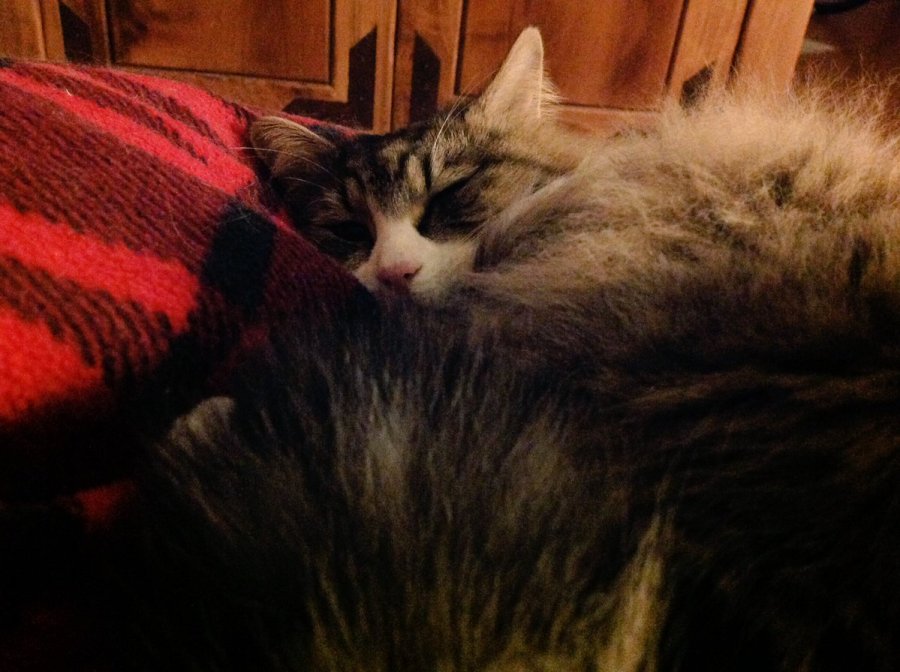
A Book is Like A … CAT?

Run a search on Google for “A book is like a…” and you will find that nearly everyone has a handy simile, thousands of entries dedicated to comparing books to start-ups (I suppose they do often keep us up at night and drive us into bankruptcy), to children (they are demanding and require discipline as well as inspiring great pride in us, I expect), to frigates (‘handle with care; this thing might sink you!’ perhaps?), to the good Doctor’s faithful TARDIS (it is bigger on the inside and leads to Narnia–oh, wait).

But so far as I can tell, nobody has yet compared a book to a cat, although the comparison is so perfectly neat as to defy the rules of Internet, which dictate that you can find someone comparing any one thing to any one other thing somewhere, no matter how hyperspecific we want to get about the details. (SEE: Why having an ulcer is like “having a burglar alarm go off inside you” … IN RUSSIAN.)

And a book is most definitely not like a dog. In no way could it ever be like … a dog. So happy to see you after work, so congenial and eager to please, so pleased with even the smallest investment of time or the teeniest of bones thrown its way.

But a cat:

c39purrvcaaoxkk

  • A cat is not dignified and neither is your book. Inspiration won’t come to you easily, or conveniently, but instead unload itself all over your lap whenever you’re least prepared to take advantage of it. It’s difficult to please, but it also can’t clearly articulate what it wants or needs to be what it needs to be, so you end up dancing in circles, trying to keep the blood flowing to your legs.
  • A cat … lurks. And so does your book. It will sit on your desktop, on your laptop, on your cloud storage platform of choice … and wait for attention. Demanding attention is what cats and books do best, only passively, and without wanting to be touched except on their hyperspecific terms so don’t even think about getting cozy.
  • A cat has a mind of its own, and yeah, so does your book. Its characters will run off in completely unexpected directions, your plot will do loop-the-loops instead of following your very thorough outline (or mental sketch, at least), and the ending never feels quite right once you get it in there.

But most importantly, a book is like a cat in one last meaningful way:

  • A cat is worth it. And I guarantee … your book is, too. It’s worth the struggle, the lack of dignity, the lurking, all of it. And yes, it’s a wonderful feeling when you’re done and have the manuscript off to a publisher–but completion, like a cat, is never a fixed point in space or time. Pretty soon you’ll have more ideas cascading in to fill the gap, and the process begins again. The act of being an author is the real work, and the real reward. Just as a cat is its own (self-important, sometimes) reward.

And that, my friends, is how a book is like … a CAT!


Thank you for reading!  If you have any questions, comments, suggestions, or contributions, please use the comment field below or drop us a line at selfpublishingadvice@gmail.com.  And remember to check back each Wednesday for your weekly dose of marketing musings from one indie, hybrid, and self-published author to another. ♠


Kelly

ABOUT KELLY SCHUKNECHT: Kelly Schuknecht is the Executive Vice President of Outskirts Press. In addition to her contributions to the Outskirts Press blog at blog.outskirtspress.com, Kelly and a group of talented marketing experts offer book marketing services, support, and products to not only published Outskirts Press authors, but to all authors and professionals who are interested in marketing their books and/or careers. Learn more about Kelly on her blog, kellyschuknecht.com