From the Archives: Quick Start Guide to Marketing Your Kindle eBooks Like a Pro!

Welcome back to our Tuesday segment, where we’ll be revisiting some of our most popular posts from the last few years.  What’s stayed the same?  And what’s changed?  We’ll be updating you on the facts, and taking a new (and hopefully refreshing) angle on a few timeless classics of Self Publishing Advisor.

∗∗∗∗∗

[ Originally posted: March 10, 2011 ]

What are the differences between marketing a Kindle ebook and marketing a printed book?

The promotional methods used to drive traffic to your website and your sales page on Amazon are similar to that of printed books, but there are some differences in marketing Kindle ebooks:

  • There are fewer competing books in the Kindle store, so you may have a greater chance of your book standing out in search results. The Kindle publishing platform makes it very easy for you to enter appropriate keyword tags for your ebook.
  • Consumers expect ebook prices to be significantly lower than print books, especially for fiction. You can experiment with different price points, but for fiction books many indie authors report that they sell at lot more books at $2.99 than at higher prices. If you price your ebook between $2.99 and $9.99 (and it’s priced at least 20% less than the printed version) you can opt to receive a 70% royalty from Amazon, which is much higher than what you’d make on a printed book.
  • The audience for Kindle ebooks is smaller, because not everyone has a Kindle, but it’s growing rapidly. Remind potential customers that they don’t need a Kindle to read Kindle ebooks—they can download a free reading app to use on their PC, Mac, iPad, iPhone, Blackberry and other devices.

What are the best ways for an author to capitalize on Kindle edition sales?

  • Be sure to prominently state on all of your book marketing materials that your book is also available in Kindle format, and provide links directly to your Kindle page on Amazon. You can use a link shortening service to create a short, customized link to use for marketing purposes, such as http://bit.ly/AmazonEbook.

To make a customized link like this, go to http://bit.ly, paste the URL of your book’s Kindle sales page into the large blue box, click the blue “customize” button (beneath the blue box), enter a name for your link (such as AmazonEbook in the example above), and click on the “customize” button.

  • Make sure that your print book and your ebook are linked together on the Amazon website. For example, the reviews for your print book should be showing up on your Kindle page, and the sales page for your print book should indicate that the book is also available in Kindle format. If you don’t see that linkage within a couple of weeks, contact kdp-support@amazon.com.
  • Earn a little extra on each print and ebook sale on Amazon when you sign up for the Amazon Associates affiliate program at https://affiliate-program.amazon.com.

What are some common mistakes in marketing Kindle ebooks?

  • One common mistake is failing to write compelling sales copy and enter the right keywords. The great thing about the Kindle publishing platform at https://kdp.amazon.com is that it’s easy to make changes. Don’t be afraid to experiment with different sales copy, keywords and price points.
  • Other mistakes include pricing ebooks too high, failing to promote them as much as printed books, and failing to take advantage of the promotional opportunities available on the Amazon website.

– by Dana Lynn Smith.

ebooks

Quite a lot has changed in the world of Kindle ebooks since 2011, including the percentages and the eminence of Amazon Associates and even which devices we use these days (cue the Blackberry exit, stage left). But many things have remained the same, such as Dana Lynn Smith’s admonition to write compelling sales copy, and pricing books perfectly to sell.

Most importantly of all, since Dana Lynn’s original post in 2011, print books have seen a resurgence in popularity. These days, it’s more important to view ebooks not as an end to their own means, but as a part and component of a much larger, much more fully rounded-out sales strategy encompassing print as well as digital. Ebooks aren’t the only answer you need, although they certainly enrich an author’s portfolio.

For more on that, I recommend checking in on Small Business Trends‘ annual report on the situation and balance between print and digital, available here: smallbiztrends.com/2017/02/printed-books-vs-ebooks.html.

small business trends the future of books
Infographic by Small Business Trendssmallbiztrends.com/2017/02/printed-books-vs-ebooks.html

Once you know your place in the “future of books,” you’ll know how to structure your sales and marketing strategies to take advantage of these trends.

Thanks for reading.  If you have any other ideas, I’d love to hear them.  Drop me a line in the comments section below and I’ll respond as quickly as I can.  ♠


Kelly

ABOUT KELLY SCHUKNECHT: Kelly Schuknecht is the Executive Vice President of Outskirts Press. In addition to her contributions to the Outskirts Press blog at blog.outskirtspress.com, Kelly and a group of talented marketing experts offer book marketing services, support, and products to not only published Outskirts Press authors, but to all authors and professionals who are interested in marketing their books and/or careers. Learn more about Kelly on her blog, kellyschuknecht.com.

Self-Publishing News: 5.29.2017

And now for the news!

Some highlights from this week in the world of self-publishing:

This week’s Publisher’s Weekly features a piece by Calvin Reid which highlights Jason Pinter, the man who founded the indie publishing house, Polis Books. Pinter found himself inspired by the 2016 election and has decided to return to his passion–writing books. The Castle, Pinter’s political thriller, will be a self-published title and be kept separate from the Polis Books list.

Pinter’s reason for self-publishing? The feeling of the books immanent importance in the wake of our current political situation. Publishing a book by traditional means can take over a year, and this was a book he felt should be published now, and right now. According to Pinter, “several editors liked the book, but said it needed to be out now. I agreed with them.” Another reason for self-publishing was that Pinter didn’t want to cut in front of other authors trying to publish through Polis Books, nor did he want to overshadow the other titles currently being publishing by his press.

Once Polis books got up and running–it will be publishing 27 books in 2017!–Pinter decided that he would make time to return to his passion for writing, which is why he’s devoted himself to publishing The Castle. Don’t expect Pinter to quit working on his publishing company though, he is instead hoping to have the best of both worlds working as an author and a publisher.

In this touching piece by Fiona Ashe, we see the story of a daughter helping her father’s dream come true. When Fiona’s father wrote 31 Years of Hell, documenting the history of the two world wars, she decided that she would edit, produce and self-publish the book herself. While an extremely rewarding process, Fiona wanted to share how it was that she also was able to make this an extremely successful process.

First Fiona reminds us of the importance of having a good editor whom you can trust and whose opinion your trust. Calling the editor “your book’s bouncer,” Fiona says, “It’s completely reasonable to be emotionally attached to your favourite paragraph in which you injected clever humour, shared a personal anecdote and created a slick metaphor. But if it doesn’t serve the story, it has to be consigned to the literary cutting room floor.”

After explaining the im portance of editing, she goes on to elaborate on the stylistic and interior formatting components of self-publishing. She says,“One thing to consider when designing the interior pages of your book is whether you understand your target market’s reading habits. Do they binge-read the way people binge-watch TV drama on Netflix? Or do they dip in and out of books periodically?” It was decided that the audience of a WWI/II book would most likely dip in and out of it, “In order to facilitate this episodic reading behaviour, we chose to break up the text with subheadings and add timelines at the end of each chapter.” Further, Fiona says she “also illustrated the book with maps and emotionally evocative photographs to enhance the storytelling.”

Read more from the article above for some more stellar advice from Fiona, the daughter of the year!


spa-news

As a self-publishing author, you may find it helpful to stay up-to-date on the trends and news related to the self-publishing industry.This will help you make informed decisions before, during and after the self-publishing process, which will lead to a greater self-publishing experience. To help you stay current on self-publishing topics, simply visit our blog every Monday to find out the hottest news. If you have other big news to share, please comment below.

KellyABOUT KELLY SCHUKNECHT: Kelly Schuknecht is the Executive Vice President of Outskirts Press. In addition to her contributions to the Outskirts Press blog at blog.outskirtspress.com, Kelly and a group of talented marketing experts offer book marketing services, support, and products to not only published Outskirts Press authors, but to all authors and professionals who are interested in marketing their books and/or careers. Learn more about Kelly on her blog, kellyschuknecht.com.

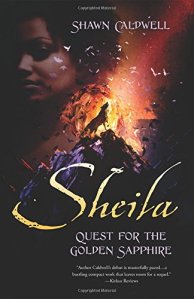
Saturday Book Review: “Sheila: Quest for the Golden Sapphire”

Book reviews are a great way for self-publishing authors to gain exposure. After all, how can someone buy your book if he or she doesn’t know it exists? Paired with other elements of your book promotion strategy, requesting reviews is a great way to get people talking about what you’ve written.

When we read good reviews, we definitely like to share them. It gives the author a few (permanent) moments of fame and allows us to let the community know about a great book. Here’s this week’s book review, courtesy of Midwest Book Review:

Sheila: Quest for the Golden Sapphire Shawn Caldwell

Sheila: Quest for the Golden Sapphire

by Shawn Caldwell

Publisher: Outskirts Press

ISBN: 9781478771036

Synopsis*:

Sheila Domino is turning 15 . . . and her life will never be the same again. On the twilight of her 15th birthday, while blissing out on the screaming guitar of a Jimi Hendrix tune, tomboy Sheila Domino and her best friend are attacked by a clan of werewolves. Even worse, while fending off the mangy mongrels, Sheila realizes that her body is transforming into the likeness of her attackers… What the hell?! A dark stranger rescues the girls, ushering them into a new land called Thera. Once unsurpassed in elegance and beauty, Thera is now scarred by darkness and poverty. The stranger informs Sheila that her destiny is to save Thera from the tyranny of Benan, leader of the lycan clan called The Devil Dogs, but Sheila is unimpressed. She only wants to know how to make the physical changes stop before her boy crush realizes that they share the same interest in food and movies-as well as an abundance of back hair. But when her foster parents are brutally murdered by The Devil Dogs, Sheila must learn to use her gift of transmogrification to fight back. Will she be able to locate the golden sapphire and save Thera from total annihilation? Find out in Sheila: Quest For The Golden Sapphire, an enthralling new novel with a fun, fierce heroine.

 * courtesy of Amazon.com

Critique:

 “Sheila: Quest For The Golden Sapphire” is a riveting read from cover to cover and clearly showcases author Shawn Caldwell as having a genuine flair for original and deftly crafted storytelling, making this fantasy action/adventure novel unreservedly recommended for school and community library YA Fantasy Fiction collections in general, and the personal reading lists of dedicated werewolf fans of all ages in particular!

reviewed on the Fantasy/SciFi Shelf of Midwest Book Review ]

Here’s what some other reviewers are saying:

This book was awesome! Full of adventure and excitement! Could not put it down. I cant wait to read more from the writer!

– Amazon Reviewer Sheri

Interview With Blog Talk Radio:

http://www.blogtalkradio.com/someuniquemag/2016/10/20/the-magic-of-fantasyya-author-shawn-caldwell


saturday self-published book review

Thanks for reading!  Keep up with the latest in the world of indie and self-published books by watching this space every Saturday!

Self Publishing Advisor

selfpubicon1

Conversations: 5/26/2017

WRITE YOUR CHILDREN’S BOOK TO INSPIRE!

Recently I was inspired by a famous news commentator who said, “Even though our world seems to be more than fifty percent influenced by hate—by evil—it is up to us to talk about and write about the good, ethical and moral things of life. Our children need to know—must know—their futures are bright.” This television news celebrity was speaking to my small group of writers and sharing some amazing (really miraculous) things that have happened in her life—demonstrating just how much power she/we have in the words we choose to “broadcast.”

At the next writers’ workshop each of us still felt her passionate message and agreed that no matter what project we were developing, somewhere—some way—we would include something to inspire our readers. So it is today that I’ve selected two books to demonstrate inspired writing. The first is a recently published children’s book and the second is a classic novel that bridges the juvenile/young adult/adult categories.

Melissa Brown just released her book, COUNTRY ZOO: Gretchen the Runt, in Februarycountry zoo melissa brown this year. A baby giraffe has just been born and joined the other giraffe’s in their outdoor enclosure. She’s been named Gretchen and it’s quite obvious that she’s smaller than normal. She can’t reach the tastiest leaves to eat or play games that the big animals play. She doesn’t like being small at all! In time, she grows bigger and new adjustments must be made.
There are wonderfully insightful comparisons made in this story to help children understand a few of the complexities life gives us all—when we are different. You will appreciate the humor and heartwarming compassion used to teach children (and parents) to value themselves and appreciate the special person(s) we are.

I predict this little picture book will become a favorite “keepsake” story in every home because: (1st) it is so well written and, (2nd) because it inspires parents and children in tandem. Thank you, Melissa Brown, for giving future writers such an excellent example and for donating a portion of your royalties to The Pacer Center to prevent bullying of children and teens.

My classic novel example is SHOELESS JOE (1982) by W. P. Kinsella, a Canadian author who inspired Readers with “…his own brand of magic realism, comic sense, sentimental and sometimes edgy” writing style” (V. Sayers, Professor of English, Notre Dame).

  • As a writer, I immediately loved two things about this novel. First, the author named the main character after himself—well, the last name, anyway. Second, the author writes in his own search for writing support and inspiration as the main character goes in search of the reclusive (real) writer J. D. Salinger. (Today we can “talk” with most of our favorite author’s via websites, Facebook messaging, etc.) BIG point to remember: if you must give someone’s real name in your book(s), be sure you have their written and signed permission.
  • Then I learned that Kinsella wrote his first draft while attending a writers’ workshop in Iowa! WOW! What a great environment! If you’ve ever been to a week or weekend retreat with other writers you already know how inspiring that dynamic energy can be.
  • In 1989 this book became a movie—FIELD OF DREAMS. The screenplay was tweaked a bit here and there, but the basic story is all there. And, they changed the “reclusive” author’s name to Terence Mann who delivered this great quote: “I want them to start thinking for themselves!” (Isn’t that what we want for all our children—to think clearly enough for themselves that they will not fall prey to those who would lead them into trouble?)

May all your writing adventures be inspired, my friends, and when you’ve come to THE END of the story, GET IT PUBLISHED. Let’s make this world a better place for our children! ⚓︎


Royalene

ABOUT ROYALENE DOYLE: Royalene has been writing something since before kindergarten days and continues to love the process. Through her small business—DOYLE WRITING SERVICES—she brings more than 40 years of writing experience to authors who need “just a little assistance” with completing their projects. This is a nice fit as she develops these blogs for Outskirts Press (OP) a leading self-publisher, and occasionally accepts a ghostwriting project from one of their clients. Her recent book release (with OP) titled FIREPROOF PROVERBS, A Writer’s Study of Words, is already receiving excellent reviews including several professional writer’s endorsements given on the book’s back cover.  

Royalene’s writing experience grew through a wide variety of positions from Office Manager and Administrative Assistant to Teacher of Literature and Advanced Writing courses and editor/writer for an International Christian ministry. Her willingness to listen to struggling authors, learn their goals and expectations and discern their writing voice has brought many manuscripts into the published books arena.

In Your Corner: Use Facebook to Promote Your Book!

Facebook

It’s not exactly breaking news anymore when we say “Facebook can help you sell books and create a platform!” to our readers here on the blog, since we’ve written about it before and maybe even a brace, a thicket, a luxuration of times—but it can never be said frequently enough, in my opinion.

Facebook can help you sell books and create a platform!

There, whew. We can all go home now.

Or can we?

There are hundreds upon thousands of resources out there specifying how and when to take advantage of Facebook, but the greater challenge is deciding which of those multitudes is actually useful for you, isn’t it? Being “findable” (there’s a five-dollar word for you!) doesn’t mean much if the platform isn’t providing you with something sustainable and enriching on your own terms.

Here are my top five recommendations for putting Facebook to work:

  1. Build a fanbase. Facebook is great as a bulletin board space, but its real power is in mobilizing large groups of people who all share a passionate interest in something, and you won’t mobilize anyone if you yourself aren’t on your page, engaging with readers, reviewers, and more generally, fans—on a regular and sustainable basis! Make it worth their while, too: upload “behind the scenes” videos and create events, use QR codes to direct traffic to your page and paper-bomb your town with it, guerrilla-style! Once you have a large fanbase, you’ll be able to do pretty much everything else that you want as well.
  2. Use your Facebook account to link with other websites. Whether it’s your email signature or those wonderful “log in using Facebook!” ancillary websites, which allow you to create and link your Facebook account in order to streamline the login process, interlinkage is a useful stratagem on many fronts. It gets your name and face out there, yes, but it also makes it extremely easy for fans to follow your movements around the internet—from Twitter to Instagram to Goodreads to Ko-Fi to Kickstarter and more! That way, even though you’re making use of all of these websites’ useful and peculiar features, you’re working with one central account.
  3. Go elsewhere. By this, I mean: use your Facebook account to interact with other authors, on their turf. Facebook is about community, and no community thrives when it’s one-sided, so don’t expect everyone to come to your page without first having something to offer on theirs! You can do a little market research while you’re at it, too, and steal ideas from authors whose pages reflect the kind of presence you yourself want to establish. You can share specific posts that you enjoyed on your own timeline, which also builds that community spirit.
  4. Keep it visual. You’ve probably heard the word “clickbait” floating around on the interwebs, but if you haven’t, the term refers to material which takes full advantage of social media users’ predilection for clicking on links which have immediate visual appeal—usually a catchy image or an equally catchy, brief, and possibly controversial headline. You don’t need to dip into the controversy side of things, but you too have a good reason to pay attention to this particular market trend, and to pay attention to the psychology behind it! Facebook users are equally as visual as those on Instagram and Pinterest, so don’t skimp on posting images to your account and your timeline. Photos bring in clicks and views more than anything else! It doesn’t just have to be images of your book, of course, although some of my favorite accounts carry out a kind of “book scavenger hunt” or “book road trip” activity, where the author takes pictures of their books in interesting locations—or ask readers to take pictures and then share those pictures to your timeline as well!
  5. Make a meal of Facebook Insights. This is the Facebook equivalent of Google Analytics, since even without a paid account, Facebook keeps detailed track of what users are looking at your page and when, how long they spend, what they interact with, and more! It’s profoundly useful, for example, to know when your “peak viewing” period is—when the highest percentage of people access your page every day—and post new material right then, for them to enjoy. It’s also useful to know, for example, that your readers really do prefer your images over your text posts—and by a factor of … well, it will vary from person to person! Once you know your fans’ habits, it may be time to explore paying for a Facebook ad … or you may not need one, depending on the circumstances!

However you choose to use Facebook, you’re not wrong. But there may be a few things you can tweak in order to do even better, as I am learning every day.

You are not alone. ♣︎


Elizabeth

ABOUT ELIZABETH JAVOR: With over 18 years of experience in sales and management, Elizabeth Javor works as the Manager of Author Services for Outskirts Press. The Author Services Department is composed of knowledgeable publishing consultants, pre-production specialists, customer service reps and book marketing specialists; together, they all focus on educating authors on the self-publishing process to help them publish the book of their dreams. Whether you are a professional looking to take your career to the next level with platform-driven non-fiction or a novelist seeking fame, fortune, and/or personal fulfillment, Elizabeth Javor can put you on the right path.