Tuesday Book Review: “Notes from the Trenches: A Musician’s Journey Through World War I”

Book reviews are a great way for self-publishing authors to gain exposure. After all, how can someone buy your book if he or she doesn’t know it exists? Paired with other elements of your book promotion strategy, requesting reviews is a great way to get people talking about what you’ve written.
When we read good reviews, we definitely like to share them. It gives the author a few (permanent) moments of fame and allows us to let the community know about a great book. Here’s this week’s book review:
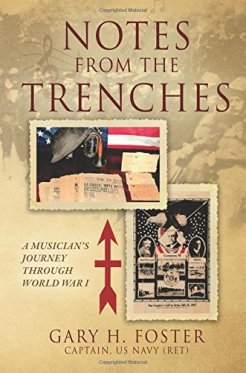
notes from the trenches gary foster

cipa evvy merit

Notes From the Trenches

by Gary H. Foster

ISBN: 9781478792741

Synopsis*:

The Terror and Triumph of WWI in a Soldier’s Own Words…

The Foster family of Wisconsin were vibrant and happy in the early years of the 20th century. Like many families in the area, they were descended from German immigrants and had a healthy appetite for hard work and beer. Barbara Foster, widowed early in life, created a loving home for her children Leo, Ottilia, Mary, and Kunigunda. They were all musicians, forming their own orchestra and playing in regional and local venues. But despite Woodrow Wilson’s promises, America found itself drawn into the Great War overseas, and Leo Foster, bugler for the Wisconsin National Guard, was sent to the front lines. Nearly a century later, this book reconstructs Leo’s World War I experience from letters, newspaper clippings, and photographs from Leo’s footlocker. Nothing compares to the immediacy of the war experience in a soldier’s own words. Notes from the Trenches follows Leo from stateside training to the horror of the Meuse-Argonne offensive and his battle-weary return home in May of 1919. Full of wit, good humor, and honesty, these letters provide a fascinating window into the War to End All Wars, with insightful organization and context from Leo’s grandson, Gary Foster.

 * courtesy of Amazon.com

Featured Review

[Following is an official OnlineBookClub.org review of “Notes From the Trenches” by Gary H. Foster.]


4 out of 4 stars


Get an in-depth look into World War I from a soldier’s perspective. Leo Foster’s eagerness, pride, humor, bravery and sense of patriotism will surprise you in Notes from the Trenches by Gary H. Foster. His life continues to inspire his lineage with many following in his footsteps.

A young musician of German ancestry from Wisconsin joins the 32nd division famously known as ‘Les Terribles’. His new journey takes him across the states, then to France and finally to Germany in a bid to fight for his country even if this means that he loses his life in the process.

Told by Leo Foster’s grandson Gary H. Foster who served in the Navy, Notes from the Trenches reveals the content of many letters that Leo wrote to his family. His mother and sisters seem to have been quite close to him. Even in the heat of war, Leo good-heartedly continues to taunt his sisters in his notes. His concern for Kuni, Mary, Tillie and his mother, Barbara shows in every letter. It is clear that he was more concerned over their welfare more than his own as he made every effort to reassure and encourage them.

Perhaps the most impressive bit of Foster’s book is that it reveals the true picture of war, the sacrifice that families have to endure both for the soldiers in the front lines and the family members left behind. Leo’s mother, Barbara, must have been a strong woman to have endured all she went through and still hold on and hope for the return of her son. The destructive nature of war is shown especially in the later letters written by Leo.

The letters are obviously in the first person which adds to the storyline’s authenticity. Leo’s humor as he constantly refers to his weight and love for ‘eats’ adds a unique comical strand which helps to lighten the weight of the account. His mention of love interests heightened the book’s appeal and gave me a glimpse of his personality.

The book is very well researched. Every letter is carefully placed in chronological order and life after World War I is also covered.

Ultimately, Notes from the Trenches fosters the spirit of patriotism and touches on an incredibly important part of history that shaped whole nations. It also reveals a history that is too powerful to be forgotten and a people’s resilience and bravery that should always be valued. I rate Gary H. Foster’s account 4 out of 4 stars.

– reviewed by EmunahAn on OnlineBookClub.org

Other Reviews

One is amazed that despite the raging horrors of war and the …

“Notes from the Trenches” is a fascinating glimpse back in time to World War I. It is fair to say that this war has been largely overshadowed by World War II and the conflicts that have since followed. As a result, bookstores have an abundance of material on those subjects, but only a handful on the War to End All Wars. This book puts World War I in the hands of the reader as written by bugler Leo Foster in his letters home to his mother Barbara and his sisters. The colloquialisms, daily routines, and wide-eyed wonder of a young man experiencing the Old World as new in the midst of conflict are fresh on the page. The author allows Leo to speak in his own words, while guiding the reader through the broader historical events of the conflict. This has the effect of giving the reader the chance to experience the war much the same way Leo Foster’s mother and sisters would have through his letters. Readers will find Leo to be brash, humorous, and possessing a brand of “gee whiz!” American optimism that seems to have largely faded from American civic life. One is amazed that despite the raging horrors of war and the normal hardships of life in that era, there was a strong attitude of pressing forward and making the best of whatever happened in life. Certainly something to glean from this book, as well as a newfound appreciation for the sacrifices of so many of that generation that our modern world continues to reap the benefits of. I highly recommend this book, and as a reader who had (I’m embarrassed to admit) a very limited knowledge of World War I, I think this is an incredible way to be introduced to the story of that conflict and the sacrifices of so many true heroes like Leo Foster.

– reviewed by Brady Christian on Amazon

A Gripping Documentation of Life on the Battlefield from a WWI Soldier Who Fought For Freedom

Rarely is there any documentation of the thoughts in real time from the men in the field who fought during WWI. Without technology or the sheer opportunity and willpower to document such emotions as they occurred, the personal trials of the fighting men in the “war to end all wars” seems lost to the ages. Then comes along Notes From The Trenches, a gripping book that recounts the actual perspectives of Leo W. Foster, a bugler in the 121st Machine Gun Battalion, 32nd Division in WWI.

The book captures in vivid detail the sacrifices, wonder, elation, disappointments, tensions and an overpowering desire to win at all costs as documented by a young man who voluntarily leaves the comforts of his Wisconsin home to fight “over there” in the battlefields of France, documented through the actual letters written by Foster and sent to America. More than 90 letters, kept for decades in the soldier’s stored footlocker, are showcased in their raw and largely unedited form, all organized in chronological order with added color and perspectives from the author about the events that led to American victory in Europe.

Notes from the Trenches is a solid read, and it’s an intriguing glimpse into the real-life battles of a war fought a century ago.

– reviewed by Mark Foster on Amazon


tuesday book review

Thanks for reading!  Keep up with the latest in the world of indie and self-published books by watching this space!

Self Publishing Advisor

selfpubicon1

Self-Publishing News: 10.29.2018 – October Round-Up

october month

And now for the news!

Some highlights from this month in the world of self-publishing, wrapping up what’s new for you and yours in October 2018.

One of the things we love most about science fiction is the same thing we love about self-publishing: it’s created, by and large, by a community of people who believe in taking whatever path fits the situation best, fits the individual creator best, and which best enables writers of so-called “niche” material to reach their (so-called) “niche” audience. For many science fiction authors, especially now, this translates into self-publishing their science fiction, bridging the gap between two of our favorite things.

How did this come to be a thing for science fiction authors? Adam Rowe of Forbes (poor guy, we keep quoting him, he so reliably writes interesting material about self-publishing!) describes how this, ahem, stellar connection came to be. Writes Rowe, “Today, prolific writers can earn six-figure incomes entirely through stories self-published on Amazon. If they’d lived in the mid-twentieth century, those same writers might have instead turned to science fiction magazines, a source of income that has all but dried up today.” The transition from magazines (print) to self-publishing (mostly digital) hasn’t been seamless, it has been lucrative. Rowe quotes the numbers: “Together, self-published indie imprints and indies with no listed publisher make up the largest segment of speculative fiction ebooks sold over the past year, at 46.2% of all ebook units sold in the genres of science fiction and fantasy, according to industry data service Bookstat.” That’s a huge chunk of the new science fiction and fantasy reading material out there! Read Rowe’s full article for more great background on the history of this new normal.

It’s a proud day, indeed, when self-publishing makes The Frisky! This is not a lengthy piece, but it is an important one, as The Frisky’s readership likely includes many newcomers to the idea (much less the lived experience) of self-publishing. This piece, half press release for a new publishing company and half sterling information that applies to anyone looking to publish, details some of the broad-strokes information new authors need to know before pursuing any option. It’s quick, it’s straightforward, and it’s probably exactly what first-time readers need to know to get started in looking for more information on the subject. Many kudos to The Frisky for supporting what we do!

We haven’t given you too many interviews lately, but this one we really couldn’t pass up. Published in the Gaston Gazette (of North Carolina fame) by contributor Michael Barrett, this piece features the work and backstory of author Megan Allen. Allen, who struggles with chronic pain herself, transmutes this experience into the genre of young adult fantasy in her latest self-published release, Magic Headaches. According to Barrett, the book follows the story of “Elinor, a young woman whose headaches give her access to an enchanted world known as Morland.” There’s a practical benefit to writing the book, Barrett notes, in that it provided Allen an outlet for her frustrations over the way the general public perceives and responds to chronic pain. Writes Barrett, “Because everyone gets a headache from time to time, Allen was used to people offering remedies for kicking them, and sensed many people don’t understand what she copes with. Writing the book became her way of processing her own feelings, while also helping friends and family to understand her mindframe.” Not one to let the world get her down, Allen not only conceived of this creative outlet, but pushed through the pain to finish her manuscript and, now, self-publish it. You can learn more about her and Elinors’ fascinating–and enlightening–journeys by reading the full article!


spa-news

As a self-publishing author, you may find it helpful to stay up-to-date on the trends and news related to the self-publishing industry.This will help you make informed decisions before, during and after the self-publishing process, which will lead to a greater self-publishing experience. To help you stay current on self-publishing topics, simply visit our blog every Monday to find out the hottest news. If you have other big news to share, please comment below.

selfpubicon1

Tuesday Book Review: “Cursed”

Book reviews are a great way for self-publishing authors to gain exposure. After all, how can someone buy your book if he or she doesn’t know it exists? Paired with other elements of your book promotion strategy, requesting reviews is a great way to get people talking about what you’ve written.
When we read good reviews, we definitely like to share them. It gives the author a few (permanent) moments of fame and allows us to let the community know about a great book. Here’s this week’s book review:

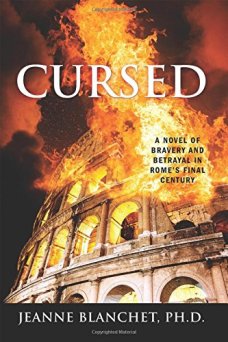
cursed jeanne blanchet

cipa evvy merit

Cursed

by Jeanne Blanchet, PhD

ISBN: 9781478747901

Synopsis*:

The year is 394 CE. Christianity has recently been declared Rome’s state religion, and the empire’s pagan temples are being shut down. When Christian Princess Serena accompanies Theofilus, a young priest, to oversee the closing of Vesta’s sanctuary, she pilfers a necklace from the statue of a goddess, inciting the head Vestal to call a horrific curse down on her and her family. Cursed traces the remainder of Serena’s life as she wonders if the curse will destroy her completely and attempts to cope with her gradually rising desperation. Meanwhile, Father Theofilus embarks on a lifelong quest to find the priceless antique Palladium, which had been housed in the sanctuary and which he plans to donate to the Church as a means of furthering his ecclesiastical career. Stilicho, Alaric, Theodosius I, Bishops Ambrose and Augustine, and Saint Jerome are among the fascinating individuals who return to life in this historical fiction thriller. Their exciting adventures are set against the background of the fall of the once-mighty Roman Empire, the rise of Christianity, and the mass migrations characteristic of Europe’s turbulent fourth and fifth centuries.

 * courtesy of Amazon.com

Featured Review

Jeanne Blanchet’s “Cursed” is an epic historical account of Christianity’s strong entrance into Roman culture, and how religion came to be more absolute than the power of even the emperors.

Christian Princess Serena and a young priest and aspiring Bishop of Rome, Presbyter Theofilus, make up two of the principal characters in the cast. Serena is pampered and used to living a life of luxury.  While her heart is often in the right place, she is easily misguided, however, by material aspirations and the beauty and allure of things, like jewelry.  Presbyter Theofilus started out as a promising young military prospect but turned his sights on the Church when religious traditions in Rome became overrun by Christian teachings and power.  What these two young people learned during their years, as did every other Roman citizen and intruder, was that Christianity’s power was to be stronger than anything else.

“Cursed” starts out strongly and is filled with rich details and obvious research.  The terminology which the author inputs into the story represents long hours of academic study, which help produce an authentic picture of Rome in its final century.  While the details remain strong throughout the novel, the pace staggers a bit as the story progresses.  It seemed that the author’s aspirations for the novel almost became a little too broad.  Whereas the synopsis of the book intimates at the book being about a young woman being evilly cursed by one of the remaining pagan priestesses, or Vestals, of Rome, and about Presbyter Theofilus’s journey to find the antique Palladium, these storylines become a little blurred.

While most of “Cursed” takes place toward the end of the 4th century CE, there are various chapters that almost randomly go back in time 30, 40, or 50 years.  One contains details about the coming of the Goths, while another provides backstory on the current Bishop of Rome.  While the historical details are strong, the context of why these chapters are included in the midst of the main story is lost.  I think the too-broad aspirations and outlook for the plot ended up overshadowing the intended theme and main point of the book, albeit unintentionally.

I am not sure I would consider this a read for the general audience.  The historical and technical terms may make the prose seem a little dense and hard to understand.  I am a history student and an aspiring historian, so the inclusion of the historical facts was perfectly normal, easy to understand, and even exciting to me, but it may pose as a barrier for those who aren’t as historically inclined.

“Cursed” certainly shows a lot of promise as a work of heavily research historical fiction.  The idea for the story is unique and captivating, and the characters are unique enough to make you want to know what happens to them by the end of the book.  In the end, “Cursed” by Jeanne Blanchet is a great example to aspiring writers of how important structure, pacing, and context are in contributing to the overall understanding, execution, and package that is a novel.

– reviewed by Megan Weiss on Reader Views

Other Reviews

History come to life.

The author has taken the historical account of early Christianity and the fall of Rome and woven together a most descriptive narrative to bring the events to life.

– reviewed by Nancy Redmond on Amazon

This book has inspiring attention to detail and emotional depth. The knowledge and research that went into the writing of Cursed has made it a real page turner that pulls you right in and won’t let you put it down.

– reviewed by MacLennan on Amazon


tuesday book review

Thanks for reading!  Keep up with the latest in the world of indie and self-published books by watching this space!

Self Publishing Advisor
selfpubicon1

Self-Publishing News: 10.22.2018 – Publishing Trends Roundup

october month

And now for the news!

Some highlights from this month in the world of self-publishing, specifically regarding publishing trends within the publishing industry, and their implications for all authors!

We’ve written in the past on this latest trend, in which media engines like Netflix, Hulu, and Amazon have been looking to self-publishing platforms such as Wattpad for their source material; previously, Hulu had tapped the Wattpad piece The Kissing Booth for translation into the visual medium. Now it’s Light as a Feather’s turn, a soon-to-be-ten-episode horror story originally by author Zoe Aarsen. This article, from Forbes contributor Adam Rowe, chronicles the process through which this story has gone since its publication. Aarsen is an ardent supporter of self-publishing, having joined Wattpad in 2012 “specifically because she was interested in self-publishing and ‘Wattpad seemed like a great way to build an audience.’ ‘When I posted chapters for the first time,'” she told Rowe, she “‘became really excited by receiving feedback from readers all over the world, and so quickly!'” Self-publishing’s timeliness and responsiveness has long been touted as one of its strengths, and it’s certainly one which has paid off for Light as a Feather, and Wattpad certainly seems to be having a moment as well, according to Rowe: “As the biggest and buzziest media companies continue to realize that books are the simplest medium for IP acquisition, Wattpad’s uniquely data-driven artistic approach seems to make the most sense.” We’ll leave the final judgment call up to you, but if you’re interested in serialized fiction, this is a must-read piece!

The grand Good E Reader is showing up for the industry again, as this article from contributor Mercy Pilkington demonstrates. In analyzing several reports from Publishers Weekly and Bowker, Pilkington crunches the numbers and comes up with a summary: “To correlate the numbers, the number of ISBN-assigned self-published ebooks has been dropping steadily–a fact that makes for really good soundbites from publishing industry conference stages–but the number of self-published books is still growing.” Which is a nice and straightforward way of saying: don’t trust the numbers from industry titans whose stranglehold on ISBNs is no longer universal, and whose expensive services an increasing number of self-publishing authors are learning to circumvent. The numbers that matter–and that can be tracked–are giving us far more good news than bad, Pilkington indicates, proving once more that self-publishing is in no way, as it was originally predicted to be, just a “flash in the pan.” Check out her full article!

Last but not least, we bring you some more of those very good numbers! This report comes to us courtesy of Books + Publishing, one of Australia’s premiere news sources for global industry data. This report, published less than two weeks ago, also digs into the Bowker report indicated above–an annual report covering worldwide publishing and self-publishing statistics–and highlights several other important details not touched on in depth by Pilkington. But first! The raw data. The report indicates that “Self-publishing in the US grew by 28% between 2016-2017, with a total of 1,009,188 self-published titles in 2017, up from 786,935 in 2016 with 8% growth from 2015-2016.” This is good news all-around for readers and writers in the industry, with unparalleled volume of reading material promoting the production of higher-quality material, as well. (As is indicated by the increased tendency of media engines in picking up self-published material for adaptation!) B+P agrees with Pilkington that the decrease in ISBNs issued has more to do with authors skipping that process altogether and the diversification of publishing paths–Wattpad is now considered a viable alternative to Amazon, as is the growing stable of quality indie and self-publishing companies–than it does with any decrease in self-publishing overall. Keep publishing, ya’all! You’re doing great things!


spa-news

As a self-publishing author, you may find it helpful to stay up-to-date on the trends and news related to the self-publishing industry.This will help you make informed decisions before, during and after the self-publishing process, which will lead to a greater self-publishing experience. To help you stay current on self-publishing topics, simply visit our blog every Monday to find out the hottest news. If you have other big news to share, please comment below.

selfpubicon1

The Alchemy of Holiday Marketing (Part I)

alchemy ingredients

In my last post, I introduced the idea that marketing—specifically marketing as regards self-published books—is a kind of alchemy. Alchemy, of course, has a lot of meanings or connotations, but we’ll be running with this definition from Merriam-Webster: “a power or process that changes or transforms something in a mysterious or impressive way.” Which then means that an alchemist is someone who is the agent of that transformation. Merriam-Webster, for the record, has some lovely historical notes on the history of the term’s evolution, including:

alchemy alchemist

You, dear author, are an alchemist. And your marketing plan can really benefit from approaching the process with that in mind. Alchemy is all about transformation, and transformation requires something to be transformed. Which begs the question (as we foreshadowed last week):

What do you have or bring to the table as an author that’s special?

The answer (which is, of course, “a lot”) shapes what comes next. All authors share the same fundamental ingredients: a manuscript (published or yet to be published), a method, and a vision. But each of those three components will be shaded by your personal approach, interests, and unique voice. And they are the base material upon which your marketing must perform its alchemy in order to introduce your book to its ideal readers.

This is where I recommend taking a leaf out of the bullet journaling page, or out of accounting’s reliance on spreadsheets. It doesn’t particularly matter what medium you use to take stock, but take stock you must, and create a baseline record of what you’re already doing. Sit down and diagram your day. What all bits and pieces of your day are related to the writing and marketing process? Do you already use social media for personal communication? How about email and newsletters and listservs? What part of your day or week do you carve out for creation, and the writing of new material? Once you’ve taken stock of several weeks in a row, you’ll start to see patterns emerge, and you’ll get a good sense of what the outliers are. (i.e. Maybe you spend one whole day browsing Netflix because you’re bored or frustrated and need escape. That’s fine … but that’s probably not a typical day. It’s an outlier and while you must make allowance for the ongoing existence of outlier days in your life, you don’t want to let them define or move your average.)

habit tracker

Many authors make the mistake of thinking that marketing is a one-size-fits all system, and that every recommendation made out there on the Internet will apply to their specific situation … and that’s just not the way of things, sometimes. Rather than starting with a list of marketing ideas and trying to apply them all at once or without alteration, start with your existing habits and see where you’re at, and what sorts of rhythms might work with your habits. You may already doing things that are the perfect platform for marketing, and you may already lead a life that makes certain marketing strategies redundant, inapplicable, or unlikely to succeed without significant cost (in time and energy as well as money). Diagram your days, make note of your habits, and then—only then—can you move on to the next question.

What is that question? Next week, we’ll get into it.

Do you have ideas to share? Please don’t hesitate to drop us a line in the comments section, and I’ll make sure to feature your thoughts and respond to them in my next post!

You are not alone. ♣︎


Elizabeth

ABOUT ELIZABETH JAVOR: With over 20 years of experience in sales and management, Elizabeth Javor works as the Director of Sales and Marketing for Outskirts Press. The Sales and Marketing departments are composed of knowledgeable publishing consultants, customer service reps and book marketing specialists; together, they all focus on educating authors on the self-publishing process to help them publish the book of their dreams. Whether you are a professional looking to take your career to the next level with platform-driven non-fiction or a novelist seeking fame, fortune, and/or personal fulfillment, Elizabeth Javor can put you on the right path.