In Your Corner : Lights! Cameras! Action! Taking your book to the movies

There once was a time when book marketing was mostly a print and maybe occasionally a radio affair. Then came television, and the publishing world absorbed the change. Later came the internet, and the publishing world was faced with a new dilemma: how to make use of the new platform and opportunities provided by the internet to build successful marketing campaigns? Always one step ahead of the curve, self-publishing authors began to look for websites like Youtube and Vimeo as possible platforms to connect with new readers and share their book trailers. And they have been wildly successful!

A book trailer is, in short, a kind of movie trailer for your book. Because videos tap into two fundamentally important human senses–both sight and hearing–at the same time, they have the power to both introduce new readers to your book and inspire them to purchase it.

A good book trailer presents images related to the book’s theme and content in an entertaining way, and is set to music that conjures up the appropriate atmosphere. A mystery novel might be set to a brooding tapestry of minor-key notes, while a romance novel might take advantage of a light-hearted upbeat tempo to clue readers into the nature of its story. Just as moviegoers might find themselves on the edge of their seats at the theater, your potential readers will wait with bated breath for the chance to pick up a copy of your book. It’s all about creating that “buzz” around your book’s release.

YouTube Screenshot

Crafting a book trailer that connects all of the dots in order to inspire this kind of reaction is, of course, quite a challenge. Video editing demands a certain professional creative skill set, complete with a deft hand at image placement, talent with text arrangement, and a nuanced way with transitioning from one frame to the next. And the timing must be precise: the entire trailer must take place over approximately sixty seconds in order to communicate all that it needs to and command a viewer’s attention.

The value of a well-made book trailer is, however, unquestionable. Short movies are the most portable of marketing tools, and are easily shared across all of the major social media platforms, including Facebook, Twitter, Tumblr, Instagram, and elsewhere. They can be embedded into blog posts or the link distributed by email. And chances are, nine out of every ten video links you’re going to click in the coming year will lead to something on YouTube–a website which generates its own enormous slice of direct internet traffic and has proven a reliable source of many “viral” marketing campaigns already. But you never know what the next video application could be–even Amazon is getting into the video game these days.

As a self-publishing author, you’re already strategically placed to take advantage of video–but creating a book trailer? That might be outside of your comfort zone or even fully beyond your abilities. There are, of course, hybrid publishing companies that offer these services as part of a package, or you can commission someone to assist you. If you opt to pay for assistance, your music selection, image identification, and text integration will all be taken care of for you, and a draft of your book video trailer delivered to you. As I recommended last week, check the fine print: as author, you should retain the right to review the draft and suggest changes before final modifications are made. You should also own any and all rights to the final book video trailer outright and therefore use it throughout your marketing efforts–by uploading it to Yahoo! Video, MySpace, Daily Motion, Twitter, Metacafe, and other popular video hosting websites.

Book marketing is all about human connection, and your book video trailer is no different. A book trailer puts all of video’s greatest assets–its immediacy, its ability to convey a lot of information succinctly, and its visceral impact–at your command. Movies have the power to move people, and a book trailer has the power to capture your reader’s attention and then translate that attention into engagement on social media as well as drive sales. Your book video trailer is a backstage pass into who you are as a writer, and an all-access ticket to the theme park of your book’s greater universe!

You are not alone. ♣︎

ElizabethABOUT ELIZABETH JAVOR: With over 18 years of experience in sales and management, Elizabeth Javor works as the Manager of Author Services for Outskirts Press. The Author Services Department is composed of knowledgeable publishing consultants, pre-production specialists, customer service reps and book marketing specialists; together, they all focus on educating authors on the self-publishing process to help them publish the book of their dreams. Whether you are a professional looking to take your career to the next level with platform-driven non-fiction or a novelist seeking fame, fortune, and/or personal fulfillment, Elizabeth Javor can put you on the right path.

Marketing Missteps Episode 9 : Thinking: “Aw, but these rules don’t apply to me!”

Week after week, for the last eight weeks, we’ve unpacked some of the biggest DON’Ts in the business, ranging from exaggerated self-interest to taking on tasks beyond your skill level to waiting.  But this week marks the penultimate misstep–the second to last misstep–the misstep that precedes the ultimate and most fateful of missteps.  Want to know what the worst of the worst of the worst is–at least, in my experience?  Stick around one more week!

But first, before I dive into today’s episode of wrong-footedness, a quick recap–

The Missteps So Far:

This week’s misstep is, as you might expect, in line with the general trend of the last few weeks.  Which is to say, it’s a misstep that has its root in a disconnect between knowing what self-publishing means and really knowing what self-publishing requires.  The misstep?

Thinking: “Aw, but these rules don’t apply to me!”

Once upon a time, I attended a conference with a number of other self-publishing authors and industry professionals.  After a panel session had finished and I was tidying up to leave, one of the other authors approached me and unloaded a small elevator speech about her book (which is actually good thing!  I always love a good elevator speech!).  The book sounded interesting in premise, but I was struck with surprise at not having heard anything about it before, especially since this was the last day of the conference and I’d spent a lot of time browsing among the various stalls that vendors and authors had set up in the hotel atrium.

“Where can I find this book?” I asked.  “I don’t remember having seen it outside.”

“Oh, well, you can find it on Amazon,” said the author, looking vaguely discomfited.

Fair enough.  But ever on the lookout to gather the top tips and tricks–and by “gather” I mean “steal”–of other authors, I took the opportunity to pivot and ask about marketing: “What are you doing to promote this book?”

Here’s the rub.  She said: “Nothing much, really.”  It turned out that she was worried that marketing her own book would take up too much time and wouldn’t do much to boost the sales of a book that came built-in with its own appeal and a timely subject.  She felt that her book hit all the “hot-button issues” of the moment and that this, ultimately, was the primary reason why books sold or didn’t, and that self-promotion was just a lot of hot air.

She couldn’t have been more wrong.  A month or two later, I remembered the conversation and pulled up her Amazon book page, discovering in the process that only two people had reviewed her book and they were both clearly personal acquaintances.  Her sales must have been very limited, indeed.  And as far as I could tell, she’d mentioned the book a couple of times on her personal Facebook account but hadn’t extended her marketing campaign to include standalone representation through Facebook, Twitter, or any other social media platform.

And she’s not alone!  Neglecting to market at all may very well be the worst mistake authors make–and among the most frequent.  But I’m here to be a little reality check: The basic rules of self-promotion do apply to you.  You might be famous, or mix with folk of a stiff upper lip, or be writing about a subject that touches on the lives of every single person on the planet in a useful and relevant way.  But–BUT!–if you don’t work and work hard, you will only ever find that the doors to healthy sales will stay shut to you.  Yes, there’s an element of the miraculous and the coincidental that helps determine a book’s blockbuster success, but very few self-published books reached acclaim without a good dollop of elbow grease to smooth the way.

Look, I’m not saying I’m the only expert out there.  I may not even be someone whose opinion you respect.  But my decades of experience in self-publishing on both sides of the published/publisher aisle can be distilled down to a handful of take-away statements, and here’s one: Even the traditionally-published author has to work, and work hard, to sell books.  Midlist authors rarely get a break, and they technically have the full force of a team of marketers and promotion experts behind them!  Self-publishing puts that weight on the author’s shoulders even as it returns the decision-making process and rights and royalties where they belong: in the author’s hands.  I guess what I’m trying to say is that no matter what kind of author you want to be, you should put together an actionable plan for marketing your book–a plan that extends beyond a few conversations at a conference.


Thank you for reading!  If you have any questions, comments, suggestions, or contributions, please use the comment field below or drop us a line at selfpublishingadvice@gmail.com.  And remember to check back each Wednesday for your weekly dose of marketing musings from one indie, hybrid, and self-published author to another. ♠

KellyABOUT KELLY SCHUKNECHT: Kelly Schuknecht is the Executive Vice President of Outskirts Press. In addition to her contributions to the Outskirts Press blog at blog.outskirtspress.com, Kelly and a group of talented marketing experts offer book marketing services, support, and products to not only published Outskirts Press authors, but to all authors and professionals who are interested in marketing their books and/or careers. Learn more about Kelly on her blog, kellyschuknecht.com. 10:00 AM

From the Archives: “6 Ways Watching Real Housewives of New York Can Help You Market Your Book”

Welcome back to our Tuesday segment, where we’ll be revisiting some of our most popular posts from the last few years.  What’s stayed the same?  And what’s changed?  We’ll be updating you on the facts, and taking a new (and hopefully refreshing) angle on a few timeless classics of Self Publishing Advisor.

∗∗∗∗∗

[ Originally posted: July 27th, 2011 ]

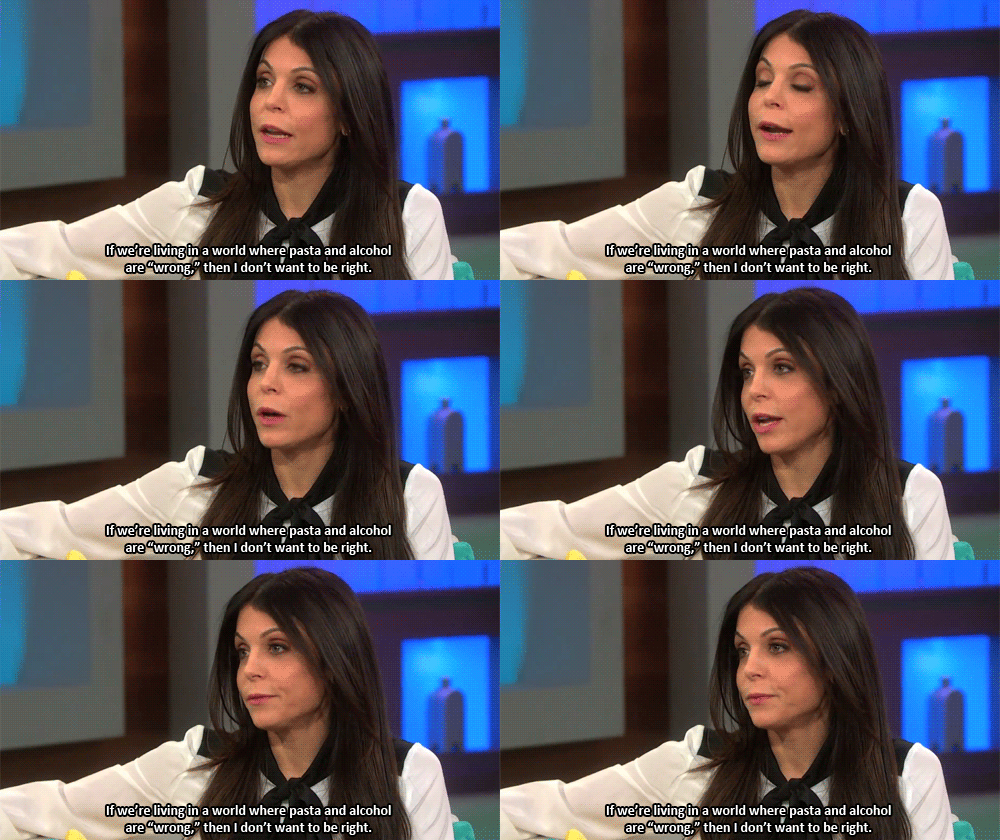
Do you watch Real Housewives of New York? If not, surely you’ve seen all the press about the show. Did you know that you can learn a lot about how to market your book and build your author brand by watching it? Here are just a few of the lessons to be learned when watching the show for any period of time (some old and some new):

  • Follow trends: Take note from Ramona and her jumping on the “renew your vows” trend. Sure, it is a good idea to be unique most of the time, but sometimes you have to “do the stuff everyone else is doing” in order to get your momentum going. After all – it works well for everyone else – isn’t it at least worth a “try”?
  • Defend the grapes: Bethenny offered to “stomp the grapes” to make wine. Not if Kelly had anything to do with it – she planned to eat those grapes. If you take a stand on some issue or cause that you really believe in and make this public knowledge, that’s a good way to network and build demand for you and your book.
  • Start your own team: It works for the Twilight saga (remember “Team Edward” and “Team Jacob”?) and is even working for RHONY with the “Team Blonde” and “Team Brunette” fiasco. Have you considered starting “teams” for the main characters in your book? This will build audience excitement for sure because people love to choose sides.
  • Refer to yourself in the third person: Did you see how Sonja referred to herself in the third person on the recent reunion show? Well, don’t do it that way, but this is a great way to write an effective author bio that will stand out amongst the crowd. Author bios should never be written in first person (neither should social media profiles and the like).
  • Toss modesty to the wind: Also in the recent reunion show, Kelly mentioned that Cosmo rated her as one of the Five Nicest Celebrities. Why can’t you do the same as an author? Naturally, you don’t want to tout your achievements at inappropriate times, but don’t be afraid to brag a little – especially when it comes to your bestselling author status.
  • Wear cream to the wedding: This is not the best thing to do in “real life”, but it can be very effective when promoting a book. Don’t allow other authors in your genre to get all of the spotlight. It’s OK to steal the show just a bit for yourself.

Many newly-published authors are faced with the question of: “How do I market my book?” Believe it or not, your answer could be as close as your nearest TV set.

– by Elise L. Connors

Does anyone still watch reality television these days?  I remember the day, back in 2008, when Real Housewives of New York premiered–and even further back, it must be said, to a day before any of the Real Housewives cluster of shows aired.  Since Real Housewives of Orange County is now in its eleventh season, you can imagine that that’s quite a ways further back!  But let’s face the facts.  A show that births such classic one-liners as:

dbcaa06f-7682-48d4-90bf-41d61ccef42d

… and:

tumblr_mzwkifYkUB1qk08n1o1_500

… just can’t die.  I won’t let it.  That’s not a world I want to live in–a world of sincerely self-aware nature documentaries is a fine and wonderful thing, but it can never rival a world in which the absurdly rich are given finely scrulpted eyebrows and scripted lines worthy of Homer.  And Bravo, home to all things Real Housewives, has some of the most loyal fans out there.  Over 1.4 million people proved their loyalty by tuning in for the premier of last season, the weakest yet.  But 1.4 million?  That’s still a lot of people.  And while the jury’s out on whether sticking around for another round of brunches and office tours with the rich and famous qualifies Real Housewives of New York marks quality decision-making, the show’s longevity puts the proof in the pudding of Elise’s 2011 blog post, above.

Track_15_3

Don’t take this as a drawn-out advertisement for a television show that I don’t even watch–but do take it as a reminder not to turn off your “out-of-the-box” skills when it comes to strategizing and marketing your self-published book.  Elise found value and inspiration in a television show because she refused to just sit back and “shut off.”  Her mind was active and engaged–even when watching reality television!  Maybe your inspiration will come through some other unorthodox channel, like a podcast or a nature walk or a recipe in a kitsch 80’s cookbook.  But it’s still valid.

It doesn’t matter how good ideas come to us, not nearly so much as it matters that we put them into real-world application.  When push comes to shove, the television we watch and the books we read and the lines we repeat to ourselves in moments of crises aren’t what define our success or failure as self-publishing authors.  Only we get to draw the line, and make the call, and cast the judgment.  What matters is the work, and that we stick with it–and keep coming back with new ideas to move that work forward!  Find your inner diva, dear readers.  Find your Real Housewives.  Be innovative.  Defy the critics, and the numbers.  Be indomitable!

Thanks for reading.  If you have any other ideas, I’d love to hear them.  Drop me a line in the comments section below and I’ll respond as quickly as I can.  ♠

Self-Publishing News: 5.16.2016

This week in the world of self-publishing:

This piece–written by Tonya Riley for “The Kernel” on The Daily Dot for the week of May 15–explores the rise and fall of one of self-publishing’s most recent features: the community-ranked and community-driven sort-of self-publishing competition website.  If you haven’t heard of InkPop, you  might have heard of Figment or Swoon Reads, both of which operate on a similar principle: would-be authors upload their manuscripts for other authors and readers to vote on and rank, and the top-ranked manuscript goes on to sign a contract with a publishing house.  In the case of InkPop, that was HarperCollins, a “Big Five” publishing house which went on to shutter InkPop in 2012 after publishing only two manuscripts through the platform.  Riley takes an up close and personal look at why InkPop ultimately failed, despite all of the things it did right.  She interviews author Wendy Higgins, one of InkPop’s two success stories, as well as other members of the InkPop forums.  To read her entire article, follow the link!

[CONTENT WARNING: LANGUAGE]

“Sometime last decade,” writes Katie Rife for The A.V. Club in this May 12 news piece, “Amazon introduced Kindle Direct Publishing, which allows aspiring authors to upload their work to Amazon directly, spending less time dealing with the dinosaurs in the publishing industry and more time writing stories about dinosaurs f***ing people.”  Rife, who eschews more politically correct language to make a point, is referencing an earlier article published by The A.V. Club about the careers of two authors of dino-erotica, one of the many subgenres (many of which are, one hopes, more innocently self-aware) that the self-publishing industry and Amazon in particular has made possible.  (No, I won’t provide that other link here.  Hop on Google if you must!)  But Rife has actual news to share, news which has rocked the self-publishing and video communities: “Amazon, being the pervert that it is, isn’t satisfied. It wants video.”  What she means is, Amazon has deliberately placed itself as a competitor to YouTube and therefore YouTube’s parent company, Google.  Amazon’s new platform probably sounds very familiar: users upload videos to Amazon’s “Video Direct” service that they have made or at least own the right to, decide if they want the video to be free, rentable or purchasable, or free on Amazon Prime (which earns income dependent on performance).  As Rife points out, the content of these videos will probably be determined by equal parts self-interest and the whim of the watching public, which could lead to some … er, interesting material.

“As a former gatekeeper, I’m fascinated by the gatekeeper divide in book publishing, where the role gets falsely propped up by supporters of traditional publishing and completely dismissed by those who favor the indie space,” states Brooke Warner of She Writes Press fame in this May 12 HuffPost Books piece.  She pits former Random House editor Daniel Menaker against self-publishing success story Hugh Howey, each of which paints their chosen platform with the language of perfection–particularly as regards “gatekeeping,” or the tendency of people in positions of authority and power to filter the tastes and interests of those under their influence.  “I take issue with both extremes,” writes Warner, whose own website falls somewhere in the middle between traditional and self-publishing models.  She rejects the sexism and predestinate careers of both parties and instead opts to argue that “there’s another gatekeeper arising in our midst that no one is talking about—and that’s the distributor.  And while she goes on to make the contestable argument that self-publishing churns out inferior books, she follows this up by positing it may in fact be a problem of recognition: there is no system in place to ensure that high-quality self-published materials rise to the top and received the acclaim they deserve, raising the tenor of self-publishing overall.  For more of Warner’s fascinating argument, check out the original article at HuffPost Books.


spa-news

As a self-publishing author, you may find it helpful to stay up-to-date on the trends and news related to the self-publishing industry.This will help you make informed decisions before, during and after the self-publishing process, which will lead to a greater self-publishing experience. To help you stay current on self-publishing topics, simply visit our blog every Monday to find out the hottest news. If you have other big news to share, please comment below.

KellyABOUT KELLY SCHUKNECHT: Kelly Schuknecht is the Executive Vice President of Outskirts Press. In addition to her contributions to the Outskirts Press blog at blog.outskirtspress.com, Kelly and a group of talented marketing experts offer book marketing services, support, and products to not only published Outskirts Press authors, but to all authors and professionals who are interested in marketing their books and/or careers. Learn more about Kelly on her blog, kellyschuknecht.com.

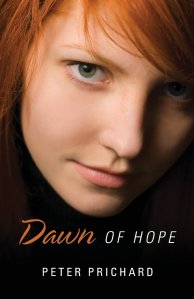
Saturday Book Review: “Dawn of Hope”

Book reviews are a great way for self-publishing authors to gain exposure. After all, how can someone buy your book if he or she doesn’t know it exists? Paired with other elements of your book promotion strategy, requesting reviews is a great way to get people talking about what you’ve written.

When we read good reviews, we definitely like to share them. It gives the author a few (permanent) moments of fame and allows us to let the community know about a great book. Here’s this week’s book review, courtesy of Fallen Over Book Reviews:

61LBTNg0FPL

Dawn of Hope

by Peter Prichard

Publisher: Outskirts Press

ISBN: 978-1478746942

Synopsis:

“Excuse me, young lady. We have the ambulance on their way, and they want to know what happened to Drew Winston.” “He said he was going to do me good,” Dawn replied purposefully to the administrative assistant in the high-school office. “I wanted to make sure that everyone in this school knew that would never ever happen.  I pushed him away and tripped him, and as he fell, he hit his head on the corner of a water fountain, which was not my intent. He’s bleeding from his head and is in convulsions.”

Within twenty-four hours of beginning her senior year at Fair Shore High School as a new student, Dawn Mortenson had chosen to fight the town’s acceptance of the bullying and sexual abuse of young women by confronting Drew Winston, the school’s All-American quarterback. Following that confrontation, she received multiple death threats, so her mother had to hire a security firm to protect herself and her daughter. That move did not work, as Dawn was kidnapped soon afterwards and ended up in the hospital.

When Dawn had been released from the hospital, she had already gained a national reputation, which attracted more people who wanted her dead. She survived the bombing of a building she was visiting, which prompted FBI involvement. She stunned the agent who interviewed her, when in answer to his question about people who would like her killed, she was able to provide evidence of over fifty individuals who had specifically threatened her-including a police officer from her hometown, who had told her that he hoped the next attempt on her life would succeed.

Dawn also clashed at times with those who even supported her efforts. A reporter in town had presented himself as someone who wanted to help. In describing why the culture of rape, bullying, and abuse has been tolerated in town, he ended with the statement, “Everybody is seen as winning, male and female alike. It is a great American success story. Fair Shore residents have paid top dollar to join the winning team and are disinclined to raise any questions about the unsavory practices that support its continuation. There is a feeling that ‘boys will be boys.'”

In response, Dawn exploded, “And you choose to support this? Goddamn you. Goddamn all of you. Let’s only hope, Mr. Bruschi, that the success of this ‘everybody-wins’ model spreads to towns all across America. Let’s only hope that, within a few years, tens of thousands of young women can be treated the Fair Shore way and be raped without comment, so that ‘boys can be boys.'” As she turned and headed toward the door, Joseph moved quickly to stop her. “Dawn, don’t leave.” “Go to hell. I thought there was hope with you because of some of the writing you’ve done. That series you did on the woman who overcame severe automobile injuries and resumed her career as an engineer after everybody said she would never work again was powerful.” “She is a remarkably brave young lady.” “And there are a lot of them out there, but your silence is ensuring that they will have to fight that much harder to create the stories they were born to tell.”

Dawn’s battle against the status quo lands a number of friends and enemies either in the hospital, in jail, or in an early grave. She uses rock-and-roll through befriending high-school band members who write their own lyrics that challenge the status quo, along with a combination of personal courage and mental toughness, to change the town forever, although at a huge personal cost.

Critique:

When I started this book I was really getting into and I found myself not putting it down but as I continue reading than I started slowing down. I am not sure why but it became not as interesting to me.  I think maybe because of so many situations that Dawn found herself in it was like really this is happening to her again?

Dawn moved into a new town where football is the big thing in that town. When she is confronted by the star of the football team this is what starts the roller coaster ride. There is more to this town than meets the eye it seems they don’t mind how their football players act because the football team is the best. Dawn doesn’t agree with this and brings their actions to the forefront of everything which in turn makes her a target. Now the way Dawn talked at times and handled situations she didn’t come across as a teenager more like an older adult, which I guess is what the author wanted to go for.

Some of the scenes were like wow and the way it was handled I felt was very grown up for Dawn.

Now Dawn and her mother have a wonderful relationship and I was very impressed with how her mother was behind every decision Dawn decided to make. Though there was one scene that I didn’t really understand why her mother acted that way. Just her anger towards Dawn for voicing her concern really bothered me. I did enjoy how Dawn built people up and voiced her opinions on things but did it in a way that made people look up to her and wanted change. When everything goes down Dawn sees who her true friends are and who are just there to make a name for themselves through her.

I plan on reading book two to see what else will Dawn be doing and how she will be changing towns and the maybe the world with her ideas and opinions.

[ reviewed by Autumn of Fallen Over Book Reviews ]

Here’s what other reviewers are saying:
Peter Prichard’s Dawn of Hope, is a compelling much needed political treatise masking as a debut novel. He is not so much a master storyteller as he is a veteran activist shouting from a platform. The drama in Dawn of Hope is the little bit of sugar sure indeed helps the medicine go down.

In the tradition of novels like Uncle Tom’s Cabin, Prichard addresses some of the major social injustice issues of our time. Dawn Mortenson, the novel’s heroine battles issues of sexual abuse and violence at in personal, social and political settings of early 21st century America. To do so Prichard’s narrative arc runs through a wealthy suburban Connecticut town, corporate America, NPR and the liberal activist community in its wake This project takes in a great, great deal in nearly 200 pages. Whew.

Part novel, part opera, Dawn of Hope leaves little to the imagination. Dawn, and the other actors in this drama, are clearly drawn with their talents and flaws on full display. The good ones are really good, and the bad ones are insufferably bad. While its hard to imagine any one person being just like Dawn, she is nonetheless a compelling compilation of other young women who have suffered the slings and arrows of outrageous sexism. Throughout the novel Dawn is often bloodied (literarily and figuratively) but she is never bowed. A relentless upward arc that pulls the reader along.

At the end, I was left with the sense we just might have the beginnings of a super heroine series on our hands. Dawn Mortenson can certainly take on other adversaries in the cause of social justice. Prichard now needs to find other settings for her immeasurable talents.

Those who care about gender bias, sexual abuse and social justice won’t be able to put Dawn of Hope down; those on other side of the aisle may have difficulty picking it up. No matter. The encouragement and the inspiration provided to those who do read it may just propel us to a better world.

– Amazon Reviewer Douglas Ferguson

Dawn of Hope is a solid read about an inspiring young woman who is extremely courageous and mature beyond her years. Her keen insight and self awareness enables Dawn to have a positive impact on society and those around her. Kudos to Dawn for embracing her power!

The first half of the book was a page turner and I felt very invested in Dawn’s story. The second half of the book was jam-packed with action and messages, but for me, there were too many fantastical turn of events, so it was hard to keep believing in the awesome idea of Dawn. Perhaps stretching Dawn’s story out over a longer period of time will recharge my early excitement about Dawn – I’m eager to read Prichard’s sequel for this very reason. Tackling many social issues and influences in one small book is an enormous task. Hopefully, by introducing Dawn of the Tobacco Wars and beyond, Prichard can build depth around his many brilliant ideas and continue to make Dawn a relatable heroine.

An excellent first book. I suspect Prichard’s books are going to get even better over time.

– Amazon Reviewer Ex-Hack
Virtual Book Tour

saturday self-published book review

Thanks for reading!  Keep up with the latest in the world of indie and self-published books by watching this space every Saturday!

Self Publishing Advisor

selfpubicon1