In Your Corner : Do I need a ghostwriter?

How do you know if it’s time to seek out a ghostwriter to help you complete your book?  And what all is involved in the process of ghostwriting, anyway?  Is it really any different from detailed copyediting?

If you’re asking these questions, I hope what I write here will help to answer at least a few of them.

As with any writing venture, ghostwriting is a unique experience that presents unique challenges in addition to unique benefits.  You won’t ever find me pretending otherwise, just as you won’t find me beating around the bush when it comes to recommending a thorough and professional edit of your manuscript once it’s been written––and just as I held no punches when I worked to draw a dividing line between copyediting and proofreading in my blog post two weeks ago.

So, what is ghostwriting?  It is, according to the “Publishing” page on About.com, “the practice of writing for and in the name of someone else. It is most commonly associated with book publishing, but today it is also widely used in public relations, corporate communications, social media, and many other industries and fields that are producing greater and greater amounts of written content.”  Many of our most prolific “superstar” genre specialists, like John Grisham and Tom Clancy and Nora Roberts (and so on and so on to infinity) employ a combination of understudies, assistants or secondary writers, and ghostwriters.  They are called upon to generate, quite simply, too much material for a single human being to keep pace.  But many if not most niche storytellers––whether famous or indie, traditionally published or self-publishing––lead hectic and busy lives that keep them from writing the books that they want to.  We just can’t ignore the fact that self-publishing authors deserve to know that there is another option out there for them!
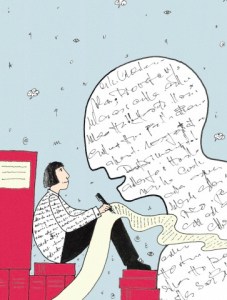
ghostwriting

The process is relatively simple: most ghostwriters work on a contract or freelance basis for companies like Outskirts Press, so the fastest way to get yourself set up with an accomplished and expert ghostwriter is to go through one of these established websites.  Perhaps the best reason of all to go with someone who has been vetted and proven trustworthy is this: ghostwriting is, at its core, a collaborative venture between you (the author) and your ghostwriter.  How you choose to work depends more on you and what your vision for a piece demands than it does on time constraints, or one hopes for such a truth in a perfect universe.  (Being too rushed for time to go it alone is a wholly valid reason to hire a ghostwriter!)

Ghostwriting has been around awhile.  Long enough, in fact, that industry supergiants like Forbes have taken a look at it––and, circling back to my comment about collaboration:  In this article for Forbes, contributor Sydney LeBlanc writes that “you can turn [your] entire book project over to the writer (research and writing) or you can provide research, notes, periodicals, etc that will help the writer.”  That’s one option, but “You can also have regular ‘interviews’ with the writer who will take notes or record conversations with you about the topic. The writer will write draft chapters for you to review, edit, or make suggestions.”  LeBlanc says that, ultimately, “There are many ways to work with a ghostwriter; it all depends on what is convenient or best for you and what is in your budget.”  (Emphasis mine.)

Hopefully this is enough to convince you that seeking out a ghostwriter is a simple and easy thing to do, and that therefore we can move past one of several possible obstacles to taking that course of action!

(PERSONAL ASIDE & RANT: Enough with the stigma, already!  Everyone’s writing method looks different, anyway, so why do we feel guilty over choosing to bring someone else in on the process?  Let’s celebrate diversification through collaboration rather than taking ghostwriting as a marker of a lack of creativity!)

So, how do you know it’s time to start researching ghostwriting as a viable option for your book?  Well, here’s a simple rule of thumb: if you can answer all or even most of the following questions with “yes,” then it might be time:

  1. Are you overworked, overstressed, or overcommitted?
  2. Do you have a story to share?
  3. Do you need a little help developing your ideas beyond the outline or draft stage?
  4. Do you believe in artistic collaboration?
  5. Can you trust the ghostwriter you pick to do justice to your vision?

Here’s where ghostwriting diverges from that other industry-specific term, “copyediting” : a copyeditor’s job is to take a finished draft and polish it up for final publication.  A thorough copyedit involves more than just shuffling commas around, but it won’t substantially change the core content of a piece.  Ghostwriting, on the other hand, involves the conceptualization and generation of a great deal of new material.  Your ghostwriter becomes your collaborator and your partner in crime, your sounding board and scribe.  Ghostwriters become folded into your stories, and it is in their best interest as paid professionals to deliver the best service they can––but if you’re both lucky, your ghostwriter might even become your ally and friend.  And what could be better than that?  Writing can be such an isolating experience, but I’d like to assure you as I do each and every week:


You’re not alone. ♣︎

ElizabethABOUT ELIZABETH JAVOR: With over 18 years of experience in sales and management, Elizabeth Javor works as the Manager of Author Services for Outskirts Press. The Author Services Department is composed of knowledgeable publishing consultants, pre-production specialists, customer service reps and book marketing specialists; together, they all focus on educating authors on the self-publishing process to help them publish the book of their dreams. Whether you are a professional looking to take your career to the next level with platform-driven non-fiction or a novelist seeking fame, fortune, and/or personal fulfillment, Elizabeth Javor can put you on the right path.

Weekly Self-Published Book Review: “The Rocky Road of Love”

Book reviews are a great way for self-publishing authors to gain exposure. After all, how can someone buy your book if he or she doesn’t know it exists? Paired with other elements of your book promotion strategy, requesting reviews is a great way to get people talking about what you’ve written.

When we read good reviews, we definitely like to share them. It gives the author a few (permanent) moments of fame and allows us to let the community know about a great book. Here’s this week’s book review, courtesy of the Midwest Book Review:

Rocky Road of Love

The Rocky Road of Love

by Vernon Hosannah

Publisher: Outskirts Press

ISBN: 9781478742555

Synopsis:

Are you ready for an outing with our favorite two organic materials, Rocky and Sandy? Rocky is a large boulder-a strong, silent type with rugged, chiseled features-who lives by the water’s edge. Sandy is a lovely tropical coast, a free spirit who is always changing. The Rocky Road of Love is the humorous tale of how Rocky and Sandy meet, fall in love, and weather the storms of life. It’s an enjoyable read for both children and adults, who will each will take something away from the experience..

Critique:

The Rocky Road of Love is a witty, allegorical tale about a marriage relationship that can be enjoyed by both children and adults. The marriage partners are Rocky, a huge boulder, and Sandy, a beautiful beach where Rocky stood. As relationships go, theirs was a case of opposites attract. Rocky was steady and stable, Sandy was ever-changing and fun-loving. Serious differences between the pair nearly caused a separation or divorce, but the land commissioner (their counselor) told them that they had no grounds. Both Sandy and Rocky learned to appreciate each other’s qualities and Sandy got Rocky to go along with having a beach party for fun. This began as a fun event but ended as a cleanup project, and the fun component became a liability instead. Sandy and Rocky eventually had children together, baby rocks and pebbles, and enjoyed a long lasting marriage with many good qualities and moments of celebration. The adults who read “The Rocky Road of Love” will enjoy all the puns and nuances, while the children will learn about compromise and celebrating differences in relationships. The prose style and language is carefully presented on more than one level, which makes for an entertaining tale for multiple generations.

reviewed in the Children’s Bookwatch ]

Here’s what some other reviewers are saying:

Wow! Another great book from Vernon Hosannah! This book is great for both children and adults. I read it to my kids and they LOVED it! I also took away some valuealbe lessons. What a phenomenal read!.

– Amazon Reviewer Kassie

A sweet, sweet tale. Nicely written. Great illustrations. Pick it up!.

– Blogger Niki


Thanks for reading!  Keep up with the latest in the world of indie and self-published books by watching this space every Saturday!

Self Publishing Advisor

selfpubicon1

Weekly Self-Published Book Review: “Handwriting Analysis: Discover Your Own Vocational/Career Potential”

Book reviews are a great way for self-publishing authors to gain exposure. After all, how can someone buy your book if he or she doesn’t know it exists? Paired with other elements of your book promotion strategy, requesting reviews is a great way to get people talking about what you’ve written.

When we read good reviews, we definitely like to share them. It gives the author a few (permanent) moments of fame and allows us to let the community know about a great book. Here’s this week’s book review, courtesy of the Midwest Book Review:

handwriting analysis by dewitt

Handwriting Analysis: Discover Your Own Vocational/Career Potential

by David J. DeWitt

Publisher: Outskirts Press

ISBN: 9781478729396

Synopsis:

Handwriting Analysis: Discover Your Own Vocational/Career Potential offers a new perspective not found in conventional books on Graphology. David J. DeWitt links handwriting analysis with professional satisfaction and instructs the reader in the analysis of their own handwriting. It is not uncommon for individuals to labor a lifetime in an occupation that they truly dislike or to which they are, at best, indifferent. Or they might move from job to job multiple times, desperately seeking a ‘career’ that is edifying. Moreover, young people just entering a sparse job market might find that they have little idea of occupations that could be personally and professionally rewarding to them. Handwriting Analysis: Discover Your Own Vocational/Career Potential will help direct the reader to determine their own career potential in order that they may make the best career choice fit their personality.

Critique:

A professional graphologist and certified graphoanalyst, David J. DeWitt draws upon his many years of experience and expertise to write Handwriting Analysis: Discover Your Own Vocational/Career Potential. Exceptionally well written, organized and presented, Handwriting Analysis: Discover Your Own Vocational/Career Potential is very highly recommended to students and practitioners of handwriting analysis, and is ideal for the non-specialist general reader with an interest in the subject.

reviewed in the Small Press Bookwatch ]

Here’s what some other reviewers are saying:

Handwriting Analysis: Discover Your Own Vocational/Career Potential by David J. DeWitt GA is a great addition to anyone’s bookshelf. It is written in a textbook form. It has room at the bottom of pages for you to make notes or to do some of the activities he shares with you. It has examples, charts along with black and white drawings that are used to promote personality tests to match specific personality types to viable occupations. This is a real fun and instructive guide for high school and any one else who is looking for their area of career choice. This book will help you unlock your potential but it would be up to you to do everything else. Your handwriting may just surprise you as mine did me. I enjoyed it. I gave this book 5 stars but wish I could give it more. I highly recommend it to everyone. I look for more from David J. DeWitt GA..
.

– Amazon Reviewer Coco

This book provides an extremely clear and practical application to career selection based on what handwriting reveals about one’s thinking style and aptitudes.

As the author notes, handwriting analysis has graduated from parlor entertainment to a professional tool used in personality analysis, hiring evaluations, jury selection and others. This book offers the reader a method of using those same techniques as a personal tool.

I have had the pleasure of taking a similar course from Mr. DeWitt and can testify to his knowledge of Graphoanalysis, the clarity of his explanations and his ability to integrate the analysis with career choice evaluation. His book evidences all those same qualities.

– Amazon Reviewer Bluemax98


Thanks for reading!  Keep up with the latest in the world of indie and self-published books by watching this space every Saturday!

Self Publishing Advisor

selfpubicon1

From the Archives: “SELF-PUBLISHING: THE NEW AMERICAN IDOL”

Welcome back to our new Tuesday segment, where we’ll be revisiting some of our most popular posts from the last few years.  What’s stayed the same?  And what’s changed?  We’ll be updating you on the facts, and taking a new (and hopefully refreshing) angle on a few timeless classics of Self Publishing Advisor.

∗∗∗∗∗

[ Originally posted: February 4th, 2009 ]

Seeing Jennifer Hudson sing the National Anthem at the Super Bowl reminded me of the recent article in the New York Times about the self-publishing industry, which received a lot of attention and has sparked ongoing controversy.

In spite of all evidence to the contrary, it appears conventionally published authors (and those striving to become such) still view self-publishing services with contempt because they feel authors are “cheating” somehow. After all, getting a book published traditionally is “hard work.”  Those who have done it (or long to) perhaps feel as if self-published authors haven’t paid their dues.

But are they really cheating, or are they simply taking advantage of wide-spread changes occurring  throughout the entertainment and business worlds?

Let’s examine other industries:  The same Do-it-Yourself (DIY) fever is sweeping through the music industry. Or, to be more accurate, has already swept through the music industry.  Talented musicians are no longer waiting for acceptance from the “establishment” and instead, are distributing their music through iTunes, finding their audiences through Myspace, and broadcasting their music videos via YouTube.   It is safe to say the music industry has irrevocably changed.  Musicians no longer give 95% of their royalties to the “industry” and customers no longer buy CDs from brick-and-mortar music stores.

Are these musicians cheating? No. They are still paying their dues, but now the invoice comes after their music has already become available. They still must market aggressively to obtain listeners, but at least they have something to market.   The audience determines which of those musicians succeed and which of them fail.

This is no different from the self-publishing book industry.

I think it is safe to say that “becoming a rock star” is a dream that almost everyone can acknowledge, if not personally identify with; although if the ratings for American Idol are any indication, it might actually be a dream nearly everyone can identify with, too.

Other common dreams are “becoming an actor,” “becoming a model,” “becoming a professional athlete,” and yes, even “becoming a published author.”

Can you imagine the uproar that would ensue if all that was required to start playing for the New York Knicks was writing a check for $1000 to some internet company? Can you imagine the fervor if all that was required to obtain a recording contract was standing in line at some reality show try-out?  Wait a minute!  That’s already happening. Reality television has altered the search for “talent” and now, in rare instances, getting “discovered” is no harder than filling out an application. Nowadays, instead of submitting audition tapes to countless producers, lyricists stand in line and face the possibility of public humiliation at the hands of Simon, Paula, and Randy.

This is no different from the self-publishing book industry.

Is this “cheating,” per se, or has the do-it-yourself mentality simply removed unnecessary hurdles that prevented talent from being discovered faster? You see, talent is the one common denominator and talent cannot be purchased. Cast members of Survivor have their fifteen minutes of fame and then disappear back into the abyss. The try-outs for American Idol feature thousands upon thousands of “hopefuls” standing in lines around city blocks and yet the main competition is comprised of just a handful.  Most had their opportunity to shine, and their audience rejected them. But at least they received a shot.

As the New York Times article states, self-publishing companies are thriving, and that is because we give writers their shot, their fifteen minutes, their chance.  We are American Idol for writers. We make it easy to publish a book. If “publishing a book” is your dream, you’re going to be happy with the result.  And if your dream is to be successful, famous, rich, or a combination of the three, you’re going to receive your chance, but just like everyone else who is successful, famous, or rich, you are going to need to bring something special to the table.

Most reasonable people recognize this. Those who don’t may become disillusioned, but listen – if it were easy to become a bestselling author, a multi-platinum recording artist, a player for the New York Knicks, or a highly-sought-after runway model, then everyone would do it.

Just because iTunes makes the distribution of music easy doesn’t mean every artist is going to become a success overnight. And just because standing in line for American Idol is easy doesn’t mean all those people are going to win an Oscar and sing the National Anthem for the Super Bowl.   Lord knows there is only one Jennifer Hudson.  American Idol didn’t make her a success; talent pours from her soul. She would have found success tripping through the dark blindfolded.  But American Idol shined a light on her, and she reflected back.

Self-publishing companies shine a light on writers.  It is the writer’s job to shine back. Some authors do, like Gang Chen, who earned over $39,000 in royalties from Outskirts Press in the 4th quarter of 2008. That’s $13,000 a month. Has his book sold a million copies? No. Is he making a lot of money as a self-published author?  Yes. By any reasonable benchmark, Gang Chen is a successful self-published author who has given specific permission to have his successes shared.

And this brings me to my last point.  All publishing companies are different, just like all writers are different, and just like all contestants on American Idol are different.  Success is never guaranteed. But if you are going to self-publish your book, you’re better off publishing with a company where your chances for success increase.  Above all, you have to believe in yourself and you have to work hard. Success rarely comes easily for anyone, but now, thanks to self-publishing companies, everyone has an equal chance. We’ll shine the light on you. What you do with that light is up to you.

football fan

Six years on, Brent’s words still hold true.  As with many other career fields and endeavors in life, indie and self-publishing authors often suffer from what psychologists call “Imposter Syndrome.”  In an excellent piece (“Imposter Syndrome, and What it Means to be an Adult”) for the journal Humanist back in 2014, Greta Christina defines imposter syndrome as “a condition where accomplished people see themselves as frauds, as not deserving of success or recognition, despite significant evidence to the contrary.  I think imposter syndrome can apply to more than just career accomplishments.  I think imposter syndrome can apply to every aspect of life, and our ability to navigate it as adults.”  She goes on to discuss the importance of rites of passage and rituals as signposts on our way to self-acceptance and self-realization.  Now, Greta Christina is approaching imposter syndrome as a humanist and not as someone specifically interested in self-publishing, but her words resonate.  Indie, hybrid, and self-publishing authors are often (still) perceived as or perceive themselves as newcomers, aliens, or interlopers in the grand publishing sphere.  And yet–and yet–the data shows that self-publishing is a fully respectable and increasingly respected niche.  It’s so pervasively utilized by authors and readers alike that I even struggle to call it a niche.

So how do we change perspectives on self-publishing?  How do we change the interior experience, the actual inhabited day-to-day emotions of being a self-publishing author?  Well, if we listen to experts like Greta Christina, we invent ourselves some rites and rituals.  Recognizing an unhealthy line of thought (such as, “I’m not a real author,” or “I’m only a self-published author”) and then combating it actively with positive (and true) rebuttals (“I am absolutely a real author!” or “I’m so excited to be a self-published author!”) is not just a ritual … it’s a necessity, like breaking any other bad habit.

So here, at the end of this archival revisitation, is my suggestion for a new daily ritual–

Repeat after me: I have to believe in myself and I have to work hard. 

Say it again and again, until you believe in it.  I believe in you. ♠

KellyABOUT KELLY SCHUKNECHT: Kelly Schuknecht is the Executive Vice President of Outskirts Press. In addition to her contributions to the Outskirts Press blog at blog.outskirtspress.com, Kelly and a group of talented marketing experts offer book marketing services, support, and products to not only published Outskirts Press authors, but to all authors and professionals who are interested in marketing their books and/or careers. Learn more about Kelly on her blog, kellyschuknecht.com.

Weekly Self-Published Book Review: “Small Government My A**”

Book reviews are a great way for self-publishing authors to gain exposure. After all, how can someone buy your book if he or she doesn’t know it exists? Paired with other elements of your book promotion strategy, requesting reviews is a great way to get people talking about what you’ve written.

When we read good reviews, we definitely like to share them. It gives the author a few (permanent) moments of fame and allows us to let the community know about a great book. Here’s this week’s book review, courtesy of the Midwest Book Review:

Small Government My A**

Small Government My A**

Kevin Loesch

Publisher: Outskirts Press

ISBN: 9781478739036

Synopsis:

The new generation of freedom is here! In his debut book, Kevin Loesch tackles various issues affecting the United States today from a unique point of view. From the Constitution and Bill of Rights, to social issues, Loesch holds nothing back in his fight with the conservative wing of the Republican party and what they get wrong or don’t understand from a Libertarian point of view. You will find out why some of their policies conflict not only with their stances or claims against small government into people’s personal lives, but that of the Founding Fathers as well.

Critique:

The debut political book by Colorado editorialist Kevin Loesch, Small Government My A**: Things Conservatives Say & Do That Aggravate Libertarians is a sharp criticism of the conservative wing of America’s Republican party, from a Libertarian point of view. No topic is too hot to touch; Loesch discusses legalizing drugs and how the “war on drugs” has overcrowded the prison system; why he regards whistleblowers such as Chelsea Manning, Edward Snowden, and Julian Assange as heroes; why America needs separation of church and state and why conservative’s efforts to undermine that division are misguided and harmful; why he feels conservatives are not serious about balancing the budget; and much more. Whether one agrees with Loesch’s views or not, he makes compelling, reasoned, and snappy arguments, worthy of extended contemplation. “It is a shame that more Republicans aren’t like Amash or Ron and Rand Paul. If they were truly concerned about the out of control spending, they would cut military spending as well. As I stated earlier, the United States does have a huge spending problem, especially when it comes to the military, which dwarfs the rest of the world.

reviewed by Susan Bethany ]

Here’s what some other reviewers are saying:

While author Kevin Loesch bashes both major political parties in the United States in Small Government My A**, the majority of his fire is directed at the Republicans. His position is that of a strong libertarian and his arguments against Republicans are based on their deceptive hypocrisy. Republicans spout their rhetoric against big government while repeatedly voting for the expansion of government, passing bills such as the Patriot Act that effectively eliminates many constitutional rights. Loesch also criticizes liberals about expanding the role of government, but as he states it, “At least they are honest about it.”

The libertarian point of view is, unfortunately, one of the few in the United States that is voicing objections against the expansion of government power and the march towards involving the country in even more foreign entanglements. Loesch is a big fan of Ron Paul, describing some of his positions as well as the flak Paul took when he said things like advocating the pulling of American troops out of countries such as Japan and Germany. Loesch directs the fiercest ire against the George W. Bush administration and the wars in Iraq and Afghanistan. On occasion he defends President Obama over the mess he inherited from the Bush administration, but only a little.

In many ways the libertarians and Loesch are political idealists in the sense that they are right, but they are battling enormous political opposition heavily entrenched in both major parties. Since he attacks both major parties, there are things in this book that both sides will like and others that they will dislike. He states many things that are the way things should be. Unfortunately, in the given political climate and the continued fear-mongering atmosphere, the liberties that have been lost are likely gone forever.

Reader’s Favorite Reviewer Charles Ashbacher

A MUST READ PAGE TURNER! THE FIRST BOOK BY THIS NEW AUTHOR IS PROVOCATIVE, CONTROVERSIAL AND DISTURBING. IT MAY CHANGE THE READER’S VIEW ON WAR, POLITICS AND JUSTICE. THIS SHOULD BE REQUIRED FOR EVERY THINKING PERSON’S LIBRARY. IT WILL BE DISCUSSED FOR YEARS TO COME. DON’T MISS THIS ONE AND LOOK FORWARD TO THE NEXT BOOK BY THIS GIFTED AUTHOR.

Amazon Reviewer james w michon

Outskirts Press also released a book trailer for Loesch’s book, found here:


Thanks for reading!  Keep up with the latest in the world of indie and self-published books by watching this space every Saturday!

Self Publishing Advisor

selfpubicon1