In Your Corner : Celebrate National Reading Month With These Marketing Tips! (part four)

Exactly three weeks ago, I started us off on a month-long exploration of what I revealed to be one of my favorite subjects–the intersection of reading with writing and publishing–in light of the fact that the month of March is National Reading Awareness Month here in the United States.  I continued my series two weeks ago and last week with a number of additional ways in which you, the indie or self-publishing author, can take advantages of the resources on offer to bolster both your existing writing methods and your book sales.  This week, I would like to invite you to continue in joining me in making reading a focus all month long, here in our Thursday blog post slot.  We may have one more week left in the month of March, but I’m holding nothing back–you get only the best of the best, my absolute top tips, here today! 

TIP TWELVE : Give your blog or website a face lift

If you already have a blog or website where you have been promoting your book in advance of its release, there’s no better time than the present to refresh the look and feel or add content.  And by “refresh,” I don’t just mean a couple of small tweaks or optimizations here and there–I mean a complete overhaul.  As in all things, the self-publishing author must demonstrate full willingness to meet readers where they live, rather than expecting them to stumble across one’s book by happenstance.  There are no (or at least, very very few) happenstances in the publishing industry, since everyone and their lawyer is out to make a profit off of gaming the system.  You don’t want to play your readers–in fact, you want to be wholly honest and authentic at all times–but you do want to show them that you care enough about them to design a website or a blog that meets their needs and outperforms their expectations.  Think big, not small, and make sure your site is inviting and reflects who you are as a writer.  

facelift

TIP THIRTEEN : Play well with others

It should come as no surprise that I’m an advocate for sharing.  After all, I didn’t ignore every single admonition to play well with others when I was a child–some of that well-intentioned parental advice rubbed off.  But in the world of self-publishing, there’s nothing more powerful than sharing!  It’s not just a “good idea”–it’s a vital and impactful way of reaching new readers.  The first step to sharing promotions with other indie authors is one of logistics and networking: I recommend getting started by connecting with other independent authors whose work compliments yours or who live nearby.  Local writers’ groups are a fantastic resource for this!  From there, you can discuss how best to share advertising in your local media to promote your books and events.  Sharing an event with another writer is an excellent way to generate more interest among venues and readers.

sharing

TIP FOURTEEN : Take the Grand Tour

In years gone by–that is, from the mid 1600s to the mid 1800s–it was the custom of the European and American elite to send their children on the Grand Tour of the European continent and parts of Asia Minor and Northern Africa.  The point of the Tour was to expose people of taste to the primary object of their taste–the cultural legacy of the West.  But there’s a far better Grand Tour which you can partake in as an indie author!  There are dozens upon dozens of prime opportunities for promoting your book throughout the year outside of your homeland, including the London Book Fair, BookExpo America, Beijing Book Fair and the Frankfurt Book Fair.  But who, you may ask, has the time or money to do that?  Self-publishing may be a recourse for those of humble budgets, but it is also a haven for ingenuity and creative thinking.  You don’t need to stress if you don’t have the time (or money) to travel the world this year: a number of self-publishing companies, including the one I work for (Outskirts Press) offer the opportunity to represent your book at any (or all) of these events throughout the year.  There is usually still some sort of cost associated with this project, of course, but it is a dramatic reduction on what you might pay individually to travel to these places, register for display space and lodging, and for marketing materials.  Just a thought: you can be a world travel vicariously through your book!

That’s it for this week, but I’ll be back next Wednesday with some final tips and ways forward!  And …

… always remember: you are not alone. ♣︎

ElizabethABOUT ELIZABETH JAVOR: With over 18 years of experience in sales and management, Elizabeth Javor works as the Manager of Author Services for Outskirts Press. The Author Services Department is composed of knowledgeable publishing consultants, pre-production specialists, customer service reps and book marketing specialists; together, they all focus on educating authors on the self-publishing process to help them publish the book of their dreams. Whether you are a professional looking to take your career to the next level with platform-driven non-fiction or a novelist seeking fame, fortune, and/or personal fulfillment, Elizabeth Javor can put you on the right path.

In Your Corner : Celebrate National Reading Month With These Marketing Tips! (part three)

Two weeks ago, I started us off on a month-long exploration of one of my favorite subjects: the intersection of reading with writing and publishing, a journey that I continued last week in honor of National Reading Awareness Month.  I said it then but I think this bears repeating: here at Self-Publishing Advisor, we love the fact that there’s an entire month devoted to celebrating the written word–as well as the ways in which we can spread the joy of literacy–and so I would like to invite you to continue joining me in making reading a focus all month long, here in our Thursday blog post slot.  How am I going about that?  Well, for starters, I’m running down my go-to list of tips and tricks for the new and ingenue self-publishing author.  This week, I’ll be starting with …


TIP EIGHT : Craft a “keep in touch” plan

Last week, we examined the benefits to putting together an active mailing list and/or using a Facebook group to keep in touch with your readers through direct messaging.  But what’s next?  Once you have put together your active mailing list, you’ll need to decide how you want to keep in touch.  And by “how,” I’m talking about the content and quality of your communication, not just the platform.  One thing is absolutely, unarguably true: over-sharing can prove more toxic to your message than bad grammar and condescension put together.  I highly recommend that you find a reasonable frequency–for example, a monthly newsletter–to touch base with your readers.  You can write about topics related to the genre of your book or other similar books that you think your readers would enjoy, or you can stick to more of a “behind-the-scenes” glimpse into your writing process, if you feel like you have enough to share without spoiling the reading experience itself.  If you plan on publishing multiple books–say, in a series–your followers would no doubt love updates on the status of each upcoming book, the research you’re doing or interesting things you’ve discovered during the writing process.  Give them just enough to whet their appetite, but not so much that they feel like they have to sift through an essay to find the important facts!

keep in touch

TIP NINE : Go to the Press

And by that, I mean: It’s time to start thinking about putting out a press release.  Any time you have important news to share about your book–such as announcing its publication, the advent of a book signing event, or spreading the news about an award it has won– you should definitely look to your local newspapers, radio stations, and other media sources … but this shouldn’t preclude you from looking further afield, to national media outlets and popular blog sites, for example.  You can use online press release distribution sites or try contacting your local newspaper as a first step, and if you’re working with a hybrid or full-service self-publishing company you should definitely check out their list of marketing options.

press release

TIP TEN : Get your next manuscript off the drawing board

Hollywood scriptwriters and directors often talk about “development hell,” but this term isn’t the exclusive property of the rich and/or famous: it applies to authors of all kinds, too!  We all know the dangers and struggles facing us in the form of the dreaded Writer’s Block, so if you’re ready to start publishing–or you’re getting close–you should definitely try to give yourself the necessary kick in the pants necessary to put the finishing touches on your manuscript and start the publication process today.  Delay hurts no one more than you, and that’s the truth!  Many companies offer publishing packages or offer the services of a Publishing Consultant to assist with this process, and sometimes a little help really is necessary.  There’s no shame in turning to a professional for help if it means your book gets off of the drawing board and into the hands of your readers!

drawing board

TIP ELEVEN : The book must be blogged!

An oft-overlooked component of a successful marketing strategy is the beloved book blogger.  We love them, we read their posts, but we don’t often think of them as partners in our journey to publication.  But they are!  They really, most definitely, can give your book a boost in visibility.  So, my last tip is more of a suggestion, really: Find those book bloggers you need to increase the exposure to your book.  Check out websites such as BookBloggerList.com to find bloggers interested in the genre of your book, and look to the book bloggers you personally admire and find readable.  Find out which bloggers would be open to reading and reviewing your book and contact them–or vice versa.  You might even get a link to your website or your Amazon book page out of it!

I’ll be back next week with some more tips!  And …

… always remember: you are not alone. ♣︎

ElizabethABOUT ELIZABETH JAVOR: With over 18 years of experience in sales and management, Elizabeth Javor works as the Manager of Author Services for Outskirts Press. The Author Services Department is composed of knowledgeable publishing consultants, pre-production specialists, customer service reps and book marketing specialists; together, they all focus on educating authors on the self-publishing process to help them publish the book of their dreams. Whether you are a professional looking to take your career to the next level with platform-driven non-fiction or a novelist seeking fame, fortune, and/or personal fulfillment, Elizabeth Javor can put you on the right path.

In Your Corner : Celebrate National Reading Month With These Marketing Tips! (part two)

Last week, I started us off on a month-long exploration of one of my favorite subjects: the intersection of reading with writing and publishing!  It’s almost too easy, given that March is National Reading Awareness Month, too.  And as I said last month: here at Self-Publishing Advisor, we love the fact that there’s an entire month devoted to celebrating the written word–as well as the ways in which we can spread the joy of literacy–and I would like to invite you to continue joining me in making reading a focus all month long, here in our Thursday blog post slot.  


March may not typically be a month you think of to get started on a major project, or finish pushing said project through the publishing pipeline, but really, there’s no better time: the weather is getting warmer but where I live it’s still quite slushy and prohibitive to long road trips––perfect!  I always try to make use of this halfway-survivable weather to knock out some major projects while also taking some short local expeditions to my favorite spots in order to shake off the winter blues.

Sometimes, however, especially when I’m bouncing back from the Winter Blues, I find myself searching around a bit for a good starting point, or a way to pick back up the threads I dropped before the holiday frenzy set in, and before I got wrapped up in everything that follows (sending kids off to school, dealing with tax season, and so on).  So, I did a little brainstorming and came up with some more tips for kicking things back into gear, and making good on the potential promised by such an ambitious theme as National Reading Awareness Month!  (You can read my first four tips here.)

TIP FIVE : Ask for book reviews  

Research has shown that positive reviews makes a book sell better.  In fact, reviews written by people who have read your book often carry more weight than reviews by recognized experts!  Just think: the last time you went hunting for a new book to read, which held the most weight for you?  The blurb on the back cover?  Celebrity endorsements?  A four or five-star review on Goodreads and Amazon?  A really thorough and useful review on one of those sites?  Or word-of-mouth recommendation?  Most people would rank these metrics in reverse order, with one notable exception: a high star rating on Amazon and Goodreads is a defining factor between those people who click through to read reviews and those who keep scrolling on by.

So how do you get reviews?  We’ve written about them before here on Self-Publishing Advisor (here, for example) but in summary: be proactive.  Very few authors can rely on reviewers coming to them!  There are plenty of ways to drive book reviews, but the most important ones include offering giveaways in exchange for reviews, soliciting reviewers through easily-googled book review index websites, and simply asking for them.  You can ask for reviews even before your book is published by offering to send the reviewer a digital copy of your book.  The key to all of these interactions is not to come off as pushy or fake.  Reviewers tend to respond well to simple requests, either favorably or with regret at not being available.

USA, New Jersey, Jersey City, View across the shelf showing girl (8-9) reading book

TIP SIX: Request peer reviews

Remember how effective word-of-mouth recommendations are?  Well, another way to get the review ball rolling is to ask friends who have already read your manuscript to write a review.  Because they have a personal connection with you, the author, they’re far more likely to do so––and far more likely to become advocates for your book––if you ask them to take on official review duties.  Since writing these reviews can be time-consuming and they may suffer low confidence if they’ve had little or no review-writing experience, you might have a couple of really good sample reviews (of your book or someone else’s) on hand for them to look at.  That way, they’ll know some of the standard language used in reviews, and also get a sense for how diverse and unique each review can be!  The point of asking your peers to review your book is to get little pops of personality bleeding through the pixels of your Amazon book page––readers love the authenticity of a person who admits a real human connection to an author, and speaks honestly from that privileged position, with all the insight into the book’s backstory that they’re now privy to. 

Businessmen working together
TIP SEVEN : Create a mailing list or Facebook group  

Last but not least––for this week, anyway––you should actively seek out readers who might be interested in reading your book.  You are probably already doing this at both personal or professional meetings as well as at conferences, book club meetings, your kids’ Mother Goose sessions at the library, and so on.  The next step is to turn these casual conversations into something a bit more structured and organized; ask if you can send these potential new readers information about your book, then add them to your mailing list.  You can use the built-in mailing list features in desktop-based versions of Microsoft Outlook, or you can look to the Cloud and to web-based softwares like MailChimp.  I don’t necessarily think of social media as a substitution for these valuable programs, but you should also consider creating a Facebook group in addition to your mailing list, and take full advantage of the intersectionality of that platform––through Facebook alone, you can schedule events, send private messages and post public announcements, upload pictures, and find new readers.  Well worth a little exploration, I think!

Small Business Revolution - Bluegrass Youth Ballet

I’ll be back next week with some more tips!  And …

… always remember: you are not alone. ♣︎

ElizabethABOUT ELIZABETH JAVOR: With over 18 years of experience in sales and management, Elizabeth Javor works as the Manager of Author Services for Outskirts Press. The Author Services Department is composed of knowledgeable publishing consultants, pre-production specialists, customer service reps and book marketing specialists; together, they all focus on educating authors on the self-publishing process to help them publish the book of their dreams. Whether you are a professional looking to take your career to the next level with platform-driven non-fiction or a novelist seeking fame, fortune, and/or personal fulfillment, Elizabeth Javor can put you on the right path.


In Your Corner : What do I need to know about Co-op Ads?

For those of you who may be new to the indie publishing world, the co-op advertisement is an invaluable tool to add to your self-marketing toolbox.

But what is a co-op advertisement in the first place?  

As Dan Poynter of ParaPublishing notes, “Book promotion is expensive. The challenges are that books are a low-ticket item (they do not cost much so you have to sell a bunch to pay for the promotion), their subjects are targeted to a small group of people (an individual title is not needed by everyone), and there is no recurring consumption (customers do not buy a new copy of the same book every trip to the grocery store).”  (Emphasis mine.) What’s the answer?  As my grandmother used to say around the holidays, “Many hands make light work.”  And many authors can band together to amplify their individual advertising impact.

Simply put, co-op ads are a way for you to experience all the benefits of a large-scale print marketing campaign without the sponsorship of a major heavyweight Big Five publishing house, and without having to lay out a whole lot of cash to do so.

teamwork

You may already be aware of what all is involved in getting your book’s name and/or cover out there into national magazines and newspapers.  You may also be aware that print advertisements like the ones that run in the New Yorker and Ladies Home Journal are expensive!  One full-page advertisement in the New York Times book review section requires a person or company to shell out around $40,00o–and that’s fairly typical.  Many other journals, print magazines, and newspaper inserts are just as expensive.  And while the NYT doesn’t come cheap, it does reach around forty million readers–so the cost for reaching each of those readers is less than one-tenth of one cent.  This is a good deal, sort of.  Not many of us self-publishing authors have $40,000 just lying around in a duffel bag.  (And if we did, well, we would probably be dealing with far greater problems than a marketing campaign!)

Expensive as these ads are, they’re not beyond your reach.  Not if you choose to become a part of co-op advertising, which allows you to share premium exposure in household name magazines and periodicals with other self-publishing authors.  By doing so, you have access to all of the benefits of national marketing without having to bear the full burden of expense.

How do you get involved in co-op advertising?  You can always try to wrangle up something on your own, of course–with other, perhaps local, authors–but that’s a lot of money and hassle to manage.  Certain hybrid self-publishing companies, like Outskirts Press, offer a range of co-op options and possibilities.  Every company offers different options, of course, but Outskirts specifically offers the option to sign up for co-op advertising in the Boston Review, Publisher’s Weekly, Bookmarks and ForeWord magazines, and the New York Times Sunday Book Review.  The best part?  Co-operative advertising doesn’t drum up competition between authors.  As with many other aspects of the self-publishing process, Poynter believes that “it is easy to band together with compatible, non-competing products to lower costs, save time and gain more attention in the market place.”  Now that’s a message I can get behind!

Always remember: you are not alone. ♣︎

ElizabethABOUT ELIZABETH JAVOR: With over 18 years of experience in sales and management, Elizabeth Javor works as the Manager of Author Services for Outskirts Press. The Author Services Department is composed of knowledgeable publishing consultants, pre-production specialists, customer service reps and book marketing specialists; together, they all focus on educating authors on the self-publishing process to help them publish the book of their dreams. Whether you are a professional looking to take your career to the next level with platform-driven non-fiction or a novelist seeking fame, fortune, and/or personal fulfillment, Elizabeth Javor can put you on the right path.

In Your Corner : What You Need to Know About Book Fairs

Book fairs are wonderful.  They are also terrifying.  Where else can you find tens of thousands of highly passionate literary fiends massing together to further the art form that is the book?  Where else can you find teeming crowds of people determined to find their next bit of reading material, and eager to simply browse among hundreds of tables of books and authors on display in order to find it?  Simply put: nowhere.  The book fair is an experience unparalleled by anything else in the reading and writing world, and because it most often reflects the best aspects of the writing and reading and publishing processes, it has quickly evolved to make room for you, the self-publishing author.  Many self-publishing platforms and hybrid publishing companies send representatives to book fairs.  Many, like Outskirts Press, will even sponsor booths in order to feature self-published books at home and abroad.

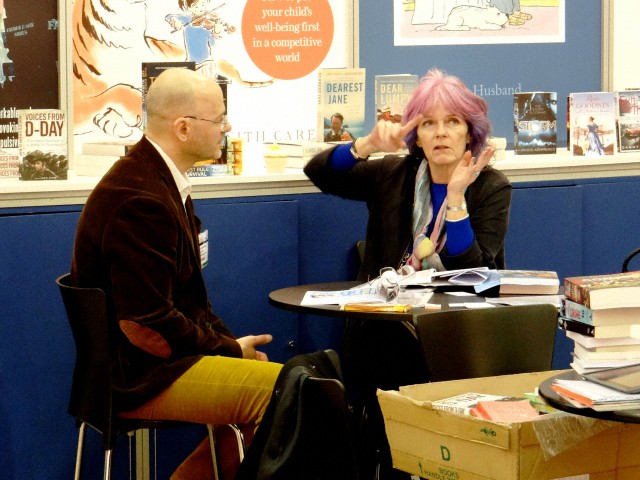
London Book Fair
 

Case in point, the 2014 London Book Fair is world-renowned & well-attended.


So, what do you need to know about book fairs?

First, you need to know your audience. 

What kind of person attends a book fair?  Interestingly, the London Book Fair has already answered that question and thoroughly; according to the LBF website, the 2015 event drew exhibitors from 60 countries and some 25,000 attendees from 124 countries.  In attendance also were around 900 members of the media, also from all over the world.  Since Planet Earth only sports around 196 countries at the moment, this means that the London Book Fair managed to represent at least 60% of the world’s population in some way, shape, or form!  Not every book fair can lay claim to such a draw, of course, but it serves as a good example of the power of books to bring people together.

There is no one-size-fits-all description for who attends a book fair.  The LBF welcomes “anyone who is involved with the creation, distribution, sale or treatment of content.  Authors, talent scouts, editors, designers, digital gurus, all walk the floor, meeting, talking, observing, discovering.”  I’d like to re-emphasize the digital gurus part of that sentence, since the LBF had 400 delegates at the Publishing for Digital Minds Conference.  If you’re a self-publishing author who’s looking to make a break into digital formats–or perhaps digital formats are your only or preferred option–there is still room for you at a book fair!  Whether you go as an attendee, a vendor, or wholly solo, the conversations you begin and the display zone in which your book is featured will reflect your digital-friendly nature.  Often, fair-goers will pause, snap a picture of a QR code, and queue new ebooks for immediate or future download–on the spot!  That’s the power of the digital-friendly book fair.

London Book Fair

Second, you need to know you belong there.

I know that it’s easy to think of book fairs as the stomping ground of the New York Times bestseller list and not for midlist authors–much less self-starting indie authors!  But making the leap to recognizing the value and worthiness of your book to keep those Big Names company at a book fair is an important one to make.  I can’t necessarily teleport to your location and give you a pep talk, but I can use this space to encourage you, I hope.  Your book is wonderful.  It needs to be read.  Critical acclaim and a blurb in notoriously biased magazines or ranking in notoriously rigged bestseller lists  doesn’t make a book better or more inherently deserving.  It just means someone with the right access to people and time and resources put out a book perfectly timed to fit into the publishing machine.

But you’re already a rebel.  You’re already striking out on your own, dispensing with the false and burdensome values of traditional publishing.  You and your book are free to take advantage of scaffolding like book fairs without being shackled to the rest of it, and your book is a bonafide example of an author designing and creating and publishing exactly what he or she envisioned.  That kind of artistic integrity creates its own gravity, its own magnetic attraction to readers.  Fair-goers will pick up on that authenticity right away!

Third, you need to make your book the star of the show.

What’s the trick to making sure fair-goers notice your book?  Creating intimacy in a warehouse-like environment.  If this sounds like an impossible task, let me be the first to assure you that it’s not.  Take a look around you whenever you next step foot in a mall or retail space, public library, or family-friendly health clinic.  How do those professionals section off space and create a warm and welcoming atmosphere?  Take note of what you personally respond to–because your ideal readers will most likely respond to the same.

London Book Fair

Often a busy or crowded space isn’t the most comfortable environment to spend time talking or browsing for new reading material.  Think of Starbucks–and of bookstores like Denver’s the Tattered Cover.  Both of these companies use small nooks to great effect, and it’s not by just packing in a lot of stuff and posters and wallpapering the whole area with product information.  A book fair is not a bookstore; it doesn’t revolve around books.  A book fair revolves around authors and the worlds that they create.  People can order whatever they like off of Amazon and have it in their hands with far less expense of time and energy and money than attending a book fair–but people still flock to them!  And why?  Because they want to participate in the social world of books.  They want to meet the people who make books happen.  They want to meet you.

So, how do you make your book the star of the show?  You winnow down your display and your presence to the absolute essentials, and you focus on building human connections with the people there.  And the London Book Fair is just the beginning–your book could just as easily find new readers in Beijing or Frankfurt!  All you need is the confidence to go, and perhaps the support of those who have gone before.

Always remember: you are not alone. ♣︎

ElizabethABOUT ELIZABETH JAVOR: With over 18 years of experience in sales and management, Elizabeth Javor works as the Manager of Author Services for Outskirts Press. The Author Services Department is composed of knowledgeable publishing consultants, pre-production specialists, customer service reps and book marketing specialists; together, they all focus on educating authors on the self-publishing process to help them publish the book of their dreams. Whether you are a professional looking to take your career to the next level with platform-driven non-fiction or a novelist seeking fame, fortune, and/or personal fulfillment, Elizabeth Javor can put you on the right path.