In Your Corner: Nixing the Social Media

I know, I know, who cuts social media marketing in the modern era?

Well, consider the question. It is entirely possible in the age of social media saturation that many people are at or past a tipping point into social media exhaustion. After all, we’ve been exploiting the digital sphere in every possible way we can imagine ever since it was invented, practically speaking, and people are growing weary of quite a few “overdone” mainstream marketing moves, including holiday sales. Consider REI’s “opt outside” program, a push-back and against Black Friday insanity.

(Incidentally, this is nothing new. The Puritans banned Christmas/Yuletide carols back in 1600s, claiming that to sing them was a political act and an embrace of a “‘popish’ and wasteful tradition […] with no biblical justification” and we all know how far, literally, they were willing to go to enact their beliefs … so, you know, there’s nothing new under the sun.)

Back to book marketing. One of the very good reasons why some authors are pulling away from social media is that they’re over-extended. That is, they’re trying to do too much with too little (time, energy, money) and need to refocus on areas where they see good traction and meaningful engagement. Spending lots of time on maintaining a Twitter account with a following of 25 is a waste if one has truly tried all of the tips and tricks of the trade, particularly if one has, say, a robust following on Facebook.

Growing up, my father always told me time is money. He wasn’t wrong.

time is money

As author and blogger Delilah Dawson writes on WhimsyDark:

We are glutted with information, and yet our answer to “How do I get people to buy my book?” is social media marketing, which is basically throwing more information out into the void.

She’s got a point, too. More information isn’t always what’s needed; meaning and value are what’s needed, and most appreciated, by readers and book-buyers today. Just tweeting or blogging is not enough … each tweet and blog post must provide something the reader can’t get anywhere else, and which adds in some measurable or immeasurable way, to the book-buyer’s life.

Otherwise it’s just white noise. And as Nancy Peacock writes, there are a lot of small ways in which social media can eat away at our happiness and our productivity as authors:

Something was going on in my brain and I knew it. I knew I was in trouble because I could not focus on the book I was trying to write. There’s always self doubt with writing, but this was different. This was more than the question of whether or not I’d be up to the task. I couldn’t concentrate long enough to even enter the flow. My mind was fractured and splintered, my spirit in constant agitation. I felt like I was failing at everything.

I think we’ve all been there, and we may even be there more often than ever now that our computers have become hubs for all manner of distractions, including (as Peacock details later in her piece) social media in all of its forms.

Srinivas Rao, in an excellent piece for The Mission, writes that quitting social media can actually improve quite a few aspects of the author’s life in addition to providing more meaningful content. Says Rao, the benefits include “less anxiety and more happiness,” “presence,” “increased focus,” and “improved productivity.” I don’t know about you, but this month those benefits are sounding preeeetty fantastic.

So, this November, take a moment to consider the possibility of nixing social media. If your immediate knee-jerk reaction is “but I have such great followers!” and it feels like shutting down something vital and important to your creative recharge process, then maybe this isn’t a move you need to make. But if your response is more along the lines of “well, I don’t see much engagement there anyway” or “I probably won’t miss it” … then maybe it’s time to take a step back from marketing your book on social media, or at the very least refocus your efforts on platforms where you have a good toehold.

I know this isn’t a terribly popular sentiment, especially to the companies (like Twitter and Facebook) who monetize your access to social media and turn a profit off of the free content you’re posting on them, but not everyone needs to use every tool in the toolbox. It’s always, always about picking the right tool for the job. Let the other tools wait for authors who will find them better suited to their work, and focus on being “you” and the “best you” possible, in branding as well as other efforts. And as always, we’re here to help support you in your decision!

You are not alone. ♣︎


Elizabeth

ABOUT ELIZABETH JAVOR: With over 20 years of experience in sales and management, Elizabeth Javor works as the Director of Sales and Marketing for Outskirts Press. The Sales and Marketing departments are composed of knowledgeable publishing consultants, customer service reps and book marketing specialists; together, they all focus on educating authors on the self-publishing process to help them publish the book of their dreams. Whether you are a professional looking to take your career to the next level with platform-driven non-fiction or a novelist seeking fame, fortune, and/or personal fulfillment, Elizabeth Javor can put you on the right path.

Easy Breezy Summer Publishing (Part 6)

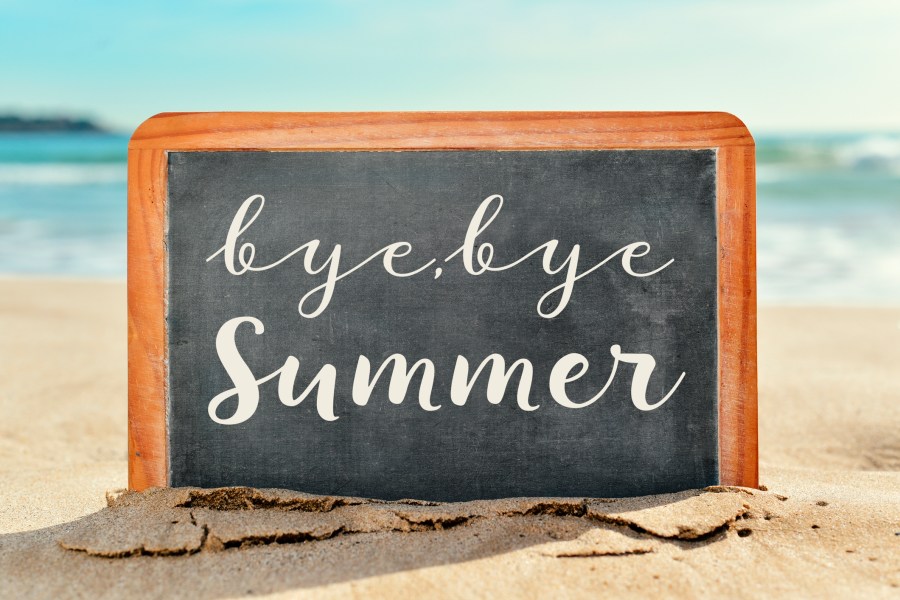
goodbye summer

Summer’s Over … What Next?

Here’s a hard thing for me to contemplate, much less say ….

Sometimes, we have to move on.

And at the end of Summer, as we transition into a new school year and all of the challenges and possibilities which it has to offer, I think we have to consider the reality and visceral truth of this statement.

Sometimes, we have to move on.

There’s no better time to do it, really. Ending something, after all, is often a doorway into starting something new–and we all need a reminder of this every now and again, especially when or if we find ourselves stuck in ruts and looking for a way out.

Oh, don’t get me wrong–everything I’ve said throughout this series ( 1 | 2 | 3 | 4 | 5 ) is still true. If you have the willpower and the resources–and everyone has just a little of each, for sure–then you should definitely keep plugging away at marketing your existing, already-published indie books. You should definitely work on innovating your strategies. You should definitely think forward to the holidays now while you have the chance.

But also … you should probably end a few things. If you’ve been hammering away at the same marketing strategy for a while now with no change in sales prospects, it’s time. If you’ve been chipping away piecemeal at a new manuscript and have lost the joy of working on the project, it’s time. If you have been sending queries out to editors, agents, and traditional publishers and receiving only rejections in reply ….

It’s time.

Ending things–bad habits, dependencies, wish-dreams with no likelihood of fulfillment–is agonizing. I have no illusions about that. And it can be absolutely terrifying to cut off something now without a clear plan in place for the future. But if I’ve discovered anything–and I have some personal news to share in the days to come on this–it’s that sometimes you have to end a thing before you can really, truly, and clearly think about what comes next.

So here are my last thoughts in this series, where we have considered oh-so-many ways to sharpen your marketing strategies and hone your self-promotional skills:

  • Recognizing a thing as incomplete, unproductive, or simply “not working out” and deciding to end it is not the same thing as giving up. It’s giving yourself a new way forward!
  • We all face some tough decisions in the days to come, if the news reports are correct, and we simply can’t afford to entrap ourselves in habitual behaviors if they’re not producing the kind of results we need to see.
  • Y’all, our dear readers, give me constant hope that with a bit of diligence, a lot of pluck, and a community of writers and writing professionals to surround ourselves with, we can find a way forward, together ….
  • Even if it means ending a couple of things now.

What have you been trying for a while that isn’t working out? Is it time to tweak or a time to change tracks entirely?


Thank you for reading!  If you have any questions, comments, suggestions, or contributions, please use the comment field below or drop us a line at selfpublishingadvice@gmail.com.  And remember to check back each Wednesday for your weekly dose of marketing musings from one indie, hybrid, and self-published author to another. ♠


Kelly

ABOUT KELLY SCHUKNECHT: Kelly Schuknecht is the outgoing Executive Vice President of Outskirts Press. In addition to her contributions to the Outskirts Press blog at blog.outskirtspress.com, Kelly and a group of talented marketing experts offer book marketing services, support, and products to not only published Outskirts Press authors, but to all authors and professionals who are interested in marketing their books and/or careers. Learn more about Kelly on her blog, kellyschuknecht.com

Easy Breezy Summer Publishing (Part 3)

Two weeks ago, I launched a new summer series on self-publishing, particularly as regards publishing and marketing your book during this busy time of year–and how to take advantage of our July theme of freedoms and independence while doing so! And I continued the series last week, with a discussion of unfreedom and what constraints are placed upon us as self-publishing authors also engaged in self-promotion by necessity. How does one market a book effectively, without the reach or access or time-honed skills of a publishing company’s full marketing team? (It’s hard, but not impossible.)

This week, seguewaying off of last week’s discussion, I’m here to talk about the freedoms which are possible when working as a part of a team. Not just any team, either–a team of self-publishing authors! Which I think you will find is something of a different proposition from a marketing team at one of the Big Five traditional publishing houses.

teamwork

But first, let’s dispel the myth of the solo indie author, struggling valiantly against the current of traditional publishing, and vanquishing his or her demons alone, without assistance, and for free. It may in fact be true that some indie authors make a success of themselves this way, just as James Patterson and Suzanne Collins and J.K. Rowling have made blockbuster success stories out of their lives in traditional publishing … all while conveniently ignoring the fact that there are thousands upon thousands of midlist authors struggling to get by, and required, despite their status as “traditionally published authors” to carry the majority of the promotional burden for their books.

Publishing is hard, no matter which way you go about it–and going solo, either in the publication process or all that comes after, harder still.

But freedom can be a collective achievement. You sacrifice nothing by teaming up with your fellow indie authors to sell your books! You lose none of your dignity, your creative control, your independence–your freedoms–but you gain oh-so-much-indeed! 

We’ve talked about the importance of book readings, book signings, and attending book fairs in promoting your book to new readers–but what if you didn’t have to go it alone? Many of the best readings, signings, and other bookish events I’ve attended have been panels, not singular affairs. Pulling multiple authors into one space, particularly indie authors, lessens the load on each participant while multiplying the event’s outreach. Imagine–even if all that happens is that your fellow readers bring their friends and families along, you’ve reached two or three or four times as many friends and families as you yourself were able to bring! That’s no shabby number.

Or, you might consider partnerships with local businesses, your public library, or events like our annual Cherry Festival as opportunities to build a coalition. Some of the fiercest book advocates are librarians and indie booksellers, yes, but don’t forget about the reach of a clerk at the counter of your local quilt store, or a restaurant with a waiting area! Your self-assembled team of advocates doesn’t have to be made up of the expected literary types; your team should make room for readers of all shapes and tastes, and partners who you normally wouldn’t think of. Once you’ve made contact with someone offline, make sure to make them a part of your online presence as well–either as a part of your social media network, or an email newsletter distribution, or something along those lines!

Lastly, you might consider going in for something like a co-op advertisement, something along the lines of this fabulous offering from Outskirts Press. In this case, you may never actually meet your fellow authors, but you’ll help each other out anyway–financially!–by reducing the cost burden on each contributing author. (And watch OP’s yearly deals, too–they often offer seasonal holiday-specific deals on their co-op ads.)

This is just a couple of examples of the kind of collaborative partnerships which can make your life, as an indie author, so much easier! Dig around online and see what suits you, but remember: you’re only freed if the marketing workload itself is reduced by your partnerships, so commit to projects with tangible and measurable outcomes, and clearly defined contributions.


Thank you for reading!  If you have any questions, comments, suggestions, or contributions, please use the comment field below or drop us a line at selfpublishingadvice@gmail.com.  And remember to check back each Wednesday for your weekly dose of marketing musings from one indie, hybrid, and self-published author to another. ♠


Kelly

ABOUT KELLY SCHUKNECHT: Kelly Schuknecht is the Executive Vice President of Outskirts Press. In addition to her contributions to the Outskirts Press blog at blog.outskirtspress.com, Kelly and a group of talented marketing experts offer book marketing services, support, and products to not only published Outskirts Press authors, but to all authors and professionals who are interested in marketing their books and/or careers. Learn more about Kelly on her blog, kellyschuknecht.com

Easy Breezy Summer Publishing (Part 1)

july 5th fifth

We all know that self-publishing and independence go together, right? Or at least, that’s the general idea, and the ultimate goal. We kick off the constraints of the traditional publishing houses, their heavy-handed contracts and royalties disputes, and waft our way over to the Elysian fields of indie bliss ….

But that’s not how self-publishing works, is it? Yes, you’re independent, but independence comes with a price tag. And this isn’t some fatalistic attempt to push you, our readers, towards traditional publishing (believe me! we hate it as much as you do!). The fact remains, however, that when it comes to self-publishing, you get what you pay for, and the rest you accomplish through elbow grease.

So … how does one market as an independent, self-publishing author? Is it even possible to rival the promotional work of the Big Five when all you have is a halfway decent laptop, debatable graphic design skills, and very little free time? How do we break free from Big Business but still sell books?!

The simple answer is: it’s hard … but totally possible. And we’ll dive into some of the pros, cons, and various logistics over the Wednesdays to come. Stay tuned for more musings on a marketing theme! (And say that ten times fast.)

Tomorrow, Royalene will be talking about how self-publishing intersect with the personal freedoms we so value here on our side of the pond. Watch her space for more excellent “independence” advice on Friday mornings this summer!


Thank you for reading!  If you have any questions, comments, suggestions, or contributions, please use the comment field below or drop us a line at selfpublishingadvice@gmail.com.  And remember to check back each Wednesday for your weekly dose of marketing musings from one indie, hybrid, and self-published author to another. ♠


Kelly

ABOUT KELLY SCHUKNECHT: Kelly Schuknecht is the Executive Vice President of Outskirts Press. In addition to her contributions to the Outskirts Press blog at blog.outskirtspress.com, Kelly and a group of talented marketing experts offer book marketing services, support, and products to not only published Outskirts Press authors, but to all authors and professionals who are interested in marketing their books and/or careers. Learn more about Kelly on her blog, kellyschuknecht.com

In Your Corner: Where (& Where NOT) to Sell Your Book

Typically, a (midlist, traditionally-published) book tour can only last so long–about three months, on the average–and that same book has about the same length of time to linger around brick-and-mortar bookstores like Barnes & Noble before being shuffled off to (midlist, traditionally-published) book heaven. There are exceptions to the rule, of course, and those rare blockbuster successes like Harry Potter and John Grisham’s latest book will never know these trials. But what about self-published books and self-publishing authors? It’s hard enough to get your book on any shelf, period, so how do you figure out which shelves matter the most, given the limited times that various retailers will be interested in stocking it?

I would offer up the following list of places to consider NOT selling your book:

  1. Big box stores. I read somewhere recently that around seventy percent of American adults haven’t stepped inside a bookstore for the last ten years. Blame the skyrocketing usefulness of digital services if you like, but the point is … most people aren’t going to find your book if it’s only for sale in a bookstore, particularly a big box store like … well, Barnes & Noble and now Amazon’s physical bookstores (Amazon’s algorithms are always sure to privilege Kindle Direct-published titles, anyway). The greatest problem of all with big box stores is, however, simply this: they won’t go to bat for you. There are too many other competing concerns, and they’re not likely to take the time to care about your individual success in the midst of all that. This isn’t to say you shouldn’t try at all to stock your book at B&N and elsewhere, but be prepared to have your books returned to you after some months if you don’t actively promote your book in each location yourself. We’ve mentioned it elsewhere on the blog, but stores may not even be willing to stock your book if you don’t give them a free return option.
  2. Independent bookstores. This one might get me into trouble with some other self-publishing authors, but my point is that independent bookstores are for the most part incredibly crowded places, with thousands of competing titles jammed into a small space. I would posit that the indie bookstore is a fantastic place to hold a reading, but a difficult place to sell books if you yourself are not present at a book launch party or a reading in order to promote it. Indies don’t have the budget to do that for you, and as with all other sales locations you should expect to bear the brunt of the marketing.
  3. Restaurants and wine bars. There can be ways to make a restaurant or wine bar or coffee shop or other “edible” establishment a happy home for your book, but usually only as a live event space–for readings and launch parties and such. Problematically, however, these locations tend to charge for such events, often a hefty sum, and the cost can outweigh the advantages–especially if there is a library or civic space nearby where you can hold your reading for free. If you’re going to sell at a restaurant, be ready to have to compete with lots of other activity and noise OR to be sectioned away from the main public area and therefore unable to draw newcomers in. It’s hard to feed serendipity when there’s a wall between you and the front door!
  4. Online. Not all algorithms are created equal, right? Amazon has come under fire in the last few months for deliberately downplaying indie and self-published works that were produced by other publishers than their own Kindle Direct service, and Barnes & Noble’s Nook store has never seen the same level of traffic as their amorphous competitor. You should not expect for your book to sell, magically, online without extensive marketing on your part and careful attention to where you sell. As in a lot of other facets of self-publishing, you want to sell through people who will go to bat for you. The folks over at Outskirts Press seem like a great example of such a company, and their online bookstore is easy to find and navigate.
  5. Under your bed. There are plenty of ways to NOT sell your book, but hiding them under the bed and expecting them to sell without you having to put in some serious elbow grease is perhaps the worst of all. The other entries on this list of “NOTs” is still a better place to start than here, in the realm of neglect. Promote, promote, promote!

… but of course, every challenge has its flip side. I would offer up this second list, in increasing order of value, as a compendium of places to DEFINITELY sell your book:

  1. Local indies. Look, I know what I said about independent bookstores on list #1. But local indies are another story. A nearby town has three of them, and they constantly compete to get visiting and local authors to stop by and sign books, host readings, and generally be a presence in their stores. It’s a mutually beneficial partnership, and many of the problems of the general indie bookstore disappear when you’re able to stop by multiple times a month and make yourself a part of the life of your local indies. They’re often willing, even, to pass word along about your other local events–readings at libraries and such. The three local indies I mentioned above all network with the big city library to take some of the pressure off in hosting parts of the annual state book festival. When things are local, they become fertile ground for long-lasting relationships.
  2. Local libraries. For many of the same reasons as with local indies, local libraries are fantastic places to sell your book. Not just at book launch parties and readings, although those too are fantastic, but possibly even at the front desk or via the community bulletin board. The point is, again, to keep yourself an active presence at the library, to stop by both at planned and unplanned moments to engage with the library patrons and staff. To cultivate relationships. One little local library I visit regularly had a special relationship with a local historian who published books about the town, and always had one or two copies of his book on hand to sell for him. When he passed away, those books suddenly became very hot property in the community, and the library hosted a farewell memorial with his family. I won’t say this particular arrangement is a common occurrence, but it’s a possibility.
  3. Local businesses. There are all kinds which might be willing to partner with you, either by putting up posters or keeping a couple of copies by the register–hair salons, museums, art galleries, specialty stores, you name it! Wherever people browse slowly, that’s an opportunity. And it’s all the better if you have a personal connection with the staff at these businesses, so that they’re interested in picking up the books themselves and having a read. The more people who know what’s inside the covers of your book and who stand behind counters in authority positions, the better, I say! The author who had that special relationship with his library? His books really move at the local city museum, too. There ought to be at least one place which just fits so perfectly for you, right?
  4. Elevators. You will have heard of the “elevator pitch” if you’ve hung around authors or businessfolk at all, and I can’t overemphasize the importance of having one of your own. There are countless opportunities to deliver a thirty-second spiel as you’re going about your daily life, your weekly routine, and your monthly once-offs! It’s all in the mindset, and flipping that switch which turns you from a regular everyday commuter to a self-promoting self-publishing author. It’s often a conscious decision, and it’s not always easy–we all want to just zombie around and relax, every now and then. Social interactions can be awkward enough as it is! But every day is full of opportunities, and if you’re sensitive to them and the mood of the person stuck in that hypothetical elevator with you, you might just have a potential future fan on your hands.
  5. Online. Yeah, yeah, I know this made my list of “NOTs” earlier. But it’s more about how you go about it and where you do that going-aboutness. And as always, think in terms of relationships. Where can you cultivate relationships so that you’ll be creating a team of people willing to promote your book with you? Very likely, social media will play an important role–but only if you’re willing to spend the time to cultivate real and actual, authentic interactions with your followers. So long as you’re dependent upon people you trust and care about–your fans–and not some faceless algorithm, you have a very good chance of growing your reach and selling some books along the way.
Girl (6-7) standing in front of bookshelf
Girl (6-7) standing in front of bookshelf — Image by © Sasha Gulish/Corbis

You are not alone. ♣︎


Elizabeth

ABOUT ELIZABETH JAVOR: With over 18 years of experience in sales and management, Elizabeth Javor works as the Manager of Author Services for Outskirts Press. The Author Services Department is composed of knowledgeable publishing consultants, pre-production specialists, customer service reps and book marketing specialists; together, they all focus on educating authors on the self-publishing process to help them publish the book of their dreams. Whether you are a professional looking to take your career to the next level with platform-driven non-fiction or a novelist seeking fame, fortune, and/or personal fulfillment, Elizabeth Javor can put you on the right path.