Self-Publishing News: 1.11.2021

news from the world of
self-publishing

The end of an era has arrived. The Kindle Lending Library has been one of Amazon’s longest-running services, having been launched in 2011 in part to help boost readership of the self-published works in its collection. The loss of access to this service will be a blow to those authors who have listed their titles in the Kindle Store, in that it will lower the circulation of their books, and will be deprived of the algorithmic benefits of proving popular in the lending library––once upon a time at least, if a book became popular in the Kindle Lending Library, it gained both word-of-mouth benefits in its offline sales and in exposure to new readers on Amazon by way of the “If you liked [x] you might also like [y]” algorithm. Writes Kozlowski, “This program was basically supplanted in 2016, when Amazon released Prime Reading. […] You can borrow up to 8 titles at a time, so it makes sense to use this over the Lending Library.  Prime Reading is also available in way more markets, such as Canada, US, most of Europe and even China.” His next paragraph is even more telling:

Amazon hardly ever announces the discontinuation of products or services, but they did it for this one.  With the Lending Library now officially over, in a couple of weeks, where do you get content now? Amazon is continuing to hype up Prime Reading for members, just like Prime Video is free for subscribers. Amazon also has Kindle Unlimited, which has way more titles than PR, but you have to pay a monthly fee.

Michael Kozlowski, Good eReader

If Kozlowski is correct, most readers who use Amazon as their point source for new reading material will already have crossed over from the lending library to the Prime Reading option, so the end of the service may have no further negative impact on self-publishing authors. That said, it marks both the end of an era and reflects Amazon’s overall shift away from its early days of author advocacy to a de-prioritization of those same authors’ best interests.

Evan Winter, a traditionally published fantasy author, originally published this think piece in the SFWA Bulletin, a publication of the Science Fiction and Fantasy Writers of America, and one of the premiere SF&F-related publications out there. Even though Winter himself has chosen to publish exclusively by way of the traditional route, he structures his article as a sort of exposé of the publishing industry overall and comparing both traditional and self-published “ecosystems.” Writes Winter, “Not long ago, I was asked where traditional publishing spaces are failing self-published writers, and I think I may have an answer: everywhere.” His decision, he writes, was informed by the democratizing influence of self-publishing and the power of traditional publishing to promote his books’ visibility––spliced with a healthy abundance of representat

This is because traditional publishing spaces aren’t structured in form or objectives to value the needs of self-published writers and their works. The ecosystem in which these spaces operate isn’t set up for self-published books and so the books have an extremely difficult time gaining the attention and acceptance of enough traditional publishing spaces to maintain a virtuous cycle of visibility, which is a primary benefit that these spaces offer. 

Evan Winter, SFWA Bulletin

While he goes on to define the benefits to self-publishing for diverse authors who have not had a chance to see characters like them on the page––”Today, self-published writers can be read, make a living, and put out stories that might have an ardent audience even if those same stories wouldn’t attract an advocate in traditional publishing”––Winter admits that he chose to publish traditionally for commercial reasons. Even though this article is a testimony to that choice, it also, we believe, poses an important question to authors wavering in their own decision-making: How much do you value the preservation of your original perfect vision for your book’s content? That’s the trade-off: visibility for creative control. It’s a tough choice for many, we know.

This image has an empty alt attribute; its file name is spa-news.jpg
As a self-publishing author, you may find it helpful to stay up-to-date on the trends and news related to the self-publishing industry.This will help you make informed decisions before, during and after the self-publishing process, which will lead to a greater self-publishing experience. To help you stay current on self-publishing topics, simply visit our blog each month to find out the hottest news. If you have other big news to share, please comment below.

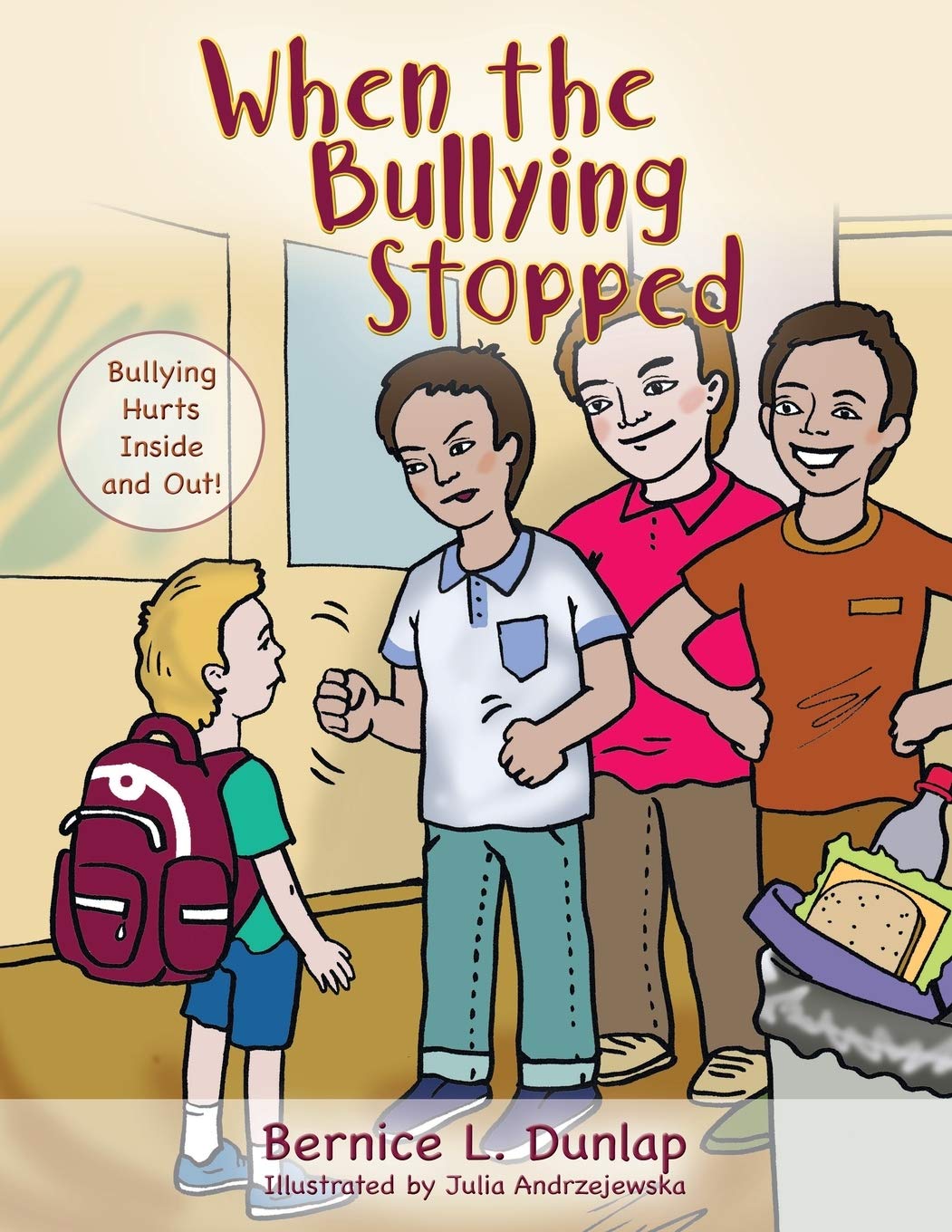
ORIGINAL BOOK REVIEW: “When the Bullying Stops,” by Bernice L. Dunlap

Welcome to 2021!

And … on to the review!

When the Bullying Stopped by Bernice L. Dunlap

OFFICIAL DESCRIPTION*:

KEEPING SILENT ABOUT BULLYING ENABLES IT TO CONTINUE

This story is about an eight-year-old boy named Peter, who was in the third grade at Leonard Street Elementary School. Alex and his friends, Max and Jax, picked on Peter every day. These boys were also in the third grade at the same school. This bullying made life miserable for Peter, and he knew he had to find the courage to tell his parents how Alex and his friends were terrorizing him at school.

REVIEW:

Oh, how the world needs more books like this one.

In When the Bullying Stopped, written by Bernice L. Dunlap and nicely illustrated by Julia Andrzejewska, we start with three bullies and one victim: Peter. Peter is a bit less muscled and a whole lot less of a dominant personality than Alex, the bullies’ ringleader, as well as Max and Jax, Alex’s sidekicks. (I am curious why the author chose to end all three bullies’ names in ‘X’s! I found it interesting––but that may just be coincidental.) Alex and co. give poor Peter a rather rough time, trashing his lunch one day and stealing his lunch money the next. Peter is a good boy, although he feels mighty small when faced by those bullies, so while he is at first afraid enough to go hungry, he eventually brings his parents and the school principal into the conversation, and just desserts (suspensions) are handed out to the three villains. Two of these villains, Jax and Max, move out of town (and therefore the narrative) at this point, while Alex continues on.

The book then transitions to following Alex instead of Peter, and here is where the bully becomes the bullied. Some kids from another local school rough Alex up, and he is left injured and frightened by the experience. Peter, who is indeed a very good boy, attempts to help his former bully despite Alex’s protests and the other kids in the schoolyard keeping well enough away. (I assume this is because they themselves had been hurt by Alex and co. in the past, and were hesitant to get near him––but this might prove an interesting point for discussion.) Peter then searches out the principal on his own and finds Alex the help he needs. Receiving assistance from someone he has wronged in the past proves a good learning experience for Alex, who eventually changes his ways and makes friends with Peter, gaining the confidence of his other peers as well.

All of this, and in only 24 pages!

The book pages are divided evenly between alternating full-page illustrations and full-page text-centered pages. There is quite a lot of text on those latter pages, proportionate to the page number, so I do recommend that readers take it slow and spend ample time pointing out what they see mirrored in the illustrations. The text is nicely edited and formatted for When the Bullying Stops to be an easy read for those who, like me in my library life, have to read their picture books upside down. I appreciate a readable-while-inverted book!

While I did not notice any negatives while reading, I do have two suggestions in order to ensure that those using this book meet with the best possible success. Parents, grandparents, teachers, and other caregivers will want to make sure to define and contextualize some of the more advanced words or terms used by Dunlap; a word like “protruding” or a term like “fetal position” are entirely possible to explain, especially in context, but they are unlikely to prove easily understandable to younger readers in kindergarten or, possibly, first grade. My other suggestion for these same youngest readers would be to break up the reading of the book into two distinct readings with some discussion in between as well as after. While the story itself is straightforward, the first section deals with a victim of bullying making the great decision to report his experiences to his parents and principal, and the second section deals with the bully, who after he is suspended is bullied himself. The book ends with some possibilities for rich future discussion with young readers. Why did the other children, many of whom had been bullied themselves, not assist the bully when he was beaten up? What does this book tell us about forgiveness and compassion? How would you respond if someone threw your lunch in the trash? … and so on.

I’m excited to see what all this book can do out there in the world, in homes and classrooms. And speaking of classrooms, I’m very interested indeed to see how this next year of hybrid/remote/classroom education settles out. Here’s hoping we achieve a new (and healthy, happy) normal sometime soon!

As a final note, consider this book’s title: When the Bullying Stops. What does happen afterward? As Dunlap suggests, it may just be an opening for personal growth, change, and classroom rapport. I’m sure you all might have some suggestions, as well!

IN SUMMARY:

In a world where bullying is tragically common, an accessible picture book like When the Bullying Stopped by Bernice L. Dunlap might just make a big difference in a child’s life. I also highly recommend checking out Dunlap’s other books for children.

WHERE TO BUY?

You can find Stella the Rejected Star wherever good books are sold, including Bookshop.org, Barnes & Noble and Amazon. You can also find out more about Marc McCormack’s work on the book’s Outskirts Press author page.

WHAT NEXT?

I received a copy of this book in exchange for an honest review. 

* Courtesy of Outskirts Press book listing.


SONY DSC

ABOUT KENDRA M.: With nine years in library service, six years of working within the self-publishing world, as well as extensive experience in creative writing, freelance online content creation, and podcast editing, Kendra seeks to amplify the voices of those who need and deserve most to be heard.

Merry Christmas to You and Yours!

Merry Christmas!!

This year, the happy job of posting on Christmas Day has fallen to me, and I couldn’t be more grateful––for you, our readers, and for the chance to share even just a hint of the love and boundless joy at the end of what has been, for many of us, one of if not the most difficult years on record.

I took a moment this morning to think back over what we have already overcome in the last twelve months:

  • COVID-19,
  • Quarantine,
  • Isolation,
  • Separation from friends, family, and loved ones,
  • Intense regulation,
  • Civil unrest and a hotly debated political season,
  • Countless disruptions to routine,
  • Financial hardships, and
  • Loss and grief over all of the above …

And I just have to say, my friends, that you are absolute champions. You’ve made it through so much. And no, I don’t necessarily think that making it through to everyone’s favorite holiday or even turning the calendar page onto a new year will magically ease all of our burdens, but I do truly think we are on the cusp of something new and good. For some of us that may be the comforts that a favorite holiday or a new year will bring, and for others it might be the time to finally work on that next book, and for still others it might just be the space to finally draw breath and think of something other than surviving the next week with food on the table and a loved one to hug.

This has been a long, hard year. But amidst all of the hardship, I have been so very blessed to write to you, read your responses, and work alongside you to make the world just a little bit better, a little bit richer, by having your words and your stories in it.

Thank you.

You are not alone. ♣︎

Do you have ideas to share? Please don’t hesitate to drop us a line in the comments section, below.
Elizabeth
 

ABOUT ELIZABETH JAVOR: With over 20 years of experience in sales and management, Elizabeth Javor works as the Director of Sales and Marketing for Outskirts Press. The Sales and Marketing departments are composed of knowledgeable publishing consultants, customer service reps and book marketing specialists; together, they all focus on educating authors on the self-publishing process to help them publish the book of their dreams. Whether you are a professional looking to take your career to the next level with platform-driven non-fiction or a novelist seeking fame, fortune, and/or personal fulfillment, Elizabeth Javor can put you on the right path.

Self-Publishing News: 12.22.2020

And now for the news.

Highlights from this month in the world of self-publishing:

In this commentary piece for the LA Times, Chad Post creates something of a nightmarish interpretation of the future in which Penguin Random House, the largest of all current traditional publishing houses, subsumes not just Simon & Schuster (the third-largest publishing house) but lays the groundwork for the decline of indie and small press publishing. PRH, whose holding company recently purchased S&S, will now be the largest traditional publishing company in history, and its only competition––Amazon––is not exactly a problem-free alternative for readers looking to support their independent publishers, bookstores, and authors as well. Writes Post,

Here’s my darkest vision of this merger: The first post-COVID-19 gathering of the Winter Institute, the only formal convention bringing together publishers and booksellers (now that BookExpo might be permanently retired), will be dominated by PRHS&S. They will have special dinners, busing booksellers to fancy venues every night to explain why it has the most important (meaning sellable) books over shrimp scampi. Meanwhile, the true laborers of the book industry — those who hustle and work the angles, who take the greatest risks and reap the paltriest rewards — will barely get any bookseller facetime at all.

There are many reasons why this could pose an issue to all of us invested in self-publishing, but it is also, as Post puts it, a rallying cry: “These two giants, PRHS&S and Amazon — helped along by COVID-19 — could put any number of presses out of business, further reducing the diversity of voices available to readers like you. And that’s exactly what we should stand against in 2021.” We couldn’t agree more.

Is the Publishing Industry Dead? by Alexis Davis 

In this article from Web Writers Spotlight, Alexis Davis asks a question oft-asked by those outside of the self-publishing industry: Has self-publishing (along with the Internet) killed the radio star––er, publishing industry? Or as she puts it more eloquently, “When ebooks exploded on the scene, experts predicted that the end of print publishing was nigh. […] Many rushed out and bought e-readers. How we consumed books forever changed. But did the advent of electronic publishing deliver a fatal blow to print publishing, and how has self-publishing affected the industry?” The answer, according to Davis, may in fact be surprising––again, to those who aren’t already in the know. Writes Davis, “In the U.S., print remains the most popular book format, with 65% of adults having read a print book in the last 12 months.” Just because digital options exist, she hints, doesn’t mean readers will abandon their favorite reading options. Digital means more options, not fewer preferences. “Just as digital music didn’t kill radio, digital publishing didn’t kill print. Radio adapted by offering live streaming. The publishing industry adapted by embracing ebooks and audiobooks,” writes Davis. “With the rise of self- and indie-publishing, we now have a more robust industry with more options available to writers, and that’s a good thing.” For the rest of Davis’ article, click the link above––it’s well worth the read.


This image has an empty alt attribute; its file name is spa-news.jpg
As a self-publishing author, you may find it helpful to stay up-to-date on the trends and news related to the self-publishing industry.This will help you make informed decisions before, during and after the self-publishing process, which will lead to a greater self-publishing experience. To help you stay current on self-publishing topics, simply visit our blog each month to find out the hottest news. If you have other big news to share, please comment below.

ORIGINAL BOOK REVIEW: “Stella the Rejected Star” by Marc McCormack

OFFICIAL DESCRIPTION*:

Stella wasn’t like all the other stars in the skies above Bethlehem. She was a four-pointed star in a five-pointed world, and the other stars teased her because of it. Then one day, the stars heard an important event was about to happen-and God would choose one star to play a crucial role.

Could that star be Stella? Not if the other stars get their way, and they will do anything to stop her!

Stella’s story shows us that often the ones considered different in the world are the ones who shine the brightest through their faith, hope, and love.

Stella the Rejected Star was written by Marc McCormack when he was eleven. Almost forty years later, Stella’s story has turned out to be his son Brady’s story. Brady, who is blind and nonverbal with autism, navigates his way through the world as both a star who has sometimes been rejected, and one of the brightest-shining ones.

Set against the first Nativity, Stella the Rejected Star is more than a Christmas story and is for everyone, especially those young readers with four points in a five-pointed world.

Stella’s story is the perfect one to teach children the importance of empathy and acceptance. If your child loves Christmas and stars, even mischievous ones, they will love Stella the Rejected Star!

Some of the proceeds from the sale of this book will be donated to autism-related charities.

REVIEW:

Once upon a time ….

The first time I read Stella the Rejected Star, I found myself humming “Rudolph the Red-Nosed Reindeer” aloud to myself. There are definitely some parallels between the stories of Rudolph and Stella––bullying by one’s peers, physical difference as a subject to be grappled with, a sort of “inspecting of the troops” or competition to guide an important process, and a message involving the triumph of the innocent over the cruel––and I think this parallel provides a unique and interesting starting point for discussions between parents (or grandparents, or caregivers) and young children.

How are these stories similar? It certainly doesn’t hurt that both Rudolph and Stella literally as well as metaphorically shine brighter than their peers, or that when Stella and Rudolph are both brought to the attention of God and Santa respectively, they take the high road and refrain from punishing their peers, even though they have acquired the power to do so.

(A quick aside: I still feel uncomfortable about having put Santa into the same sentence as God, particularly since I grew up in a household where the secularization of Christmas was a regular discussion. Whatever your or my personal stances might be on this particular depiction of the divine, I think it’s pretty safe to assume we’re all aware that the Nativity story occupies a sacred and beloved space in many households around the world, and I definitely do not want to imply I do not take the faiths of my friends, family, and neighbors seriously. I do think it’s important to specify that this book resonates specifically with mainstream Christianity as experienced in America, to prevent confusion.)

How are these stories different? Well, we’ve established that God is not Santa (and vice versa). And while Rudolph’s mission is one of spreading good cheer, Stella’s is to lead the shepherds and wise men to the newborn Jesus. McCormack also distinguishes his story with an added twist: in Stella the Rejected Star, faithfulness magnifies a star’s light, while the bully stars discover that their unkindness leads to a loss of this same light. Not only does this provide an opportunity to talk about bad behavior and bullying with kids, but it also introduces the concept of faithfulness and the relationship between faithfulness and behavior.

I find it incredible that an 11-year-old wrote this story, but that’s the background: McCormick wrote it as a boy and published it in honor of his son Brady, who has an autism spectrum disorder (ASD). That Brady was himself was a preemie and only surviving twin underscores the importance of this story, both to McCormick, and to those who learn from his picture book. Beyond the value of teaching children to empathize with and be kind to those who stand out for their differences, there is another moral to this story. Hardship, McCormick hints, provides a backdrop against which both heartbreaking and incredibly beautiful stories can play out. All of this in 32 pages, half of them Seth A. Thompson’s colorful and evocative illustrations. I can’t imagine a better way for families of faith to finish out 2020 than with a story of hope, faith, and maintaining joy through hard times.

You can find another detailed review of Stella the Rejected Star on the Readers’ Favorite website, reviewed by Emily-Jane Hills Orford. It is encouraging to me personally that other highly-rated reviewers have begun to pick up on McCormack’s wonderful story.

IN SUMMARY:

Stella the Rejected Star is a sweet and wholesome picture book for those looking to re-invest the holiday season with the magic of love and kindness present in the Nativity story. Marc McCormack’s story and Seth A. Thompson’s illustrations combine to create what will quickly become a modern classic for English-speaking Christian families.

WHERE TO BUY?

You can find Stella the Rejected Star wherever good books are sold, including Bookshop.org, Barnes & Noble and Amazon. You can also find out more about Marc McCormack’s work on the book’s Outskirts Press author page.

WHAT NEXT?

There are several more children’s books in my TBR pile for me to get through before the end of 2020, with my next review scheduled for the afternoon of January 1st. I can’t imagine a better way to start off a new year than with a good book!

I received a copy of this book in exchange for an honest review. 

* Courtesy of Amazon book listing.


SONY DSC

ABOUT KENDRA M.: With nine years in library service, six years of working within the self-publishing world, as well as extensive experience in creative writing, freelance online content creation, and podcast editing, Kendra seeks to amplify the voices of those who need and deserve most to be heard.