In the time that I’ve been contributing to Self Publishing Advisor, I don’t think I’ve once talked about outlines and outlining––at least, not as the primary subject of a post. That’s about to change!
I can’t think of a better time to address outlining and planning than after a year of great upheaval and disruption, when so few things went according to design and the world proved time and time again the old adage about one’s best laid plans:
Unfortunately for them, mice have neither opposable thumbs or the ability to write the Great American Novel––and I must confess, Mrs. Frisby and the Rats of NIMH was one of my absolute favorite books as a child, so I wouldn’t have minded if they did. My mother, on the other hand, didn’t find a nimble mouse detective nearly so appealing.
For those of us who do have opposable thumbs and the desire to use them for writing, we have long debated the merits and drawbacks of outlining, of sitting down to build the architecture of our next book before hanging the wall panels and window frames upon it. There are those who are naturally drawn to this kind of thing; I remember envying them as a college student. Such orderly minds! As you might have guessed, I was not made from the same stuff. I was, as many authors now phrase it, a pantser, perpetually neglecting to outline any of my papers the way that American students are encouraged to do from middle school onward. I have also neglected to outline most of my creative writing projects over the intervening years, leaning on long late-night writing sessions to finish out drafts.
As I’ve gotten older (and hopefully wiser), I’ve come to experience the importance of cultivating the kind of “organized thinking” I’d only admired from afar as a younger person. I may not be naturally inclined toward rigorous planning sessions, but as my ability to draft for hours on end late at night has attenuated over time, writing became much more of a challenge to be overcome than a creative endeavor undertaken as easily as breathing. Writing, it turns out, takes time, and I am merely human in that my time is limited … and growing moreso as I age, and competing concerns such as family and work jostle within my planner for all available waking hours. (And naps. Let’s be honest. I find naps more and more mandatory as I age, too.)
So it is that I’ve come to regard outlining as both a science worth mastering and an art worth ever refining by constant practice. And I’ll confess, I absolutely do still struggle with the whole concept. Why spend valuable time planning what to write when I might just as well be spending that time actually writing, getting underway for real? But I need this slower beginning to a large writing project, it turns out, and I will waste far less time later in the manuscript drafting process if I remember what beats I am meant to be hitting and by which page number (or word count) I should begin curving my story arcs toward their denouements. Many of my novel-length works would have required far less editorial work later on if I’d only planned ahead and then stayed on target instead of simply meandering wherever my heart desired at any given moment in the writing process.
Of course, it’s one thing to say such a thing and it’s another to actually feel convinced that it’s true. Plenty of teacher, professors, and fellow writers have tried to convince me of the value of outlines, and yet I wasn’t ready to feel that truth until I’d stopped just short of finishing multiple projects because I couldn’t figure out how to get them back on track. This isn’t an issue for me if I have even a vague plan when I set out of what the point, purpose, and closing mood were supposed to be.
I know I can’t persuade you to outline before you’re ready, as I took a couple of decades to reach that conclusion myself. You might be one of the lucky ones, like those planners among my college acquaintances who seemed born thinking in bullet points, but truthfully outlining is a practice that can be picked up at any stage of life, and any stage of a person’s craft. You might be like me, and find yourself boxed into an ever-more-cluttered brain corner by the increase in mayhem brought on by 2020. And if you’re just on the cusp of leaning that way, of maybe taking your first baby steps into the outlining world, I hope my words of affirmation here will prove the encouragement you need in order to try it out.
I thought I might take this topic a little farther next week and offer some practical how-to tips of what to do once pen hits paper or you sit down to type up that first outline. There are so many competing ways of doing it––what do you think? Would seeing some options prove useful to you?
Thinking of you always. ♣︎
Do you have ideas to share? Please don’t hesitate to drop us a line in the comments section, below.
ABOUT ELIZABETH JAVOR: With over 20 years of experience in sales and management, Elizabeth Javor works as the Director of Sales and Marketing for Outskirts Press. The Sales and Marketing departments are composed of knowledgeable publishing consultants, customer service reps and book marketing specialists; together, they all focus on educating authors on the self-publishing process to help them publish the book of their dreams. Whether you are a professional looking to take your career to the next level with platform-driven non-fiction or a novelist seeking fame, fortune, and/or personal fulfillment, Elizabeth Javor can put you on the right path.
“There is a shift in the artistic landscape taking place, and with it different ways of publishing and distributing literature,” writes Sinead Overbye for Stuff, a New Zealand-based news website. She covers the work and writings of a group of Maori authors. Says Overbye,
Self-publication is a re-emerging trend, particularly within Māori writing communities across the motu. It is no coincidence, and it is not new. Māori have always been innovative and self-determining, against all odds. Self-publication continues an historical trend of Māori resisting reliance upon the Crown and other entities to support what they believe will benefit them. It is a way of refusing to compromise, and of determining to speak in exactly the way we want to. It doesn’t ask, ‘Let us speak’, rather it says, ‘We have voices, and will speak regardless of who listens’.
In this way, Overbye’s words echo the sentiments we’ve expressed often here on SPA––that self-publishing is a democratizing influence on literature, and an influence that allows for authors without massive blockbuster intentions (as far as their envisioned audiences go) to still reach the readers they need to reach. Overbye goes on to write that in a “system where money determines the perceived value of everything, it is a radical (and to some, a confusing) act to produce work that doesn’t increase individual wealth, but whose chief purpose is to communicate.” That’s a line we’ll be chewing on for some time.
This one is such a heartbreaking story, in a good way! Abby Luschei, writing for Seattle Refined, covers the story of artist Jayashree Krishnan, who has been painting the faces of COVID-19 first responders and healthcare workers. In an interview with Luschei, Krishnan noted that the artworks’ positive reception online “was saying that the art is not just about the artwork, but it opened up the space for people who were not healthcare workers to step in and say something encouraging for them.” Writes Luschei,
In just about 10 months, Krishnan has painted more than 150 portraits of healthcare workers. Through this process, she’s heard their stories about what it has been like to fight COVID-19 first-hand. Krishnan is self-publishing a book, “Caring for Humanity,” that will feature those paintings and stories.
I don’t know about you, but we can’t wait to see the final product. Says Krishnan, “This series is about so much more than just a piece of art, Krishnan said. It’s about sharing their experiences — what it was like to work in COVID units in the very beginning, how it changed and how some of them ended up contracting COVID themselves, for example.” If we only get one good thing out of this virus situation, we’re glad it’s a fabulous work of artistic self-publishing.
As a self-publishing author, you may find it helpful to stay up-to-date on the trends and news related to the self-publishing industry.This will help you make informed decisions before, during and after the self-publishing process, which will lead to a greater self-publishing experience. To help you stay current on self-publishing topics, simply visit our blog each month to find out the hottest news. If you have other big news to share, please comment below.
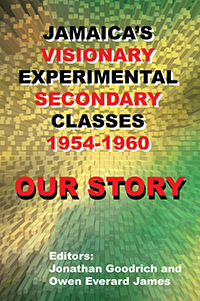
“Our Story” ed. by Jonathan Goodrich & Owen Everard James
OFFICIAL DESCRIPTION*:
Equal opportunity for children to access “good education” has to be one of the primary obligations of any government. In a developing country like Jamaica, such opportunity is tantamount to ensuring the country’s viability if not its very survival. OUR STORY is a collection of first-person narratives by graduates of one of the most visionary and effective yet undocumented experiments in the history of secondary education in the English speaking Caribbean. The poetic prose of graduate Trevor Thomas highlights this shortcoming: “A brilliant meteor had streaked across the bleakness of Jamaica’s education landscape, briefly illuminating its dark canopy, but attracted scant attention, and the remains were unceremoniously buried without headstone or epitaph.”
The observation of Prof. Emeritus, the Hon. Errol Miller, OJ, CD, Ph.D., DLL (Honoris Causa), an internationally recognized scholar on the subject, further emphasizes the sentiment in his exceptional foreword: “Our Story recounts and reflects upon a unique chapter in the history of Jamaican secondary education told sixty-seven years after it began and sixty years after it ended by some students who assess its impact on their lives.”
Although OUR STORY focuses on the period 1954-1960, it directly references critical antecedents as well as pivotal outcomes from the period, especially in the area of Education Policy. The revolutionary role of the Hon. Edwin Leopold Allen, the then Minister of Education who envisioned and implemented the Experimental Secondary Classes, and the notable teachers that were the definitive agents of the success of the endeavor are recognized. The inextricable connection between the Classes and the broader history of Secondary Education in Jamaica is boldly clarified in the volume.
OUR STORY references Jamaica’s political, economic, and cultural history as these unfolded during the period immediately preceding and immediately following, national Independence in 1962. The absence of the story of the Classes from the larger narrative of secondary education in Jamaica substantiates a void in the history that should be addressed. This history and the related influence of the imposed, traditional, generally elitist, and highly discriminatory, imposed British system of education are well known and documented. This history is therefore not the main driver of this effort. Instead, the effort is driven by the realization that the Experimental Secondary Classes have not received the recognition and credit that they unquestionably deserve.
The historical linkages with our own stories demand that we acknowledge the nature, cause, consequences, and relevance of the international protests instigated by the worldwide recognition of systemic discrimination against people of color. It would be irresponsible not to do so. The common origins, direct relevance, and impact on how we may view our own heritage, and the future of the land of our birth are inescapable. Notably, the protests are in direct response to historical inequities in the opportunity to access crucial socio-cultural prerequisites such as education, justice, and the benefits that generally accrue from a clearly flawed, artfully marketed participatory economy that is extensively dependent on the education status of participants.
Hopefully, as the stories are told and read, the telling will not be in vain.
REVIEW:
If this last year has taught me anything, it’s that our education systems (globally speaking) still leave a lot to be desired. One might say they “need some work.” When students’ education suffers, no matter what grade or level they are at, society suffers––both in the moment and for decades to come. I had the benefit of an unconventional childhood, with a mix of homeschooling with dedicated and deeply invested parents, and a middle and high school education overseas. I can’t speak for the intervening years since I finished high school, but at the time, that particular education system ranked fairly high on the various “best education systems” lists that are released every year. It certainly wasn’t perfect, but it was challenging in some really good ways that prepared me incredibly well for college.
I can’t say the same was true for my fellow students in college and graduate school––many of my friends struggled, especially in the first two semesters, with the workload and the different ways of thinking that university-level courses require of students. I remember feeling rather proud to have received a “better” education (although to an extent that word is subjective), and now I feel a bit ashamed of having lorded that over my friends. As many research reports have shown, blame for poor performance across American school districts and elsewhere shouldn’t be placed on the shoulders of the students or teachers––the system itself is broken, and the fractures show at every level, from childhood through adulthood.
In Our Story: Jamaica’s Visionary Experimental Secondary Classes (1954-1960), editors Jonathan Goodrich and Owen Everard James have collected the background, methods, and results of a unique educational experiment carried out in Jamaica during a six-year periods ending in 1960. It is, I must say, an exhaustive document––fully book-length––about this educational programme, and yet it is also fascinating. I knew very little about the history of education in Jamaica and the other Caribbean islands, merely that it had been altered irrevocably by the area’s colonization by various foreign actors, namely Spain and Britain, and the import of imperial cultures along with slave labor from Africa (and later, indentured Chinese and Indian peoples). The native Taino peoples had been devastated, so I only expected that the country’s education system would reflect norms established during the British occupation. This book deals with what was essentially an educational experiment carried out in the years immediately prior to Jamaica’s emancipation in 1962, making it an interesting historical document of a time of great change on the island––and the ways in which all of these changes impacted how education was done. And indeed, the first chapter alone documents far to many of these changes for me to summarize effectively here.
As is stated in the forward, “Our Story is about fruitful lives: some thirty-fold, some sixty-fold and some a hundred-fold, made possible by access to good quality education with international currency.” It is, by its mere existence, a document that refutes the argument that educational success ought to be approached in the same way as business success. The book draws on personal recollections collected well after the fact, and the editors acknowledge both the benefits (hindsight and lived experiences) and the drawbacks (erroneous and incomplete memories of events as they happened) of this approach. Its editors set the scene for the unfolding of this particular experiment by first describing the various (and often ad hoc) other competing systems in use during this period. But as Goodrich and James put it, the book exists not to focus on these things but rather the experiment itself––the ESCs (Experimental Secondary Class)––and to remedy the fact that these classes had never “received the recognition and credit that they unquestionably deserve.”
A quick note for those of you who like to know such things: There is a religious inflection to this book and the educational experiment it documents. This is something of an historical artifact of the period being discussed––and of the British heritage and influence that even now persists in an independent Jamaica.
Would the ESC system work today, in 2021, in my country? I have no idea. It would certainly require a complete restructuring of the system––a system admittedly that I’ve previously described as “broken.” In this I’m not exactly unusual; almost everyone I know is unhappy with the current state of things and with the quality of education that children and teenagers are receiving. The challenge isn’t one of motivation, but rather execution: How can a country overhaul its educational system without a period of great disorganization, and without protest against the ways and means of getting it done? Goodrich and James document one possibility, carried out as an experiment with a limited reach that still managed to make a vast difference. I would certainly recommend that educators and administrators take a look at this book––it might just prove the very thing that’s needed going forward.
IN SUMMARY:
Editors Goodrich and James cover the results of the Experimental Secondary Class (ESC) programme in Jamaica in the years before that country’s independence. The book provides a thorough and inspiring template for modern educators to learn from as we continue to face educational systems drained of funds and adequate support, as well as the freedom to innovate.
WHERE TO BUY?
You can find Obsolete wherever good books are sold, including Bookshop.org, Barnes & Nobleand Amazon. You can also find out more about it on the book’s Outskirts Press listing.
WHAT NEXT?
The next book on my list is The Portal by David Bernstein, which won a CIPA EVVY merit award back in 2018 for Juvenile Fiction. It’s a work of fantastical science fiction, and promises me robots and time portals, so I’m quite excited about that!
I received a copy of this book in exchange for an honest review.
ABOUT KENDRA M.: With nine years in library service, six years of working within the self-publishing world, as well as extensive experience in creative writing, freelance online content creation, and podcast editing, Kendra seeks to amplify the voices of those who need and deserve most to be heard.
Writing and publishing is difficult enough without added challenges being added on top of the usual brainstorming, crafting, editing, strategizing, and marketing that self-publishing authors take on as a part of the process. (Allowing, of course, for some variation, depending on existing skills and assistance provided by third parties.) We heard a great deal last year about some of the pandemic’s additional challenges last year, particularly during the summer, but much of that conversation has either died down or been reframed as a part of the “new normal.” So I just have to wonder, do we still need to talk about the pandemic outside of its health- and social-specific effects? Is it still worth grappling with the “extras” that COVID-19 has added to our writing and publishing lives?
I, personally, happen to think that we are entering a new phase of this whole thing. By and large, one year in, we’ve figured out how to live with the restrictions and their consequences (eagerly or otherwise). Two vaccines have passed all the standards that need passing in order to achieve wide distribution, and state governors are working on specific distribution plans for each state. Where I am just now, many of the restrictions themselves have begun to loosen, although most people I know are still being fairly cautious. Some schools are back in operation. My favorite bakery reopened! … and then closed again, then reopened again, and so on and so forth a number of times as the occasional worker came down with the virus. By and large, we are now well-acquainted with this open-closed-open-closed-etc cycle, and well-acclimated to last-minute changes in plans as the knock-on effects of the virus continue to manifest.
But what about when it comes to books? I see that the news posts here on the blog have dealt occasionally with the effects of COVID-19 on the publishing industry since March (summary version: book sales are up, particularly in digital, and so too with digital library offerings, as more library users make use of them). Most of the data, however, is coming from traditional publishers and indie bookstores (which are still struggling). Publishers Weekly (and probably many other organizations) keeps an updated list of COVID-19-related cancellations and postponements––again, privileging the traditionally published lineup, which is usually decided years in advance.
Getting a handle on just how this same situation is affecting those who choose to go indie is another matter. For one thing, self-published books don’t require the same long (up to two-years!) run-up to release as their traditionally published cousins, so there are very few compendiums of upcoming indie publications to build buzz. As we’ve seen throughout this last year, it is entirely feasible to progress from initial thoughts through writing and publication within two months with self-publishing, although we don’t recommend that many sleepless nights to everyone who wants to publish in the next year. (Chances are, anyway, that you have already been working on a manuscript before you read this post.)
Where do we look for self-published book statistics these days? Publishing through Amazon might be an indicator (and the company does love to release its self-reported statistics when they’re good news for them), but due to Amazon’s diversification and movement into the traditional publishing sphere with its own imprint and so forth, “publishing through Amazon” can look any one of a hundred different ways. It is not necessarily a good indicator of general self-publishing statistics anymore, in my opinion––the data I’ve seen talks big about the total amount its authors have earned in the last year, but the company hasn’t released any comparative reports to pre-COVID-19 times, or on whether their authorship has remained steady, much less grown.
About the only people reporting on the effects of COVID-19 on self-publishing are individual authors themselves, on their blogs or in their newsletters or social media feeds. To my knowledge, no one has a good handle on how many books are self-published even during a good year, much less this last year (this is because ISBN purchases, while tracked rather well, only apply to those authors who choose them––and they aren’t required for the publication of ebooks). Perhaps I’m so stuck on this because I myself work in the industry, and I want to know just how the virus’ long-term effects will challenge and/or benefit those authors I work with on a daily basis. Do we even know?
I’ve heard by word of mouth and on social media that many authors are struggling to write because of the persistence of work-from-home directives continuing for a large sector of the marketplace, and because many schools are also either working remotely or in hybrid systems. I’ve also heard that there is a huge wave of pandemic-related works in the pipeline for publication in the near future, although most traditional publishers haven’t quite gotten there without cutting corners. I’ve heard a lot of stories involving children’s books, particularly, when it comes to pandemic-related publications this last year, with the first ones appearing within months of the outbreak, published by schoolteachers and grandparents and other caregivers. But these are just the stories that I, Elizabeth, have heard. I am not representative of the entire industry, for sure.
What have you heard? Do you think we still need to talk about the pandemic when it comes to self-publishing, as I do? I’d love to hear your stories. And as always, I’d love to hear about your 2021 writing goals. ♣︎
Do you have ideas to share? Please don’t hesitate to drop us a line in the comments section, below.
ABOUT ELIZABETH JAVOR: With over 20 years of experience in sales and management, Elizabeth Javor works as the Director of Sales and Marketing for Outskirts Press. The Sales and Marketing departments are composed of knowledgeable publishing consultants, customer service reps and book marketing specialists; together, they all focus on educating authors on the self-publishing process to help them publish the book of their dreams. Whether you are a professional looking to take your career to the next level with platform-driven non-fiction or a novelist seeking fame, fortune, and/or personal fulfillment, Elizabeth Javor can put you on the right path.
Here’s an article from lifehacker‘s Explainer section that provoked a number of conversations among self-publishing authors this last week: Sam Blum’s take on the necessary underpinnings of published (and therefore public) authorship. It begins with a familiar hook, too. Write Blum, “No two writers’ journeys to publication are the same, but most follow the same general path.” To view publishing from the appropriate distance from which to see a general path, Blum begins his summary with a warning: “Don’t quit your day job.” (We are not going to spend too long thinking about how Blum’s imagination also leads to “you lovingly stroke its spine,” a favorite out-of-context comment about books that seems a little over the top.) He goes on to describe the various ways and means of going after a traditional publishing gig, but many of his suggestions are also applicable to self-publishing (which lifehacker‘s Nicole Dieker wrote about all the way back in 2017––we still highly recommend you read that article as well). He writes about building a network, self-education, and carrying out some intensive market research. The only point that doesn’t apply is the section on finding an agent, but one might argue that finding a self-publishing company and team that works for you would make a good substitute there. Not only is his recent article a good reminder of many points we’ve covered here on the blog on other days, but it is also a good reminder to check out Dieker’s older article.
This one is a more troubling bit of news. One of our favorite aspects of self-publishing that we like to celebrate here on this blog is the power of the indie world to democratize the entire publishing space. One might argue, as we have in the past, that a healthy self-publishing industry supports not just a healthy traditional publishing industry as well, but a healthy society. And we are extremely grateful to live in a part of the world where free speech is honored and enshrined in our founding charters––and where, although our systems remain imperfect, the average person can still find a way to say what needs to be said, write what needs to be written, and publish what needs to be published. This article from TechCrunch is a good reminder that this is not true of all corners of the world, and that the situation in China is but the tip of the iceberg when it comes to the quieting of badly needed voices across the globe.
As a self-publishing author, you may find it helpful to stay up-to-date on the trends and news related to the self-publishing industry.This will help you make informed decisions before, during and after the self-publishing process, which will lead to a greater self-publishing experience. To help you stay current on self-publishing topics, simply visit our blog each month to find out the hottest news. If you have other big news to share, please comment below.