Marketing BASICS : Selling Readers ON Your Book, Not Just Selling Your Book to Readers

Welcome back to my series on marketing B.A.S.I.C.S. here at Self Publishing Advisor, of which this is the fourth installation.  Three weeks ago I got the series underway with this introductory post, followed by an exposition on the “B” in B.A.S.I.C.S. (“Building an Online Presence“).  Last week, I answered the burning question of “What does the letter “A” stand for, then?” with a not-so-simple answer tackling various ways and means of “Ascertaining Your Ideal Reader.”  This week, as you might have guessed, we’re taking a look at the next letter in B.A.S.I.C.S. as we examine just how to go about Selling readers ON your book––and not just selling your book TO readers.  If the distinction seems a touch unclear, consider it this way: there are a lot of reasons why people do or do not buy specific books, and it only rarely can be defined as ONLY a financial transaction.  Ultimately, a book’s larger success can be credited to the author’s creation (and after, cultivation) a fan following made up of readers who really love and connect to the book.

As I mentioned last week, this series emphasizes marketing for new or first-time authors, but this point––this letter “S”––carries a lot of meaning for even the most experienced of authors.  There’s no point in an author’s professional career––even a blockbuster success of a career––where free passes are handed out.  No matter what stage of the self-publishing process you are at, you must continually strive to connect to your readers, and to create a product that is more than just attractive to them––you must strive to create a product, a book, that blows them away.  Each and every time.  This, too, is one of the most important and foundational of steps to crafting a successful marketing strategy.
selling a book

So, how DO I sell readers on my book?

  • Even before you publish your book, build community.  Spread the word!  Launch countdowns and promotions (like giveaways of Advance Reader Copies, or ARCs) on social media early.  And don’t forget to reach out!  Many first-time self-publishing authors find their most passionate advocates to be other members of the indie community.  Why?  Not only do they understand the rigors and narrative of self-publishing, but they’re by and large a welcoming bunch with extensive and generous networks––networks made up, in part, of avid readers looking for their next great book.  You shouldn’t approach the indie publishing community, online or off, as a chance to steal eggs from someone else’s basket, though: humility is a quality that belongs in the self-publishing community every bit as much as it does in fairy tales.  And, seeing a little of themselves in you, many established indie authors will be willing to put in a kind word for you with their readers.  One day, you’ll be able to pay it forward in the same way.


  • Share.  You’re not just selling a book––you’re selling the larger narrative surrounding your book, and that narrative intersects with your own life in ways that you won’t always be able to predict.  A key ingredient to selling readers on your book is to follow in Steve Job’s footsteps and be your own product’s biggest fan; your book is a beautiful and wonderful thing, and your enthusiasm for can be positively infectious.  Never be ashamed to share with your readers your passion for what you’ve created, and to do so in as many creative ways as you can think of: radio and blog interviews, posts to Twitter and Instagram and Tumblr and Vine that reveal the “behind the scenes” elements that give a book its own life and render you, the author, into an interesting character in your own right.  (And trust me, you ARE interesting!  You’ve written a book, after all.  You’ve put a piece of yourself out in the world for other people to engage with and respond to.  Whoa.)


  • And last but not least: Publish the book that you would want to buy.  If you’re only halfway sold on the concept, execution, or presentation of your book … well, let’s just say that readers are usually looking for the same things in the books they buy as authors really want to see in the books they publish.  Give every detail of the process––from conception through creation to final publication––the same level of care and attention that you might give to a priceless work of art.  The comparison is only fair, as your book is art.  And I, for one, can’t wait to read it.

Thank you for reading!  If you have any questions, comments, suggestions, or contributions, please use the comment field below or drop us a line at selfpublishingadvice@gmail.com.  And remember to check back each Wednesday for your weekly dose of marketing musings from one indie, hybrid, and self-published author to another. ♠

KellyABOUT KELLY SCHUKNECHT: Kelly Schuknecht is the Executive Vice President of Outskirts Press. In addition to her contributions to the Outskirts Press blog at blog.outskirtspress.com, Kelly and a group of talented marketing experts offer book marketing services, support, and products to not only published Outskirts Press authors, but to all authors and professionals who are interested in marketing their books and/or careers. Learn more about Kelly on her blog, kellyschuknecht.com.

From the Archives: “Self-Publishing Authors Can Get Their Books on the Shelves of ‘Traditional’ Bookstores”

Welcome back to our Tuesday segment, where we’ll be revisiting some of our most popular posts from the last few years.  What’s stayed the same?  And what’s changed?  We’ll be updating you on the facts, and taking a new (and hopefully refreshing) angle on a few timeless classics of Self Publishing Advisor.

∗∗∗∗∗

[ Originally posted: April 27th, 2011 ]

Even with the recent changes in the book publishing industry, a “traditional” bookstore presence should still be a goal for authors who want this. Why? Well, with this presence, authors are able to target an audience that is passionate about books. Think about it — people have to leave behind the comforts of their own home to go into a bookstore. Most likely they are there to purchase a book. If your book is on the shelf, yours may just have a chance at being the book they buy.

How can you work toward getting your book into that bookstore, though? Is it a matter of luck? Can self-publishing authors make the cut? The good news is that even if you’re not necessarily on a “lucky streak”, it’s still possible to successfully target placement in “traditional” bookstores. However, you must have a solid plan in place for doing so. Here are a few action items to put on your list as you get started:

  • Make sure your book is fully returnable. If your book cannot be returned, there is great risk involved for the bookstore. For example, if they stock 10 copies of your book and only 4 sell over the course of a year, they are losing money. If the book is returnable, though, the store can simply send the book back that doesn’t sell. Think of this return-ability as a type of “insurance” for your book.
  • Offer a sufficient trade discount. What’s sufficient? Typically that will be around 50-55% (or higher). Of course this does cut into your profits, but a higher retail margin gives the bookstore more incentive to stock your book on their shelves. No incentive? No cigar.
  • Build proof that your book is desirable. This is probably the most difficult (though not insurmountable) part of it all because authors often have a bias view of their book. However, the best indicator of a desirable book is exponential sales figures. If the amount of books you sale doubles, triples, quadruples, etc. month-after-month, that is something that can work in your favor. If you aren’t a professional marketer, you may want to seek the services of a book marketing consultant. Make sure they are able to help you draft a marketing plan and go forth on planning your publicity.

After you’ve done all of the above, you must put together a proposal to submit to bookstore contacts. You can find others specifically on their websites, but Barnes & Noble can be reached here:

The Small Press Department
Barnes & Noble
122 Fifth Avenue
New York, NY 10011

Other bookstores can be found through Google. Another popular site for locating independent bookstores is Indie Bound.

Do you know of any other bookstores that are small press/self-published friendly?

by Wendy Stetina

When Wendy first posted this article back in 2011, the publishing industry looked rather different––and in many ways, it looked to be stumbling down the path to utter self-annihilation.  Borders, once a behemoth of the bookselling industry, went out of business in 2011, leaving many readers and authors questioning what––if any––place the brick and mortar bookstore held in the future of their industry.  In the heated discussion that followed in the post’s comments section, various Self Publishing Advisor subscribers pointed out the rise of online retailers as the cheapest and most effective sales platform for indie authors.  In response, SPA moderator Elise L. Connors wrote that “[T]his post wasn’t written with the intention of persuading authors to go after bookstores. It was actually written to let authors who are going after that avenue know that they shouldn’t give up on that ‘dream’ because of the current landscape of the industry.”  (The italics are mine.)

It’s true that Amazon has continued its meteoric rise to the top of the bookselling industry since 2011, and it’s also true that Amazon’s expanded offerings to self-publishing authors have captured much of the market and spurred much public dialogue about the world of indie publishing.  It’s true that Barnes & Noble’s online presence, the Apple iBooks Store, and a whole host of social media platforms and numerous self-publishing companies have sprung up in recent years to diversify and stabilize the market.  And while there have never been so many ways to buy and sell a book as there are in the year 2016, it is true too that ebooks and e-readers have done nothing to lessen customers’ appreciation for the pure tactile pleasure of a brick and mortar store.

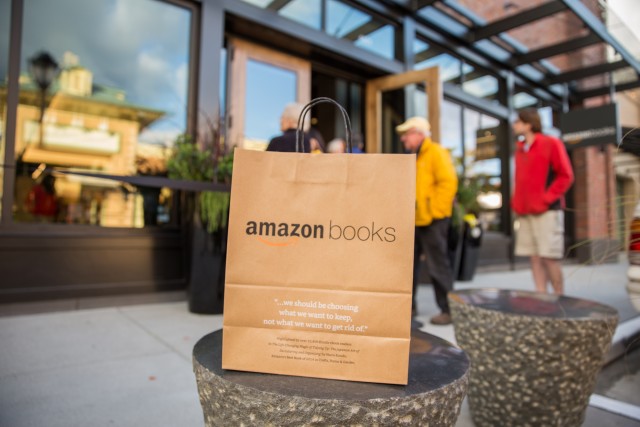
Even Amazon has come around to seeing a street presence as importance, as evidenced by the launch of the first Amazon Books shop (in Seattle) last year.  Yes, it seems mostly a kind of marketing gimmick, but it’s one that works.  As one skeptical self-publishing expert learned, even the store’s critics often walk away with an Amazon Prime Membership or a physical book or two.  (These are true stories, people!)  There is, apparently, nothing that quite beats the “instant gratification” of beholding actual physical books on an actual physical shelf.  And while the jury’s still out on whether Amazon Books stores will do anything specifically geared to boost sales of self-published works––like installing Espresso Book Machines, for example, or offering curated collections of Print on Demand (POD) editions of Kindle favorites––one can’t help but notice the wide swathes of shelf space dedicated to Kindles in pictures of the interior.

amazon bookstore

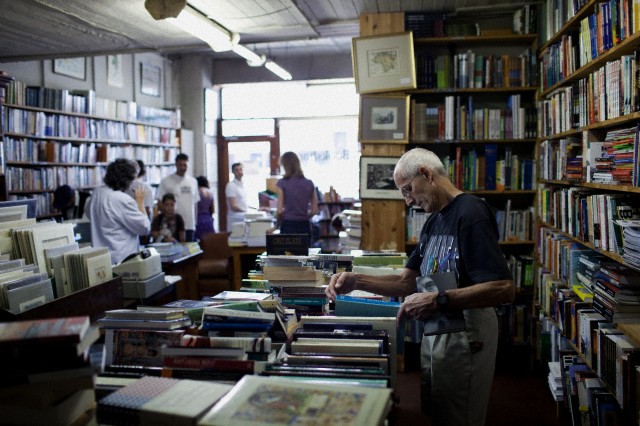
And Amazon’s not the only company with a brick-and-mortar presence that can make a difference for indie and self-publishing authors.  In fact, many independent bookstores and even larger chains like Denver’s Tattered Cover go to great lengths to boost sales of local indie authors.  On my last visit to one of Tattered Cover’s several stores, I stepped inside the doors and made my way toward the coffee bar––only to find my progress impeded by a series of low bookshelves that blocked out the cafe’s seating area.  These shelves were the first thing every customer sees when walking in that store, and they were positively packed with self-published books, placed there on consignment.  (If you live in or near Denver and are interested in knowing more, visit their website.)


But ultimately, I’m not here today to defend the bookstore as a vital place to sell your books.  I’m here to help those of you who already know you want to get your book into a bookstore somewhere … to do so with the least amount of fuss.

To return to Wendy’s original post, most bookstores now either mandate her first point (“Make sure your book is fully returnable“) or take any guesswork out of the equation by relying on a consignment model (as with Tattered Cover, above).  And Wendy’s second point holds true: when an author is given the option, it’s a wise idea to “Offer a sufficient trade discount.

In many ways, however, Wendy’s third point is the most important.  Aside from keeping your name and work in the public eye, simply by virtue of placing your book in a bookstore, there are several ways you as an author can help “Build proof that your book is desirable.”  Most bookstores have stringent standards for the self-published books they stock: the title in question must dots its is and cross its ts in that it must have an ISBN, a cover that exudes professionalism and sound design sense, and so on.  Striving to meet these standards in order to appear on Barnes & Noble’s or Tattered Cover’s shelves can only do good things for the “desirability” of your book on a larger scale.  I guarantee you that an attractive, professional-looking book will sell better online as well as off the shelf.

Last but not least, a fantastic way to sell readers on the value of your book is by building relationships with them––and one of the best ways to make contact with your readers is to host events … at your local bookstore.  If you pursue hosting such an event, many bookstores will offer additional opportunities to feature your works within your stores, especially since good attendance at your event will likely translate into a solid spike in general sales for them.  (More foot traffic always equates to more sales when it comes to a brick-and-mortar bookstore.)  And the flipside of the coin is also worth examining: if you have already managed to clear a bookstore’s consignment standards, they are more likely to agree to partnering with you on hosting such an event.  Readings, Q&A sessions, and book signings are fertile ground for the indie author!  ♠

KellyABOUT KELLY SCHUKNECHT: Kelly Schuknecht is the Executive Vice President of Outskirts Press. In addition to her contributions to the Outskirts Press blog at blog.outskirtspress.com, Kelly and a group of talented marketing experts offer book marketing services, support, and products to not only published Outskirts Press authors, but to all authors and professionals who are interested in marketing their books and/or careers. Learn more about Kelly on her blog, kellyschuknecht.com.

Self-Publishing News: 1.25.2016

This week in the world of self-publishing:

This week’s featured interview was posted to HuffPost Books on January 23rd, courtesy of contributor Rajesh Setty.  In it, Setty speaks with Linda Stirling, author and CEO of The Publishing Authority website.  “There are two ways for authors to keep books in print long-term,” says Stirling:

1. Sell a lot of books without ceasing so a traditional publisher will keep the book in print

2. Self-publish your books

[But] What a lot of writers are unaware of with book sales by traditional publishers is there are many variables to how these books can make enough sales for publishers to keep them in print.

As a result, Setty transcribes, well-known authors profit and midlisters suffer from a lack of creative control in addition to limited rights and revenue.  The solution?  According to Stirling, the answer is simple and easy and one that you already know: self-publishing.  “Bookstores and publishing houses are in business to make money, not to nurture authors,” says Stirling.  “They need to see a return on investment, so if an author doesn’t earn out their advance, it’s unlikely they’ll see another one.”  With self-publishing, however, “none of these concerns need call the presses to a halt. Competition is seen as a plus; promotion is in the author’s hands and can continue indefinitely; and there is no selling window, so writers can go on to make income from their books indefinitely.”

Stirling makes for an excellent self-publishing ambassador and advocate.  For the rest of her interview with Rajesh Setty, drop on by the complete HuffPost Books article.

Good news for Cincinnati residents, writes Sara Gadzala in this January 22nd article for Cincinnati.com: the Public Library of Cincinnati and Hamilton County has unveiled new additions to its nine-thousand-square-foot MakerSpace, including an Espresso Book Machine!  The machine, which is only the third in the nation to be made available to the public in a library setting, prints and binds high-quality books so quickly you barely have time to sip your coffee while you wait.  (See what I did there?)  Says Gadzala, library patrons can “Consider it a birthday present for MakerSpace, and a gift to anyone who wants to self-publish or print content from OnDemand Books, which has a database of more than seven million titles.”  According to the team leader of the Cincinnati MakerSpace, their offerings are “much more than a thrifty business tool. Anybody with a library card can make a reservation on the larger machines” even though a reservation is recommended due to high demand.  We’ve written about the Espresso Book Machine before––several years ago, here and here––here on Self-Publishing Advisor, so it’s nice to see this technology being made available to more people.

“Save the Date!” declares the website banner over this January 20th press release published to the Digital Book World website.  If you’re free March 7th – 9th to travel to New York City, you couldn’t pick a better way to spend your time than by dropping by the annual conference put on by BookExpo America (BEA), which self-advertises as “North America’s premiere event for the publishing industry today” and which aims “to engage and educate booksellers, librarians, agents, authors, and industry insiders by delivering insights on the latest trends and unparalleled networking opportunities.”

Conference organizers have just released the program’s schedule and themes, and as it turns out it’s a good year for self-publishing conferencegoers, as one of the conference’s eight “tracks” or themes is dedicated to studying self-publishing concerns: “Within the self-publishing track authors and service providers will explore the opportunities to reach readers, build sales, and establish a social presence with readers.”  That’s some handy information.  (Other tracks include: Children’s Publishing, Marketing & Engagement, as well as Analytics, Tech & Mobile.)  For more information, visit the original press release here, and the conference website here.


spa-news

As a self-publishing author, you may find it helpful to stay up-to-date on the trends and news related to the self-publishing industry.This will help you make informed decisions before, during and after the self-publishing process, which will lead to a greater self-publishing experience. To help you stay current on self-publishing topics, simply visit our blog every Monday to find out the hottest news. If you have other big news to share, please comment below.

KellyABOUT KELLY SCHUKNECHT: Kelly Schuknecht is the Executive Vice President of Outskirts Press. In addition to her contributions to the Outskirts Press blog at blog.outskirtspress.com, Kelly and a group of talented marketing experts offer book marketing services, support, and products to not only published Outskirts Press authors, but to all authors and professionals who are interested in marketing their books and/or careers. Learn more about Kelly on her blog, kellyschuknecht.com.

Saturday Book Review: “Percy Finds A Girlfriend”

Book reviews are a great way for self-publishing authors to gain exposure. After all, how can someone buy your book if he or she doesn’t know it exists? Paired with other elements of your book promotion strategy, requesting reviews is a great way to get people talking about what you’ve written.

When we read good reviews, we definitely like to share them. It gives the author a few (permanent) moments of fame and allows us to let the community know about a great book. Here’s this week’s book review, courtesy of the Observations from a simple life blog:

Percy Finds a Girlfriend by Sissy Parker

Percy Finds A Girlfriend (A Frame Named Percy Book 1)

by Sissy Parker

Publisher: Outskirts Press

ISBN: 9781478764632

Synopsis:

Pamela Jones has established herself as an up and coming artist, critics have praised her work as a chip off the old block. Pamela’s father William Jones has been guiding his daughter’s work for quite some time now. Four years ago Pamela created a frame for the family’s portrait and she gave it a kiss and called him Percy and this is where Percy’s life started. Unbeknownst to Pamela every time she gives her creations a kiss and a name they come to life but nor can they talk to her or any other human under the age of 10. Pamela felt Percy needed a companion so she created a beautiful porcelain statue and again she gave it a kiss and a name but before Percy could bond with the statue it was stolen. Pamela suspects someone in the family but the family thinks someone came in and stole the statue. The Jones family will go to great lengths to find out who stole the porcelain statue. Percy Finds A Girlfriend is another episode in Percy’s adventure; he is still trying to learn how humans and his friends deal with everyday life. Come join him on this ride of love, friendship and betrayal.

Critique:

Percy Finds a Girlfriend by Sissy Parker is a magical story of a picture frame named Percy and how he is able to speak and interact with the other household items as they witness the lives of the Jones family.

The story opens with the house on Mulberry Street with its occupants. Hanan is the wife of William and mother to Pamela, Bernita, Anita, Sandy and Liz. Pamela is an artist who crafts amazing works of art including stained glass and other works. The Jones family is preparing for a wedding. Hanan’s niece is coming and the house is in a fury trying to get everything ready. Pamela has a special reveal for her family and their guests. It is a small porcelain statute she named Jacqueline. Jacqueline was created as a girlfriend for Percy. The family doesn’t believe that Percy is alive and finds it weird that she would make a girlfriend for the picture frame. But unbeknownst to the family, Pamela is able to breathe life into her creation with a simple kiss. Then suddenly, Jacqueline goes missing. Who is the thief? Will Jacqueline be returned safely?

I enjoyed the precise about a magical picture frame and other household items who are the often silent witnesses to the Jones family. I think this story is a great imaginative adventure as told through the eyes of a beautiful picture frame. I recommend this book for readers who enjoy magical stories.

Percy Finds a Girlfriend

is available on Amazon

on the Kindle for $5.00 and in paperback for $9.95

reviewed by Jennifer Lara  ]

Here’s what some other reviewers are saying:

The narration of the book is the primary character in the book, Percy. Pamela Jones, an artist designed Percy,a picture frame.Pamela sets the frame by the family portrait and gives it a kiss. Every time she creates something and kisses it, it almost becomes alive. It becomes smart. These creations can only talk to children under 10 years of age. At least they are the only ones who understand them. Well not quite, a family of mice can also have communication with the kissed objects.Pamela develops a plan to give Percy a girlfriend. She makes a statue, [and names] it Jacqueline. Percy finds love. A theft occurs at a wedding and Percy and Pamela are really upset about it. Jacqueline is gone. Will the thief be discovered? Is it a new character or an existing character? Will things get back to normal? Will Percy find his Love? or is she gone forever? Will the ending be a happy one or sad one? This was a great book for children and adults. Children and adults attach themselves to different things and sometimes believe they’re like human.It’s a fun and exciting read. Great story for children and adults alike.Pick up a copy and read it with or to your child and be introduced to Percy, Jacqueline, Pamela and others. I enjoyed it and I’m going to pass it along to some nieces who I know will enjoy it.

– Amazon Reviewer Gayle Pace

The primary character and the narrator in this book for children is a picture frame named Percy. He was made by artist Pamela Jones and when he was put around the family portrait Pamela kissed him and somehow granted him sentience. Percy is not the only intelligent object in the house, every object that Pamela creates and then kisses develops a consciousness. They can talk to each other but only humans under the age of 10 can understand them. There is a family of mice in the house and they can also communicate with the objects kissed by Pamela.

Pamela creates a porcelain statue that she names Jacqueline and she places her next to Percy with the intention of giving him a lady friend. Her plan works and Percy finds himself in love. There is a human wedding with a large number of attendees at the house and in the aftermath someone steals Jacqueline, an action that devastates Pamela and Percy.

After a bit of moping and engaging in a process of elimination, the culprit is discovered and it turns out to be someone that has been cranky and disagreeable throughout the entire story. All is restored in the Jones household when Jacqueline is returned.

The premise of sentient objects is an interesting one that children will find entertaining, for they naturally develop attachments to objects and consider them to be alive with dynamic personalities capable of having deep emotions. There is a significant amount of family drama and subterfuge as well, even though there is a happy ending and the “bad person” is forced to confess and accept punishment. This is a good story.

– Amazon Reviewer Charles Ashbacher


saturday self-published book review

Thanks for reading!  Keep up with the latest in the world of indie and self-published books by watching this space every Saturday!

Self Publishing Advisor

selfpubicon1

Conversations: 1/22/2016

IT’S A NEW DAY! NEW MONTH! NEW YEAR!

Readers Have Deep Emotional Expectations


Yes, readers have emotional and spiritual expectations when they purchase your book. Not only are they looking for the escapism-excitement of cliffhanger stories they want to hear, feel, taste, touch and smell the scenes you’re creating. These are the elements where writers either shine brightly or fade quickly. The story and plot pieces cannot carry a book toward the bestselling lists alone. You may recall my mention of Aristotle a couple weeks ago. His philosophical thoughts continue to offer today’s writers a unique perspective on how to enhance the full reality of a character’s experience by adding uniquely descriptive words—even made-up words—from the following categories.

four elements earth fire air water

  • The Earth we walk upon brings us many challenges. Will your characters face a hot, dry, throat parched day? Or will they enjoy a cool, crisp, invigorating day? Must they dig themselves out of 18 inches of wet, heavy snow? Or face an earthquake? Tornado?
  • Water—and having access to clean water—is truly a life or death part of your story whether it is ever mentioned or not. If characters exist in an environment where turning on the faucet and filling the coffee-maker is an every-day occurrence that describes an important part of your story. However, if your character(s) must walk nine miles to reach a well of bitter water, their perspectives (and your reader’s perspective) will be quite different.
  • The Air we breathe might be hot and polluted or cool and clear. Air quality has become a focal point of governments and life-threatening to people/characters with breathing illnesses. Particles in the air can literally “take the breath away” from someone as if a poison gas surrounded them.
  • Fire. Readers can enjoy the cozy fireplace flames with your characters or the campfire nights under a clear star-spangled sky. They can also hear, taste, smell and be touched by the heat that comforts them in winter or the heat of flames that explode in a forest fire or burn a home to the ground. Fire is an element that readers both fear and enjoy.
  • Aristotle’s 5th element of “life” is aether which we identify today as “outer space.” He imagined that the stars and planets, that make up the “heavenly spaces” we see above us, have an effect and affect on our daily lives. Every character you create will looks UP—at some point in their story—and feel or think something that is unique to them. Something that will connect with your readers.

aether

Over the span of the last 40 years I’ve listened to hundreds of writer/speakers in workshops and classrooms as they talked about the usefulness of descriptive writing. They agree upon the absolute need to incorporate the sounds, tastes, textures, smells and emotional elements of the concepts listed above. However, most such lecturers warn writers not to over-do. MY ADVISE is to LET LOOSE and “over-do” with ALL you’ve got—especially as you create the 1st draft of your manuscript. If your desire is to give Readers a story they can “sink their teeth into,” then DO IT with clear, concise, picturesque word choices. The whole concept of descriptive writing is to feed and satisfy the readers’ expectations—allowing them the opportunity to live the lives of the characters. Paint a masterpiece image of the people, places and things that make up your story. Every detail will make your book more interesting and more engaging. THEN, by the time your 2nd book hits the bookstores and online shopping sites, you’ll have created a fan-base for all your future published works! ⚓︎


RoyaleneABOUT ROYALENE DOYLE: Royalene has been writing something since before kindergarten days and continues to love the process. Through her small business—DOYLE WRITING SERVICES—she brings more than 40 years of writing experience to authors who need “just a little assistance” with completing their projects. This is a nice fit as she develops these blogs for Outskirts Press (OP) a leading self-publisher, and occasionally accepts a ghostwriting project from one of their clients. Her recent book release (with OP) titled FIREPROOF PROVERBS, A Writer’s Study of Words, is already receiving excellent reviews including several professional writer’s endorsements given on the book’s back cover.  

Royalene’s writing experience grew through a wide variety of positions from Office Manager and Administrative Assistant to Teacher of Literature and Advanced Writing courses and editor/writer for an International Christian ministry. Her willingness to listen to struggling authors, learn their goals and expectations and discern their writing voice has brought many manuscripts into the published books arena.