In Your Corner: Hook, Line, and Sinker

fishing reading hook

Hooking your reader is, shall we say, important. There. I don’t want to dance around the point, because that is the point–when it comes to getting a potential reader to become an actual reader, or better yet, an actual reader who buys your book, you don’t wan to hedge around the issue. You want to go straight at it, and nail it down with a few well-placed expert strategies.

So how does one hook a reader?

As with actual fishing–the kind involving scales and tails flopping in the bottom of your boat–there are different methodologies and categories of fishing, and within those categories there are umpteen number of hook varieties.

There’s what you do with the text itself.

Don’t worry, I won’t draw out the analogy much farther, and I won’t compare any one strategy to fly fishing vs reel fishing vs net fishing vs spear fishing. I will leave those distinctions to your imagination instead and simply say this: The first line has to count. And the first paragraph. And the first page. In the digital age more than ever before, a book has to sink its teeth into a reader immediately. Gone are the days of Tolstoy, sad as this is to say, when readers were more likely to give a book a couple hundred (or thousand, even) pages before passing judgment. These days, we are all bound by the necessity to impress in an online preview, such as the “Look Inside!” feature provided on Amazon.

It’s not such a bad thing; pithy first lines and impactful first pages are not the worst thing in the world, and neither is a reader’s predilection to choose a sure hit over uncertainty. I like to think of the root cause as something other than simply that tendency towards “instant gratification” which many people tend to levy against younger people as a kind of weaponized term; when it comes to picking books, people of all ages tend to make their choices much the same way. No, I like to think of the “first line fever” as the natural and healthy response to a world simply saturated with possible books to read.  People have to narrow the list somehow, and previews are an effective, efficient way to do this. (Ever been overwhelmed just walking into a bookstore or library with how many good books there are out there that you’ll never have a chance to read, simply because of time and quantity? I have.)

Self-published books have long been known for their first lines, as Andy Weir’s The Martian exemplifies. (I won’t repeat it here, since it includes some language.) Indie authors have the freedom to push boundaries and that can result in some pretty wonderful things, so if you’re looking to ramp up your opening pages, take the time to immerse yourself in examples that worked and which you admire. Many people will point you towards Jane Austen and the classics; but remember, they had a different audience.

But there’s also what you do with the book once it’s written.

I’m talking about marketing, as you might have guessed. But I’m also talking about presentation. If first lines are about first impressions, so too is your back cover copy, your cover design, and your online presence. To quickly and effectively hook a reader, you want to present yourself and your book as easy to access. Make sure your social media platform is well-developed and that your website and book page listing on Amazon are as rich with information and as sharply-written as your first page. As I mentioned earlier, it doesn’t pay to beat around the bush when it comes to presenting your work to the world. And if your book looks beautiful online and in the hand when someone pulls it off of a bookstore shelf, they are so much more likely to pick it up.

I suppose, really, at the base of everything I’ve said here is the assumption that you’ll be self-publishing in a world gone so thoroughly digital that most book purchases are made online. There are a lot of politics and high feelings surrounding this issue, but it is the current state of things, and worth paying attention to no matter where you fall on the matter. And if you still haven’t found your hook (or hooks) and are struggling to figure out the next step, we’re here for you in the comment section below and would love to point you towards even more specific strategies.

You are not alone. ♣︎


Elizabeth

ABOUT ELIZABETH JAVOR: With over 18 years of experience in sales and management, Elizabeth Javor works as the Manager of Author Services for Outskirts Press. The Author Services Department is composed of knowledgeable publishing consultants, pre-production specialists, customer service reps and book marketing specialists; together, they all focus on educating authors on the self-publishing process to help them publish the book of their dreams. Whether you are a professional looking to take your career to the next level with platform-driven non-fiction or a novelist seeking fame, fortune, and/or personal fulfillment, Elizabeth Javor can put you on the right path.

Planning for 2017: Success?

After taking time to consider occasions that will lead to the need for damage control, this week we’re going to redefine what “success” means in respect to our goals, and as a concept in general. While the assumption is often that “success” means completing a new book or successfully marketing an already finished one, this one-size fits all definition does not look good on, or flatter the strengths and weaknesses of each unique author.

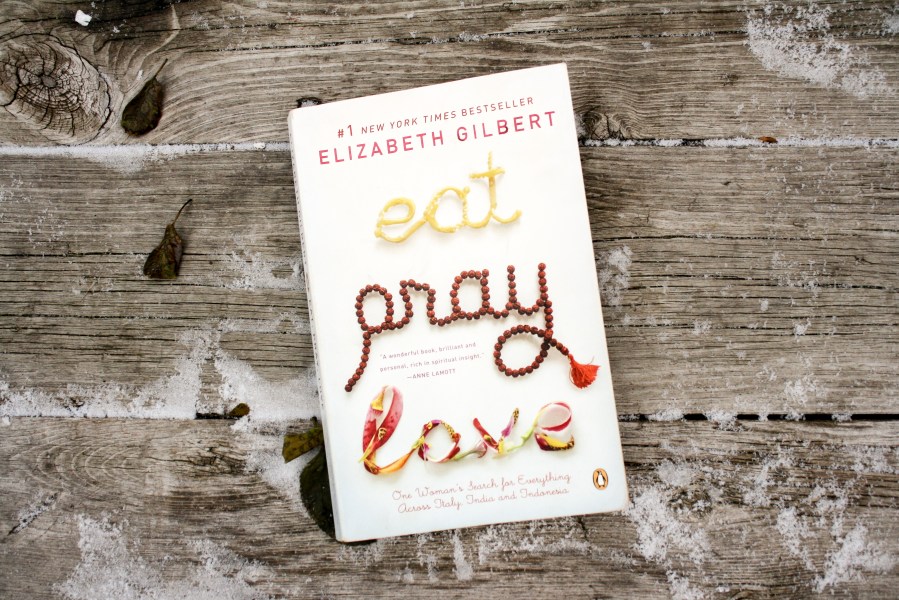
The author of “Eat, Pray, Love”, Elizabeth Gilbert, interestingly experienced the “success” of her book to provoked the same sense of anxiety and discomfort that is often associated with failure. She explained that the success carried a large looming cloud of expectations from her readers that she feared she wouldn’t be able to live up to in her next book. “Failure catapults you abruptly [into] the blinding darkness of disappointment,” Gilbert said. “Success catapults you just as abruptly, just as far, into the equally blinding glare of fame, recognition, and praise.”

For Gilbert, your subconscious cannot tell the difference between these two opposing poles, because they are both so far from the spectrum of our everyday, normal existence. Taking that into account, I think it is important to transform the idea of success into something more normal, more everyday, rather than something that just comes from world-wide recognition for our work.

eat pray love elizabeth gilbert

Re-conceptualizing Success

While finishing a book or having it fly off the shelves should be appreciated as a success, this is a very long-term and difficult goal to achieve. To put this into perspective, let’s say you were training for a marathon and never considered any of your training days leading up to it as successful because they weren’t the big day–logging those miles is going to start to feel hollow and unrewarding. Sure, that first training run over ten miles isn’t a marathon, but that is a huge success compared to sitting on your couch at home, and should be celebrated as such!

Having your vision of success span from the time you begin your project, to the time you complete it will definitely keep you in a better head space and keep you more motivated and excited with each leap and bound you make! Hence why we like to stress the importance of dividing up that overarching goal into smaller, more bite-sized pieces that you can achieve along the way and count as successful mile markers to your grand finale, which may be a finished book.

What are some short-term mile-markers that should be perceived as successes for a writer?

  • An outline completion
  • A chapter completion
  • A first draft completion
  • A marketing plan
  • Winning a writing competition
  • Writing an awesome Tweet, blog post, or other social media post that gets a lot of traffic
  • Your first piece of fan mail
  • Your first royalty check
  • Getting a gleaming endorsement for your back cover
  • And countless other examples.

Let’s make success part of our everyday. Let’s make small goals for ourselves that we can objectively look at and say, “You know what, I succeeded today” when we’ve accomplished them. Success doesn’t have to be this epic thing that becomes almost intimidating, as Gilbert describes it in her TED talk, and nor does failure. If we become at home in our everyday successes and failures, the monumental ones won’t seem so shocking to us.

“Success means doing the best we can with what we have. Success is the doing, not the getting; in the trying, not the triumph. Success is a personal standard, reaching for the highest that is in us, becoming all that we can be.”

– Zig Ziglar


Thank you for reading!  If you have any questions, comments, suggestions, or contributions, please use the comment field below or drop us a line at selfpublishingadvice@gmail.com.  And remember to check back each Wednesday for your weekly dose of marketing musings from one indie, hybrid, and self-published author to another. ♠


Kelly

ABOUT KELLY SCHUKNECHT: Kelly Schuknecht is the Executive Vice President of Outskirts Press. In addition to her contributions to the Outskirts Press blog at blog.outskirtspress.com, Kelly and a group of talented marketing experts offer book marketing services, support, and products to not only published Outskirts Press authors, but to all authors and professionals who are interested in marketing their books and/or careers. Learn more about Kelly on her blog, kellyschuknecht.com

From the Archives: “A New Year’s Manifesto”

Welcome back to our Tuesday segment, where we’ll be revisiting some of our most popular posts from the last few years.  What’s stayed the same?  And what’s changed?  We’ll be updating you on the facts, and taking a new (and hopefully refreshing) angle on a few timeless classics of Self Publishing Advisor.

∗∗∗∗∗

[ Originally posted: December 30th, 2015 ]

Around this time last year, I was busy making resolutions for the new year–2015, the year we’ve just finished–and in some cases I have actually managed to make good on those resolutions (see the list here and here).  This year, however, I’m pushing back a little against the instinctual attraction to “list-fever,” that special kind of holiday mania that leaves us mellow and warm and happy once the list is complete (it always feels good to write up a list, doesn’t it?) but panicked and anxious as the year reaches its end and we haven’t yet accomplished all that we set out to do.  And so it is that this year, instead of compiling all of the things I want to do, I thought I’d sketch out a quick drawing of who I think we are, as self-publishing authors.

This is my self-publishing manifesto:

I hereby claim the mountain of content and the island of method for us, the (few, the mighty) self-publishing authors of the world.  I assert our right to write what we please in whatever manner we please and within whatever time frame we deem fit.  I declare nothing off-limits, nothing too “edgy” or “tame” or “niche” or “unique.”  We are the fearless in life, and we have the right, too, to write and publish as adventurously as we live.

I hereby claim the lake of responsibility and the waterfall of ethical treatment for us.  In the little skirmishes and give-and-take between the traditional and self-publishing worlds, we occupy the high moral ground, ground from which we foresee a future in which authors are treated with the respect that they have earned, simply by virtue of being authors, and in which no one–neither the authors nor the publishers, the editors, the graphic designers, nor any other professional involved in the industry–uses their influence to abuse or undervalue others and the services they offer.  I assert our support for a future in which no-one can claim a monopoly on distribution or quality of product.  I claim the right to creative freedom and creative control–as well as an ethical flow of profits to and from the right people–for us, the self-publishers.  And I also claim the collective right to not tolerate unethical behavior from the corporate publishing sector which routinely reneges on its commitments to writers, readers, and its own employees.

I hereby claim the plains of ambition and the foothills of inspiration for us.  We will write, to the best of our ability, the best books we are capable of writing.  We will create, to the best of our ability, the finest covers and illustrations and altogether visually pleasing objects of which we are capable of creating.  We will learn from our mistakes without damage to our sense of self or our ego; we will seek out expert feedback and emerge with a refreshed sense of purpose and vision for where to go next.

I also claim the right to act out of self-interest, collectively and individually, for us–the authors who have been told we don’t belong or aren’t good enough but most definitely do and are–while also upholding our commitment to generosity, compassion, and social responsibility.  I claim the right to take full advantage of the digital revolution, to look forward to and think with a futurist’s imagination about, a publishing world and a market that looks radically different from the one we work with now.

I hereby claim ownership of my own decisions.  I do not ask for permission from others to write what I write or publish what I publish; I write and publish what brings joy to me and to my readers.  I do not ask for compliments or pats on the back or for any recognition which undervalues my skills and the intelligence of my readers.  I declare my obligation to respect, value, and represent the interests of others, and to balance this obligation with my own needs as an author and human being.  I recognize the privileges of my position as a person of influence, a person with the vocabulary to reflect and shape the world around me, and seek to put that privilege to good use for good ends.

I am not shy about recognizing my strengths, and I am not afraid of my weaknesses.  I hereby claim the valley of well-earned pride and the city of well-learned failures as my province.  I am proud to be a self-published author, and proud to be a part of a wider community of self-publishing authors as well as the readers who open their hearts and minds to the books we place in their hands.

– by Kelly Schuknecht


manifesto writing cheerfully

I think this one stands on its own—don’t you? What else can we claim in 2017 that we weren’t able to claim in 2015 or even 2016? The self-publishing industry hasn’t necessarily broken new ground, but it has built steadily upon its previous successes, and reports keep coming in that the market share division between digital and print books has leveled out and begun to run steady. But there’s a lot of tension in the air, politically, socially, and yes, metaphorically—tensions that have the power to shape our decisions. If I were to add any one “claim” to my original list, it would be this:

I hereby claim the fearlessness, both frantic and calm, of the entrepreneur, of the start-up, of the crowdfunded, cloud-built-and-stored, groundbreakers. I opt to place myself in the way of beauty, and in the way of success, by giving it all that I’ve got and taking no prisoners, taking no breaks from being myself and from pursuing my dreams, and yet taking a jackhammer to my bad habits with a sensitivity to my good ones, and to my body, mind, and soul’s needs. I claim the ambition of the space race, the empty-all-pocketbooks audacity of a world utterly bankrupt of fear, and the joy of knowing that whatever mistakes I make, whatever failures I slide into, I rush headlong into them knowing that I gave my absolute best and without fear that it’s the end. I will live with a future-mind, knowing that today’s fears and hardships will not hold me in place forever. I claim the right to unleash myself on this world, as an author and a purveyor of stories.

How’s that for an addition? I think I might just keep up this tradition. I might even codify our existing claims—along with any additions you, dear readers, might throw our way—into a document for year-round use. What do you think?

Thanks for reading.  If you have any other ideas, I’d love to hear them.  Drop me a line in the comments section below and I’ll respond as quickly as I can.  ♠


Kelly

ABOUT KELLY SCHUKNECHT: Kelly Schuknecht is the Executive Vice President of Outskirts Press. In addition to her contributions to the Outskirts Press blog at blog.outskirtspress.com, Kelly and a group of talented marketing experts offer book marketing services, support, and products to not only published Outskirts Press authors, but to all authors and professionals who are interested in marketing their books and/or careers. Learn more about Kelly on her blog, kellyschuknecht.com.

Self-Publishing News: 1.9.2017

And now for the news!

This week in the world of self-publishing:

Let’s Kickstart the new year with a piece on funding books with, well…Kickstarter. Funding is always the number one concern when thinking about publishing a book in general, but especially when self-publishing. Dylan Goldby used crowdfunding to help publish a book of his photography and says, “For me, crowdfunding made the most sense because I wanted to leverage my existing contacts, spread the word organically, and use the final product to raise more money without having to pay back any loans, etc.” Further, he says he enjoyed the rewards program built into crowdfunding which allowed him to send copies of his book to those who supported him, which also acted as a networking and marketing tool.

As far as using Kickstarter goes, Goldby has realistic and insightful advice for authors thinking about utilizing this crowdfunding platform. First off, he is explicit in stating that this is a time consuming process, so if you have a more efficient way to raise the money, by all means take advantage of it. The next piece of advice he offers: be prepared. Have your idea fully flushed out, study campaigns that have failed and succeeded and find out why. Part of Goldby’s preparation was creating a folder of Facebook and Instagram posts, emails asking for support, blog posts, videos, etc. Picking core hashtags relevant to your project is another great way to amplify your online presence.

Since you’re already in the self-publishing world, I’ll just keep beating a dead horse and say that marketing is a crucial piece to using Kickstarter–you need to self-promote like it was your job! Keeping up on your social media and networking presence is a fundamental piece to a successful Kickstarter campaign. To find out more about how Goldby experienced such success via this route, read the article above!

If you keep up on Huffington Post, you may have seen the article last week titled: Self-Publishing: An Insult To The Written Word, in which author Laurie Gough makes claims such as, “I’d rather share a cabin on a Disney cruise with Donald Trump than self-publish,” and “From what I’ve seen of it, self-publishing is an insult to the written word, the craft of writing, and the tradition of literature.”

Of course statements like these make me cringe, however something that makes me cringe even more is the sensationalism and mob culture of the online world which reacted to Laurie’s article with personal death threats, trashed ratings and the like. We unfortunately live in a world where technology allows us to fire vitriol at perfect strangers without ever seeing the repercussions or painful reactions of those we spew it at. Can you imagine threatening someone’s life you disagreed with if you were sitting next to them on public transportation? Of course not, because it is not only socially unacceptable, it is an absolutely insane and outrageous thing to do.

Gough has since apologized for the article (which has not stopped the hate-mail of course), where she recants her naive claims and admits on her Facebook page, “I’ve only read a handful of self-published books so was basing my article on that. I guess I was in a bad mood when I wrote it and I SO wish I’d never written it.”

Admittedly, Laurie’s article was offensive, brusque and clearly out of touch with the self-publishing world. Comparing self-publishing to screaming into a microphone and calling yourself a musician or saying that “the only similarity between published and self-published books is they each have words on pages inside a cover. The similarities end there,” are highly unfair assessments of the industry and have been proven wrong by numerous successful self-published authors.

So my question is why, when we know people are obviously wrong and expressing intolerant views, do we act so wrongly and intolerant right back at them? Intolerance shouldn’t breed more intolerance; if you fundamentally disagree with the tenants of someone’s argument, either ignore it and go on with your day, or add something productive to the conversation that will help persuade them via rational argumentation, rather than by fear of their safety or well-being. Screaming your opinion the loudest won’t make people listen to you, it will only make them want to plug their ears.

People will disagree with you, they will shoot you down, and they will tell you that you have no talent. Traditional publishing companies have done that to us for years, but we don’t go burn down their headquarters or troll their CEOs–we move on and we take the high road. I sincerely hope self-published authors let up on Gough, and I am sincerely happy to see her public and quite genuine-seeming apology.


spa-news

As a self-publishing author, you may find it helpful to stay up-to-date on the trends and news related to the self-publishing industry. This will help you make informed decisions before, during and after the self-publishing process, which will lead to a greater self-publishing experience. To help you stay current on self-publishing topics, simply visit our blog every Monday to find out the hottest news. If you have other big news to share, please comment below.


Kelly

ABOUT KELLY SCHUKNECHT: Kelly Schuknecht is the Executive Vice President of Outskirts Press. In addition to her contributions to the Outskirts Press blog at blog.outskirtspress.com, Kelly and a group of talented marketing experts offer book marketing services, support, and products to not only published Outskirts Press authors, but to all authors and professionals who are interested in marketing their books and/or careers. Learn more about Kelly on her blog, kellyschuknecht.com.

Saturday Book Review: “50 Things Your Kids Don’t Want To Tell You”

Book reviews are a great way for self-publishing authors to gain exposure. After all, how can someone buy your book if he or she doesn’t know it exists? Paired with other elements of your book promotion strategy, requesting reviews is a great way to get people talking about what you’ve written.

When we read good reviews, we definitely like to share them. It gives the author a few (permanent) moments of fame and allows us to let the community know about a great book. Here’s this week’s book review, courtesy of Midwest Book Review:

50 Things Your Kids Don't Want to Tell You by Shelly Campbell-Harley

50 Things Your Kids Don’t Want to Tell You

by Shelly Campbell-Harley

Publisher: Outskirts Press

ISBN: 9781478773627

Synopsis:

Shelly Campbell-Harley has a Master’s in Education and has had dozens of articles published online and offline, including The Old Schoolhouse Magazine, where one of her articles was included in TOS magazine’s Best of the Best 2013 special publication. Shelly has been involved with young people in many different facets over the past two decades, including that of teaching, educational consultant, youth group leader/director, and working with youth in a rehabilitation environment. She is currently teaching at-risk youth in an innovative charter school program in southern California. 50 Things Your Kids DON’T Want To Tell You is a compilation of valuable insights gleaned from young people aged 10-19 whom Shelly has encountered and wanted to share with parents and other adults who work with young people. It is an eye-opening experience for many who are curious as to what is going on in the lives and minds of our youth today. It was written with the purpose of opening the lines of communication between adults and young people, as well as promoting more positive relationships. 50 Things Your Kids DON’T Want To Tell You is a fascinating, scary, and realistic read that will awaken your mind and shake up your impression of how well you think the youth of today are living. With the rise of teenage suicide rates and school shootings, this book may be the beginning of an important connection needed to bridge that gap of communication while helping our young people see that they are being heard and understood. Get your copy today and make a positive change in a child you know!

Critique:

50 Things Your Kids DON’T Want To Tell You is comprised of five chapters:

  1. Family Relationships
    2. Personal Choices
    3. School: The Stage
    4. Legal: Crossing Lines
    5. Sex: No Plan

After each chapter, author Shelly Campbell-Harley has a ‘Reflection Page’. This is where you may list your thoughts about what you’ve read. Here, you may use free thought, mind mapping, or whatever method you deem necessary to lead to possible truths.

There isn’t any commentary on the 50 Things and it’s supposed to be that way. The book was meant to help you to think critically (deeply, not negatively) about whether or not your offspring is struggling with some of the mentioned issues. If 50 Things brings you and young to a point where a nonjudgmental conversation can be broached, then, the book will have well-earned your bucks.

Perhaps, a resource section would have been good though.

Shelly Campbell-Harley is the author of over a dozen educational articles and has written several children’s books, as well as a book on leadership. She has a Master’s in education and has been teaching for over 20 years. When Shelly is not writing, teaching, or spending time with family and friends, she enjoys reading, crafting, and spending time outdoors.


reviewed by Ginae McDonald of Midwest Book Review ]

Here’s what some other reviewers are saying:

Shelly Campbell Harley understands the most important thing about getting your teen to open up and talk to you, the parent, about what’s going on with their lives. And that is listening. Not interrogating, but rather inviting your child to share with you, and responding in a way that allows for them to feel safe in their sharing. The key to get them to take you up on this invitation could be unlocked in this simple book. Forever grateful to Shelly Campbell Harley.

– Amazon Reviewer S. Brown

I loved this book. I back and bought multiple copies after reading it, and gave to family, friends and co-workers. This book really opens your eyes to the different situations that might be or could be going on in your own child’s life or possibly a friends child or a family member’s child. I am very happy with this purchase and recommend this book to everyone.

– Amazon Reviewer Amazon Customer


saturday self-published book review

Thanks for reading!  Keep up with the latest in the world of indie and self-published books by watching this space every Saturday!

Self Publishing Advisor

selfpubicon1