Book reviews are a great way for self-publishing authors to gain exposure. After all, how can someone buy your book if he or she doesn’t know it exists? Paired with other elements of your book promotion strategy, requesting reviews is a great way to get people talking about what you’ve written.
When we read good reviews, we definitely like to share them. It gives the author a few (permanent) moments of fame and allows us to let the community know about a great book. Here’s this week’s book review:
Here Comes Ingo, a Mom’s Choice Awards Recipient is a great example of the benefits of art in early childhood development. This unique picture book encourages children to switc hseats with the illustrator via painting, coloring and drawing directly ON the page in order to tap into their creativity and let th eimagination soar. As with the best of books, at the conclusion of the story, the journey is not over. Ingo invites children to visit again and again in order to expand on Ingo’s dream world following into the tradition of classic books such as Good Night, Gorilla, The Adventures of Polo, Tuesday, Where’s Walrus, Sea of Dreams and The Red Book.
* courtesy of Amazon.com
Featured Review
The Mom’s Choice Award® Names Here Comes Ingo Among the Best in Family-Friendly Products
The Mom’s Choice Award® has named picture book Here Comes Ingo as among the best in family-friendly media, products and services. The MCA evaluation process uses a proprietary methodology in which entries are scored on a number of elements including production quality, design, educational value, entertainment value, originality, appeal, and cost. “I am thrilled to earn the Mom’s Choice Awards Honoring Excellence Seal of Approval,” says Odeta Xheka, the creator of the book. “I know all the great things the MCA does to connect consumers, educators, and caregivers with the best products and services available for families”.
To be considered for an award, each entrant submits five (5) identical samples for testing. Entries are matched to evaluators in the MCA database. Evaluators are bound by a strict code of ethics not only to ensure objectivity, but also to ensure that the evaluation is free from manufacturer influence. The five evaluations are submitted to the MCA Executive Committee for final review and approval. “Our aim to introduce families and educators to best-in-class products and services,” explains Dawn Matheson, Executive Director of the Mom’s Choice Awards. “We have a passion to help families grow emotionally, physically and spiritually. Parents and educators know that products and services bearing our seal of approval are high-quality and also a great value. The MCA evaluation program is designed to incorporate the expertise of scientists, physicians and other specialists; but we also engage parents, children, educators, and caregivers because they are experts in knowing what is best for their families.”
With the evaluation now complete, the testing samples of Here Comes Ingo will be donated to schools, libraries, hospitals and nonprofit organizations.
About Here Comes Ingo:
Created by Odeta Xheka of Odeta Xheka Visuals,Here Comes Ingo is a great example of the benefits of art in early childhood development. This unique picture book invites children to switch seats with the illustrator via painting, coloring and drawing directly ON the page in order to tap into their creativity and let the imagination soar. An artist first and foremost, Odeta Xheka came up with the idea of this book after observing her children spend longer and longer stretches of time “painting on mommy’s art” using their crayons, color pencils, stickers and glitter to add their own ideas to the art prints in their room. Soon after, Here Comes Ingo a book that offers children an unparalleled sense of agency which in turn encourages exploration, self expression, logical thinking and creativity came to life.
Here Comes Ingo was released on January 13, 2019 and is available in hardcover and paperback formats. Readers can get their copy on Amazon, Barnes&Noble or on the publisher’s website.
About the Mom’s Choice Awards®:
The Mom’s Choice Awards® (MCA) evaluates products and services created for children, families and educators. The program is globally recognized for establishing the benchmark of excellence in family-friendly media, products and services. The organization is based in the United States and has reviewed thousands of entries from more than 55 countries. Around the world, parents, educators, retailers and members of the media look for the MCA mother-and-child Honoring Excellence seal of approval when selecting quality products and services for children and families.
Beautiful colors, great message of kindness and tolerance
Bought both hardcover and paperback for my kids. My son enjoyed pouring over the illustrations while my daughter used her paperback copy as an excuse to “give Ingo more friends” by drawing her favorite animals alongside the colorful artwork. As for me, I enjoyed the unexpected quiet time 😉
How to be curious and brave to the unknown ( in the most colorful way )
I bought the book as a gift for my 4 year old niece; and not a surprise, she liked it a lot.
The images in the book have vibrant colors, and raise the child’s interest in the second.
The child passes a nice time with her parents by commenting on the pictures and scenes that appear through the whole the book.
Every time you re-read it, you can add new details and knowledge about the brave habitats that the brave Ingo explores.
I would recommend it to every child and parent too, to spend time together and increase the curiosity of the child and teach him/her how to face new unknown situations in a day-to-day young life.
Good luck to the author and let’s see how far Ingo can fly 🙂
Novels are about characters and relationships (or should be), but plots are about something that happens. How can you be sure that your plot is properly structured and that your characters are playing the proper role in the proper way? By using this fun and easy method:
Get an 8.5 x 11 piece of paper and fill it with a Tic-Tac-Toe grid (or pound sign symbol, if you prefer). Then enclose the lines with an outside box and you are left with 9 blank squares. Number the boxes from 1 – to 9 starting at the top left corner and going from left-to-right on each row.
Place the single major incident that happens in your novel in the center square, box number 5. And since everything that occurs in a novel should somehow be connected to that one major event, this blocking scheme will help you place (and pace) appropriate characters, events, and twists in the appropriate parts of the story leading up to (and in the aftermath of) that event. Boxes 1 -4 (the beginning portions of the novel) all must lead up to that major event. Boxes 6-9 (the ending portions of the novel) involve the fall-out, climax, and resolution from that event.
Box #1 in the upper left-hand corner is typically where the protagonist is introduced, hopefully in a dramatic way that entices the reader. Box #2 in the middle of the top row is typically where the antagonist is introduced. You will also notice that since Block #2 is touching Block #5 directly below it and Block #1 to its left, that the antagonist must play a key role both in the protagonist’s character and in the major event of the story. Box # 3 in the upper right is where other major characters and perhaps (hopefully) the major love interest is introduced. After all, what’s the point of reading (or writing) a novel that doesn’t involve love?
So in the top row of our grid we have The Protagonist, The Antagonist, and the Love Interest. Therefore, each major character plays the largest role in their own column. Of course the protagonist is featured throughout, since he/she is the protagonist, but Blocks 1, 4, and 7 are his/her starring sections. The antagonist plays the largest roles in the middle column (Blocks 2, 5, and 8); and the love interest owns the right column (Blocks 3, 6, and 9). Not coincidentally, major turning points occur at the end of each row (always related to the love interest; it’s what the protagonist fights for, right?)
It could be argued that the center column is actually the most important, because that is the column where the major event takes place in Block #5. Part of the point of this 9-block device is to ensure a book is properly paced, with sufficient build-up (ie, motivation), and sufficient fall-out, and all the emotional highs and lows that result. But it would be a mistake to assume that just because the major event is in Block 5 that nothing happens until half way through the book. The opposite is true. Something notable must happen in EVERY single square (otherwise, why write about it?).
Now that we’ve discussed the columns, let’s discuss the rows. The top row involves the beginning of the novel, and if you’re a 3-act structure traditionalist, you would say Row 1 is Act 1, Row 2 is Act 2 and Row 3 is Act 3. In row 1 you introduce your characters, and lay the ground work and emotional motivations for everything that takes place in Row 2. The plot-outline-blocks of this 9-Block device can help you determine where in the story each character should be introduced based upon that specific character’s involvement with the plot. The middle row is arguably the most important (for the same reason column 2 is the most important) because it involves the major event of the story. And finally, the bottom row (Act 3) involves the character’s lowest point, the turning point, and the dénouement (the final resolution), respectively.
Block #4 traditionally involves specific build-up and motivations to the major plot event in Block 5, which is the centerpiece of your plot. Block 5 is also the one square among all of them that is connected to the most adjacent squares, so important characters or events leading up to this plot point must be present in Block #2 and Block #4, while important consequences must be present in Blocks #6 and #8.
Block #6 in the middle-right is where another major turning point of your novel should take place, which is further complicated (and motivated/caused) by the major event that just took place in Block 5. And, more importantly, that turning point in Block 6 should lead to the “emotional low” of your novel, when everything is at their darkest. This is Block #7. A protagonist driven to his or her lowest point is sometimes driven to drastic measures and this is where events and characters introduced in Blocks 1 and Blocks 4 make another appearance, thus fulfilling requirements of foreshadowing, and demonstrating you are well in control of your craft as a novelist.
Typically a major twist leads to an epiphany and is what motivates the final climax (often some sort of emotional or physical confrontation), and this all occurs in Block 8. Given its direct proximity below Block 5, it’s probably no surprise that the epiphany or twist, as well as the climax, are all directly related to the event that takes place in Block 5.
The final block #9 in the lower right hand corner is where the dénouement begins and all the plot points are resolved, not out of the blue, but by connecting dots left in adjoining Blocks 6 (the second major turning point) and 8 (the results of the climax), while all involving the “love interest” or character/motivation introduced in Block 3. Resolutions cannot occur without the proper foundation, and novels cannot end without making a statement (of some sort) about the nature of love.
In 2002, Ernst & Young Entrepreneur of the Year Semi-Finalist Brent Sampson founded Outskirts Press, a custom book publishing solution that provides a cost-effective, fast, and powerful way to help authors publish, distribute, and market their books worldwide while leaving 100% of the rights and 100% of the profits with the author. Outskirts Press was incorporated in Colorado in October, 2003.
In his capacity as the President and Chief Marketing Officer, Brent is an expert in the field of book publishing and book marketing. He is also the author of several books on both subjects, including The Book Marketing COACH, Self-Publishing Questions Asked & Answered, and Sell Your Book on Amazon.
Forbes has well and truly been showing up for those amongst its readership who are self-publishing authors lately, and Amy Morin’s recent piece is yet another example of this excellent representation. Morin, whose website describes her as “a psychotherapist turned ‘accidental’ author,” knows the stakes when it comes to building a brand and crafting resources for others, including books. Morin has traditionally published three books domestically to date, but she understands the value to self-published works as well. In fact, her fifth “way” in this article is to publish a book in the manner most suited to your individual circumstance. Writes Morin:
While some people insist a self-published book is the way to go, others say traditional publishing is more profitable. But, publishing isn’t a one-size-fits-all. It depends on your topic.
If you have (a) small niche market, you may need to self-publish. Then, it’s up to you to decide whether to create a $50 manual or a $l.99 eBook.
She also advocates for traditional publication in other circumstances, but it’s heart-warming to see even this traditionally published author showing up for and advocating for self-publishing.
Good e-Reader is another news platform that has routinely showed up for self-publishing authors, and this week’s article by Mercy Pilkington demonstrates their continued support for authors seeking another way. Pilkington opens by describing just how far self-publishing has come, from origins shrouded in stigma and production difficulties to high-quality works offering diverse opportunities for diverse authors. Pilkington’s article is especially concerned with those authors who self-publish with the goal of having their self-published title or future works picked up for traditional publication. She touches on a recent blog post by powerhouse literary agent Anne Tibbets, who warns authors that already-self-published works are not the best candidates for making that transition, and offers this advice to authors wanting to make the leap from self-published to traditional publication:
Tibbets does offer some advice for seeking a traditional publishing deal, but there’s bad news: the advice itself isn’t new. “Write a whole new book that’s completely unrelated to anything you’ve self published, that’s unsold anywhere, unpublished anyplace (even online), and fits into the traditional publishing categories, sub-genres, and word count requirements, and query agents with that novel.”
We might put it another way: If you’ve successfully self-published a book already, the incentive to republish your book traditionally is marginal (you’re already making bank, and a traditional publisher will cut into your profits). Most people who are self-publishing these days are choosing to do so because self-publishing is the only or the best fit for their book anyway. There are plenty of reasons to self-publish, including the narrow selection parameters traditional publishers employ when picking manuscripts which exclude many high-quality works worth reading. And readers know this! One glance at the comments might well indicate that there’s still some negative opinions floating around in the ether, but a second glance will show that there are readers and commenters going to bat for self-publishing, as well:
As in all things, don’t let the haters get you down! Listen to those who know the value to your dreams.
As a self-publishing author, you may find it helpful to stay up-to-date on the trends and news related to the self-publishing industry.This will help you make informed decisions before, during and after the self-publishing process, which will lead to a greater self-publishing experience. To help you stay current on self-publishing topics, simply visit our blog each month to find out the hottest news. If you have other big news to share, please comment below.
Book reviews are a great way for self-publishing authors to gain exposure. After all, how can someone buy your book if he or she doesn’t know it exists? Paired with other elements of your book promotion strategy, requesting reviews is a great way to get people talking about what you’ve written.
When we read good reviews, we definitely like to share them. It gives the author a few (permanent) moments of fame and allows us to let the community know about a great book. Here’s this week’s book review:
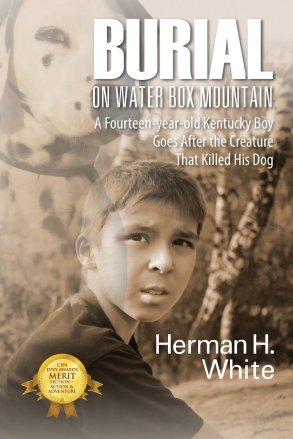
Imagination…or Something Real? Fourteen-year-old Joseph has no idea that his life is about to change in ways he couldn’t have imagined. Things haven’t always been easy for him; his mother is a controlling tyrant, and he is having some similar experiences with a teacher at school. He’s learned to find an inner core of courage and resilience…and those qualities will be tested to the utmost when he embarks upon a wilderness adventure to prove that his beloved dog was killed by a creature that nobody else knows about. Joseph’s family accuses him of having a wild imagination, but Joseph knows the truth…the spirit of his dog returned to tell him about the creature, and Joseph is determined both to prove that it is real, and to avenge the death of his dog. Follow Joseph on his trek into the compelling wilderness of Water Box Mountain, as he moves from the nostalgic atmosphere of rural life into an adventure full of natural beauty, survival skills, and excitement. A superb read for young adult and adult readers, Burial on Water Box Mountain is a modern fable that the whole family can enjoy.
* courtesy of Amazon.com
Featured Review
Amazing Story About Trusting in Oneself No Matter What!
This book I really enjoyed as it was such an exciting read, I could not put this book down from start to finish! The main character, Joseph is telling the story of his determination to find a creature (ape) that killed his dog. No one believes Joseph, but this does not stop him from believing in himself and his gut feelings and searching for this creature. .
This book is about a journey of a teenager who wants to discover truths in life and face his fears and learn. For me, I became so wrapped up in the story because the author made Joseph come alive!
What I love about this book is the moral/lesson: To believe in oneself and be determined to go forward no matter what. This is a fun read and an inspiring read.
This is a must read for all ages, for me, I loved the ending.
Highly recommend this book!
– Reviewed by Amazon Hall-of-Fame Reviewer Daisy S.
Other Reviews
As an adult, I enjoyed it, too!
This is a good book for boys, probably 12 to 15. Lots of suspense, and an exciting tale. It didn’t get five stars because the language, especially dialogue, is stilted in a number of places. I read it because I wanted to give a copy to my grandson, and I felt that the story propelled me forward because of the exciting plot. All in all, a good book, without some of the objectionable subjects in other books I checked out before finding this one.
A great read with excitement and suspense that everyone will love. The story has great moral solutions to problems that Joseph the main character encounters. I highly recommend this book to everyone.
It has been a long time since we’ve written about the Espresso Book Machine (EBM) on this blog, but that doesn’t mean that they’re not still out there and making a big difference. And they’re still newsworthy! Last Fall, the iconic New York bookstore Shakespeare & Co. closed its doors on its original historic location and reopened them elsewhere in New York, with the added bonus of an Espresso Book Machine! For those not already read into the EBM and what it can do, Mackenzie Dawson breaks it down this way for readers of the New York Post: ‘If a title is not available on the shelves, the patented 3D printer Espresso Book Machine can print one “in the time it takes to brew an espresso.”‘ She quotes bookstore CEO Dane Neller, who went on to add:
“I felt that the future of bookstores was smaller stores, community-based and experiential. This technology is like bringing the warehouse into the store, allowing us to offer customers the selection of Amazon.”
And there, we very much agree. The EBM isn’t limited to Amazon selections, however; EBMs also allow customers to bring their own media for printing in a variety forms, including UB. For more on how the EBM works, check out their online brochure.
Romance is big business, as Kim Komando would be (and is) the first to tell you. On Valentine’s Day last week, Komando write that “More than half of the top 20 books on Amazon’s romance best-seller list are titles from its book-publishing arm or are from self-published authors.” And that’s just the tip of the iceberg when it comes to Komando’s words of wisdom; she also notes that while “Romance is serious business” indeed, “Some authors make six figures a month selling love stories. And to keep their books at the top of the charts, authors are known to spend upwards of $50,000 a month in advertising.” So even though “Love doesn’t always make sense,” as Komando would put it, “for eBook authors, it can make dollars.” And it costs dollars, too. Keep an eye on Komando’s website for more developments on this front; she knows the industry.
One of this last week’s more interesting developments comes from an unexpected corner of the internet: Psychology Today, not exactly our usual go-to spot for news on publishing. But this week? This week they’re in our corner, and they’ve got our back. PT contributor Marty Nemko, PhD, unfolds his own self-publishing story:
I’ve written 11 books, most published by Wiley, Random House’s Ten Speed Press, etc. Yet perhaps surprisingly, I feel best about the few I self-published using Amazon’s CreateSpace and its Kindle Direct. And here’s the punchline: That’s true even though those self-published books have sold far worse than my commercially published ones.
Especially today, when most publishers will look only at agented submissions—and it’s hard to get a respected agent—I believe it’s usually wise to write for self-publication, even if you’ve previously written books that have sold well. Indeed, I made that choice with four of my five most recent books.
So why is he such an advocate for self-publishing?
It comes down to the process, writes Nemko, and he gets into the fascinating psychology of why, exactly, self-publishing might be of benefit to everyone. We cannot recommend this article enough!
As a self-publishing author, you may find it helpful to stay up-to-date on the trends and news related to the self-publishing industry.This will help you make informed decisions before, during and after the self-publishing process, which will lead to a greater self-publishing experience. To help you stay current on self-publishing topics, simply visit our blog each month to find out the hottest news. If you have other big news to share, please comment below.