How to Format Your Self-Published Book

One of the questions I am most frequently asked by self-publishing authors is how to format the manuscript for submission. Every self-publishing company may have its own requirements, but here is an overview of what is most common:

PAGE SIZE: A typical manuscript page will be the standard 8.5 x 11. If you want an idea of how long your book will be, you can set your page size to the trim size you plan to select. Changing to the trim size you plan to select will also help you see how your text shifts and moves.

MARGINS: It’s fine to use the default margins in Word. However, if you want to get closer to standard margins for many self-publishing companies, set the top and bottom margins to .95” and the left and right to .75”.

SPACING: Most authors prefer to use double-spacing when creating their manuscript because is allows for easier editing and proofreading. It is fine to submit it with double-spacing to most self-publishing companies. However, if you want to get an idea of the length of your book and how the text will look, change the manuscript to single-space.

PARAGRAPH INDENTS: It’s best to not use spaces or tabs, but rather to set your paragraph setting to the first line hanging .25”.

HARD RETURNS: Only use hard returns at the end of a paragraph, NOT the end of each line like a typewriter.

SPELL CHECK: Run the grammar check and spell check and have a third party proofread your manuscript. It is important to note that grammar and spell check don’t always catch every error and the suggestions aren’t always correct. It is best to have another person as well as yourself proofread the text.

ABOUT JODEE THAYER: With over 25 years of experience in sales and management, Jodee Thayer works as the Director of Author Services for Outskirts Press. The Author Services Department is composed of knowledgeable customer service reps, publishing consultants and marketing professionals; together, they all focus on educating authors on the self-publishing process in order to help them publish the book of their dreams and on assisting authors with marketing and promoting their book once published. Whether you are a professional looking to take your career to the next level with platform-driven non-fiction or a novelist seeking fame, fortune, and/or personal fulfillment, Jodee Thayer can put you on the right path.

Friday Conversations With A Self-Publishing Writer 9/20/13

One more thought about partnering with a ghostwriter:  Two are better than one.  When you’ve started working with a writing-partner you’ll discover that one person’s idea spawns connecting thoughts in the other person; this collaboration produces a better book.  Much like film-making where writer and director join forces, the author and ghostwriter bring their own unique histories to play in the making of your book.  Thus I have three more criteria for finding that perfect partnership:

1)    Vision:  When you (the author) have formulated your core statement about your book—what it is, what it brings to the reader—does the person you’re interviewing share that vision?  Both you and your teammate should see that picture; have that same goal.

2)    Adaptability:  Some authors think they want a “helper” who will enhance their book by following the manuscript “exactly” as the author has written it.  That is every author’s decision to make; however, they should not waste their money hiring a true ghostwriter.  Employ the Editor who will correct grammar, punctuation, sentence structure; without creative input.

  1. However, the author who wants to explore enhancing their manuscript will be as adaptable and flexible as the ghostwriter they hire.  Their manuscript may, indeed, end up being very close to the original—or—very different with improved plot, character, setting (research required) elements that bring out the author’s inspired ideas.  This is especially true for authors in the Inspirational genre: fiction and non-fiction.

3)    Passion:  Both author and ghostwriter must share a passion for the subject matter of the manuscript.  Every book on every bookshelf was written to “tell something important.”  If the level of commitment is weak, so will be the finished product.

These three criteria also hold true after you’ve written the words: THE END.  Then the search begins for the right publisher.  Notice I’ve used the word right.  From my personal perspective I see too many authors open that door of “hope-they-will-accept-it,” then send out multiple queries to the “big” houses—and wait.  If you know that your book is ready to meet its readers, then step up and employ the best self-publishing company you can find.

There are several quality self-publishers out there (and some not so great); however, this is where you’ll use the same criteria that I’ve outlined in this and last Friday’s blog.  The self-publishing staff will become your book-making-crew—the cameraman, format editor, printer, marketing director.

  • Talk with them and ask for referrals from their published list.  Search their bookstore for two or three books in your genre, then ask for referral/contact information for those authors.
  • LOOK at the books they’ve printed—either at the bookstore or on the Internet.
  • Compare their publishing packages.  This is a competitive business, so don’t be swayed by the first dollar-difference you see between companies.
  • LISTEN to the Author Representatives.  It won’t take you long to discern whether they have a true passion for their work (helping authors like you)—or not.

Bottom line:  As the author, you are creating an alliance of experts dthat starts with you and ends when you hold your finished book in your hands.  “Two are better than one;” and a team that brings all their talents and skills together to produce your book is best.

Royalene ABOUT ROYALENE DOYLE: Royalene Doyle is a Ghostwriter with Outskirts Press, bringing more than 35 years of writing experience to authors who need “just a little assistance” with completing their writing projects. She has worked with both experienced and fledgling writers helping complete projects in multiple genres. When a writer brings the passion they have for their work and combines it with Royalene’s passion to see the finished project in print, books are published and the writer’s legacy is passed forward.

Weekly Self Published Book Review: Dusk

Book reviews are a great way for self-publishing authors to gain exposure. After all, how can someone buy your book if he or she doesn’t know it exists? Paired with other elements of your book promotion strategy, requesting reviews is a great way to get people talking about what you’ve written.

When we read good reviews, we definitely like to share them. It gives the author a few (permanent) moments of fame and allows us to let the community know about a great book. Here’s this week’s book review by Midwest Book Review:

dusk

Dusk

Carolyn Budd-Goertzen

Publisher: Outskirts Press

ISBN: 9781432777883

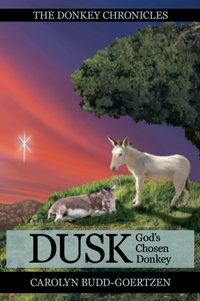
Animals were almost members of the family in ancient times. “Dusk: God’s Chosen Donkey” seeks to tell the early life of Christ through the eyes of his family’s donkey. Offering a unique perspective, Carolyn Budd-Goertzen provides an unusually powerful story from the most unlikely of sources. The first of a series, “Dusk” is worth picking for those seeking original Christian fiction, recommended.

Online Retailers Gained, While Brick-and-Mortar Lost In Wake of Borders Exit

Bowker recently released a study detailing the sales of online and brick-and-mortar retailers after Borders’ exit from the market. Here is a summary of the results:

  • Online retailers — led by Amazon —  earned 44 percent of America’s book dollars. This is up from 39 percent in 2011.
  • Barnes & Noble, including BN.com, remains the second largest bookselling outlet.
  • Women increased their lead over men in book buying, accounting for 58 percent of overall book spending in 2012, up from 55 percent in 2011.
  • Men are bigger hardcover buyers.
  • Ebooks continue their steady upward trend, with an 11 percent share of spending in 2012, compared to seven percent in 2011.
  • Despite the growth of ebooks, traditional print book output grew three percent in 2012.

This information is important for authors who have already self-published or who are considering self-publishing. It is essential that authors are aware of industry trends, so they can use the information to make the best publishing and marketing decisions for their books.

These results show the importance of offering an ebook version of your self-published book. Despite the popularity of ebooks, there is still a demand for print books. For many authors, the best option is to offer both a print and ebook version in an attempt to reach the largest market. However, this varies greatly from author to author and depends on the target market as well as the author’s personal goals.

To learn more about the Bowker report, visit http://www.bowker.com/en-US/aboutus/press_room/2013/pr_08062013.shtml.

I’d love to know, how do the results in this report impact your self-publishing decisions?

ABOUT KELLY SCHUKNECHT: Kelly Schuknecht is the Vice President of Outskirts Press. In addition to her contributions to the Outskirts Press blog at blog.outskirtspress.com, Kelly and a group of talented marketing experts offer book marketing services, support, and products to not only published Outskirts Press authors, but to all authors and professionals who are interested in marketing their books and/or careers. Learn more about Kelly on her blog at http://kellyschuknecht.com.

Self-Publishing Week in Review: 9/17/13

As a self-publishing author, you may find it helpful to stay up-to-date on the trends and news related to the self-publishing industry. This will help you make informed decisions before, during and after the self-publishing process, which will lead to a greater self-publishing experience. To help you stay current on self-publishing topics, simply visit our blog every Tuesday to find out the hottest news.

Why You Should Self-Publish

This successful self-published author talks about how his latest self-publish book recently debuted #7 on the New York Times Bestseller List and how he has sold over a million books in the last two years. My favorite part of the article is when the author says, “My happiest days were spent writing, not being a bestselling author.” I also like when he states, “Implicit in the message that only some people should publish is the stance that all publishing is commercial, it’s all about making money, about being a bestseller, a pro. But that’s not the reason I do it.”

Self-Publishing on a Shoestring: Amazon’s Matchbook Program

There has been a lot of buzz about Amazon’s Matchbook Program. The program gives customers who buy a print copy of a book in the program a deeply discounted or free Kindle version of the same book. It’s similar to what Amazon has been doing with their audiobooks, where anyone who buys an e-book, can order a deeply discounted audiobook version, as well.

Self-Publishing Is Growing Up

Publishers Weekly is significantly beefing up its coverage of self-publishing authors. PW Select, a guide to self-publishing, will go monthly in October.

If you have other big news to share, please comment below.

ABOUT KELLY SCHUKNECHT: Kelly Schuknecht is the Vice President of Outskirts Press. In addition to her contributions to the Outskirts Press blog at blog.outskirtspress.com, Kelly and a group of talented marketing experts offer book marketing services, support, and products to not only published Outskirts Press authors, but to all authors and professionals who are interested in marketing their books and/or careers. Learn more about Kelly on her blog at http://kellyschuknecht.com.