As a self-publishing author, you may find it helpful to stay up-to-date on the trends and news related to the self-publishing industry. This will help you make informed decisions before, during and after the self-publishing process, which will lead to a greater self-publishing experience. To help you stay current on self-publishing topics, simply visit our blog every Tuesday to find out the hottest news.
Social media is an excellent marketing tool for self-published authors. It’s free, effective, and fairly easy to use. This excellent article offers simple tips to help authors harness the power of social media.
This Huffington Post article by Smashwords founder Mark Coker explains the current trends and news in the publishing industry and offers insight into 2015 industry predictions. The article is well-informed and thought-provoking. It is a must read.
In today’s publishing world, writers have lots of options. You can publish at a Big 5 press, publish with a small press, publish with a micropress, or self-publish both digitally and in print. This handy infographic breaks down whether self-publishing or traditional publishing is the right choice for you.
If you have other big news to share, please comment below.
ABOUT KELLY SCHUKNECHT: Kelly Schuknecht is the Executive Vice President of Outskirts Press. In addition to her contributions to the Outskirts Press blog at blog.outskirtspress.com, Kelly and a group of talented marketing experts offer book marketing services, support, and products to not only published Outskirts Press authors, but to all authors and professionals who are interested in marketing their books and/or careers. Learn more about Kelly on her blog at http://kellyschuknecht.com.
If you are like many writer’s, publishing a book is probably on your 2015 to-do list. You’re probably feeling inspired, excited, maybe a little scared or overwhelmed, and you’re hoping your dream won’t become another failed resolution that gets pushed to the back burner after the thrill of the new year wears off.
Well, I’m here to help. Each week in January I will offer you tips and tricks to help you accomplish your goal of publishing a book this year, and I encourage you to continue reading my posts every week throughout the year for inspiration, advice, and news that will help you become a successful author. (Be sure to check out last week’s post about setting writing goals.)
This week, I’d like to share some tips that will not only help you achieve your goal of publishing but will also improve your craft. Here are six tips that will make you a better writer this year.
1. Follow your heart.
Don’t worry about what is popular right now or stress over what readers will think of your work. The best writing comes from the heart, and you will be more fulfilled if you write what you are passionate about.
2. Step outside your box.
To learn and grow, you must try new things. Experiment with a new genre. Develop a character that is vastly different from your normal characters. Visit a new place. Try a new food. Listen to a different band. Be willing to take risks in both your life and your writing.
3. Treat it like a job.
Stop waiting for inspiration and start writing every day without excuses. You may not love what you write everyday, but at least you will get words down on paper. You can always rewrite later, and most people find the words start flowing once they just sit down and start writing. You’ll never be a published writer if you never actually write.
4. Read. Read. Read.
Whether you write fiction or non-fiction, for adults or children, the best thing you can do for your career is read! Read everything. Books, magazines, newspapers. Read various genres. Read top sellers as well as indie authors. Read about the subject you write about. Read about things you’ve never heard of. Read books for children. Read the classics. Read as much as you can.
5. Rewrite as many times as you need.
Most first drafts need a rewrite. Many second and even third drafts could use a rewrite. Don’t feel so pressured to complete your manuscript that you settle for less than your best, but be careful not to get so caught up in perfection that you never finish.
6. Unplug.
When you are writing, editing, researching, or brainstorming, unplug. Log out of your social media sites. Turn off the TV and cell phone. You’ll be surprised how much more productive you’ll be by following this simple tip.
I’d love to know, what is the best writing advice you’ve ever received?
ABOUT JODEE THAYER: With over 25 years of experience in sales and management, Jodee Thayer works as the Director of Author Services for Outskirts Press. The Author Services Department is composed of knowledgeable customer service reps and publishing consultants; together, they all focus on educating authors on the self-publishing process in order to help them publish the book of their dreams. Whether you are a professional looking to take your career to the next level with platform-driven non-fiction or a novelist seeking fame, fortune, and/or personal fulfillment, Jodee Thayer can put you on the right path.
Last week I offered you a list of progressive steps that I hope will help you begin this New Year with a flurry of writing that leads you to fame and fortune. However, today, let’s pause a moment and consider who your Readers’ are and why they will buy your books.
Why do “readers” READ? Lots of studies have been done by universities and science groups. Here are three of the top statistical discoveries:
Entertainment value. The human mind simply needs to escape into another world in order to survive the world we’re in. The subject matter can be as diverse as swashbuckling historic fiction or the dietary needs of the largest land-living arthropod in the world—the Giant Coconut Crab. If the story elements are “fun,” people will buy the book, read and enjoy it.
Sparking the imagination. As readers are entertained, their imagination takes flight because they’re discovering something new. This cyclic circle of reading-imagining-discovering does something amazing in the human brain as synapses fire and we become smarter! Yes, really smarter…which in turn…
Reading makes readers more attractive. What? Yep, more attractive. While turning the pages of all those fun and imaginative books, a person absorbs a wider vocabulary. Then, when using that more diverse word-bank, other people are drawn to them, seeking the exchange of “fun” and ideas.
Most writers instinctively know these things and appreciate reading almost more than anything else. However, the food-for-thought that I’d like to leave you with today is: Write for yourself, first, and the readers will follow.
No matter how much research is done and passed forward to teach writers how to write, the real magic can’t happen until the writer connects to the reader. And, sad-to-say, it is impossible to connect to every reader. Thus the topic/heading of this blog: Write TO yourself and FOR yourself. Review the three statistics listed above and fold them into your topic and/or plot selections. What sparks your imagination? What genres entertain you? When you’re talking with a group of people, what topic holds-the-floor during the conversation? As you answer these questions for yourself, you will begin developing your writing projects along these lines—your stress levels will decrease and the pages will flow.
And, in the midst of all this creativity, don’t forget to research WHERE you will publish! The self-publishing business is a big one and not all companies are the right fit for you or your genre.
ABOUT ROYALENE DOYLE: Royalene Doyle is a Ghostwriter with Outskirts Press, bringing more than 35 years of writing experience to authors who need “just a little assistance” with completing their writing projects. She has worked with both experienced and fledgling writers helping complete projects in multiple genres. When a writer brings the passion they have for their work and combines it with Royalene’s passion to see the finished project in print, books are published and the writer’s legacy is passed forward.
Book reviews are a great way for self-publishing authors to gain exposure. After all, how can someone buy your book if he or she doesn’t know it exists? Paired with other elements of your book promotion strategy, requesting reviews is a great way to get people talking about what you’ve written.
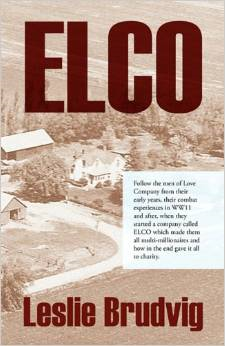
When we read good reviews, we definitely like to share them. It gives the author a few (permanent) moments of fame and allows us to let the community know about a great book. Here’s this week’s book review by Midwest Book Review:
War can forge bonds that last a life time. “Elco” is a novel by Leslie Brudvig about a troop of soldiers, who through their friendship, splits and reunion years later, create a business with their wide array of experience. Their friendship is tested, and they drive to do good in the world. “Elco” is a fine novel focusing on the extent that friendship can go, highly recommended.
There’s no better moment to dabble in time-travel than at the start of a new year; our sense of reality is skewed, anyway, by a solid season of interrupted work schedules, an exoticized diet, and upbeat television specials featuring exuberantly optimistic actors and singers. Why not take the holiday nostalgia one step further by actually crossing an event horizon and stepping into 1439?
Consider the setting: Established by the Romans as a military outpost in 12 B.C.E., Strasbourg in the Fifteenth Century had a long and rich history of latinic and germanic occupations, as the remnants of the Roman empire duked it out with the Alemanni, Huns, and Franks. It had a history, too, of internal conflict, with the citizens outmaneuvering their bishop and winning the status of an Imperial Free City in 1262, courtesy of King Philip of Swabia. Within a century the city had been wracked by revolution, the bubonic plague, and exceptionally brutal pogroms, in which Strasbourg’s entire Jewish population was either burnt to death or forcibly expelled from the city. The year of the pogroms is also the year in which Gutenberg is reported to have begun building his printing press––1439––and one has to wonder if there isn’t something more than coincidence at work here.
William Caxton showing specimens of his printing to King Edward IV and his Queen. Published in ‘The Graphic’ in 1877; now in the Public Domain.
“Okay––” I hear you saying. “Okay, so Gutenberg did some cool things, reinventing existing technologies in a frenzy of progress, like some Steve Jobs of medieval France. But what does that have to do with self publishing, promotion, and me?”
Quite a lot, actually.
While we don’t know a lot about Gutenberg––including, for example, how he felt about the pogroms and expulsions and social constructs of his day, and even the exact year he was born––we do know rather a great deal about his legacy. His celebrated press was in full operation by 1452, less than 13 years after its conception, which is actually quite impressive given the materials he had to work with and his somewhat unpredictable financial situation (he was eventually bankrupted in a court case by his sponsor, the wealthy Johann Fust). And in a time when books were still for the most part produced over the course of painstaking months of fine brushwork by dedicated monks, he put more printed materials into the hands of more readers than any westerner before him. He was the definition of the foolhardy entrepreneur, borrowing money, racking up mammoth debts, quitting Strasbourg in disgrace, and setting up shop elsewhere, repeatedly.
He may have been born into a different time and a different world, but we intrepid few (the self-publishing few) can still learn two very important things from this early icon of self-publishing:
1) Use the tools at hand, and use them well, but don’t become shackled to any existing paradigm. Gutenberg didn’t invent the printing press, as much as westerners like to think so. That honor goes to Bi Sheng in 11th Century China, or perhaps even an earlier inventor of cluster of inventors of whom we know nothing. What Gutenberg did that was so impressive is that he seized on the tools available to him––newly minted methods for punchcutting, matricing, and so on––and repackaged them in such a way as to make them efficient and therefore affordable enough to outdistance his competition––the monks––in both speed and quantity. He didn’t invent the wheel, but he did put a motor on it and send it speeding into the next century. He knew when to let go, too, and answer to no other voice but his own vision for publication.
2) Pay attention to the market; listen to both your readers’ needs and those of your own practical enterprise. Gutenberg didn’t just print the sacred texts for which he is famous. In fact, the bible-printing business drove him into the ground––or underground––and he lost so much money that even his astute early decision to print more lucrative materials (latin grammars, indulgences, pamphlets, and a dictionary) was not enough to keep him (even remotely) afloat. Listen to your readers, and pay attention. We live in a day and age where it’s feasible to customize your approach to the market, whether in terms of the format or formats you use to reach the most readers with the most net profit, or in terms of the kinds of events, interviews, and other promotional efforts you coordinate to spread the word. You don’t have to be the victim of your own art, as Gutenberg was; you can stick to your vision and reinvent yourself, all at the same time.
Johannes Gutenberg’s story is equal parts inspiration and cautionary tale, but there’s so much more to him than I can sum up here. It’s only fitting that one of the world’s largest, oldest, and most comprehensive volunteer-driven digital enterprises is called Project Gutenberg, and is dedicated to the distribution of free ebooks. Next week, I’ll examine another titan of Ye Olde Selfe-Publishing Impulse. Will it be Jane Austen for her efforts with Sense and Sensibility, or Ezra Pound, or Emily Dickinson, or Virginia Woolf? Check back next week to find out who!
If you have any comments, reflections, or suggestions for this new series, I’d love to hear them. Drop me a line in the comments box, and watch this space on Wednesdays in 2015 as I blog my way into better acquaintance with these legendary figures of self-publishing!
ABOUT KELLY SCHUKNECHT: Kelly Schuknecht is the Executive Vice President of Outskirts Press. In addition to her contributions to the Outskirts Press blog at blog.outskirtspress.com, Kelly and a group of talented marketing experts offer book marketing services, support, and products to not only published Outskirts Press authors, but to all authors and professionals who are interested in marketing their books and/or careers. Learn more about Kelly on her blog, kellyschuknecht.com.