Decluttering…Ambitiously!

This week I’d like to take a look at the ways in which we can “declutter ambitiously,” or find ways to set realistic and simple goals for ourselves–including for decluttering! If you had a New Year’s resolution list that was far too grand for your lifestyle, now may be a time to take a look at your goals for the day, week, month or year and refine them to something more accomplishable.

calendar planning


  • Draw up some numbers


How many social media posts do you want to make per week?

How many blogs?

How many pages or chapters do you want to finish per month?

Do you want to have a completed book by the end of the year? Or multiple books?

These goals are very simple and easy to measure. Once you have these numbers down on paper, you can begin to create a schedule that will promote progress towards these now clearly defined goals.

If you want to get three blogs done per week, pick three days that best work with your schedule to do them and treat it like a homework assignment due on Mondays, Wednesdays and Fridays, for example. If you want a book done by the end of the year and you envision it having around twenty chapters, make sure you’re getting a chapter done every two weeks at least–you’ll need to give yourself extra time for editing of course!

  • Use a calendar!

This can be the calendar on your phone or computer or a good ole fashioned paper one. Use the data from step one to make yourself a schedule. Actively engage with this schedule rather than just look at it. When you complete tasks, use a symbol that shows you did so and reward yourself based on your consistency and progress.

This is also useful for noting when you may be realistically too busy to write some weeks, allowing you to stack your writing on other weeks when holidays, busy days at work, family vacations, etc., come up.

If you do use a calendar that is synced with your phone and computer, use the alerts that are available to prompt you and remind you of the commitments you made to your writing. Do not expect to be able to do all of your writing, blogging and marketing in one day, and do not clutter your schedule by even kidding yourself that that is a reasonable workload…which leads to my next point.

  • Set reasonable goals

For some people, writing 500 words a day is a walk in the park. For others, perfectionists and otherwise that might take a couple of days. If you’re honest with yourself you can avoid a cluttered schedule that just gets more and more backed up each day you fail to reach your goals each day. We all know what happens when we get overwhelmed by the idea of falling short of our overambitious goals–we grow anxious and are almost unable to work at all. This horrible paralysis can be avoided by just understanding yourself and being honest with yourself as a writer.


Thank you for reading!  If you have any questions, comments, suggestions, or contributions, please use the comment field below or drop us a line at selfpublishingadvice@gmail.com.  And remember to check back each Wednesday for your weekly dose of marketing musings from one indie, hybrid, and self-published author to another. ♠


Kelly

ABOUT KELLY SCHUKNECHT: Kelly Schuknecht is the Executive Vice President of Outskirts Press. In addition to her contributions to the Outskirts Press blog at blog.outskirtspress.com, Kelly and a group of talented marketing experts offer book marketing services, support, and products to not only published Outskirts Press authors, but to all authors and professionals who are interested in marketing their books and/or careers. Learn more about Kelly on her blog, kellyschuknecht.com

 

From the Archives: “Traditional Publishing: Hard Facts”

Welcome back to our Tuesday segment, where we’ll be revisiting some of our most popular posts from the last few years.  What’s stayed the same?  And what’s changed?  We’ll be updating you on the facts, and taking a new (and hopefully refreshing) angle on a few timeless classics of Self Publishing Advisor.

∗∗∗∗∗

[ Originally posted: October 17th, 2008 ]

We are in ongoing exploration of the advantages leading self-publishing options offered for publishing authors. Collectively, what are the advantages of self-publishing in general over the long established alternative? Here are some hard facts on Traditional publishing.

7 – Traditional publishers lose money on over 85% of the books they publish, so they only accept 2% of those that are submitted.

6 – They typically accept manuscripts only from established authors who have demonstrated a proven track record.

5 – Authors lose all control of their content during the editing process.

4 – Authors must still invest an enormous amount of time, energy, and money promoting a traditionally-published book.

3- Authors typically receive 5-10% royalty on the wholesale price of the book, and from that have to give 15-25% to their agent. Do the math.

2 – The majority of books published by old-fashioned publishers go out of print within 3 years. Many books that are stocked on book shelves remain stocked for as little as five weeks before being returned, unsold, to the publisher.

1- Old-fashioned publishers acquire all rights to your book and keep them, even when the book goes out of print or the publisher goes out of business!

– by Karl Schroeder

On Advances & Other Things

First off, it’s worth noting that the numbers are all over the board here, and that while the industry’s most reliable source of yearly hard data–the annual Author Earnings Report–isn’t out for this year yet (which makes sense, since we’re only a few months in) it isn’t set up to gauge that kind of question to begin with. Publishers understandably have a vested interest in fogging up the data around advances, especially how many people actually earn them back, because the facts of the matter are such that:

  • It’s a much smaller number than Karl reported back in 2008, probably closer to the 2 to 5% range;
  • Advances protect some authors from facing their own losses, but they also cheat some well-performing authors out of representative royalties in a classic case of “settling for a misleadingly presented benefit”;
  • A high percentage of unmet advances equals a lot of waste, and in an industry which is barely scraping by as-is, this would be a major blow to certain publishers’ reputations as champions of the everyman;
  • A high percentage of unmet advances also equals a slippage in the market, and publishers have to maintain intense competition with each other in order to attract that small number of well-performing authors who do make back their advances, and in so doing make a profit for the publisher as well. Lose a couple of big-name authors because their reputation is slipping, and the rest might flee as well … and the publishing house go under.

So it’s not data that publishers really want to broadcast.

All of this to say, publishers do indeed prefer established authors who have proven track records as blockbuster bestsellers, and newer or more typically performing (“midlist”) authors are left to struggle along with substandard marketing and promotional help, because the publisher doesn’t believe investing more will pay off. These midlist authors must carry the burden of self-promotion themselves, even if they supposedly have the might and muscle of a major publishing house behind them. Only the guaranteed successes are guaranteed significant assistance, and there are very few guaranteed successes, aren’t there?

Control will always be an issue. Perhaps you might consider giving up control, if you knew that you were putting your book into good hands of great skill and leaving your book with a team who really had its best interests at heart. But publishing houses aren’t like that; they have to think about the bottom line at all times, because the industry is so competitive and they’re so often at risk of losing everything. So they make the call on your book cover, maybe even your book title, and on all sorts of marketing and promotional decisions which you may or may not agree with in the first place–because they have to keep the machine moving, and the assembly line in motion.

You might have guessed the preferable option, seeing as how we’re a blog about self-publishing. But we don’t just have a vested interest; we want to lay out all the options, with all the facts, so that you can choose the one best suited to you. And if you know your book is a guaranteed blockbuster success, then traditional publishing may well be a good route for you! But if you’re publishing a book with narrower appeal, maybe more specialized material, or with the goal of reaching a certain fandom–well, self-publishing is an effective and efficient way of doing that, while ensuring you retain full creative control.

That, we can get behind. (And we do … a lot. Sorry about that!)

hard facts child

Thanks for reading.  If you have any other ideas, I’d love to hear them.  Drop me a line in the comments section below and I’ll respond as quickly as I can.  ♠


Kelly

ABOUT KELLY SCHUKNECHT: Kelly Schuknecht is the Executive Vice President of Outskirts Press. In addition to her contributions to the Outskirts Press blog at blog.outskirtspress.com, Kelly and a group of talented marketing experts offer book marketing services, support, and products to not only published Outskirts Press authors, but to all authors and professionals who are interested in marketing their books and/or careers. Learn more about Kelly on her blog, kellyschuknecht.com.

Self-Publishing News: 3.13.2017

And now for the news!

This week in the world of self-publishing:

This incredible series by Bennett Voyles goes over how digitalization has changed “book consumption, book production and book marketing.” This part of the series focuses on the writer.

While Voyles is quick to admit that the top five publishing companies control 80% of all the book industry’s sales in the US, he quickly counters that staggering percentage with the fact that “The Big Five” only has a 23% share of the Amazon ebook market. Further, three of the top ten best selling books on Apple iBook this past February were written by self-published authors.

So what are the advantages to the digitization of the publishing industry for writers? Voyles suggests that the publishing process is now more streamlined. If you want to make edits to a book you’ve already created, you can quite literally do that with a few clicks of a button–better yet, if you do so through an Amazon e-book, those changes are instantly made to already purchased books. This means that the authors can immediately adapt to the reactions, reviews and input of their readers.

Think about it this way, if you’re worried about the response you might get from a book, you can almost give it a test run by publishing it first as an ebook, gain some feedback from readers all around the world and then adapt your manuscript to create something more reader friendly. Looking at digitization in this way, it seems as if the quality of books coming out in this age will be enhanced, contrary to the all too oft made argument the proliferation of ebooks/self-publishing would in general lower the overall quality of books today.

Voyle hammers this home when he points to successful self-published authors who end up landing deals with traditional publishing houses, meaning that the quality of self-publishing leaves room for cross-over. But he almost seems to suggest that this cross over to traditional publishing may not actually be that profitable for self-published authors who can make anywhere from 35-70% royalties over the 7% royalties they’d get in a big publishing house. Further, traditional publishing houses seem to be moving in the direction of outsourcing a lot of the copyediting, proofreading and production to freelance workers, workers that can just as easily be hired by self-publishing authors meaning that you now have access to the same quality of editors as traditional publishing companies anyhow.

Not only do self-published authors have a higher chance of getting a bigger paycheck than they would in a traditional publishing house, they are given the chance to publish first and foremost, which “raises the odds of success from nil to slim,” according to Voyle, who acknowledges that self-publishing is not a sure thing either. Self-published authors have to be a publishing company of their own; they have to find editors, deal with copyrighting, create an interior and cover design, be marketing savvy, etc. etc. Doing all that on top of creating a solid manuscript is obviously a bit overwhelming, which is why we at Outskirts Press offer services to help writers with those somewhat laborious tasks.


spa-news

As a self-publishing author, you may find it helpful to stay up-to-date on the trends and news related to the self-publishing industry. This will help you make informed decisions before, during and after the self-publishing process, which will lead to a greater self-publishing experience. To help you stay current on self-publishing topics, simply visit our blog every Monday to find out the hottest news. If you have other big news to share, please comment below.


Kelly

ABOUT KELLY SCHUKNECHT: Kelly Schuknecht is the Executive Vice President of Outskirts Press. In addition to her contributions to the Outskirts Press blog at blog.outskirtspress.com, Kelly and a group of talented marketing experts offer book marketing services, support, and products to not only published Outskirts Press authors, but to all authors and professionals who are interested in marketing their books and/or careers. Learn more about Kelly on her blog, kellyschuknecht.com.

Saturday Book Review: “A Slice of History, Musing on Religion”

Book reviews are a great way for self-publishing authors to gain exposure. After all, how can someone buy your book if he or she doesn’t know it exists? Paired with other elements of your book promotion strategy, requesting reviews is a great way to get people talking about what you’ve written.

When we read good reviews, we definitely like to share them. It gives the author a few (permanent) moments of fame and allows us to let the community know about a great book. Here’s this week’s book review, courtesy of Midwest Book Review:

a slice of history, musing on religion by frans koning

A Slice of History, Musing on Religion

by Frans Koning

Publisher: Outskirts Press

ISBN: 9781478760061

Synopsis*:

A View of the World from Three Continents. . . From a farm in The Netherlands to poverty-stricken Sierra Leone…from the brief peace after the Great War to the horrors of World War II…from Europe to America…this extraordinary book of anecdotal essays ranges through the life of a man who has lived broadly and deeply.

Author Frans Koning shares his observations and impressions on topics ranging from what it was like to be a teenager in a Nazi-occupied country, to his experiences in Africa with the Peace Corps, and his move to the United States. He has experienced the effects of brutality and fear and lived to tell about man’s inhumanity to man. With a perspective gained from three continents, he can see how human experience is both diverse and similar…and how patterns in human behavior emerge, from the Waffen SS to ISIS. Immediately engaging, loosely structured, and retaining a piquant flavor of his native land in a Dutchman’s English, A Slice of History is a uniquely personal yet immediately accessible memoir of life during the most turbulent decades of our time.

 * courtesy of Amazon.com

Critique:

Most Americans know World War II from secondary sources like books, documentaries, etc. or from people they know who were alive at that time. “A Slice of History: Musing on Religion” by Frans Koning is a delicious primary source on how a young man experienced the war in the Netherlands. The dominant theme coming so often from the US public on “How we saved Western Europe” misses the complexities involved for the Dutch and all other liberal minded youth in this part of Europe who lived through this period.

The book is written in the style of letters written to friends, or even a thoughtful diary, is a refreshing reading experience. Koning shares his religious and political thoughts and feelings as he tries to create meaning in the midst of the forces of the war around him. The author’s colorful descriptions of a few of his medical practice experiences at home and in West Africa will certainly raise the reader’s curiosity. His ancestors trace back to the Reformation, as he reflects on his own struggles to understand the Christianity he encountered from parents, country, and Americans when he moved to the US. His long, soul searching for religious meaning caused his involvement with a liberal church. The openness and critical thinking of that religion served his questioning mind well.

Finally the narrative is full of personal details that most Americans could never imagine. This includes discovering the proper placement of straw into his wooden shoes, and how his mother saved Koning’s life from a belligerent Nazi SS officer by bribing him with a ham and a half bottle of gin.

This book causes readers to imagine how they would have reacted to events if they had been there. Overall, anyone interested in WWII will find this to be an excellent excursion into understanding how WWII affected a thoughtful young man.

reviewed by Gary Gustafson of Midwest Book Review ]

Here’s what some other reviewers are saying:

A nice piece of personal contemporary history from early twentieth century Holland (with some WWII drama, also). There are also medical observations from his years as an doctor in the African bush, and thoughtful views on comparative religion. Enlightening and fun as well.

– Amazon Reviewer Aaron Stafford

A personal opinion of the author and his life experiences: Dr Koning is a friend, and has very cogent opinions about the world, based upon his eighty plus years of life and experiences. His observations, in my experience, are keen and penetrating.

– Amazon Reviewer Scott Chester


saturday self-published book review

Thanks for reading!  Keep up with the latest in the world of indie and self-published books by watching this space every Saturday!

Self Publishing Advisor

selfpubicon1

Conversations: 3/10/2017

MARCH INTO SPRING

WITH A SPRING IN YOUR WRITING STEP Part II

Continuing with concepts about genre writing that meets my criteria of educational reading, this week I’ll focus on the Fiction/Mystery/Historical Fiction genres. For me, these novels pivot on the depth of development of the main character(s) and key supporting characters.

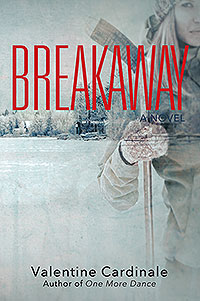
cover-1Just recently I discovered the author Valentine Cardinale—wondering if that is a pseudonym—then discovering it’s his real name and a memorable author’s name it is, indeed. His most recent book release is BREAKAWAY staring Father Richard Bianchi who can’t help but become a “private” investigator in the drama surrounding the abduction of Eddie Dvorak.

Cardinale has tapped into a growing concern among people around the world, especially Americans who travel abroad. I don’t know if this author did any background research in abductions, however, here are a few statistics that may peak your interest.

  • In 2014 there were 83,957 missing person cases in the U.S. alone.
  • 50,569 adults
  • 33,388 under 18 years of age
  • An average of 750,000 are reported each year

Should we (people) be educating themselves about the abductions happing in their cities? Fiction/Mystery novels can open our eyes to many things—and just may encourage you to consider researching and developing your own mystery novel with this key component.

cover-2The second novel I’ve recently found is TURNINGS: Love In A Time of War by Chloe Canterbury.  The story revolves around a young woman named Sarah (of the Shaker community) and John (a Colonel in the Confederate army). It is 1862 in Kentucky where the Civil War is causing havoc.

There is so much history research available for this time period the writing of such a novel might feel too heavy. However, once an author understands the main characters, they will “write” their own story and Readers will increase their knowledge base—which makes it vitally important that:

  • Places and events are fact-checked several times.
  • Settings, equipment, clothing, etc. are correctly described.
  • Military ranks/positions are accurate.

And, of course, writers must constantly make their own reality-check of how a woman—of the Shaker belief—will respond to her love of God and her growing affections for this Confederate soldier.

The world we live in is full of amazing and complicated personal relationships. It is through safe, fictionalized relationships that we can learn how to develop better relationships in our own lives. Both of the novels listed here have been developed to do just that.

I believe every writer has their own favorite novels that have inspired and encouraged them—especially as examples of excellent writing techniques. Mine include a sweeping time period novel titled: Mary Called Magdalene by Margaret George. It is my hope to someday become such a writer who carries Readers into the different worlds of historic times. The goal: Never quit! Keep writing! Publish! And you, too, will have amazing success!  ⚓︎


Royalene

ABOUT ROYALENE DOYLE: Royalene has been writing something since before kindergarten days and continues to love the process. Through her small business—DOYLE WRITING SERVICES—she brings more than 40 years of writing experience to authors who need “just a little assistance” with completing their projects. This is a nice fit as she develops these blogs for Outskirts Press (OP) a leading self-publisher, and occasionally accepts a ghostwriting project from one of their clients. Her recent book release (with OP) titled FIREPROOF PROVERBS, A Writer’s Study of Words, is already receiving excellent reviews including several professional writer’s endorsements given on the book’s back cover.  

Royalene’s writing experience grew through a wide variety of positions from Office Manager and Administrative Assistant to Teacher of Literature and Advanced Writing courses and editor/writer for an International Christian ministry. Her willingness to listen to struggling authors, learn their goals and expectations and discern their writing voice has brought many manuscripts into the published books arena.