NaNoWriMo––which stands for National Novel Writing Month––is a fabulous opportunity to chip away at a project or two that you’ve been thinking about all year. But it is also, as many writers have discovered, the kind of undertaking that is all-consuming and exhausting. For those of us who have found ourselves unable to participate this year––whether it’s because we didn’t know about NaNoWriMo in the first place, or (as with one of our writing staff) are helping a parent recover from brain surgery, or (as with several friends and relatives) are simply too busy with raising a family or working a 9 to 5 job––it would be nice to know that it’s actually completely acceptable not to participate in this particular yearly event.
So for all of you who feel like you need encouragement or permission to take a break from NaNoWriMo, here it is! I’m encouraging you! I’m giving you permission to do what’s best for you in the here and now, whatever that is!
There are, in fact, some completely legitimate reasons to NOT participate in NaNoWriMo, and if you’re feeling extra pressure this year to join in or catch up and you’re just not ready, just remember that we are often our own greatest critics, and even well-intentioned friends and fellow writers may need the occasional reminder that you will reach your own goals in your own time as you are able.
I really don’t think that we can be our best selves, much less the best writers we can be, without first addressing those underlying issues underlying our reticence, or our struggle to write–head on.
So this November, instead of challenging you to see which excuses you’re coming up with to not participate in NaNoWriMo, I challenge you to try and figure out what is happening to throw you off of your NaNoWriMo game. Once you know the root causes, you have three options, right?
Do nothing, and let sleeping dogs lie (however uneasily) and run the risk of facing writer’s block indefinitely as a result;
Deal with them to the fullest extent possible and find a solution that allows you to write (although perhaps not today); and
Manage them in balance with other major ongoing concerns to an extent that allows you some freedom to write.
Understandably, I’m going to lobby for everyone to manage or solve their excuse-inducing-problems because I want all of you to feel unshackled and fully able to write … but I do understand that you have a life outside of writing. We all do. Sometimes that life is going to intrude upon your process as a writer, and that’s okay. It really is. I mean, come on, 2020 has thrown us all for a loop! Maybe this is not the year to try and hurry yourself into making NaNoWriMo work. And maybe it is. Either way, we’re here for you at SPA to support you in making the best possible decision to fit your own life and needs.
Stay strong. Take care of yourself. Know your own heart. Know your limits. Seize the day … even if you’re seizing it for a very long nap.
You are not alone. ♣︎
Do you have ideas to share? Please don’t hesitate to drop us a line in the comments section, below.
ABOUT ELIZABETH JAVOR: With over 20 years of experience in sales and management, Elizabeth Javor works as the Director of Sales and Marketing for Outskirts Press. The Sales and Marketing departments are composed of knowledgeable publishing consultants, customer service reps and book marketing specialists; together, they all focus on educating authors on the self-publishing process to help them publish the book of their dreams. Whether you are a professional looking to take your career to the next level with platform-driven non-fiction or a novelist seeking fame, fortune, and/or personal fulfillment, Elizabeth Javor can put you on the right path.
Here’s a fun and uplifting story for those fans of epic fantasy: Isaac Stewart, who has worked as art director for fantasy megastar Brandon Sanderson among others, has launched a Kickstarter campaign to launch his lift-the-flap picture book after struggling to find a traditional publisher willing to take on the project. The fundraising campaign for the book, Monsters Don’t Wear Underpants, was fully funded within 12 hours, and has now more than doubled Stewart’s original funding goal. (So nice things can happen on the Internet after all!) At least for now, the book is available for pre-order, and even if you don’t have children going through potty training, you can certainly take notes from Stewart’s well-orchestrated Kickstarter process if you’re thinking about taking a similar path to self-publication.
“As a ghostwriter,” Elaine Pofeldt writes in the opening to a recent Forbes article, “I often hear from prospective authors who would like to write a book but are on the fence about whether to self-publish it or try to find a commercial publisher.” Pofeldt, a longtime contributor to a number of high-profile publications on the subject of entrepreneurship and co-founder of the entrepreneur-boosting company 200kfreelancer.com , offers a well-rounded and realistic comparison of the self-publishing process in contrast to a more traditional (or “commercial”) approach. She covers topics ranging from funding through writing, editing, publishing, and promoting your book––and how each experience varies between the two options. This is a thoughtful article that despite being written by someone “in the industry” will still prove useful to those readers who are not specifically launching their books through her business.
As a self-publishing author, you may find it helpful to stay up-to-date on the trends and news related to the self-publishing industry.This will help you make informed decisions before, during and after the self-publishing process, which will lead to a greater self-publishing experience. To help you stay current on self-publishing topics, simply visit our blog each month to find out the hottest news. If you have other big news to share, please comment below.
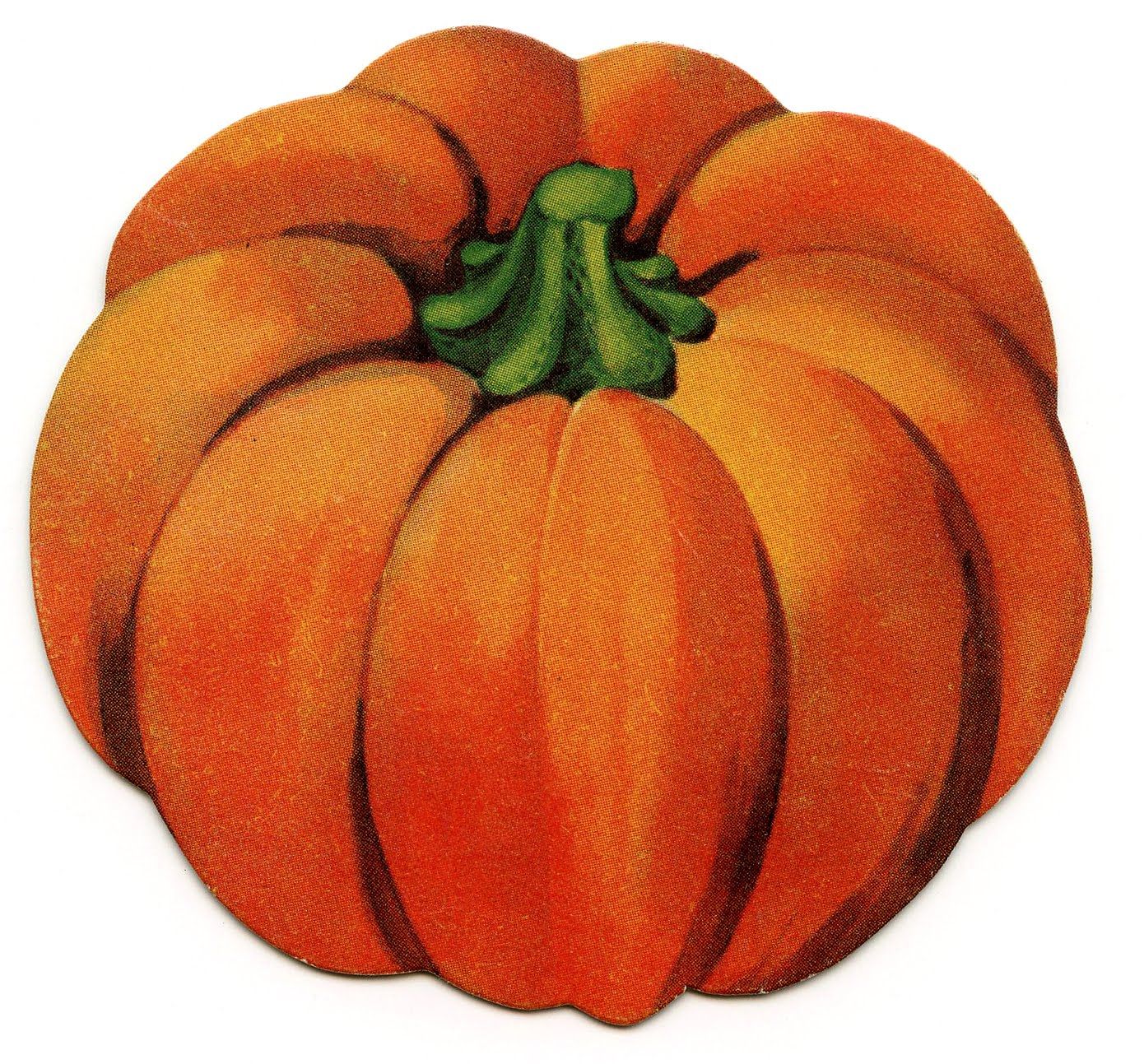
In the story of Cinderella, our heroine must get herself and her carriage home before the midnight bell, when the spell breaks that has turned a pumpkin into a carriage and a poor orphan servant into a lady. In some tellings of the tale, Cinderella doesn’t quite make it in time, and finds herself mixed up with the pulp and seeds as her carriage reverts to its original state. I liked these stories the best as a child, mostly because I can’t imagine explaining that to a prince (or a mean stepmother). Then I would imagine the scene as it played out, with Cinderella explaining: “I’m sorry, I lied about everything and am not a princess, but would you like some pumpkin seeds for your garden? I understand this variety can grow to be the size of a carriage!”
Now, if you search for “Cinderella” and “Halloween” together online, you’re likely to pull up a list of absolutely useless Halloween costumes based on the Disney animated (or live action reboot) version. They’re cute, but they’re not demonstrative of an actual connection between the two.
But consider: On this particular Halloween––that is, October 31st, 2020––the night between Halloween and a candy-induced migraine of a Sunday is also the night in which we get to celebrate midnight twice. ÂNDˆa full moon. This particular pumpkin patch of coincidences, in which Halloween, Daylight Savings Time, and a full moon. This particular full moon will be the Blue Moon, as it is the second full moon in the month of October, and that is a fairly novel event, which explains the origin of the phrase “once in a Blue Moon” to describe an event that is rare. It’s kind of weird, but it’s also kind of amazing. What a year, right?
Halloween is an astronomical celebration. It is a cross-quarter moon, which I am just beginning to wrap my head around, that falls roughly halfway halfway between equinox and solstice. But don’t trust me, trust diagrams from the great and wonderful Internet full of amateur astronomers!:
There’s a lot of fun science behind this astronomical event, one definitely worth celebrating (maybe even in a Cinderella costume). It is also, of course, considered something of a spiritual event, with both its lovers and its haters due to its pagan origins. Of course, a person could say the same thing––that there’s a lot of fun science behind it––about each of these things: the Blue Moon, a full moon on Halloween, and Halloween as a cross-quarter event.
Perhaps this is just me connecting the dots between two very different things, but I always think of Cinderella around Halloween, mostly because of that iconic pumpkin carriage scene. If there was indeed a ripe pumpkin on the vine the night that Cinderella’s fairy godmother transformed her into a high-status lady for the prince’s ball, then the events in the story may very well have happened on Halloween. There’s a shared wistfulness and aspiration behind the story of Cinderella and the stories of modern day trick-or-treaters (or since this is 2020, those folks who dress up for the day even though it’s difficult to go door to door safely in some areas due to COVID-19).
They are aspirational because they reflect some larger than life passion or desire. For Cinderella, that desire was to be seen for who she was inside and not be defined by her poverty. For many trick-or-treaters, often it reflects someones or somethings that they find interesting and compelling enough to put on as a costume. (Unless you’re an infant, in which case, it reflects your caregivers’ passions.) Kids dress up as superheroes, first responders, heroes and villains from any number of shows and movies and books––and they do so because they wish to be extraordinary too, deep down.
They are wistful because so often our lives take us in a different direction from those aspirations. (It’s extremely difficult to find available fairy godmothers these days who are taking on new clients.)
We as writers often feel similar things about the publication process, that it won’t ever possibly work because it’s too difficult, or requires specialized editorial or software know-how, and so forth. We are afraid of still being in the pumpkin as the carriage reverts, and feeling publication as an impossibility that one can only wistfully watch from afar as it happens to other people.
Today, as you go about your final preparations for Halloween (maybe complete with a splash of some Cinderella story), I want to challenge you to see publication as something that is, in fact, within your ability to achieve. This is where you see the connection between all of these different dots. Self-publishing exists for a reason. For many reasons. And unlike Halloween, to become a published author isn’t something that you can only ever be aspirational for. If you ever figure out how to get a radioactive spider to bite you, I want to know your secret. But suffice it to say, most Halloween costumes do not reflect achievable career paths. It’s extremely difficult for Spider-Man to pay the rent if he’s constantly running away from work to do a second, unpaid job of saving people and annoying Tony Stark.
But self-publishing isn’t some remote once-in-a-blue-moon possibility. It exists precisely to get you from your aspiration to whatever the complete opposite of wistfulness is. Celebration of past accomplishments, perhaps? Pride in a job well done, and pride in a dream realized. And it isn’t something that you have to do alone through impersonal computer-mediated steps. Self-publishing as an industry is absolutely packed with amazing people with useful and related skills who are not just happy to talk with you in a casual sense––they’re eager. And delighted to help aspiring authors become published authors, and then to welcome new authors to the author club.
This has been a year of feeling alone in the face of all the things our world is throwing at us. But don’t fall into the trap of including publication on that list. You can chat with your local librarians, your local bookstore staff, the excellent employees of self-publishing companies, and yes, you can chat with me too.
Don’t let yourself be frightened to publish––or at the very least, don’t let yourself talk yourself into a self-fulfilling prophecy of publication being impossible. Get yourself and your pumpkin carriage of a manuscript home (and published) by midnight––and see what kind of wonderful things can happen when you believe in yourself.
You are not alone. ♣︎
Do you have ideas to share? Please don’t hesitate to drop us a line in the comments section, below.
ABOUT ELIZABETH JAVOR: With over 20 years of experience in sales and management, Elizabeth Javor works as the Director of Sales and Marketing for Outskirts Press. The Sales and Marketing departments are composed of knowledgeable publishing consultants, customer service reps and book marketing specialists; together, they all focus on educating authors on the self-publishing process to help them publish the book of their dreams. Whether you are a professional looking to take your career to the next level with platform-driven non-fiction or a novelist seeking fame, fortune, and/or personal fulfillment, Elizabeth Javor can put you on the right path.
When it comes to speaking directly to the troubles of the present, one can’t overlook the impact of articles such as this one by Tiffany Johnson for the Spokesman Reporter, in which she records details of a conversation with self-published author W.D. Foster Graham, who is using his experience and voice as a Black author in America to broaden the diversity of local library collections both through the inclusion of his own books as well as by requesting a number of books by other authors be added to their catalogs. Foster Graham is most well know for “Never Give Up and Mark My Words, which are both part of his Christopher Family Novel series.” Writes Johnson, “He used the self-publishing process as an opportunity to care for his project in a way that was relevant to his unique narrative as a Black voice in the United States. “I had to vet editors. I would ask them, ‘What does cultural sensitivity mean to you?’” he said.” Once his books reached publication, he began approaching libraries. The Hennepin County library welcomed his books into their collections, and other libraries began to follow suit.
According to Foster-Graham, now seven counties in the Twin Cities metro area plus St. Paul, Rochester, and St. Cloud, offer his books and other Black authors that he has requested. He urges the Black community to do the same. “You need to come at them with data on how they can access more African American books. I provided them with an alternative [solution],” he said.
We cannot recommend this article highly enough. It’s not too long, so we don’t want to steal too much of the limelight from Johnson’s excellent writing, but suffice it to say this is a positive, proactive approach to improving the quality and quantity of voices represented in a regional way, and it just might offer a roadmap for other authors and readers to assist in starting tough but necessary conversations with their own local libraries.
Alright, now this is interesting––and if the first reviews of the crowdfunding project Spark Books Accelerator Program by the Spark Project come back positive, then this might prove to be an incredibly useful tool for some self-publishing authors who have struggled to raise the money to pay for premium services, like copyediting and illustrations (just to name two). According to Patricia Mirasol of Business World, this “accelerator program uses a similar model as the local crowdfunding platform that matches creators with backers who are willing to pitch in money for ideas they find compelling and worthwhile.” Sounds nice, right? As more details are made public and the Spark Project beta tests its first few crowdfunding attempts, we will report further on this subject! Quoting from one of the project’s founders, Mr. Dulay, Mirasol repeats his words that “The beauty of crowdfunding is that it [offsets expenses]. Our goal is for the whole process to pay for itself.” Nice idea, nice plans, and now we watch and wait for nice test runs.
Prabbhan’s article in The Free Press Journal is something of a wake-up call. Not only do writers struggle with the same COVID-19 inspired challenges that we all face, but they are also struggling with the additional challenge of not being able to access their local libraries and bookstores (or at least, not in the same ways as they did before––most bookish spaces have pretty robust online presences these days). Bookstores offer inspiration, research pathways, and much more, hints Prabbhan, who interviews a number of young writers for the article. That said, one interview––with author Karan Puri––is especially illuminating in a positive sense. Writes Prabbhan:
[Puri] believes that the ‘stay home stay safe’ phase can be a terrific option for those wanting to maximise their side-hustles. “The lockdown gave me the time to complete my book and release it all over the world through Amazon self-publishing. A great platform, I took advantage and first launched the ebook version of the book. I started interviewing a few people who had gone through such issues for my book, and it’s been a worthwhile pursuit.
Whether or not his local bookstore is open for business, Puri sees possibilities. That’s a notion we will keep in mind when the days seem especially hard. There is a silver lining, perhaps, for some authors who never quite found the time in their busy lives to complete their manuscripts!
Every list needs to end with something as pure and sweet as this article from the Green Bay Press-Gazette! As Clough himself puts it in the article’s opening lines, “It’s not often a golden retriever gets a writing credit, but that’s the case on Baby Bumbu, a book from writer John Koski and illustrator Ben Toyne, both of Sturgeon Bay.” The cover is adorable, and the idea is adorable: “tells the fictional story of a puppy taken to join a circus in France and her efforts to return to her Wisconsin home,” writes Clough. Bumbu has been “dognapped”! Obviously we’re going to have to read the book so we find out what happens to poor Bumbu. In addition to the regular edition of the book, a special addition is available for an additional fee that goes directly to a nonprofit. Clough sums up the details: “Those who order directly from Koski can have their books ‘signed’ with a paw print from Grace Ellen.” We don’t know much else about this particular book yet on the blog, but we can’t wait to learn more. Find out more information at the link above!
As a self-publishing author, you may find it helpful to stay up-to-date on the trends and news related to the self-publishing industry.This will help you make informed decisions before, during and after the self-publishing process, which will lead to a greater self-publishing experience. To help you stay current on self-publishing topics, simply visit our blog each month to find out the hottest news. If you have other big news to share, please comment below.
We are halfway through October, and the year continues to be an odd one. And while many neighborhoods will be skipping the door-to-door risks of trick-or-treating––or finding super creative ways to be both safe and merry––some areas are ramping up the intensity of their outdoor decorations as a way to demonstrate their continued love for the season of Halloween.
It is one hundred percent acceptable––even encouraged!––to put your imagination to work when it comes to putting up spiderwebs and that twelve-foot skeleton that sold out immediately and became an instant internet meme. We want to be extra spooky during the month of October … but only to our neighbors. Our readers? Not so much. This week, I’ll talk about things that will scare away readers and how to avoid these mistakes.
1) Typos and poor grammar
While even books published by big-name traditional publishers occasionally have mistakes, readers expect books to be nearly flawless. If your manuscript is full of typos and grammar mistakes, readers will not take you or your book seriously, no matter how great your story. It is difficult to review your own manuscript, so I always recommend hiring a professional copyeditor or keeping an eye out for an all-encompassing publishing package that includes a built-in editing service.
2) A poorly developed story
Sometimes authors feel rushed to meet a deadline or lose track of the direction of their book. If you’re like me, the most punishing deadlines of all are the ones I create for myself, independent of what’s going on in the world. If elements such as plot, characters, setting, organization, and voice aren’t properly developed, a book will leave readers disappointed. Since an author is attached to a story and knows in their mind how it is supposed to read, it is always best to have someone else review every story destined for publication. Consider hiring a developmental editor or ask trustworthy friends, family, and colleagues to provide feedback.
3) A generic cover
Despite the cliché “Don’t judge a book by it’s cover,” readers decide whether or not to purchase a book at least partially based on the cover. Rather than using stock photos or artwork, I highly recommend spending extra for a personalized book cover that is professional and that captures the essence of your book. As with editing services, graphic design is a demanding process and often well-worth the financial investment of searching out assistance from someone who knows exactly what to look for.
I’d love to know, have you ever been spooked away from purchasing a book? What pushed you over the edge?
You are not alone. ♣︎
Do you have ideas to share? Please don’t hesitate to drop us a line in the comments section, below.
ABOUT ELIZABETH JAVOR: With over 20 years of experience in sales and management, Elizabeth Javor works as the Director of Sales and Marketing for Outskirts Press. The Sales and Marketing departments are composed of knowledgeable publishing consultants, customer service reps and book marketing specialists; together, they all focus on educating authors on the self-publishing process to help them publish the book of their dreams. Whether you are a professional looking to take your career to the next level with platform-driven non-fiction or a novelist seeking fame, fortune, and/or personal fulfillment, Elizabeth Javor can put you on the right path.




 Self Publishing Advisor