Guest Post: Ingram Puts Publishing on Notice

On April 27, 2020 Ingram Book Wholesalers began removing books from wholesale distribution that they determined to lack integrity and therefore negatively affect the reputations of publishers, libraries, and retailers, and, let’s face it, Ingram.

Screen Shot 2020-04-30 at 10.51.30 PM

Ingram sent all the publishers for whom they distribute books worldwide a “Service Alert” beginning with an initial paragraph containing the sentence: “To align with our industry’s needs for content integrity, we will actively remove print content from our catalog that does harm to buyers and affects the reputations of our publishers and retail and library partners.”

That is a pretty broad statement, so what does it mean? In the most general sense, it means if you paid to independently publish yourself, if you published traditionally, or if you published through a full-service self-publishing company for a service fee, your book is most likely safe since most of them vet manuscripts in advance of acceptance (with the help of an actual human being).  

On the other hand, for authors who have published books through Amazon’s CreateSpace or Kindle Publishing Platform, where the whole thing is done by lunchtime, you may have a greater concern since there was no human vetting process. Amazon publishes just about anything because their product isn’t your book, you are.  Ingram knows this, so books published via CreateSpace and KDP are also likely to undergrow harsher scrutiny simply because of how the books themselves were published.

And that’s the problem. Automated, “free” online publishing platforms like KDP are making it possible for nefarious or unscrupulous individuals or companies to profit from publishing what Ingram identifies as content lacking integrity. To that end, Ingram finds itself forced to become the gatekeeper, a role once held by The Big Five publishers (and their various subsidiaries) but a role that has been sorely lacking in the publishing industry since the advent of automated online publishing platforms.  

First Amendment pundits may be inclined to cry “foul” and wave their free speech cards, but Ingram’s use of “harm to buyers and affects the reputation of…” is not a subjective matter of opinion or free speech, but an empirical definition of value and quality. This is an important distinction that few humans have trouble making, but one that even fewer computers can make accurately.  For instance, no legitimate publishing company would accept 200 blank pages titled “Scrapbook” and publish it as a book. A computer, on the other hand, might consider 200 blank pages to be perfect. After all, there would be no mistakes, no copyright violations, and no libelous content!

To support that point, Ingram’s notification to its publishers listed some examples of content lacking integrity:

  1. Content containing 90-100% blank pages like notepads, scratchpads, journals, or similar type content.
  2. Summaries, workbooks, abbreviations, insights, or similar type content without permission from the original author. For example: A Summary of J.K. Rowling’s Harry Potter and the Chamber of Secrets.
  3. Content that mirrors/mimics popular titles, including without limiting, similar covers, cover design, title, author names, or similar type content.
  4. Content that is misleading or likely to cause confusion by the buyer, including without limiting, inaccurate descriptions and cover art. For example: A book with a cover design that does not match the interior content; a cover that appears to be for a product other than a physical book. 
  5. Content listed at prices not reflective of its market value. For example: a blank journal listed at $99.99.
  6. Content scanned from original versions where all or parts contain illegible content to the detriment of the buyer.
  7. Content created using automated means or mass-produced processes.

These are all examples of books commonly accepted through automated online publishing platforms, but are rarely accepted by full-service self-publishing companies with a human vetting process, which is in place for precisely this reason – to protect writers and readers.

Therefore, the question professional authors who use Amazon’s automated publishing platforms may want to ask themselves is this:  Is that the company I want to keep?


brent sampson

In 2002, Ernst & Young Entrepreneur of the Year Semi-Finalist Brent Sampson founded Outskirts Press, a custom book publishing solution that provides a cost-effective, fast, and powerful way to help authors publish, distribute, and market their books worldwide while leaving 100% of the rights and 100% of the profits with the author. Outskirts Press was incorporated in Colorado in October, 2003.
In his capacity as the President and Chief Marketing Officer, Brent is an expert in the field of book publishing and book marketing. He is also the author of several books on both subjects, including The Book Marketing COACH, Self-Publishing Questions Asked & Answered, and Sell Your Book on Amazon.

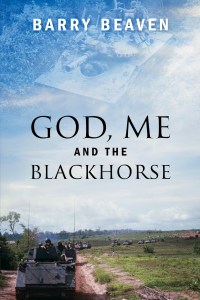
ORIGINAL BOOK REVIEW: “God, Me and the Blackhorse” by Barry Beaven

God, Me and the Blackhorse by Barry Beaven

OFFICIAL DESCRIPTION*:

Doc Beaven belonged to a devout Christian family. Because of his faith he chose to be a non-combatant and became a medic who never carried or fired a weapon. After teaching medics he went to Viet-Nam where he was sent to the 11th Armored Cavalry Regiment, the first and only independent Cavalry regiment in Viet-Nam. While only having 13,000 troopers during the war the regiment developed an elite reputation for combat and was commanded by the best of commanders, including George Patton’s son. Doc Beaven was awarded several decorations including the Purple Heart, and talks about life and the difficult choices in the war as well as the combat and those who served. Following the war, he became a physician and currently works in Correctional Medicine.

REVIEW:

I have always been cautious of wartime memoirs and even the more realistic wartime fiction, particularly those memoirs and fictions of the Vietnam War, but having taught several of Tim O’Brien’s books in freshman courses, I have a deep respect for the literature that came out of the Vietnam War. I saw how it worked upon my students. Mostly I taught core classes where very few of the students actually wanted to be there, but reading about Vietnam straightened more than a few backs. I’m cautious about reading books from that moment in history because … you can’t read them and remain unaffected. And as is perhaps to be expected for someone of a generation that has never seen a draft, I have no stomach for war.

I began God, Me and the Blackhorse before COVID-19 became the life-altering specter that it has become, and I’ll be honest: I had to put it aside for a couple of weeks when things here in Montana looked bleak. But it’s a compelling read, and once the new normal of working from home and so forth had fallen into place, I found myself drawn back to Barry Beaven’s voice and experiences in his memoir.

His story isn’t the typical one coming out of Vietnam, either, so I learned a great deal about the function and realities of being a noncombatant medic on the front lines. There were a lot of good surprises in reading this book. For example, I knew going in that Beaven had taken the medic path in part because of his religious beliefs, so I expected something more like the memoirs of wartime chaplains that I’ve read, which tend to have more to do with either falling out of faith (disillusionment) or distinctly preachy in tone, mapping the faith lessons of battle onto the peacetime lives of readers who have never been. There’s nothing wrong with those types of books; it’s just that my own religious upbringing means I’ve already read so very many of them.

Beaven is not preachy. His is also not a story of great disillusionment or loss of faith. From what I can tell, he had his reckonings, but he keeps his faith and is rightly proud of his decisions during that time to this day. His is the voice of a thoughtful observer, the kind who notices small details not just because they tended to save his life or help him save the lives of others on a regular basis, but because that’s the kind of storyteller he is. One of my favorite moments in which we watch Beaven watching others is this one:

We had a Spec 6 medic with the unit then. He was an LPN and basically ran the medics. Dr. Cupps was in charge, but the scut was run by him. He had this bad hand tremor that would shake constantly up until the moment he had to do something, and then it would smooth away. It was fun watching him suture or cut as he’d have this shaking needle heading for someone’s skin but then be totally smooth when the needle touched the skin

Through a wonderful command of the details, he perfectly reconstructs both his world and the many personalities moving through it during the wartime years. He summons the tedium of the endless patrols, punctured as it was by sudden bouts of hostile contact.

And yes, he paints a pretty good picture of the kind of emotional callouses combat medics have to develop in response to so much death. And while he puts his readers in that moment perfectly, Beaven the adult memoirist does draw back every now and again to comment upon the actions and thoughts of Beaven the young medic.

But it’s not a tedious read, I guarantee you. Beaven has a good sense for when to give his readers a bit of humor. I may or may not have laughed out loud (I admit nothing) when I read the line:

One of our squadron’s medics stole a jeep and drove to Saigon for a bash and sold it to pay for the party. We got him back but not the jeep.

It’s asides like this that make God, Me and the Blackhorse more than just another record of a hard time. And it’s Beaven’s personality that I find the most valuable aspect of this very interesting memoir.

IN SUMMARY:

Barry Beaven is one of those rare wartime memoirists who knows how to let a story breathe, and rarely does he try to tell his readers what to feel. Throughout God, Me and the Blackhorse, he documents the experiences and the emotion of working as a medic in Vietnam with a specificity of detail that those historical fiction authors who have not seen combat simply can’t replicate. Once you settle into Beaven’s voice and style, you find yourself running alongside him to the aid of the wounded amidst the thunder of enemy fire.

WHERE TO BUY?

You can find God, Me and the Blackhorse wherever good books are sold, including Amazon and Barnes and Noble. You can also find out more about Barry Beaven’s work on the book’s Outskirts Press author page.

WHAT NEXT?

I’m trying out a lot of different things as I try to break myself out of a little bit of a recent reading rut: young adult literature, fantasy, and … sports fiction? I’m fascinated by the role American sports play in history and society, having grown up in large part abroad, so I’m digging into Patrick McLean’s A Sense of Urgency. I’m hoping this book will help me understand baseball, because even after fifteen years stateside, I’m only just now beginning to understand American football. Time to figure out another sport!


I received a copy of this book in exchange for an honest review. 

* Courtesy of Amazon book listing.


SONY DSC

ABOUT KENDRA M.: With nine years in library service, six years of working within the self-publishing world, as well as extensive experience in creative writing, freelance online content creation, and podcast editing, Kendra seeks to amplify the voices of those who need and deserve most to be heard.

In Your Corner: Derailed by COVID-19?

Coronavirus, Covid-19 symptoms

Yeah.

That happened.

For many of us, it’s still happening. Even in those states that are moving into Phase 1 of reopening, there’s a lot left to do and a great deal that must happen before a “new normal” settles into place.

The truth of the matter is that, while some people did find a way to turn lemons into lemonade during this most lemony of seasons, it has still been hard. And it has been hard, specifically, for those in the business of wordcraft. The shutdown has not, for many people, been a nice and relaxing break from “real life,” but rather a stressful and busy time in which we’ve had to master new technologies and new routines while also feeding families and homeschooling kids and filtering social media and grappling with new and shifting work resources. Personality conflicts and tensions both within friendships or work relationships or family groups have ballooned. A librarian friend told me recently that while working from home, her library’s staff were expected to do twice as much as usual with half as many resources, and be able to flip their bedrooms into functional workspaces each morning. And every back-room tension she and her coworkers already had was magnified exponentially by the miscommunications made possible by working remotely. A teacher friend also mentioned a doubled workload; her two young sons were at home and adjusting to taking her direction in their learning, while she was still tasked with designing remote classes and assignments for three different high school English courses. A retired friend, whose home life is markedly less busy, still found himself unable to concentrate on anything other than his own mental and physical health under the COVID-19 restrictions.

Some writers, undoubtedly, will still have produced fantastic and profound works of art during this period of unprecedented disruption. And good for them! That’s fantastic! But many writers (and readers, let’s be honest) can’t settle into the business of words when they’re either so busy or so mentally burnt out as we have been, collectively, over the last six to eight weeks.

And that’s okay, too.

Just as the world turns on its axis and we go through our seasons, our writing lies must also leave room for the occasional tilt or turn. Productivity does not always have to be measured in the number of words written. Sometimes, productivity is a state of mind, of being open and receptive to the world around us without a pen and paper or laptop as the medium of record. If you emerge from the COVID-19 shutdown with just a sense of having survived, you did good and important work. If you emerge with a story or two or an experience you’re still mulling over, that maybe one day will inform a book you write, you did good and important work. If you emerge with nothing at all and a bleak sense of having failed at anything writing-related, we’re here for you.

Ninety-nine percent of writing, regardless of genre, is about paying attention.

There’s been a lot to pay attention to lately. Don’t kick yourself for something you haven’t done or think you failed to do (and you didn’t fail at anything, we promise). The past will keep. Together, we will figure out the next part of our story together. And if there’s any way we can help encourage you here on the blog, or enable you in your writing or book marketing journey, please (please!) let us know in the comments below.

You are not alone. ♣︎


Elizabeth

ABOUT ELIZABETH JAVOR: With over 20 years of experience in sales and management, Elizabeth Javor works as the Director of Sales and Marketing for Outskirts Press. The Sales and Marketing departments are composed of knowledgeable publishing consultants, customer service reps and book marketing specialists; together, they all focus on educating authors on the self-publishing process to help them publish the book of their dreams. Whether you are a professional looking to take your career to the next level with platform-driven non-fiction or a novelist seeking fame, fortune, and/or personal fulfillment, Elizabeth Javor can put you on the right path.

ORIGINAL BOOK REVIEW: “Tales of Invasions and Empires: Our Place in Time (c. 1100-1400)” by Kent Augustson

(POSTING TO SPA April 17th) Tales of Invasions and Empires

cipa evvy award

2019 CIPA EVVY Award

OFFICIAL DESCRIPTION*:

This is the first book in a trilogy offering an original interpretation of our place in time that makes the discord of the current day more comprehensible. This is accomplished using three devices.

First, recognizing that human history is the history of civilizations, we have identified four civilizations that, with their spread, account for about 85% of the world’s population today. These are Confucian China, Hindu India, the Muslim Middle East, and the Christian West. To gain an appreciation of these four is to know well today’s world and to glimpse where we are heading.

Second, we provide a unique time frame for the progress of these civilizations which expands upon German philosopher-historian Karl Jasper’s well-regarded argument for an Axial Age relating to love, morality and wisdom in the centuries surrounding 500 BC. We postulate a new Axial Age in our day that speaks to power.

Third, we make our simple but powerful hypothesis accessible by avoiding complex reasonings and endless accumulations of data. Rather, presented perceptively in each book are seventeen memorable tales about the civilizations that link to one another, interact with one another like a long novel of four families out of which our theme evolves. Beginning with 1100 AD when these civilizations start to meaningfully interrelate, the books cover three centuries apiece. The final chapter in this work provides a summation of how events in the 12th to 14th centuries directly relate to the present day.

REVIEW:

QUICK NOTE AT THE TOP: The world has changed somewhat since this book came out in 2018; in the last month alone, twenty million United States citizens have lost their jobs in one of the biggest economic downturns of all time, a reality that is echoed and magnified on a global scale. Whatever else COVID-19 does, it has done much to lay bare the systems of power that underpin daily life. And the fragility of our “modern” world. Augustson has dealt with several chunks of history in his books, including the 2014 publication of Our Place in Time: The New Axial Age and the Pivotal Years (2015-2020), which would be a better place to dig for his predictive insights into what’s happening now.

To return to this particular book: I’m always deeply appreciative when authors can manage to do three things: show their authority (and expertise) on a subject, make plain their personal bias without it compromising the book’s value, and produce a readable book. Augustson doesn’t lead with his thirty years in government affairs; I had to delve into the authors notes and so forth at the end. But it becomes pretty clear from early on that he knows what he’s doing so far as crafting a persuasive argument and backing it up with curated information that’s digestible to the common reader. There are charts. There are maps. There are structured chapters. But there’s also a kind of playfulness and a clear voice to the work which keeps it from feeling overwhelmingly textbooky.

Augustson starts with seventeen chapters about seventeen intersecting lives. Fair warning, though: he takes it for granted that readers are familiar with some terms that I personally hadn’t seen before (“Jaspers Age” being one, and “Axial Age” another). A little quality time with le Googl brought me up to speed, but it’s well worth taking a pause after the introduction to study the initial charts and timelines and lock in some of those terms before going further. I was set up well for this book by reading Keay’s history of China last year and having started Dalrymple’s The Anarchy more recently. (Not to mention all the Western Civ courses I took through high school and college, getting both the Commonwealth (Australian) and individualistic (American) takes on that third of Augustson’s four cornerstones. Once I finish Dalrymple, Augustson has inspired me to look for a book specifically on the history of Islam and Muslim culture; then I will have a better understanding of his four cornerstone civilizations.

Augustson’s grasp of the facts of history is one thing, but his ability to draw together the different threads of history in very different parts of the world by focusing on the intersecting lives of one or two individuals per chapter is what sets this history apart. Whatever you personally believe about the threefold ages Augustson argues in favor of, it is worth reading this book simply for the pleasure of seeing so many otherwise disparate lives wound so cleverly together. The fifteenth chapter, which deals with “Global Cold and the Black Death” is both hard and valuable to read on its own.

IN SUMMARY:

Augustson’s experience in government affairs is put to work in this mammoth installment of what could safely be called history with a bent towards interpretation, and he makes an interesting argument for the realization of humanity in three ages. Fair warning: This book weighs over a pound, so make sure to have set aside some serious reading time.

WHERE TO BUY?

You can find Tales of Invasions and Empires wherever good books are sold, including Amazon and Barnes and Noble. You can also find out more about Kent Augustson’s work on the book’s Outskirts Press author page.

WHAT NEXT?

Regrettably, the far-reaching effects of the current global pandemic prevented me from finishing the book I had intended to review two weeks ago, so you can look for that review next Friday. It has been worth the extra time, however.  I’m speaking of Barry Beaven’s God, Me, and the Blackhorse, a hard-hitting memoir of war. (I know, I picked light subjects to review in a time of global unrest. Comforting.) I’ll see you all back here next week, then, and in the meantime I hope you stay safe and healthy.


I received a copy of this book in exchange for an honest review. 

* Courtesy of Amazon book listing.


SONY DSC

ABOUT KENDRA M.: With nine years in library service, six years of working within the self-publishing world, as well as extensive experience in creative writing, freelance online content creation, and podcast editing, Kendra seeks to amplify the voices of those who need and deserve most to be heard.

Self-Publishing News: 4.14.2020

the word "april" from the wooden letters

We apologize for the interruption to our normal routine! This has certainly been a disrupting time for everyone, not just us, and we hope that now we are settling into all of our respective new routines that this post finds you well and thriving despite the difficulties.

And now for the news.

Highlights from this month in the world of self-publishing:

There have been many interesting by-products of the virus-related shutdown, but one of the most significant ones as far as we are concerned is the potential for self-publishing to flourish under the new restrictions. “Authors are rushing to dust off dystopian tales which might once have joined the list of great unpublished novels,” writes Adam Sherwin of inews.co.uk. (One assumes that he’s not talking about authors who have children at home to manage who would otherwise be at daycare or school while they were at work.) Sherwin focuses on the specific development of one manuscript by thriller writer Peter May, who began writing the book Lockdown after a previous, less severe pandemic. Sherwin also covers several other newly-released books that touch on the novel coronavirus in some way, including A. M. Smith’s self-published novel Muller, which was likewise inspired by earlier historic episodes of contagion.

Here’s an interesting food-for-thought article by Mike Coker for Publisher’s Weekly, which in summary poses and attempts to answer the question: Has Amazon become just as much a bookish gatekeeper as the remaining Big Five traditional publishing houses that preceded it? And if so, are the authors who self-publish through its platform truly indie authors? We’d be really curious to hear what you think. (Comment below with your thoughts!)

Estelle Erasmus has opinions, and she’s here to share them in a recent article for Forbes. “COVID-19 has many of us hunkering down in place and social distancing. If you are a writer, and have all your survival needs met (food, shelter, support), then it might be the opportunity you need to get your story written,” she says, and in the perfect follow up to Sherwin’s article on books already making it into the world, she has some tips for those looking to make the most of that opportunity by getting your own story out there. From crafting a narrative arc to asking yourself the right questions as you move forward, this article is a concise and ultimately straightforward set of suggestions that are worth considering, if they fit with your own life and routine.


spa-news

As a self-publishing author, you may find it helpful to stay up-to-date on the trends and news related to the self-publishing industry.This will help you make informed decisions before, during and after the self-publishing process, which will lead to a greater self-publishing experience. To help you stay current on self-publishing topics, simply visit our blog each month to find out the hottest news. If you have other big news to share, please comment below.