Demystifying the Digital Census : Self Love Levels Drop

Two weeks ago, I launched this series by laying the groundwork for understanding what the FutureBook (and its parent organization, The Bookseller) is all about and, as a result, what the annual Digital Census seeks to measure and comment upon.  (In summary: it tracks emerging and outgoing matters of interest for authors and publishers and other trade experts invested in digital publishing, whether through traditional or indie, hybrid, and self-publishing platforms.)  I also took a quick peek at the FutureBook‘s first confirmed trend of 2015: the fact that mobile has overtaken both tablets and dedicated e-readers as the primary means for reading ebooks.  And last week, I applied a microscope to the FutureBook’s second confirmed trend of 2015: the fact that digital sales are still growing, but that growth is slowing.  

self-love

This week, I’m going to examine the FutureBook’s third confirmed trend for the year.  Straight from the horse’s mouth, so to speak: “Self-love levels recede as many indie authors report lower satisfaction levels.” The FutureBook publication, which you can read here, says:

futurebook

Screen Shot 2015-11-24 at 11.44.01 PM

You can imagine how deeply sad I feel when I see a well-respected and industry-enriching publication commenting on authors tanking in the self-love department.  As it turns out, the data indexed by the Digital Census isn’t necessarily asking authors to psychoanalyze their performance and self-satisfaction, so “self-love” may be a bit strong of a term––but then again, maybe not.  Many authors do equate self-satisfaction (and their identity, really) with their performance in respect to sales figures.  And that’s a deeply problematic way to measure self-worth, as everyone is well aware … but sometimes we can’t help but believe it to be an accurate yardstick, especially when we’re spoon-fed a certain narrative by the mainstream media: the narrative in which success means J.K. Rowling, means Veronica Roth, means Tom Clancy and P.D. James and Agatha Christie, means George R.R. Martin, means blockbuster film adaptations and interviews with Ellen or Oprah or Jimmy Kimmel.

Maybe other self-publishing authors and bloggers might be content to state that this is wrong and it shouldn’t be the case, but I can’t just let it lie.  Where does the narrative of success originate?  And how can we alter the conversation to reflect a more holistic, life-affirming reality––the selfsame reality that indie, hybrid, and self-publishing authors of great quality and phenomenal worth experience on a day-to-day basis?

I think a lot of it comes down to the whole do as I say, not as I do syndrome that applies to many other grand social narratives in our modern world.  For example, we affirm again and again to our children that whatever path life takes them on, they have value––as plumbers as well as princesses, as garbage collectors and astronauts––but we flood their lives with films, television shows, and books that highlight the “exceptional” nature of the same “grand narratives” that the world will later try and tell them are impossible to actually attain, in adulthood.  (When was the last time we turned to a college student and said, “You can totally be a princess!” … and actually mean it?)

It’s the same with publishing, including self-publishing: we tell warn aspiring authors again and again that success doesn’t look like any one thing, and it certainly isn’t equatable with sales figures.  But at the same time, the narratives of “successful” authors that we learn about and spread through news articles and social media are almost always about authors who rake in the big bucks and attention from the Big Five publishing houses (after a successful “grassroots campaign,” of course), and about rags-to-riches stories like Andy Weir’s and Christopher Paolini’s.  And I’m here to say: it’s too little, and too late.  It’s simply not good enough to affirm our indie authors as individual successes with trite sayings and cold comfort.  By the time we need comforting, it’s too late.  We have to break the stereotypes and unravel the threadbare story before authors publish.

Otherwise, we’re always going to be playing catch-up and damage control.  I will always, always be on hand to affirm that you’re a success simply because you did the hard thing and you (self-) published your book, but I think we can do more to set you up for a healthy sense of your own value and worth and general excellence, and do it earlier and better.  Let’s start by teaching the next wave of future authors that numbers do not an identity make!


Thank you for reading!  If you have any questions, comments, suggestions, or contributions, please use the comment field below or drop us a line at selfpublishingadvice@gmail.com.  And remember to check back each Wednesday for your weekly dose of marketing musings from one indie, hybrid, and self-published author to another. ♠

From the Archives: “Avoid the 3 ‘Tell-Tale’ Signs of Self-Published Books”

Welcome back to our new Tuesday segment, where we’ll be revisiting some of our most popular posts from the last few years.  What’s stayed the same?  And what’s changed?  We’ll be updating you on the facts, and taking a new (and hopefully refreshing) angle on a few timeless classics of Self Publishing Advisor.

∗∗∗∗∗

[ Originally posted: May 2nd, 2011 ]

You’ve self-published a book, and it’s amazing that you’ve dedicated so much time and energy into writing and creating you own masterpiece. While there’s nothing wrong with self publishing, and it’s actually a great opportunity for many authors, you don’t necessarily want your book to “look self published”. That could mean inability of your audience to take your book seriously, receiving horrible reviews, suffering from poor sales performance, or worse.

Here are a few of the 3 “deadly sins” not to commit when publishing your book:

  • Use of cover templates – Templates are often rather dull, at best. Invest your money into really making your cover stand out.
  • Unedited manuscript – Run on sentences, sentence fragments, etc. are all things that can leave a bad taste in the mouth of a reader. We always recommend that you hire a professional editor for your manuscript. No, your sister-in-law doesn’t count as a professional editor. You need more than a fresh set of eyes when it comes to choosing an editor. You need someone who is professionally trained in editing.
  • Non-traditional interior
    • Double-Spaced – A book should NEVER be double spaced. Just because something works great for reports and other forms of communication doesn’t mean it will work the same for a printed book.
    • Strange and/or difficult to read typestyles – You like typing in Script MT Bold. It looks beautiful on screen, but will not look as good in a printed book.
    • Missing headers/footers – Have you ever read a book (other than a children’s book) without a header or footer? Why leave them out on your book?
    • Non-standard page numbering – Make sure your page numbers are in the same position on each opposite page. Also make sure font is consistent across all numbering.
When you hire a self-publishing company, all of these things can be taken care of under one umbrella. However, if you are “going it alone”, it’s important to remember the tips above to make sure you avoid showcasing an unprofessional appearance.
-WENDY STETINA


Four and a half years after Wendy’s original post, not much has changed when it comes to the aspects of self-publishing which set the final products at a disadvantage compared to their traditionally published kin.

And look, we’ve all seen a lousy book cover or two in our time.  And with online compendiums like the Huffington Post––what with their readerships of thousands upon thousands––going out of their way to pick on a select few, I see no reason to get in on the finger-wagging here.  But suffice it to say, many self-published book covers don’t look quite as polished and beautiful as those put out by the Big Five publishing houses.  There are all sorts of reasons for this: self-publishing authors are shorter (much shorter) on funds than the average industry juggernaut, or perhaps simply prefer to allocate their funds elsewhere, or perhaps have a poor eye for what appeals to a mass market audience.  Templates are rather dull, but they exist for a reason.  Or a series of unfortunate reasons.

We don’t need to blame our fellow indie authors for the trend’s existence to recognize that we can, collectively, do better.  How?  Well, we’ve written about the virtues of a well-crafted book cover before and elsewhere at length, but suffice it to say that there are quite a few options which will result in a lovelier cover than the one you or I can churn out in a basic word processing program.  More importantly, the time and money and energy you spend on an attractive cover reaps dividends that more than compensate for the expense.

When it comes to leaving a manuscript unedited, however, I must admit that I struggle to see a reason that justifies this decision.  Not because I don’t recognize the limitations of a tight budget or the profound importance of exercising total creative control over one’s own work––I understand that  completely––but because an unedited manuscript poses so many opportunities to lose and alienate our readers, no matter how excellent the content and construct of our work.  An attractive book cover will draw readers in, while a polished and professionally-edited manuscript will keep them invested.  It’s as simple as that.  (And for more of our rationale on this one, check out Jodee’s thoughts here, Rob Mangelson’s thoughts here, and Elizabeth’s thoughts here.)  As self-publishing authors, we can’t afford to lose our readers.

Sometimes, we miss things.  The more people who have eyes on a given work, the less likely it is that any single mistake will be overlooked, which is one reason why paying a professional to edit or at least evaluate your work is such an important idea.  But there’s another reason: Professional copyeditors know the rules.  I don’t just mean the official rules of publication and grammar, but the unspoken rules too.  They know which details are going to distract a reader, consciously or subconsciously, from your book.  They know how to create consistency in the midst of chaos.  All of those little details that Wendy mentioned in her original post?  They are exactly the kind of thing that can hurt your sales, even though they may seem small or insignificant.  Copyeditors are your partners and co-laborers in bringing your book to the world, and it’s in their best interest as well as yours to catch every single little misstep before it becomes a profit-buster.

copyediting

Whether it’s presenting your book with an exterior as beautiful as its interior, or editing your book’s content, self-publishing today offers all sorts of options to the aspiring author that wouldn’t have been possible just four years ago.  That is good news indeed! 

KellyABOUT KELLY SCHUKNECHT: Kelly Schuknecht is the Executive Vice President of Outskirts Press. In addition to her contributions to the Outskirts Press blog at blog.outskirtspress.com, Kelly and a group of talented marketing experts offer book marketing services, support, and products to not only published Outskirts Press authors, but to all authors and professionals who are interested in marketing their books and/or careers. Learn more about Kelly on her blog, kellyschuknecht.com.

News From the Self-Publishing World: 11/23/15

This week in the world of self-publishing:

We pretty much love i09, the millennial go-to forum for all news fandom-related.  And when an article begins with the line, “At an anti-library closure protest, local magician and comics legend Alan Moore had some surprising words” you can bet we sit up and pay attention––particularly when those “surprising words” end up rallying support to the self-publishing cause.  The article by Kaila Hale-Stern, which posted to i09 on November 19th, records Moore as saying “Publishing today is a complete mess. I know brilliant authors who can’t get their books published [….] Publish yourself. Don’t rely upon other people.”  Says Hale-Stern, “It’s rare and refreshing for an established writer to promote the potential boons of self-publishing and be honest about their perception of what lies behind the industry curtain.”  Moore’s words aren’t exactly  hot off the press (the protest actually took place back in 2011), but Hale-Stern’s decision to resurrect them––and to a high-traffic website like i09––says a lot about what millennials are hungering for.  HINT: It’s not more bureaucratic red tape and rejection by traditional publishers.  For more of Hale-Stern’s article, visit her article here.

In another article published on the 19th, GalleyCat contributor Dianna Dilworth updates readers on the latest development for self-publishing authors looking to break into the audiobook market––and, fittingly enough, this week that involves the launch of a new self-publishing tool by the audiobook industry supergiant, Audiobooks.com.  (When you own the domain name, you must be close to the top of your pyramid.)  The platform is being called Author’s Republic, and according to Dilworth it will allow self-publishing authors to “submit titles to Audiobooks.com, Audible, iTunes, Amazon, Barnes & Noble, Scribd, Downpour, and tunein, as well as library providers such as Findaway and Overdrive.”  The benefits seem (from a cursory glance at least) to be notable: “Most of these platforms will pay authors an average of 35 percent royalty on what their titles are sold for. iTunes and Amazon will pay a 25 percent royalty.”  Only time will tell if this new service measures up to existing competitors, of course.  For more information, follow the link.

Self-publishing made it into the Huffington Post this last week!  In an article for HuffPost Books on November 20th, contributor Brooke Warner writes that “Most writers have traditional publishing aspirations” in that “They want an agent to fall in love with their project and champion their work; they’re looking for the external validation of being accepted by a publishing house; their fantasies about getting published involve a red carpet experience that’s increasingly elusive in this industry.”  But so few aspiring authors receive that validation, despite having genuinely rich material to submit.  The solution?  According to Warner, you can fine-tune your approach to agents and publishers alike, but the one option which will always be open to you is that of the indie, hybrid, and self-publishing market.  Says Warner, “Independent publishing is a blossoming middle ground for authors, and in many cases you can replicate the experience you always dreamed of having–though you pay for it instead of being paid for it.”  Obviously we’re a little biased here at SPA, but we fully advocate for more creative control!  To catch more of Warner’s article, check out the original post.

When it comes to self-publishing, or publishing in general, “art books” don’t get a lot of love or attention.  But they should!  I mean, what’s more eye-catching and giftable than a beautiful oversized book full of illustrations and photographs?  And with the digital revolution has come a parallel evolution in the creation and editorial tools now available to artists and photographers––so really, seeing someone pay attention to them is both refreshing and necessary.  In this November 20th piece for Publisher’s Weekly,  Ryan Joe writes that “despite the amount of work that goes into such an endeavor, numerous creators—some big names in their respective fields, others up-and-comers—are taking matters into their own hands when it comes to getting their art books published.”  He goes on to document the ways and means in which several of these creators have trailblazed the way for other artists to follow, and in so doing Joe creates a summary guide for authors looking to flex a different self-publishing muscle.  Well worth a second look, we’d expect!


As a self-publishing author, you may find it helpful to stay up-to-date on the trends and news related to the self-publishing industry.This will help you make informed decisions before, during and after the self-publishing process, which will lead to a greater self-publishing experience. To help you stay current on self-publishing topics, simply visit our blog every Monday to find out the hottest news. If you have other big news to share, please comment below.

KellyABOUT KELLY SCHUKNECHT: Kelly Schuknecht is the Executive Vice President of Outskirts Press. In addition to her contributions to the Outskirts Press blog at blog.outskirtspress.com, Kelly and a group of talented marketing experts offer book marketing services, support, and products to not only published Outskirts Press authors, but to all authors and professionals who are interested in marketing their books and/or careers. Learn more about Kelly on her blog, kellyschuknecht.com.

Demystifying the Digital Census : Digital Sales Growing, But Slowing

Last week, I began a series in which I’m applying a microscope to the results of FutureBook‘s Digital Census of 2015 and breaking down to its component parts just what the fallout will be for you and me as indie and self-published authors.  FutureBook, an annual project of industry titan The Bookseller, has been hitting the books for five years now and has become the standard-bearer for those elements of the publishing (and specifically, digital publishing) revolution that range from mainstream (like Amazon) to cutting-edge, innovative, or brand new (like Goop and Medium!).

ebooks

The fifth annual FutureBook conference was held, in part, to evaluate and respond to the Digital Census of 2015, in which record numbers of readers and writers and bloggers and publishers (of traditional or indie ilk alike) and other industry experts reflected upon the ways that has changed or the ways in which they foresee the industry changing, all while indexing their hopes and concerns for where the Book as an object and industry and personal revelation is headed.  The data was condensed down to five talking points which in turn guided and shaped the course of the rest of the conference, and which indicate our ever-evolving relationship to publishing.  These points are:

  1. Mobile overtakes tablets and dedicated e-readers as the device of choice […]
  2. Digital sales are still growing, but they are also slowing […]
  3. Self-love levels recede as many indie authors report lower satisfaction levels […]
  4. Publishing remains very much divided on matters digital […]
  5. … And the majority believe publishers remain unprepared for what is coming [….]

Today I’m going to examine the second of these points, having addressed #1 (the rise of mobile) in last week’s post.  Here’s what the final FutureBook publication says about digital sales, which continue to demonstrate significant growth––although perhaps also showing signs of plateauing :

digital sales

The data meshes nicely with a series I just finished two weeks ago (“The Current State of E-Readers | An Author’s Guide“), in which I lay out the reasons why slowed growth in both ebook and e-reader sales is both a cause for concern (less overhead profit coming in) and for optimism (a diversified, stabilizing market with more competition and more options for authors).  Much of the research I gathered there applies here, so I don’t want to sound like a broken record and repeat myself––but I do want to emphasize the last line in the FutureBook article:

“Publishers have found that digital technology makes producing and delivering audio much more straightforward, but many are concluding that apps are not worth the candle.”

I think this is an important sentence because nowhere else in the article do audiobooks earn a lot of love, and even in the data mentioned above, the statistics for digital audiobooks is combined with that for digital e-books (that is, the text-based variety that doesn’t involve voice actors and snappy narration). And if there’s one segment of the digital publishing industry that’s neglected here and deserves a second look, it’s the digital audiobook!  Readers love them, and so therefore authors are beginning to pay attention.

We all have probably heard about Amazon’s merger with Audible and their ACX offerings for digital audiobooks by now, but what we don’t know (necessarily) is that there’s a whole niche market out there for authors looking to self-published audio books outside of the ACX/Audible/Amazon umbrella.  This Publisher’s Weekly article, for example, takes a look not just at ACX but at smaller companies without big corporate backing, like Open Book Audio and Spoken Word––and other media are starting to take note, including MediaShift and Author Marketing Institute.

As with all aspects of self-publishing, producing an audiobook (either with or without ACX/Audible/Amazon involvement) is a time- and energy-intensive process that deserves both careful and cautious consideration before you decide to commit … or not to commit.  But if there’s anything I’ve learned from my years in the publishing industry, it’s that readers are inherently voracious and will devour good words wherever they find them and in as many formats as they can discover them … and that there’s no such thing as “standing still” when it comes to the evolution of book distribution technology.  We have, as authors, a responsibility to remain at the forefront of the digital evolution––not hanging back and attempting to deny the inevitable progress from one mode of consumption to another, but leading the way and cutting new paths for those who follow.  Only if we innovate can we stay relevant and useful to our readers.  And I fully believe it when I say your book deserves to be heard.*


* and yes, I know that’s a terrible pun!


Thank you for reading!  If you have any questions, comments, suggestions, or contributions, please use the comment field below or drop us a line at selfpublishingadvice@gmail.com.  And remember to check back each Wednesday for your weekly dose of marketing musings from one indie, hybrid, and self-published author to another. ♠

KellyABOUT KELLY SCHUKNECHT: Kelly Schuknecht is the Executive Vice President of Outskirts Press. In addition to her contributions to the Outskirts Press blog at blog.outskirtspress.com, Kelly and a group of talented marketing experts offer book marketing services, support, and products to not only published Outskirts Press authors, but to all authors and professionals who are interested in marketing their books and/or careers. Learn more about Kelly on her blog, kellyschuknecht.com.

From the Archives: “Self-publishing, Literature and Pop Culture”

Welcome back to our new Tuesday segment, where we’ll be revisiting some of our most popular posts from the last few years.  What’s stayed the same?  And what’s changed?  We’ll be updating you on the facts, and taking a new (and hopefully refreshing) angle on a few timeless classics of Self Publishing Advisor.

∗∗∗∗∗

[ Originally posted: August 19th, 2009 ]

I opened the Books section in yesterday’s New York Times “Urban Eye” to read the headline, “Why Literature Doesn’t Matter.” Really? How sad. It matters to me. It matters to my family, friends, and colleagues. It matters to the self-publishing authors I work with every day. Literature doesn’t matter…. I wish someone would have told me.

According to “Urban Eye,” a recent Sunday Book Review article penned by novelist Kurt Anderson was to fill me in. Anderson writes, “During the 1960s and ’70s…people who hadn’t read a word of a first-rate contemporary novel — no Cheever, no Bellow, no Salinger, Heller, Styron, Doctorow, Updike or Roth — nevertheless knew the novelists’ names… And then everything changed.”

But book sales in the US have remained strong, and are even growing over previous years in Europe. Despite the current recession effects, statistics show that readers are still buying books. Not matter? Anderson goes on to claim, “But irony of ironies, after literature was evicted from mass culture, pop culture itself began to fragment and lose its heretofore defining quality as the ubiquitous stuff that everybody consumed.”

Ah, I’m seeing to whom, or rather to what, Literature doesn’t matter to – pop culture. Wait, then this is a good thing for authors and readers. The fragmentation that Anderson talks about is the segmenting of consumers into smaller, more clearly defined profiles. What that means to self-publishing authors of fiction, non-fiction, etc., is not that your work doesn’t matter, that Literature doesn’t matter, but that it doesn’t matter to everyone. Perfect, now you can coordinate and focus your subject matter and marketing efforts to readers who will benefit from, and buy your books.

Talk to your self-publisher early on about your custom marketing plan.

Karl Schroeder


Interior detail of antique and vintage books and ornaments on a shelf in a Cotswolds country cottage

When Karl Schroeder first wrote this blog for us back in 2009, the market for self-publishing authors had already begun to (in his words) “fragment” into smaller and smaller niche genres and industries.  Authors were on the lookout for that “big hit wonder” element for their books to tap into, the mode that we’re often taught to expect or at least reach for as writers in the modern West.  But despite appearances–despite the rise of J.K. Rowling and Stephanie Meyer and E.L. James and Gillian Flynn and too many others to name–the superstar writer has mostly receded into the background.  What we have today is a (more) stable, (more) diverse, and (more) opportunity-rich industry, and this holds true even for the oft-neglected self-publishing author.

So, yes, what Karl said remains true: literature does still matter, though not to everyone.  What may have, perhaps, changed is that it no longer matters just to connoisseurs of hyper-specialized niche genres and so on … literature does in fact have a profound impact upon and presence within pop culture.  And I’m not just talking about Young Adult Literature or the ever-popular megagenre of crime fiction … I’m talking about the supposedly “forgotten” or “neglected” classic literature.

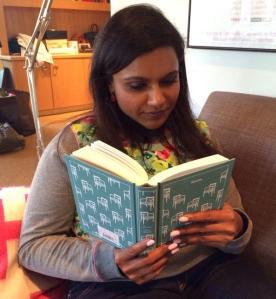
Ever heard of the #IReadEverywhere hashtag?  Well, it’s a thing.  A very, very big thing … because it demonstrates that our favorite pop culture icons–whether Mindy Kaling or or–read.  A lot.  And they read a pretty fantastic cross-section of all genres, including, yes, classic literature.  For example, we have:

ireadeverywhere1

Mindy Kaling reading Jane Austen (it doesn’t get more classic than that).  And …

ireadeverywhere2

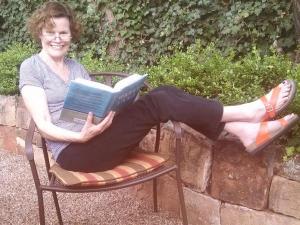
Judy Blume reading Wally Lamb. And …

ireadeverywhere3

The Big Bang Theory’s Mayim Bialik and Melissa Rauch reading Jonathan Safran Foer and Julia Child, while their co-star …

ireadeverywhere4

Jim Parsons reads Buster Keaton.

And they’re not the only ones!  The #IReadEverywhere campaign has generated hundreds of pictures of celebrities catching a few classic words between subway stops, while sipping mochas at coffee shops, or playing on the floor with their cats.  The age of the book may vary (Foer and Childs never overlapped with Jane Austen in the historical record, let’s just say), but the tenor of the trend remains the same: everyone reads, and a lot of people read everywhere and perhaps even often.  You can’t despair for the state of classic literature or any literature at all when it’s literally a marker of “cool” to snap a selfie of you toting Hemingway along to a hip bar in NYC of a Saturday night.

And yet, Karl’s ultimate point remains as valid as ever: you still need to “[t]alk to your self-publisher early on about your custom marketing plan” if you want to create and maintain a steady stream of book sales.  And you can do that most effectively by narrowing your gaze to a specific, manageable target audience.  It’s better to start with a handful of very interested, very invested readers than to spread your fairy dust thinly among people who are only marginally interested.  Invested fans will (sometimes quite literally) sell your book for you, and that has historically been how self-published works have come to receive broad acclaim.  Think of Andy Weir and his blog readers.  Think of E.L. James and her fanatically excited followers on FanFiction.net.  Think of John and Jennifer Churchman and The SheepOver.  You can do everything right as an author and still not sell books if you haven’t gotten your fans on board.  On the flip side, you can invest just a little time and energy in wooing your readers and seizing opportunities when they arise, and sell books like hotcakes by doing so.  Talk to a marketing expert at your self-publishing company, and see what magic you can make happen, together! 

KellyABOUT KELLY SCHUKNECHT: Kelly Schuknecht is the Executive Vice President of Outskirts Press. In addition to her contributions to the Outskirts Press blog at blog.outskirtspress.com, Kelly and a group of talented marketing experts offer book marketing services, support, and products to not only published Outskirts Press authors, but to all authors and professionals who are interested in marketing their books and/or careers. Learn more about Kelly on her blog, kellyschuknecht.com.