Self-Publishing News: 1.11.2016

This week in the world of self-publishing:

Corine la Font, in this January 10th article for the Jamaican Gleaner, writes that “it is wise and cost-effective to just obtain the free assigned ISBNs from the platform you are using”–since most platforms provide ISBNs automatically–instead of buying them directly.  Since ISBNs are sold in batches of 10, you may end up with a whole lot more than you need, unless you use a third party service or hybrid publishing company.  ISBNs, for those who aspire to self-publish but have yet to do so, are numeric codes of either 10 or 13 digits that publishing companies, booksellers, readers, and others will use to identify your book as well as the format in which your book is published.  “Ideally,” says la Font, “each format should have its own ISBN, that is print, audio and Kindle/ebook, but what tends to happen is that Amazon, when publishing the ebook of the same title, assigns an ASIN (a topic for another article) to that specific format.”  ISBNs are a key element of the publication process; for more information, visit la Font’s original article here!

Under the “Booklife Report” heading in this week’s Publisher’s Weekly roundup–published on January 10th–-you’ll find a link to an earlier 2016 article by Leylha Ahuile on the explosion of opportunities for self-publishing authors in the Spanish language market.  While the article itself is only available to Publisher’s Weekly subscribers (leaving us with the tantalizing introductory sentence: “Self-publishing is a well-established part of the English-language book trade, but Spanish-language self-publishing is just starting to take off”), it reminds me of this 2013 article by Tina Folsom of the Indie Voice blog, titled “Exploring the Foreign Markets for Self-Publishing.”  Ahuile’s article may claim that opportunities in Spanish language markets have some element of newness to them, but Folsom’s piece and many other articles besides have long been touting the possible benefits of looking beyond the tangible boundaries of geographical divides and the abstract boundaries of language.  Whether you’re looking to self-publish in English and translate your book to Spanish, or publish directly in Spanish, don’t neglect to consider the fact there are more native Spanish speakers and Spanish-language readers in the world than there are native English speakers.  And this doesn’t even touch the percentage of global citizens who speak and read other languages, like Mandarin Chinese!  There has never been a better time to sell your book abroad.

“Penguin Random House, the largest book publisher in the world, is chopping off its self-publishing arm,” writes Amy Wang of the Quartz blog in this January 7th article: “The company said Tuesday (Jan. 5) that it has sold Author Solutions—the self-publishing author-tools platform that it bought in 2012.”  Author Solutions has long been a mainstay of the self-publishing toolbox, but has struggled to emerge from its ownership transfer and other internal problems and to overcome significant obstacles to satisfying end-user demands.  While a sale does not necessarily spell the utter end for Author Solutions, it does seem to indicate a continued slide towards irrelevance as other, better, and easier-to-use options reach a mainstream audience.  Writes Wang, the sale is also an admission of defeat in the battle to stave off market dominance by Amazon, “which already churns out an estimated 85% of self-published titles via its various platforms.”  That’s a tough number to beat.  For more of Wang’s article, follow the link.

“There’s too much grumbling among authors,” says Carol Buchman in this January 7th contribution to The Bookseller.  But Buchman, a self-publishing author of Western fiction based out of Montana’s Flathead Valley, sees a lot of cause for hope: “some people seem to overlook the wonderful benefits of various publishing modes these days,” she says, citing the “freedom to publish and to read in the manner that suits [one] best,” the choice “among e-readers, audio devices, and paper—hardbound or paperback,” and the opportunity for authors to “publish their works in all three formats” as reasons not to despair for the world of words.  “As a storyteller,” she writes, “I’m enthralled by the possibilities in technological development for storytelling.”  She goes on to address “the innovative energy inherent in technology” as an empowering force, and to rally readers and authors alike to a more hopeful, optimistic outlook.  Her full “five-minute manifesto” is available, courtesy of The Bookseller, here!


spa-news

As a self-publishing author, you may find it helpful to stay up-to-date on the trends and news related to the self-publishing industry.This will help you make informed decisions before, during and after the self-publishing process, which will lead to a greater self-publishing experience. To help you stay current on self-publishing topics, simply visit our blog every Monday to find out the hottest news. If you have other big news to share, please comment below.

KellyABOUT KELLY SCHUKNECHT: Kelly Schuknecht is the Executive Vice President of Outskirts Press. In addition to her contributions to the Outskirts Press blog at blog.outskirtspress.com, Kelly and a group of talented marketing experts offer book marketing services, support, and products to not only published Outskirts Press authors, but to all authors and professionals who are interested in marketing their books and/or careers. Learn more about Kelly on her blog, kellyschuknecht.com.

The Current State of E-Readers | An Author’s Guide (Part V––iPads )

I started off this series by examining the Kindle, and then the NOOK, and then the Samsung Galaxy Tab.  This week, I’m going to take a (quick) look at the whole suite of Apple products that have by and large eroded any hold the dedicated e-reader held over the general reading public.  I’m talking about the computers you carry around in your pockets and backpacks, the mobile forward operating bases and command centers of your life, the little devices that have had a big impact on how we interpret our lives and arrange our days: the iPhone and the iPad.  Apple manufactures laptops, too, though making room for more traditional computers in this conversation might lengthen it to a mere century or two in length.  You might say that I could “talk for hours” about the changing role of the home or personal computer in everyday life.  I’m just going to allude to the fact that you can use an Apple Air or its predecessors to read e-books, using the same apps you might use on your mobile device.

It’s possible. It’s just that a laptop tends to not be the preferred device for most consumers who own more than one kind of Apple device.  And there are a lot of people who own multiple Apple devices.  In 2012, USA Today reported that roughly half of American households had at least one Apple product.  And the numbers didn’t end there; the article also stated that: “Americans don’t stop with just one device. Homes that own least one Apple, own an average of three. Overall, the average household has 1.6 Apple devices, with almost one-quarter planning to buy at least one more in the next year.”  And that was in 2012!  And when it comes to the iPad specifically, there’s even more reason to be hopeful: according to a report from the Stamford Advocate (drawing upon a longer piece for the Business Insider)  that’s so hot off the press it might smudge if you even look at it, Apple Inc just reported its quarterly earnings and the outlook for iPads remains good, despite a slight decline in total global tablet sales.  The Stamford Advocate’s Jay Yarow records Apple’s CEO Tim Cook as saying: “70% of people planning to buy a tablet plan to buy an iPad, per [a] ChangeWave survey.”  Seventy percent!  And that’s on top of the 200+ million units sold prior to 2014.  So, in summary … there are a lot of iPads out there, and there will be plenty more, as Apple continues to dominate the tablet market.

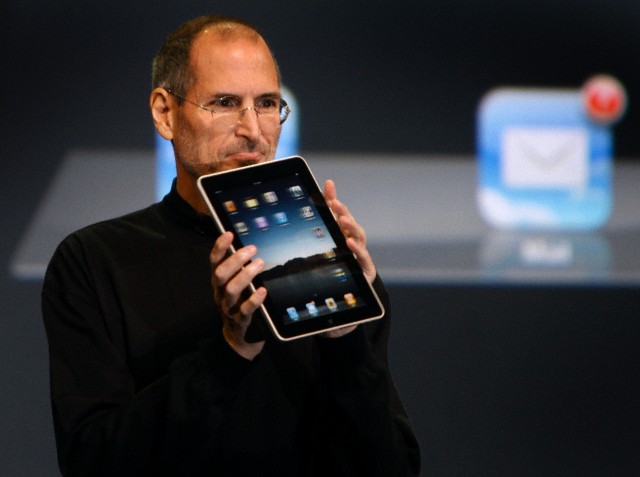
steve jobs with ipad

But what does this mean for you as an indie, hybrid, or self-publishing author?  Do people really use iPads the way they would use dedicated e-readers like Kindles and NOOKs?  As illustrated by this article for PC Magazine, the matter of what constitutes a dedicated e-reader and how it’s different from a tablet like the iPad has grown steadily more confusing.  Everyone more or less admits that they like the look and feel of the dedicated devices (which eschew backlighting, making for a more comfortable experience) but they are more likely to purchase a tablet like the iPad because of its versatility.  An iPad can simply do more, the general opinion runs, even though many devices like the new Kindle have a whole suite of apps a la tablet, and many tablets (including the iPad) have Kindle apps to sync a person’s reading experience via the Cloud.

In theory, it would be entirely possible to own a Kindle, an iPhone, an iPad, and a Macbook laptop, and move seamlessly from one device to another, picking up on one where you left off on the other––including if you happen to be listening to an audiobook version on your iPhone and use the WhisperSync function.  WhisperSync means you no longer have to worry about trying to find your place, even if you’re switching back and forth between reading and listening to a given book.  (Have I mentioned that I “nerd out” over technological innovations like this?  Ones that actually make life easier?  I do.  Often.)

So, yes, people really do use their iPads as their primary reading devices, in part because they’re so easily integrated into a larger “reading experience” as designed and made possible by Apple’s entire product line.  And because the iPad runs on an app-based (or “application-based”) operating system, you as an author need to know how best to make your books discoverable to the average iPad user.  Consider this list by ZDNet of top ebook apps as downloadable through the App Store:

  1. iBooks (Apple’s own signature e-reading app)
  2. Amazon’s Kindle app
  3. Barnes & Noble’s NOOK Library app
  4. The Kobo Books app
  5. The Google Play Books for iPad app
  6. The Bluefire Reader for iPad app

… and it’s worth noting, before even discussing the pros and cons of each app, that all of these apps are downloadable for free through the App Store, even if the content for them must be subscribed to, purchased, or loaned (in the case of both Bluefire and the Overdrive Media Console app, which are favorites of many public libraries which offer downloadable ebooks in addition to their physical lending collections).  Books with half a century under their belts are (for the most part) available under Public Domain, and many of these classics are available for free in a variety of formats.

Now, don’t get me wrong, but even while all of this is great news for readers, it doesn’t necessarily make for light work for you, the indie author.  Why?  Because, with so many reading app options easily available on the iPad, the chances of readers discovering your work diminishes with every app your book is not available through.  Not to mention, you probably want to make a profit, so a library’s free ebook loaning system doesn’t benefit your bottom line at all––unless readers run out of time and end up purchasing a copy in order to finish (which does, on occasion, happen).  In summary, it’s a good idea to cover all of your bases and not just the “big three” of ebook sales (Amazon, Apple, and B&N).  Google Play has been on the uptick ever since its creation as the primary sales conduit to devices running Android operating systems, but now it’s emerging as a contender for iPad owners as well, after the development of an attractive and intuitive app for iPads.  The Kobo Books app and the Adobe Reader app should also be kept in mind––many readers enjoy the streamlined experience of opening .PDF files with the Adobe Reader app, so you should not rule out offering a .PDF download of your book through some online retailer or your own personal website.  Basically, the more places a reader is likely to see your book, coupled with more ways and editions and formats in which it can be downloaded, the more likely that reader is to spend hard-earned currency on purchasing your book.  Balancing expense (of time, energy, and money) against discoverability is, perhaps, one of the trickiest of self-marketing arts that you must master––but you’re not alone.  We’re here to help, and to be a sounding board for your own strategic plan!

Thank you for reading!  If you have any questions, comments, suggestions, or contributions, please use the comment field below or drop us a line at selfpublishingadvice@gmail.com.  And remember to check back each Wednesday for your weekly dose of marketing musings from one indie, hybrid, and self-published author to another. ♠

KellyABOUT KELLY SCHUKNECHT: Kelly Schuknecht is the Executive Vice President of Outskirts Press. In addition to her contributions to the Outskirts Press blog at blog.outskirtspress.com, Kelly and a group of talented marketing experts offer book marketing services, support, and products to not only published Outskirts Press authors, but to all authors and professionals who are interested in marketing their books and/or careers. Learn more about Kelly on her blog, kellyschuknecht.com.

The Current State of E-Readers | An Author’s Guide (Part II)

Last week, I launched us into a new series about e-readers, and the pros and cons of using each different e-device (don’t worry, this won’t be quite the epic saga that the Beginner’s Guide to Social Media primer turned out to be!).  This week, I’ll be taking a closer look at perhaps one of the most talked-about e-readers of all time, the Kindle.  No doubt you’ve heard a lot about Amazon’s entry into the e-book sphere before, and elsewhere, in part because it was launched by a massive company still on the upswing in popularity, with the built-in infrastructure to ensure a strong debut––and in part because it remains a solid performer, especially in its newer incarnation, the Kindle Fire.

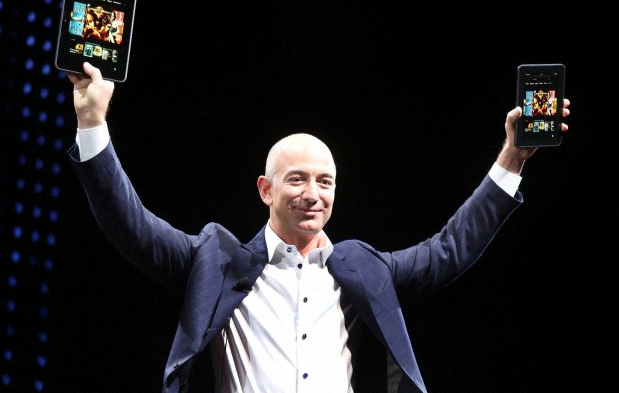
jeff bezos with the kindle
Amazon CEO Jeff Bezos with the new Kindle Fire HD

Just how many people own a Kindle?  A 2014 Forbes article reported that “roughly 43.7 million Kindle devices had been cumulatively sold till the end of 2013,” but, well, Amazon isn’t really talking, except when it’s super proud of itself, so the data Forbes was using may or may not be representative.  Even though in 2014 the Pew Research Center was marking an uptick in e-reader (specifically, Kindle) and everyone seemed, for the most part, highly optimistic about e-readers and therefore e-book distribution, some more recent data seems to indicate a plateauing of that trend … if not a slight reversal.  According to an article by Business Insider contributor James Cook, “for the first time ever the number of tablets shipped has decreased”––and Amazon’s Kindle line has been the hardest hit, with a decrease of some 69.9% in respect to shipments.  That’s a lot.  And the numbers are still so new that few tablet users are speculating yet as to why the Kindle has taken the brunt of the market change.  Is it because users have grown bored, or because Amazon hasn’t reinvented the wheel since the Kindle Fire was released two years (or two lifetimes, in today’s rapid-fire technology-hungry universe)?  But wait––what about the Kindle Paperwhite (the “Kindle 3”)?  Why does nobody seem to be getting on the Paperwhite train?  Is it because people are actively migrating away from Amazon, or from tablet computers, or from e-books?  The numbers seem to be holding mostly steady for e-books downloaded and read, so what’s the deal?

I’ll let you know as soon as I know.

Still, in the meantime, here’s what you need to know about the Kindle (Fire and Paperwhite):

They’re beautiful devices, designed and manufactured specifically to make thumbing through your digital library as tactile and responsive a practice as running a hand across a physical bookshelf––or at least, these e-readers are about as close as you can get without engaging your sense of smell.  (They do, however, make use of your fingertips and your ears as well as your eyes.  There’s some benefit to a multimodal interface, in terms of absorption of information, or so I’ve been told.)

And don’t forget that while sales may have dropped this last year (and significantly), the Kindle and Kindle Fire have out-sold almost every other dedicated e-reading device out there.  There are millions––dozens of millions––of Kindles out there already in use.  So yes, it still remains completely and absolutely worthwhile to sell your book as an e-book edition through the Kindle Store.  The total number of units sold alone should indicate this, but as the aforementioned Pew Research Center report also says, 3 in 10 American adults read an e-book last year, most of them on a tablet or dedicated e-reading device.  That’s a lot of e-books, my friends.  And Jim Tierney over at Loyalty360 reports that Amazon Prime Membership jumped by 53% in 2014––to around 40,000,000 (that’s 40 million) total adults.  And what with the advent of the Kindle Lending Library––a controversial offering, to be sure––Prime subscribers can opt to read certain select e-books for free.  That’s a lot of potential future readers.

Not much has changed when it’s come to the disadvantages of owning a Kindle, except for the fact that Amazon has taken away any grounds for complaint about the graphics, display quality, and user interface.  Their customer support system is pretty nifty, too, and users seem to like it.  No, you still can’t take the Kindle into the bathtub with you, and you probably don’t want to hurl it off the edge of a parking garage unless you actually want to watch it break, but these tablets do qualify as robust, insofar as tablets are allowed to.  Lending books to friends is possible, but still not quite intuitive.  Universities are starting to get on board with letting students use e-book editions for courses, but this still remains an underutilized possibility.  And no, it’s not an actual book you can hold in your hand and sniff for that “old-book” smell.  (But that’s what perfume is for, right?!)

I’m not about to try and sell you on buying a Kindle––or any e-reader, for that matter––but I do think it’s worth oohing and aaahing a little over the modern creature comforts technology has provided us.  An interlinked dictionary that I can access while reading?  Handy.  Highlighting and bookmarking?  Essential.  And much more difficult to “lose” when we’re speaking of a digital item.  And it’s nice, too, to have the option of reading multiple file formats on the same dedicated e-device without having to switch between apps.  PDFs?  No problem.  TXT?  DOC?  The Kindle’s got you covered.  And for now, people aren’t quite tossing them in a blender just to watch sparks fly, so I wouldn’t quite put up the crime scene tape just yet––if Amazon has proven anything, it’s proven just how much it loves to be on top!

Thank you for reading!  If you have any questions, comments, suggestions, or contributions, please use the comment field below or drop us a line at selfpublishingadvice@gmail.com.  And remember to check back each Wednesday for your weekly dose of marketing musings from one indie, hybrid, and self-published author to another. ♠

KellyABOUT KELLY SCHUKNECHT: Kelly Schuknecht is the Executive Vice President of Outskirts Press. In addition to her contributions to the Outskirts Press blog at blog.outskirtspress.com, Kelly and a group of talented marketing experts offer book marketing services, support, and products to not only published Outskirts Press authors, but to all authors and professionals who are interested in marketing their books and/or careers. Learn more about Kelly on her blog, kellyschuknecht.com.
From the Archives: “Using Listmania to Promote your Self-Published Book”

Welcome back to our new Tuesday segment, where we’ll be revisiting some of our most popular posts from the last few years.  What’s stayed the same?  And what’s changed?  We’ll be updating you on the facts, and taking a new (and hopefully refreshing) angle on a few timeless classics of Self Publishing Advisor.

∗∗∗∗∗

[ Originally posted: August 22nd, 2008 ]

If your self published book is available on Amazon.com, there are a lot of ways to promote it.  Since Amazon sales should account for a large percentage of your overall book sales, this site is a good place to concentrate a lot of your efforts.

I’m going to tell you about creating a “listmania” list on Amazon. Have you ever noticed when you browse for something on Amazon, there are lists that are related to that subject that are mentioning other books and/or products?

By strategically listing products on your lists, (including YOURS of course), you can start to generate more traffic to your book listing.

Here’s how YOU can create just such a list:

Sign up for an Amazon Author Connect account if you don’t have one yet. Or sign-in to your current account.

Click on your personal “store” on the top tabs. Then select “Your Profile” from the sub-menu.

You will see lots of things you can personalize, including your bio and your online photograph.

But scroll down and you will see a section called “Listmania!” And this is where you create a listmania list.

Creating a Listmania List is a good way to increase exposure for your book.

Obviously, you want to ensure that your book is on your list.

But the real trick to a successful Listmania list depends upon the OTHER books you put on your list, the ones written by other people.

There are two ways to go about it.

1 – Adding books to your list that are applicable to your subject. The idea behind this concept is easy — if someone reads your list because they were browsing a similar book, they’ll be more apt to buy YOUR book because they’re interested in the subject.

2 – On the other hand, you can add very popular books to your list, since more people may have a chance of seeing it, even if fewer of them will be interested in your book.

I recommend creating multiple lists and trying different tactics to see which is more successful. Amazon lets you track the number of times your list was viewed. Use these numbers to create better lists in the future.

If you have more specific questions about creating a listmania list, the Amazon FAQ will help you.

Amazon Listmania

So here’s the thing: Listmania doesn’t really exist anymore!  Back in 2013, Amazon ceased offering support and guidance on using the Listmania interface, and it was entirely dismantled and rendered unusable over the months following.  (Adrienne Dupree over at Leave The Corporate World Behind even wrote a lovely little lament to mark its final passing.)  And this fact means that, on the one hand, we have to throw the baby out with the bathwater when it comes to our original post … but on the other hand, this presents the perfect opportunity to present you with new and fresh ways of utilizing Amazon for your self-promoting and self-marketing ends (as a self-publishing author).

First, we need to break down exactly what Listmania offered the average author.  Essentially, this featured compiled lists–and this makes sense, given its name–but it was not to be confused with Amazon’s wish lists, gift lists, and registries, or even Goodreads’ Listopia lists (which still exist).  These lists were designed to focus a reader’s attention on products that were similar or in some way related to products that a customer had already been viewing. By strategically listing popular products on your lists, including your own book, you were–in theory–able to generate more traffic to your book listing when people viewed your Listmania lists.  This brings us full circle to that one key word I’ve been lobbing around a lot lately: findability.  An Amazon Listmania list was supposed to render you and your book more findable, but to many people it remained just another one of the giant retailer’s many algorithmic mysteries.

And yet … findability remains important.  There simply are better ways of going about it!

Here are my top 3 recommendations for filling that gaping hole in your heart once occupied by Amazon Listmania:

  1. Start a Pinterest page.  Not just any Pinterest page, mind.  (And I’ve written about Pinterest recently in depth, so I won’t make like a broken record and repeat myself too much here.)  Whip up a Pinterest page (or “pin” to a “board”) where you collect together other books along with other somehow related objects that your ideal reader might want to purchase.  For example, someone who reads Hugh Howey’s Wool might want to pick up some tickets to tour the Titan Missile Museum outside of Tucson, or perhaps some Wool-inspired art prints.
  2. Create a public Amazon Wishlist.  This is easy to do, and it serves much the same function as a Listmania list–only, you’ll have to do a touch more legwork to advertise the list’s existence, since these wishlists aren’t necessarily designed to be searchable.  For more information, hop on over to the Amazon how-to page for wishlists, and peruse at your leisure.  Each wishlist is shareable across any platform you might wish, and you can snag a web link to copy and paste into emails or Twitter, Tumblr, Facebook, Instagram, or any other kind of social media feed you can imagine.
  3. Take a stab at an entirely new social media platform.  The reason why Listmania disappeared is that nobody was using it, or at least, too few people were using it to make it worth Amazon’s efficiently allocated time to advertise and maintain.  It had a function, but it wasn’t one that really connected with Amazon’s user base.  To make yourself findable these days, you must needs throw yourself into the post-millennial age, and go where your readers are.  I’m not necessarily an advocate of just trying anything–you should always do a little cross-demographic market research to see if your readers actually are the sort who use Snapchat or Instagram or Tumblr or Twitter–but as a good friend told me last week, “Just doing what you’ve always done and expecting things to improve is a special kind of lunacy. Sometimes you have to innovate.”  So–innovate, with calm but cautious optimism. ♠
KellyABOUT KELLY SCHUKNECHT: Kelly Schuknecht is the Executive Vice President of Outskirts Press. In addition to her contributions to the Outskirts Press blog at blog.outskirtspress.com, Kelly and a group of talented marketing experts offer book marketing services, support, and products to not only published Outskirts Press authors, but to all authors and professionals who are interested in marketing their books and/or careers. Learn more about Kelly on her blog, kellyschuknecht.com.