Character Development Tips for Fiction Writers

Back in November 2012 I participated in NaNoWriMo.  As a first time fiction writer, one of the things I found the hardest was keeping character traits straight in my head. Did he have red or brown hair? Was he short or tall? As I was working through this problem, I developed some tricks to help me keep all those important character traits straight. Here are my favorites:

1. Let someone inspire you.

Even if you are writing fiction, you can use people in your real life as inspiration. Picture someone you know or see and base your character on that person. Not only is this a good way to generate ideas and help you remember your character descriptions, it is also a great way to ensure your characters are realistic because you will be describing someone you’ve actually seen or met.

2. Keep a list of character traits.

Even if you think you know your characters well, it is hard to remember all of the details once you are well into writing your book. To avoid messing up descriptions half way through the book, keep a list of all the character traits. You can format this however is most convenient for you. Perhaps create a table with headings such as physical characteristics and personality traits. The key is to keep the list updated and to review it often while you write and edit your book.

3. Plan ahead.

Some people let their characters develop as they write the story, but if remembering character traits is an issue for you, it may be beneficial to create your characters ahead of time. Before you begin writing, envision your characters. Imagine you are interviewing them and write down everything they would tell you and you would observe. What do they look like? Where do they live? What is their temperament? What are their motivators? Their fears? Their strengths? The more you figure out ahead of time, the easier it will be to write about them as they come into your story. Be sure to keep all this information in a safe, organized place that you can reference often.

4. Double and triple check your work.

As you write your book, your character may begin to take on a different personality than you expected or you may decide different characteristics are more suiting for certain characters. It is okay to change things, and you don’t have to be glued to your list of character traits as you write. You do, however, have to make sure everything is consistent before you self-publish your book. While you are revising your manuscript, read through it while focusing on character traits. You should also have at least one other person review your manuscript because he or she will often catch subtleties you missed.

5. Hire help.

If character traits is a struggle for you, a developmental editor may be able to help. Unlike copyeditors who review your manuscript for grammar and style issues, developmental editors look for consistency and structural elements such as character development and realistic dialogue. They can point out errors in your manuscript where you made mistakes and offer advice on improving your characters.

I’d love to know, what do you do to help you remember your characters’ traits?

ABOUT KELLY SCHUKNECHT: Kelly Schuknecht is the Vice President of Outskirts Press. In addition to her contributions to the Outskirts Press blog at blog.outskirtspress.com, Kelly and a group of talented marketing experts offer book marketing services, support, and products to not only published Outskirts Press authors, but to all authors and professionals who are interested in marketing their books and/or careers. Learn more about Kelly on her blog at http://kellyschuknecht.com.

The Importance of a Compelling Back Cover Synopsis

You’ve finally finished your self published book, and you can’t wait to share it with readers. But how do you convince them that your book is worth reading? One of the most powerful ways to lure in readers is the back cover synopsis.

Think about when you visit a bookstore. You might be searching in a particular genre or just browsing the entire store for something that catches your attention when the title or cover of a book peeks your interest. What do you do next? Most likely, you turn over the book and read the synopsis on the back cover. What is written there influences whether or not you purchase the book.

Now, think about when you are shopping for books online. You probably enter keywords in the search engine. A list of books pop up. The results are based on keywords found in the book’s title, the author’s name, and the product description. Again, a title or cover catch your attention. What do you do next?

You probably click on the book and read the description. This description is usually the same as the text that appears on the back cover of the book. Just like when you were shopping in a store, this text influences whether or not you decide to buy the book.

Just as you are influenced by the back cover synopsis when purchasing books, so are your readers. Therefore, it is essential that you take the time to write a compelling and professional back cover synopsis for your self published book. For more information on writing a great back cover synopsis, check out these posts:

Is Your Back Cover Copy Driving Away Potential Readers?

Five Tips for a Great Synopsis

Copywriting Services in Self-publishing

I’d love to know, how much does the back cover influence your book purchases?

ABOUT JODEE THAYER: With over 20 years of experience in sales and management, Jodee Thayer works as the Manager of Author Services for Outskirts Press. The Author Services Department is composed of knowledgeable customer service reps and publishing consultants; together, they all focus on educating authors on the self-publishing process in order to help them publish the book of their dreams. Whether you are a professional looking to take your career to the next level with platform-driven non-fiction or a novelist seeking fame, fortune, and/or personal fulfillment, Jodee Thayer can put you on the right path.

Weekly Self Published Book Review: The First to Say No

Book reviews are a great way for self-publishing authors to gain exposure. After all, how can someone buy your book if he or she doesn’t know it exists? Paired with other elements of your book promotion strategy, requesting reviews is a great way to get people talking about what you’ve written.

When we read good reviews, we definitely like to share them. It gives the author a few (permanent) moments of fame and allows us to let the community know about a great book. Here’s this week’s book review by Midwest Book Review:

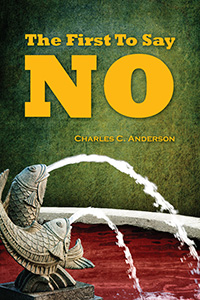
The First To Say No

The First To Say No

Charles C. Anderson

Publisher: Outskirts Press

ISBN: 9781432791018

Reviewer: Michel Violante

“The First To Say No” by Charles C. Anderson is about two female doctors from Parkview Hospital who decide to stop the physical abuse of a local gang. “The Plagues,” as they were called, were an ethnically-mixed group of delinquents who went to Parkview pretending to be sick in order to get drugs. Once at the hospital, they would terrorize the staff and patients, while the corrupt police force did nothing and the hospital administration looked the other way, as they believed them to be patients nonetheless.
It was after Dr. Elita slaughtered the seven gang members that raped her, that Elita and her best friend, Dr. Kate, took action as they became Parkview’s female vigilantes. While their plan developed and unfolded, Kate at one point recruited her own mother to help them as well as coworkers and friends. I found it fascinating how this suspenseful story mingles with some of the characters past as well as the medical field. Anderson creates well-developed characters whose love of helping others goes beyond their duty, turning them into heroes.
I am a fan of medical mysteries and thrillers, but what I found fresh and unique about this story was the fact that regular professional women turn into action heroines for their community. I loved how these women utilized their knowledge and came up with a realistic plan to exterminate “The Plague.”
“The First To Say No” also reflects the current failing of the U.S. Health Industry. I was amazed at how bad the doctors really have it. Anderson’s writing style was clear, crisp and simple, even when dealing with medical terminology. The plot flowed wonderfully and kept me interested at all times. The details about the Health Industry and clear descriptions made the story so real, it felt almost like true crime.

I recommend “The First To Say No” by Charles C. Anderson to anyone who loves a fresh, suspenseful read. It is definitely a page turner.

4 Ways to Bring New Life to Your Manuscript

Sometimes writers hit a dead-end in their manuscript, and they need help bringing the project back to life. While you might think writing would be the solution, it may be best to save the manuscript and take a break. But don’t completely forget about the project. Instead try these four tips to help bring new life to your self publishing book project.

1. Do some research.

To write about an event, type of character, or location, it is often helpful to be very familiar with it. When you aren’t knowledgable on the subject, you can’t always write believable scenes or dialogue. This is why it is so important to do research, even if your book is fiction. Interview people. Read a variety of sources. Take trips. Learn as much as you can about your subject.

2. Learn how to heighten the conflict.

Every story and book has a conflict. It is what keeps the readers interested and wanting to read more. There are a variety of ways you can heighten the conflict in your story. Brush off those old creative writing books, and read up on conflict. Then play around with some different tactics such as the “what if” game to bring new life to your story.

3. Mix it up.

Don’t get stuck in a rut of always doing the same thing. Try a different voice or genre. Create a character who is different from characters you usually write. Even if you decide the new techniques don’t work for you, they are bound to spark some creative ideas.

4. Work it out.

Even if they seem like a waste of time, writing exercises are a great way to get your creative juices flowing. Take a writing course or find writing workbooks with creative exercises.

I’d love to know, how do you bring new life your self publishing projects?

ABOUT KELLY SCHUKNECHT: Kelly Schuknecht is the Vice President of Outskirts Press. In addition to her contributions to the Outskirts Press blog at blog.outskirtspress.com, Kelly and a group of talented marketing experts offer book marketing services, support, and products to not only published Outskirts Press authors, but to all authors and professionals who are interested in marketing their books and/or careers. Learn more about Kelly on her blog at http://kellyschuknecht.com.

5 Pinterest Marketing Tips for Self-Publishing Authors

When used appropriately, social media sites such as Facebook, Twitter, and LinkedIn can be effective tools for book marketing.  The hottest social media trend right now is Pinterest! Like the other social media sites, it can help self publishing authors  facilitate communication with current and potential readers, generate sales, and increase awareness of their books.

This photo sharing site enables users to “pin” images and videos to virtual pinboards, or “Boards,” and share them with others.  Users can organize their pins based on their interests; a few popular examples are food, books, travel, and style. When other users see a pin they like, they can repin it onto one of their own Boards.  Think virtual word-of-mouth marketing!

The visual and social nature of Pinterest make it a perfect fit for book marketing.  Here are a few ways you can use the site to promote your self published book.

1.  Become active on Pinterest and begin networking with people who are pinning in your areas of interest.  People are more likely to want to support people that are active in the community versus people that are just pinning to promote a product or service. You can search on Pinterest for topics related to your interests and your book and start following Boards you find “Pinteresting.”
2.  Create your own Boards.  Keep in mind, Pinterest was created for people to share images and interests.  Your Boards need to be visually appealing, contain lots of images, and they should give potential readers some insights into your interests and why you wrote the book. If you have a poetry book, for example, you may choose to Pin graphics with quotes from your favorite poets, thus allowing you to begin connecting with other Pinners who also like poetry.
3.  Upload images related to your book.  These may include cover images, illustrations, locations that were featured in your book, and/or people that provided inspiration for your characters.
4.  Pin quotes from your book or short selections to entice people to learn more about your book, spread the word and purchase their own copy.
5.  Include links to your website, your publisher’s website or book retail sites so people know where they can purchase your book once you’ve got them “pinterested.”

Pinterest is gaining in popularity, so now is the time to get active, have fun and start promoting your self published book if you haven’t already.