From the Archives: “Give me six hours…”

Welcome back to our Tuesday segment, where we’ll be revisiting some of our most popular posts from the last few years.  What’s stayed the same?  And what’s changed?  We’ll be updating you on the facts, and taking a new (and hopefully refreshing) angle on a few timeless classics of Self Publishing Advisor.

∗∗∗∗∗

[ Originally posted: August 7th, 2009 ]

Give me six hours to chop down a tree and
I will spend the first four sharpening the axe.
– Abraham Lincoln

Let’s look at breaking down your self-publishing book project into the short, mid, and long range in terms of the process in goals. The actual time involved for each phase varies with each author and each project. Nevertheless, you’ve worked hard on writing, revising, and preparing your book for publication. Congratulations. The first step or phase is done or nearing complete, and it’s time to publish.

Many authors confuse this second step – actual publishing – with step 3. Let’s slow down and take a closer look. Phase 1 is the writing, or artistic phase. Step 2, the publishing or business step. Time to begin sharpening the axe. Upfront prices are important, but take the time to avoid the ever present instant gratification of free and quick publishing and research beyond. What kind of pricing control will you have? Professional production options? Will your book be situated to retail competitively on the market? What kind of marketing services and options are available after publication? These are critical questions to ask as you research full-service self-publishing options, customize your mid-range work, and begin to look at getting your published book into reader’s hands. Now your prepared to chop the tree.

– by Karl Schroeder

Karl’s recommendations for breaking the publishing process down into three simple steps has as much to offer the self-publishing author in 2016 as they did in 2009. The steps are straightforward:

  1. Writing (the “artistic” phase)
  2. Publishing (the “business” phase)
  3. Publishing (the “chopping of the tree” phase)

There’s some lack of clarity between these two final points in Karl’s original post, but there doesn’t have to be. Think about it more like the distinction between planning and execution, which in reality ought to be separate steps and given equal weight from the outset. If the planning is not given your full attention, the execution can only ever be mediocre. And your book deserves better than mediocre!

planning

There are plenty of services out there to help you organize your plan and navigate the oft-hazardous process of publishing. If you’re still in the process of writing your book and you need a little more structure, I can’t begin to recommend the Scrivener writing software highly enough. Better still, you can try it for free for 30 days, which if you’re doing NaNoWriMo this November may be just enough time to knock out what’s left of your book.  If not, the renewal fee is minimal. It is, at its core, a digital studio space.  That’s Stage 1 taken care of.

If you’re at Stage 2, however, it might be time to reach out for help.  In doing your research for Stage 3, you will have stumbled across any number of companies offering self-publishing services–but how many of them have customer support?  Even if you’re not ready to commit to a specific company, it’s well worth getting to know who’s on the other end of the line when you call in.  In the case of Outskirts Press, you’re hooked up with a Publishing Consultant almost right away. (A real live person, in the age of the Internet?? Amazing.)  Some of your early questions can be answered by such a person, but if your questions require further attention, it’s worth paying (a reasonable amount, one would hope) someone like a Personal Marketing Assistant for that insight.  After all, as Karl said, marketing needs to start before your book hits the shelf.  It’s more of a lifestyle than a small component of a larger project.

Stage 3 is easy if you have knocked out the first with your customary thoroughness, in part because extensive planning will have made you aware of what you value most in a self-publishing company, and what steps to take once you’ve chosen one.  It might seem simple or reductive to break the publishing process down into just three steps … but then again, it works!

Thanks for reading.  If you have any other ideas, I’d love to hear them.  Drop me a line in the comments section below and I’ll respond as quickly as I can.  ♠


Kelly

ABOUT KELLY SCHUKNECHT: Kelly Schuknecht is the Executive Vice President of Outskirts Press. In addition to her contributions to the Outskirts Press blog at blog.outskirtspress.com, Kelly and a group of talented marketing experts offer book marketing services, support, and products to not only published Outskirts Press authors, but to all authors and professionals who are interested in marketing their books and/or careers. Learn more about Kelly on her blog, kellyschuknecht.com.

Conversations: 9/16/2016

THE MANUSCRIPT IS JUST ABOUT FINISHED

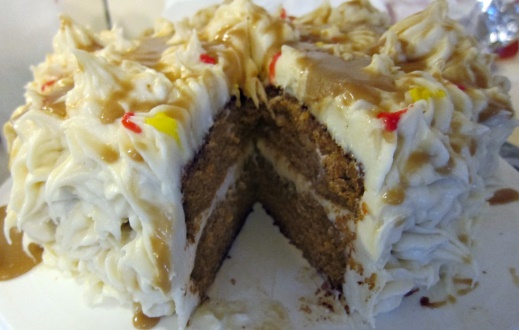
It’s Time to Think About adding the Frosting!

cake with frosting

Just last week I went to a writers’ workshop and within the first two minutes of the speaker’s presentation she said, “From the minute you sit down to begin your first book, you need to be thinking about marketing.” OH, my! I printed my first book in 2004, self-published my second book in 2015, and have a good start on book number three. With the help of several very creative friends, I’ve dipped my toes into the marketing river, but it’s not a comfortable place for me. I really don’t know many writers who are (honestly) comfortable wearing marketing shoes.

So, today, I’m encouraging every writer I know to think about the book you’re beginning—or about to finish—as if it were a delicious cake just waiting to be tasted and enjoyed. If it were sitting in the bakery with no frosting covering it, how many people would buy it? All the other frosted and decorated cakes would appeal to buyers first. Your cake/book would sit there for a long time—maybe not be selected at all.

If you’re a self-published author you may be familiar with the concept of “optional assistance” publishing companies offer to help launch our books into the world. One such option for most of my clients has been the Professionally Designed Book Cover. This is really the frosting-on-the-cake! I remember working with a client who knew the image she wanted to present on her book cover. We spent hours discussing it. She wanted to have it ready to submit with the manuscript, and did not want to add the expense of using the publisher’s Designer. So, she had me “spend” hours researching potential images—multiple illustrations—and finally selected two possibilities. When her manuscript was sent in, with the cover images, the Designer showed her the two she’d selected. He also showed her a proposed option—his interpretation of what she wanted. WOW! That book cover “popped!” It was immediately clear to both of us that when her book was placed on a shelf, it would be quickly noticed.

We both learned a valuable lesson that day—to consider what the publisher can offer us in the areas where we are weak. Our time is a valuable commodity, as is our brain-power which we need to begin the next book(s). If we need editing assistance (see last week’s blog), marketing inspiration or help with developing a video trailer that will catch the attention of today’s Readers who search the Internet before making the book-purchase selections, then that’s what we must do.

Even if you have a contract with a traditional publisher, you may need to seek out assistance in the marketing arena. These publishing houses may introduce the book and give authors a nudge into the world of book-promotion, but they rarely offer additional help beyond that. Their book will go out of print after only a few years if the sales don’t keep it alive.  (This is not the case with self-publishing companies. For a very modest yearly “storage fee” your book will be available as long as you want it to be.)

So it is that I encourage you to build up that layer of frosting/visibility as thick as you can for the book you’ve worked so hard to deliver. ⚓︎


Royalene

ABOUT ROYALENE DOYLE: Royalene has been writing something since before kindergarten days and continues to love the process. Through her small business—DOYLE WRITING SERVICES—she brings more than 40 years of writing experience to authors who need “just a little assistance” with completing their projects. This is a nice fit as she develops these blogs for Outskirts Press (OP) a leading self-publisher, and occasionally accepts a ghostwriting project from one of their clients. Her recent book release (with OP) titled FIREPROOF PROVERBS, A Writer’s Study of Words, is already receiving excellent reviews including several professional writer’s endorsements given on the book’s back cover.  

Royalene’s writing experience grew through a wide variety of positions from Office Manager and Administrative Assistant to Teacher of Literature and Advanced Writing courses and editor/writer for an International Christian ministry. Her willingness to listen to struggling authors, learn their goals and expectations and discern their writing voice has brought many manuscripts into the published books arena.

The Book Beautiful: Front & Back Matter (It Matters!)

So you’ve written a manuscript, thus the ‘meat’ of your book is complete. However, you want to happily sandwich that meat between what we call ‘front matter’ and ‘back matter.’ Front matter includes things like the half-title, the title page, the copyright page, a dedication, acknowledgements, a table of contents, and perhaps other things such as an epigraph, a preface, an introduction, or a prologue. The back matter can include an index, an appendix, and other material that doesn’t belong in the meat of the book, but that you’d like to include to feel you have a complete book.

First, let’s break down what front and back matter should include and how to make them look professional and appropriate. We’ll begin by tackling the different types of front matter you can choose to include.


  • Half Title –  As writers, you’re probably (and hopefully!) avid readers yourself, so you know that typically the first page of a book tends to just contain the title of the book. No author name, no other clutter, just a straightforward, bold texted title.
  • Title Page – The title page will also include the title of the book, but it will also include a subtitle (if you have one), the author’s name, as well as the name of the publishing company of the book. Other details that are often found on this page would be the location of the publishing house, the year the book was published, and perhaps even an illustration.
  • Copyright Page – You’ll usually find the copyright page by simply flipping the title page, and it will have a copyright notice, edition information, cataloging data, publication information, legal notices, and your book’s ISBN.
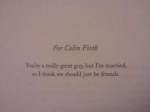
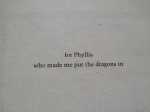
  • Dedication Page – This page will typically follow your copyright page and can be as simple as…


For my dearest mother Mary: R.I.P.

Or they can be witty…

“I dedicate this book to George W. Bush, my Commander-in-Chief, whose impressive career advancement despite remedial language skills inspired me to believe that I was capable of authoring a book.”

Pedram Amini, ‘Fuzzing: Brute Force Vulnerability Discovery’

Or they can be touching…

“Dear Pat,

You came upon me carving some kind of little figure out of wood and you said, “Why don’t you make something for me?”

I asked you what you wanted, and you said, “A box.”

“What for?”

“To put things in.”

“What kind of things?”

“Whatever you have,” you said.

Well, here’s your box. Nearly everything I have is in it, and it is not full. Pain and excitement are in it, and feeling good or bad and evil thoughts and good thoughts- the pleasure of design and some despair and the indescribable joy of creation.

And on top of these are all the gratitude and love I have for you.

And still the box is not full.”

–John Steinbeck, ‘East of Eden


  • Acknowledgements Page – This is where you can express your appreciation for all of those who helped you create the book.
  • Table of Contents – The table of contents is where you list all the major divisions within your book, more often than not in the form of chapters. The length of your book will determine how detailed your table of contents will need to be–a longer book will typically require a more detailed table of contents to assist your reader in navigating the piece.
  • Epigraph – An epigraph is a quotation that you can choose to devote an entire page to (usually facing the table of contents), or that you can choose to put at the start of the first chapter.
  • Preface – A preface is place for the author to explain how the book came into being and is often signed and dated by the author.
  • Introduction – Here the author can explain the goals of the work, place the work in context, or explain the organization and scope of the work.
  • Prologue – A prologue is told from the voice of a character in the book, and not the author’s own. It is typically used in a piece of fiction to set the scene for the story that is about to unfold.

As for the back matter of your book,

  • Index – An index will act as a guide to the book itself; it provides an alphabetized list of terms in the text and will indicate where in the text these terms were used.
  • Appendix – An appendix will provide supplementary details about your book such as corrections, updates, and details.


Now these are merely suggestions for what you can choose to include in the front and back matter of your book. What is most important is that what you do include looks professional and is well formatted. Pick up multiple books from your shelf and take a look at the front and back matter for a point of reference. While you’ve probably skipped over it on most books you’ve read, think how much more legitimate books with these sections look than books without them. These parts of publishing may seem tedious, but as I’ve said before, they are what will transform your manuscript into a book.


Thank you for reading!  If you have any questions, comments, suggestions, or contributions, please use the comment field below or drop us a line at selfpublishingadvice@gmail.com.  And remember to check back each Wednesday for your weekly dose of marketing musings from one indie, hybrid, and self-published author to another. ♠


Kelly

ABOUT KELLY SCHUKNECHT: Kelly Schuknecht is the Executive Vice President of Outskirts Press. In addition to her contributions to the Outskirts Press blog at blog.outskirtspress.com, Kelly and a group of talented marketing experts offer book marketing services, support, and products to not only published Outskirts Press authors, but to all authors and professionals who are interested in marketing their books and/or careers. Learn more about Kelly on her blog, kellyschuknecht.com

From the Archives: “Self-Publishing Ripple Effect Marketing”

Welcome back to our Tuesday segment, where we’ll be revisiting some of our most popular posts from the last few years.  What’s stayed the same?  And what’s changed?  We’ll be updating you on the facts, and taking a new (and hopefully refreshing) angle on a few timeless classics of Self Publishing Advisor.

∗∗∗∗∗

[ Originally posted: May 27th, 2010 ]

Later this week, on May 18th, the Colorado Independent Publishers Association (CIPA) EVVY Awards will be hosting the 2013 award banquet. The event will take place at Marriott Denver South at Park Meadows and all proceeds will benefit the literacy projects of the CIPA Education and Literacy Foundation (CIPA ELF).

CIPA is a nonprofit association of independent book publishers, authors, future authors and related publishing service providers that has been providing leadership since 1992. Members come from many states as well as from Colorado and three foreign countries to take advantage of the resources made available through CIPA membership. Organization membership, along with active participation in CIPA programs, can open doors to many opportunities and can save thousands of dollars in costly mistakes.

Best of luck to all the finalists! To learn more about the event, visit http://www.cipacatalog.com/pages/CIPA-EVVY-Awards.

by Kelly Schuknecht

.

Thanks for reading.  If you have any other ideas, I’d love to hear them.  Drop me a line in the comments section below and I’ll respond as quickly as I can.  ♠


Kelly

ABOUT KELLY SCHUKNECHT: Kelly Schuknecht is the Executive Vice President of Outskirts Press. In addition to her contributions to the Outskirts Press blog at blog.outskirtspress.com, Kelly and a group of talented marketing experts offer book marketing services, support, and products to not only published Outskirts Press authors, but to all authors and professionals who are interested in marketing their books and/or careers. Learn more about Kelly on her blog, kellyschuknecht.com

The Book Beautiful: Illustrations

We all started out reading illustrated children’s books; perhaps your parents would read the words as your eyes were captivated by the images of a hungry caterpillar, the Berenstain bears, a Curious little George, etc. As we grow older, however, it’s probably not too often that the books we fill our time with have accompanying illustrations. Nevertheless, it has not always been the case that book for adults went unillustrated. Charles Dickens, for example, was known to have very close relationships with his illustrators, to whom he would give plot outlines before he’d even written the text itself. So while it’s easy to pull up references to colorful children’s books illustrations, that is not to say that they don’t have a valid and important place in other genres of books geared toward young adults and adults as well.

curious george illustration

So you want to write an illustrated book? First of all, don’t look at the illustrations to an illustrated book as supplemental, but as a crucial aspect to the themes you are trying to convey. Images help augment the reader’s imaginative experience, they make a book fun and easier to read, and they definitely help hold on to the reader’s attention.

There are certain genres that illustrations or photographs seem to be an obvious and necessary accompaniment–cookbooks, DIY-books, textbooks, autobiographies and biographies, and as we’ve previously mentioned, children’s books. The illustrations for a cookbook could simply be photographs of the final result of your recipe, and for a DIY-book they could be drawings or photographs of the different steps of the project your book conveys. If you’re writing an autobiography or a biography, photographs of the subject throughout their life or at pivotal moments in their life will help the reader further identify with the subject as a person rather than as a character in a story whom they have to fabricate an image of in their mind. As far as children’s books goes, the adage ‘don’t judge a book by its cover’ doesn’t really apply–kids will always judge a book by its cover and they will be inevitably more drawn to eye-catching, colorful illustrations.

Quantity is another important consideration to make as far as illustrations go. For a young-adult book, one illustration per chapter will usually suffice, while a children’s book should probably have one illustration per page. With a children’s book then, layout becomes another consideration–will your images be a full-page spread, or will they be next to, above, or below the text? If you’re writing a biography or an autobiography, you may want to have your photographs placed at the relevant points in your text–for example, your subject won the Olympic gold medal and here is a picture of her doing just that. OR, you could have a center panel with multiple pages of photographs and use footnotes in the text that will direct the reader to the relevant images that they can flip to easily.

Now, assuming that you yourself are not going to illustrate your own book (not to at all doubt your artistic abilities), the question of how to get your book illustrated become important. Outskirts Press offers custom, full-color illustrations for authors, even if they haven’t published through our company. By using this service, you can be sure that you’ll never have to split royalties with an artist, a cost that is always nice to avoid. Remember, no matter who you choose to illustrate your book, that quality illustrations are going to be a very important factor in the marketing value of your book.


Thank you for reading!  If you have any questions, comments, suggestions, or contributions, please use the comment field below or drop us a line at selfpublishingadvice@gmail.com.  And remember to check back each Wednesday for your weekly dose of marketing musings from one indie, hybrid, and self-published author to another. ♠


Kelly

ABOUT KELLY SCHUKNECHT: Kelly Schuknecht is the Executive Vice President of Outskirts Press. In addition to her contributions to the Outskirts Press blog at blog.outskirtspress.com, Kelly and a group of talented marketing experts offer book marketing services, support, and products to not only published Outskirts Press authors, but to all authors and professionals who are interested in marketing their books and/or careers. Learn more about Kelly on her blog, kellyschuknecht.com