Demystifying the Digital Census : Digital Sales Growing, But Slowing

Last week, I began a series in which I’m applying a microscope to the results of FutureBook‘s Digital Census of 2015 and breaking down to its component parts just what the fallout will be for you and me as indie and self-published authors.  FutureBook, an annual project of industry titan The Bookseller, has been hitting the books for five years now and has become the standard-bearer for those elements of the publishing (and specifically, digital publishing) revolution that range from mainstream (like Amazon) to cutting-edge, innovative, or brand new (like Goop and Medium!).

ebooks

The fifth annual FutureBook conference was held, in part, to evaluate and respond to the Digital Census of 2015, in which record numbers of readers and writers and bloggers and publishers (of traditional or indie ilk alike) and other industry experts reflected upon the ways that has changed or the ways in which they foresee the industry changing, all while indexing their hopes and concerns for where the Book as an object and industry and personal revelation is headed.  The data was condensed down to five talking points which in turn guided and shaped the course of the rest of the conference, and which indicate our ever-evolving relationship to publishing.  These points are:

  1. Mobile overtakes tablets and dedicated e-readers as the device of choice […]
  2. Digital sales are still growing, but they are also slowing […]
  3. Self-love levels recede as many indie authors report lower satisfaction levels […]
  4. Publishing remains very much divided on matters digital […]
  5. … And the majority believe publishers remain unprepared for what is coming [….]

Today I’m going to examine the second of these points, having addressed #1 (the rise of mobile) in last week’s post.  Here’s what the final FutureBook publication says about digital sales, which continue to demonstrate significant growth––although perhaps also showing signs of plateauing :

digital sales

The data meshes nicely with a series I just finished two weeks ago (“The Current State of E-Readers | An Author’s Guide“), in which I lay out the reasons why slowed growth in both ebook and e-reader sales is both a cause for concern (less overhead profit coming in) and for optimism (a diversified, stabilizing market with more competition and more options for authors).  Much of the research I gathered there applies here, so I don’t want to sound like a broken record and repeat myself––but I do want to emphasize the last line in the FutureBook article:

“Publishers have found that digital technology makes producing and delivering audio much more straightforward, but many are concluding that apps are not worth the candle.”

I think this is an important sentence because nowhere else in the article do audiobooks earn a lot of love, and even in the data mentioned above, the statistics for digital audiobooks is combined with that for digital e-books (that is, the text-based variety that doesn’t involve voice actors and snappy narration). And if there’s one segment of the digital publishing industry that’s neglected here and deserves a second look, it’s the digital audiobook!  Readers love them, and so therefore authors are beginning to pay attention.

We all have probably heard about Amazon’s merger with Audible and their ACX offerings for digital audiobooks by now, but what we don’t know (necessarily) is that there’s a whole niche market out there for authors looking to self-published audio books outside of the ACX/Audible/Amazon umbrella.  This Publisher’s Weekly article, for example, takes a look not just at ACX but at smaller companies without big corporate backing, like Open Book Audio and Spoken Word––and other media are starting to take note, including MediaShift and Author Marketing Institute.

As with all aspects of self-publishing, producing an audiobook (either with or without ACX/Audible/Amazon involvement) is a time- and energy-intensive process that deserves both careful and cautious consideration before you decide to commit … or not to commit.  But if there’s anything I’ve learned from my years in the publishing industry, it’s that readers are inherently voracious and will devour good words wherever they find them and in as many formats as they can discover them … and that there’s no such thing as “standing still” when it comes to the evolution of book distribution technology.  We have, as authors, a responsibility to remain at the forefront of the digital evolution––not hanging back and attempting to deny the inevitable progress from one mode of consumption to another, but leading the way and cutting new paths for those who follow.  Only if we innovate can we stay relevant and useful to our readers.  And I fully believe it when I say your book deserves to be heard.*


* and yes, I know that’s a terrible pun!


Thank you for reading!  If you have any questions, comments, suggestions, or contributions, please use the comment field below or drop us a line at selfpublishingadvice@gmail.com.  And remember to check back each Wednesday for your weekly dose of marketing musings from one indie, hybrid, and self-published author to another. ♠

KellyABOUT KELLY SCHUKNECHT: Kelly Schuknecht is the Executive Vice President of Outskirts Press. In addition to her contributions to the Outskirts Press blog at blog.outskirtspress.com, Kelly and a group of talented marketing experts offer book marketing services, support, and products to not only published Outskirts Press authors, but to all authors and professionals who are interested in marketing their books and/or careers. Learn more about Kelly on her blog, kellyschuknecht.com.

From the Archives: “Self-publishing, Literature and Pop Culture”

Welcome back to our new Tuesday segment, where we’ll be revisiting some of our most popular posts from the last few years.  What’s stayed the same?  And what’s changed?  We’ll be updating you on the facts, and taking a new (and hopefully refreshing) angle on a few timeless classics of Self Publishing Advisor.

∗∗∗∗∗

[ Originally posted: August 19th, 2009 ]

I opened the Books section in yesterday’s New York Times “Urban Eye” to read the headline, “Why Literature Doesn’t Matter.” Really? How sad. It matters to me. It matters to my family, friends, and colleagues. It matters to the self-publishing authors I work with every day. Literature doesn’t matter…. I wish someone would have told me.

According to “Urban Eye,” a recent Sunday Book Review article penned by novelist Kurt Anderson was to fill me in. Anderson writes, “During the 1960s and ’70s…people who hadn’t read a word of a first-rate contemporary novel — no Cheever, no Bellow, no Salinger, Heller, Styron, Doctorow, Updike or Roth — nevertheless knew the novelists’ names… And then everything changed.”

But book sales in the US have remained strong, and are even growing over previous years in Europe. Despite the current recession effects, statistics show that readers are still buying books. Not matter? Anderson goes on to claim, “But irony of ironies, after literature was evicted from mass culture, pop culture itself began to fragment and lose its heretofore defining quality as the ubiquitous stuff that everybody consumed.”

Ah, I’m seeing to whom, or rather to what, Literature doesn’t matter to – pop culture. Wait, then this is a good thing for authors and readers. The fragmentation that Anderson talks about is the segmenting of consumers into smaller, more clearly defined profiles. What that means to self-publishing authors of fiction, non-fiction, etc., is not that your work doesn’t matter, that Literature doesn’t matter, but that it doesn’t matter to everyone. Perfect, now you can coordinate and focus your subject matter and marketing efforts to readers who will benefit from, and buy your books.

Talk to your self-publisher early on about your custom marketing plan.

Karl Schroeder


Interior detail of antique and vintage books and ornaments on a shelf in a Cotswolds country cottage

When Karl Schroeder first wrote this blog for us back in 2009, the market for self-publishing authors had already begun to (in his words) “fragment” into smaller and smaller niche genres and industries.  Authors were on the lookout for that “big hit wonder” element for their books to tap into, the mode that we’re often taught to expect or at least reach for as writers in the modern West.  But despite appearances–despite the rise of J.K. Rowling and Stephanie Meyer and E.L. James and Gillian Flynn and too many others to name–the superstar writer has mostly receded into the background.  What we have today is a (more) stable, (more) diverse, and (more) opportunity-rich industry, and this holds true even for the oft-neglected self-publishing author.

So, yes, what Karl said remains true: literature does still matter, though not to everyone.  What may have, perhaps, changed is that it no longer matters just to connoisseurs of hyper-specialized niche genres and so on … literature does in fact have a profound impact upon and presence within pop culture.  And I’m not just talking about Young Adult Literature or the ever-popular megagenre of crime fiction … I’m talking about the supposedly “forgotten” or “neglected” classic literature.

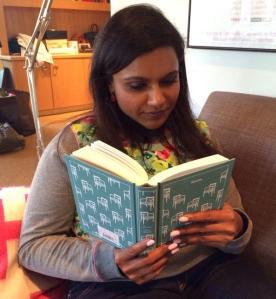
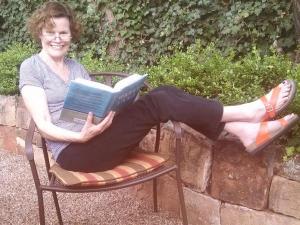
Ever heard of the #IReadEverywhere hashtag?  Well, it’s a thing.  A very, very big thing … because it demonstrates that our favorite pop culture icons–whether Mindy Kaling or or–read.  A lot.  And they read a pretty fantastic cross-section of all genres, including, yes, classic literature.  For example, we have:

ireadeverywhere1

Mindy Kaling reading Jane Austen (it doesn’t get more classic than that).  And …

ireadeverywhere2

Judy Blume reading Wally Lamb. And …

ireadeverywhere3

The Big Bang Theory’s Mayim Bialik and Melissa Rauch reading Jonathan Safran Foer and Julia Child, while their co-star …

ireadeverywhere4

Jim Parsons reads Buster Keaton.

And they’re not the only ones!  The #IReadEverywhere campaign has generated hundreds of pictures of celebrities catching a few classic words between subway stops, while sipping mochas at coffee shops, or playing on the floor with their cats.  The age of the book may vary (Foer and Childs never overlapped with Jane Austen in the historical record, let’s just say), but the tenor of the trend remains the same: everyone reads, and a lot of people read everywhere and perhaps even often.  You can’t despair for the state of classic literature or any literature at all when it’s literally a marker of “cool” to snap a selfie of you toting Hemingway along to a hip bar in NYC of a Saturday night.

And yet, Karl’s ultimate point remains as valid as ever: you still need to “[t]alk to your self-publisher early on about your custom marketing plan” if you want to create and maintain a steady stream of book sales.  And you can do that most effectively by narrowing your gaze to a specific, manageable target audience.  It’s better to start with a handful of very interested, very invested readers than to spread your fairy dust thinly among people who are only marginally interested.  Invested fans will (sometimes quite literally) sell your book for you, and that has historically been how self-published works have come to receive broad acclaim.  Think of Andy Weir and his blog readers.  Think of E.L. James and her fanatically excited followers on FanFiction.net.  Think of John and Jennifer Churchman and The SheepOver.  You can do everything right as an author and still not sell books if you haven’t gotten your fans on board.  On the flip side, you can invest just a little time and energy in wooing your readers and seizing opportunities when they arise, and sell books like hotcakes by doing so.  Talk to a marketing expert at your self-publishing company, and see what magic you can make happen, together! 

KellyABOUT KELLY SCHUKNECHT: Kelly Schuknecht is the Executive Vice President of Outskirts Press. In addition to her contributions to the Outskirts Press blog at blog.outskirtspress.com, Kelly and a group of talented marketing experts offer book marketing services, support, and products to not only published Outskirts Press authors, but to all authors and professionals who are interested in marketing their books and/or careers. Learn more about Kelly on her blog, kellyschuknecht.com.

News From the Self-Publishing World: 11/16/15

This week in the world of self-publishing:

In true entrepreneurial fashion, superstar actress and businesswoman Gwyneth Paltrow has decided to start yet another new venture … and this one’s into our world, the world of self-publishing.  According to Andrea Mandell in a USA Today article from November 10th, Paltrow will be calling her self-publishing line “Goop”––the same name as her existing fashion/beauty/lifestyle website.  It’s unclear at this point whether Paltrow will open up the new company for other aspiring authors, and how content will be selected and curated, but for now there are plans in the works for a cookbook and a beauty book at some later date.  Goop (the self-publishing company) will exist in partnership between Paltrow and existing publishing powerhouse, Grand Central Publishing.

On November 11th, Jessie Rosen of Bustle published a meme-rich list of reasons why authors should write that long-delayed YA novel … and now.  I’m happy to report that point #6 is, in her words, “You Can Self-Publish and See Just as Much Success.”  (The accompanying GIF image is, interestingly, pulled from the recent 50 Shades of Grey film––and keeps company with other GIFs on the list from Pretty Little LiarsDivergent, and Harry Potter.  It’s nice to know once and for all that popular culture has officially been infiltrated by Our People.)  Anna Banks and Amanda Hocking also win mentions.  And if this list isn’t enough to convince you that writing a YA novel is a worthwhile investment of time and energy, perhaps it will provide a good dollop of inspiration to publish whatever other kind of book you want to write.  (Hint: it doesn’t have to be YA!)

“There is proper etiquette on approaching a bookseller with a request to stock a self-published title,” writes Sue Corbett in this November 10th Publisher’s Weekly piece on the runaway self-publishing success, The Sheepover.  The joy of this sweet little picture book’s journey to an international market with Little, Brown and Company is in fact a story of the authors’ local Vermont community: when the husband and wife team first approached a local indie bookstore owner with their book, it was an eavesdropping customer who purchased the first copy, pulled in a friend to buy a second copy, and convinced the bookstore owner not only to stock a handful but to write a blog post about the book––a blog post which ended up capturing a lot of attention both at Publisher’s Weekly and among those who subscribe to PW emails.  And those original eight copies?  Paid for by a Kickstarter campaign linked to the authors’––John and Jennifer Churchman––Facebook account.  And if this story doesn’t warm the cockles of your heart, even after the first Autumn snow, then perhaps it will at least inspire you to try self-publishing a picture book of your own!

On a more “serious” newsy note, a decision has been made in respect to a long-running lawsuit leveled against self-publishing supergiant Author Solutions that has far-reaching implications for indie authors looking to publish in the near future.  In his November 13th article for Publisher’s Weekly, Jim Milliot charts the progress of the lawsuit, which was filed in 2013 by three authors accusing the company of fraud, and how this case intersected with the company’s transition to a new president and CEO––Andrew Phillips.  While the case has been dismissed, Phillips admits that he is “happy to be able to focus entirely on growing the company’s business.”  Author Solutions, which was first formed by the merger of AuthorHouse and iUniverse in 2007, has since gone through sequential ownership by Pearson, Penguin, and finally, Penguin Random House.  With all the resources of one of the Big Five publishers behind it, Author Solutions has instituted something called the “Author Care Initiative,” with the goal of improving customer satisfaction and retention in the face of an increasingly competitive market.  And they’ve seen measurable improvement in their numbers, which speaks to the value of actually caring about the authors!  You can read about the full set of measures as instituted by Phillips in the article.


As a self-publishing author, you may find it helpful to stay up-to-date on the trends and news related to the self-publishing industry.This will help you make informed decisions before, during and after the self-publishing process, which will lead to a greater self-publishing experience. To help you stay current on self-publishing topics, simply visit our blog every Monday to find out the hottest news. If you have other big news to share, please comment below.

KellyABOUT KELLY SCHUKNECHT: Kelly Schuknecht is the Executive Vice President of Outskirts Press. In addition to her contributions to the Outskirts Press blog at blog.outskirtspress.com, Kelly and a group of talented marketing experts offer book marketing services, support, and products to not only published Outskirts Press authors, but to all authors and professionals who are interested in marketing their books and/or careers. Learn more about Kelly on her blog, kellyschuknecht.com.

Demystifying the Digital Census : E-Readers are OUT, Mobile is IN

As promised in last week’s “News from the Self-Publishing World,” I’m going to take a closer look at the results of FutureBook‘s Digital Census of 2015 and break down just what the implications are for you and me, indie and self-published authors.  FutureBook, an offshoot of the well-known institution, The Bookseller, is now in its fifth year and rapidly becoming a litmus test for the emergence of digital technologies and their assimilation into common usage across the developed world.  The conference, which self-advertises as “bring[ing] together more than 50 speakers from across the media world for a day of reckoning, realisation and revivification,” may well come to guide these emergences as well as reflect upon them at some point in the future–it has become so important.

futurebook

This year, according to the FutureBook, the five main takeaways from the conference are as follows:

1. Mobile overtakes tablets and dedicated e-readers as the device of choice […]

2. Digital sales are still growing, but they are also slowing […]

3. Self-love levels recede as many indie authors report lower satisfaction levels […]

4. Publishing remains very much divided on matters digital […]

5. … And the majority believe publishers remain unprepared for what is coming [….]

I’m going to take these points one at a time, break them down, and hopefully unpack the important details.  Here’s what the final FutureBook publication says about mobile tablets and e-readers:

futurebook

This little summary is, of course, useful in its own way for delineating the boundaries of the conversation at hand–a conversation in which self-publishing authors have a great vested interest.  The stakes are high for those of us who depend upon ebook sales for our income, and so knowing where to focus our attentions (and, let’s face it, our money) is handy.  (And as we have suspected for a while, we should be focusing on the Kindle Store as a marketplace although perhaps not on the Kindle as a piece of hardware.  For more on that, take a look at my post on Kindles in the e-reader-related series I wrapped up last week.)  But there’s an aspect of the conversation that this summary neglects: why.

Why are e-readers diminishing in appeal?

Is it something to do with a lack of novelty (they’ve been around for a while now), or because the function of reading ebooks can be better performed with other hardware (like the iPad or iPhone), or because of something else entirely?  Reports from industry experts seem to suggest a little of all of the above.  One TechRadar article cites “multifunctionality” and “age” as driving the market these days, with readers under 25 reading far more ebooks than the national average but doing so with the devices they’re always carrying with them anyway–their phones.  This puts “a demographic bomb” under the e-reader, and as the devices’ primary user base ages out of the buying population, so too will the devices themselves.  And this Christian Science Monitor article argues that the whole system has been “top-heavy” from the beginning, with only a handful of companies getting in on the e-reader market in the first place and therefore rendering it fragile and dependent on sales figures that can swing dramatically from one quarter to another.  We can’t ignore those other voices, too–like this one from the Independent–that the act of turning a page on an ebook simply isn’t rich enough to edge out the superior experience of holding a print book in hand.

All this to say, we can’t afford to forget that any entry into the canon of Great Technologies can be supplanted by changes in market demands, ousted by demographic shifts, and displaced by some new shiny gadget.  Remember that whole “don’t put all your eggs in one basket” expression?  Well, it probably originated in the early 1700s, and we still eat eggs and put them in baskets today.  By which I mean to say: some things remain the same, and some things change.  It seems that what needs to stay the same is our dedication to adaptability in the rapidly changing world of self-publishing.


Thank you for reading!  If you have any questions, comments, suggestions, or contributions, please use the comment field below or drop us a line at selfpublishingadvice@gmail.com.  And remember to check back each Wednesday for your weekly dose of marketing musings from one indie, hybrid, and self-published author to another. ♠

KellyABOUT KELLY SCHUKNECHT: Kelly Schuknecht is the Executive Vice President of Outskirts Press. In addition to her contributions to the Outskirts Press blog at blog.outskirtspress.com, Kelly and a group of talented marketing experts offer book marketing services, support, and products to not only published Outskirts Press authors, but to all authors and professionals who are interested in marketing their books and/or careers. Learn more about Kelly on her blog, kellyschuknecht.com.