Self-Publishing News: 6.27.2016

This week in the world of self-publishing:

“Against all expectations, the traditional book is making a comeback,” writes Chris Mitchell in a June 27 article for The Australian Business Review.  No small publishing market backwater, Australia has long stood as a laboratory for new trends and technologies–and as a healthy chunk of the global market, with access to east European and Asian markets as well as serving as a gateway to the Southern Hemisphere.  As with many other facets of life–such as the environment–Australia often sees changes coming long in advance of others (disasters included) … and the disruptive effects persist there long after they recede elsewhere around the world.  But there’s good news as far as publishing is concerned: the global panic over the digital takeover is beginning to abate Down Under, as the nation’s paper and hardback copies make a comeback.  Says Mitchell:

Last year, for the first time in nearly a decade, book sales rose in Australia — by 2.4 per cent to $979 million. Add $410m in education sales and leading Australian publishers are starting to see a way through the digital disruption of the past ­decade.

They also see a stabilising of digital book sales globally. ­E-books appear to have plateaued at 20 per cent of the market in the English-speaking world.

What does this mean to the self-publishing author, Down Under and abroad?  In keeping with the other coverage we’ve given this issue, it seems as though good news for traditional publishing is almost always good news for self-publishing, too.  (Despite traditional publishing’s tendency to cast it as an “us vs. them” debate.)  A stable market, in which every niche has found stability, is a wonderful thing for self-publishing authors!  And while “Australian book retailers are generally seen to have a long way to go to become as good at selling their stock online as retailers in the US and Britain,” writes Mitchell,
“The rise of Booktopia, the country’s largest independent online bookstore, has shown how this can be done well.”  Australians are canny about balancing the niches!  For more of Mitchell’s original article, click here.

We’ve written about SELF-e before on Self Publishing Advisor, but Ben Muir of The Chronicle has a brand-new (June 24) update!  After summarizing the publishing experience (which seems, more often than not, to be a choice between the traditional route and some variant of the self-publishing route) Muir goes on to introduce SELF-e as some kind of “middle ground.”  SELF-e, which can be found at self-e.libraryjournal.com, is “a website that lets libraries distribute the work of independent authors, and offer an array of genres and content for subscribing patrons.”  Sponsored by the online version of Library JournalSELF-e is one of several–and one of the most successful, to date–options available for self-publishing authors attempting to get their books onto the shelves–physical or digital–of their local library.  The mechanics of the SELF-e process are simple: Authors upload their books in what Muir calls a “painless” process, and once libraries purchase subscriptions to SELF-e, their readers access SELF-e through Biblioboard, a  companion site to Library Journal that operates much like other digital libraries.  Muir writes specifically to announce Timberland Public Library’s decision to invest in SELF-e, a good sign that libraries and their users are still finding this sort of platform useful.  For more information, follow the linkfollow the link!

There’s some very good news for self-publishing authors who choose to pursue audio editions of their books, writes Ryan Joe for Publisher’s Weekly on June 24: “For the second consecutive year, sales of audiobooks grew around 20% in 2015, totaling about $1.77 billion, according to the Audio Publishers Association (APA).”  And this “boom,” writes Joe, “is due to the explosion of digital audio, which has made audiobooks more accessible.”  Muir names three platforms offering digital audio options for the discerning author: Audible’s Audiobook Creation Exchange (ACX), the Deyan Institute, and Author’s Republic, owned by Audiobooks.com, and there are various hybrid publishing companies that offer audio packages.  And a lot of authors are headed in this direction, reports Audible’s EVP and publisher, Beth Anderson: already, some 58,000 authors and narrators have booked gigs through her website alone–and while Audible and Amazon are both hefty household names, smaller audiobook publishers are also seeing remarkable success.  There are many benefits to choosing to publish an audiobook, as Joe goes on to describe, including targeting new reader bases and demographics.  For his entire article, check it out on Publisher’s Weekly online!


spa-news

As a self-publishing author, you may find it helpful to stay up-to-date on the trends and news related to the self-publishing industry.This will help you make informed decisions before, during and after the self-publishing process, which will lead to a greater self-publishing experience. To help you stay current on self-publishing topics, simply visit our blog every Monday to find out the hottest news. If you have other big news to share, please comment below.

KellyABOUT KELLY SCHUKNECHT: Kelly Schuknecht is the Executive Vice President of Outskirts Press. In addition to her contributions to the Outskirts Press blog at blog.outskirtspress.com, Kelly and a group of talented marketing experts offer book marketing services, support, and products to not only published Outskirts Press authors, but to all authors and professionals who are interested in marketing their books and/or careers. Learn more about Kelly on her blog, kellyschuknecht.com.

Marketing Master Strokes Episode 3: Incentivize!

Two weeks ago, we stopped thinking about the many ways we can mess up the marketing process (Marketing Missteps) to thinking about the many ways we can knock this marketing thing out of the park–and so this series, Marketing Master Strokes, was born.  Our first marketing master stroke?  Being all ears.  (Which is to say, listening to the stories of others, and keeping an open mind to actually changing your own approach.)  And our second?  Being willing to reach your readers where they live, which we elaborated upon to explain involves setting aside the ego in order to adapt your outreach methods to best suit your readers.

But what about a third Marketing Master Stroke?  Well, it’s going to be one that rings a few bells, plucks a few strings, or sets off a few sparks of memory–because we write about it a lot here on Self-Publishing Advisor.  We use a lot of different names for it and we come at it from all kinds of different angles, but what we’re here to talk about today is the deceptively simple concept of incentivization–about motivating your potential readers to become actual readers, in point of fact.  How do you make purchasing your book an inviting proposition?  How do you make it an inevitability?

The format of your book makes a big difference.  If you offer both digital (e-book and in many cases, audiobook) and analog (physical paperback or hardcover) copies of your book, I recommend breaking down your approach into separate fronts.  Incentivization by way of promotion and marketing looks so dramatically different between those two categories that it’s almost worth–or rather, probably worth–doing one at a time, so that you can throw the sum total of your energy and concentration into addressing each format separately.

Digital Formats

Whether we’re talking about an e-book or an audiobook, digital formats offer some truly exciting possibilities for incentivization.  Amazon automatically offers the first ten or so pages for free (the so-called “first chapter freebie“) and you can replicate this on your blog and with other online retailers.  Curating your own freebie chapter isn’t an option with Amazon, but it is when you choose the method of delivery via blog or email, and I highly recommend taking the time to edit what makes it in to your freebie–this gives you an edge over the Amazon preview, which often cuts off in the middle of a paragraph.  Make sure the freebie ends with some sort of natural cliffhanger or emotional hook, to keepyour readers coming back!

Perhaps the greatest weapon in your digital arsenal is the option to offer timed discounts and sales.  Because you control the base price as a self-publishing author, you get to shape your own sales!  You can time them to coincide with events of national interest (say, Father’s Day or the anniversary of Amelia Earhart’s final fateful voyage–you know, only relevant to you and your work) or you can use the calendar as a guiding star.  Sales tend to find success when they close on the last or first day of a month, holidays, and so on.  Why are sales so important?  Because they create a sense of urgency.  Offering a constant “discounted” price does nothing but soften the impact of your sales pitch, but a timed sale?  Readers often just need that last little bit of motivation to move from “thinking about it” to “take my money!”  Or at least, that’s my experience in bookstore checkout lines.

Physical Formats

We’ve talked a lot about these strategies, and I don’t want to bore you to tears, but don’t forget to work your way through the entire checklist:

  • Book Readings (a great centerpoint for a sale, by the way)
  • Book Fairs (ditto that!)
  • Giveaways & Merch (you don’t want to leverage these as bribes for reviews, but you can certainly use them to incentivize coming to other events where your books are sold, or to encourage the sort of general enthusiasm for your work that will naturally lead to reviews!)
  • Limited Edition Offers & Bundles (comic book authors have created some really good models for bundles that you can use for inspiration, and creating short runs of specialty covers is also a specialty of theirs; don’t hesitate to mix it up to build demand)
  • Insider Access (readers want to feel special for being your fans, and you should reward this impulse; maybe the purchase of a book becomes a ticket to an author interview via Google Hangouts–or maybe it gives them access to a limited-access “behind the scenes”  page on your website? The options are endless!)

comic con booth

Go find your readers!


Thank you for reading!  If you have any questions, comments, suggestions, or contributions, please use the comment field below or drop us a line atselfpublishingadvice@gmail.com.  And remember to check back each Wednesday for your weekly dose of marketing musings from one indie, hybrid, and self-published author to another. ♠

KellyABOUT KELLY SCHUKNECHT: Kelly Schuknecht is the Executive Vice President of Outskirts Press. In addition to her contributions to the Outskirts Press blog at blog.outskirtspress.com, Kelly and a group of talented marketing experts offer book marketing services, support, and products to not only published Outskirts Press authors, but to all authors and professionals who are interested in marketing their books and/or careers. Learn more about Kelly on her blog, kellyschuknecht.com. 10:00 AM

 

From the Archives: “6 Radio Interview Tips for Self-Publishing Authors”

Welcome back to our Tuesday segment, where we’ll be revisiting some of our most popular posts from the last few years.  What’s stayed the same?  And what’s changed?  We’ll be updating you on the facts, and taking a new (and hopefully refreshing) angle on a few timeless classics of Self Publishing Advisor.

∗∗∗∗∗

[ Originally posted: March 6th, 2013 ]

Radio interviews are a great way for self publishing authors to promote themselves and their books, but many people are nervous about doing radio interviews. With these great tips, you are sure to have a successful and fun experience.

1. Keep it fun!

Most radio listeners enjoy some humor and natural conversation. The easiest way to nail your interview is to not over think it. Just go with the flow and don’t take yourself too seriously. Listeners can tell if you are having fun, so don’t forget to smile and be enthusiastic. Even though you are on the radio, listeners can still sense your expressions.

2. Keep it natural!

Interviews that are over-rehearsed and presentation-like are boring and awkward. While you can practice a little bit ahead of time, don’t read from notes or memorize your talking points. Just act as if you were talking to a friend.

3. Don’t worry about silence.

Many people worry about moments of awkward silence. It is the radio host’s responsiblity to fill those gaps and keep the interview moving, so don’t worry. The pressure isn’t on you.

4. Be ready to go live.

If you are doing a phone interview, know that many hosts start the interview shortly after the call begins. Some hosts will give you a few minutes to listen and get comfortable, but be prepared to go live immediately.

5. Keep it short.

Keep your answers to 30 seconds or less. This allows for more questions and some commercial breaks, and it keeps the listeners from getting bored.

6. Be respectful.

You may get some callers who aren’t very pleasant. They may challenge or insult you, but you must stay professional. While it is okay to defend yourself or the topic when the caller is wrong, be sure to do so gracefully. The listeners will respect you if you remain respectful.

I’d love to know, do you plan on doing radio interviews?

– by Kelly Schuknecht

We’ve written about radio interviews occasionally here on Self Publishing Advisorhere, here, and here–but while the world has changed a great deal in respect to its usage of technology, we authors have yet to take full advantage of the changes that have taken place within the radio industry.

Take the changes in listenership, for example: according to Ryan Faughnder of The LA Times, “the millennials so desired by advertisers (specifically, people in the 18-34 age group) listen to an average of 11.5 hours of radio a week. That’s less than people in Generation X (those aged 35-49) and baby boomer (50-64) categories, who average 14 hours and 14.5 hours a week, respectively.”  Where have they gone?  As Faughnder goes on to explain, they’re still listening to audio–but they’re streaming it.  “While nine out of 10 millennials still listen to at least five minutes of traditional radio a week,” he says, “young adults are splitting their time with other audio options such as streaming services (including Spotify, Rdio and now Beats Music) and their personal music collections.”  In a world of streaming audio, self-curated content is king.

\After all, when you know what you like, why leave the soundtrack to your morning commute up to chance?  Radio is famous for operating somewhat independently of its listeners’ stated interests–NPR, for example, perceives itself as a discovery tool as much as it does programming for the people.  Much of the disconnect between Millennial listeners and traditional radio services can be chalked up to this difference in perception–but the good news is, they still listen, albeit not for long and not always by the same methods we are used to.  This means you must capitalize on the brevity of the format–keeping it short and vibrant for listeners who live with their finger on the radio dial–and you must also go looking for new marketing ideas in radio.  Remember podcasts?  Very often they feature specialized content that would complement your work perfectly–and they have a fairly wide reach, too, given that they’re archived online and available to stream through iTunes and other services.  And book bloggers who also run podcasts might be willing to work with you on a brief interview for on-air and a longer interview to be hosted on their website, allowing you the best of both worlds.  Check out the advertising options for radio programs and podcasts that you like, and consider paying for an ad instead of an interview, as ads are repeated often enough to reach multiple demographics.

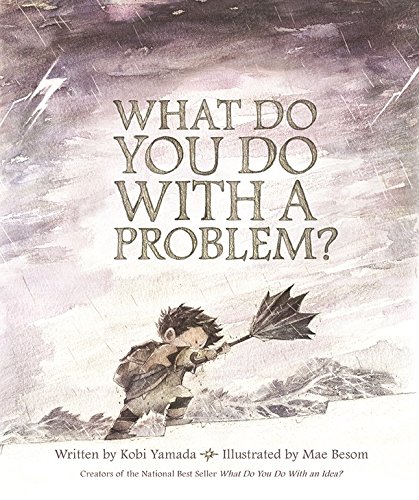
Radio isn’t dead, but it’s evolving!  Even in the three years since I posted my original article, we’ve seen massive clusters of readers move from traditional radio to streaming services.  As Kobi Yamada writes in What Do You Do With a Problem? (one of my new favorite picture books, by the way!), don’t think of this as a problem–think of it as an opportunity!

what do you do with a problem

Thanks for reading.  If you have any other ideas, I’d love to hear them.  Drop me a line in the comments section below and I’ll respond as quickly as I can.  ♠


KellyABOUT KELLY SCHUKNECHT: Kelly Schuknecht is the Executive Vice President of Outskirts Press. In addition to her contributions to the Outskirts Press blog at blog.outskirtspress.com, Kelly and a group of talented marketing experts offer book marketing services, support, and products to not only published Outskirts Press authors, but to all authors and professionals who are interested in marketing their books and/or careers. Learn more about Kelly on her blog, kellyschuknecht.com.

Self-Publishing News: 6.20.2016

This week in the world of self-publishing:

Carole Nelson Douglas published sixty novels the old-fashioned traditional way before she decided to explore self-publishing, writes Drucilla Shultz for Publisher’s Weekly on June 17th.  Why?  She wanted more control over her published materials, a familiar story to many who are involved in self-publishing today.  And the change, while not entirely without discouragements (Douglas has felt victim of a certain degree of “status downgrade”) has reaped a great deal more rewards (Douglas’ latest book is receiving positive critical recognition).  Perhaps the greatest byproduct of Douglas’ conversion, however, may be her advocacy for indie and self-publishing authors everywhere.  “Look to your audience,” says Douglas (by way of Shultz):

“Figure out who your audience is, who you’re writing for, what genre you’re writing in, and what the books in that genre look like. Recognize that indie publishing is a lifetime learning experience. Yes, some authors broke out big and fast a few years ago, and those gold rush days are over, but audience-expanding strategies are still out there. Look for role models online. Authors love to tell ‘how I did it.’”

Douglas also recommends looking to the internet (“Online Advice”) and seeking out a professional copyeditor (“Professional Help”).  Refreshingly direct, she’s up-front about the fact that self-publishing is a lifetime commitment, with plenty of avenues to success and an equal number of pitfalls.  For Shultz’s entire article and interview with Douglas, tap into the original piece at the link.

“Michele Melton of Olathe loves to bake,” writes Sara Beane for The Kansas City Star on June 17th:

“So after years of being asked by family and friends how to make her popular cake pops — bite-sized pieces of chocolate-dipped cake on a stick — she decided it was time to put her tried-and-true recipe on paper with a children’s book to teach kids how to make her cake pops. But she didn’t want it to be just any book; she wanted it to be interactive.”

I don’t know about you, but crafting an interactive work is hardly a recipe for traditional success.  Breakout phenomenons like Dragonology and so forth have occasionally reached bookshelves, but by nature traditional publishing houses are steadfastly conservative, and opposed to experimentation.  Melton’s book, Beane reports, is about a 10-year-old girl who loves to bake–Cake Pops With Marlee–and is designed to teach children how to bake alongside their parents and caregivers.  “The process of self-publishing the book was both costly and time-consuming for Melton,” says Beane, and “Things were already stressful when life threw her a curveball in November. That’s when Melton’s 24-year-old son Jake collapsed while at work and was soon diagnosed with an inoperable brain tumor.”  Under mounting pressure, already committed to self-publishing her book and now coping with her son’s life-changing illness on limited funds, Melton found escape in writing.  And eventually, writes Beane, what “started as a way to share a recipe with others has now turned into something much more important for Melton. It’s a chance to remind parents to take the time to cherish their kids.”  For the rest of Melton’s heart-touching story, read Beane’s full article here.

It’s not often that self-publishing received professional treatment at length, but that’s exactly what Catherine Dunn is doing for Digital Book World.  Her June 16th article serves as part four of a six-part series, a series which has already recommended that a self-publishing author “[makes] sure your manuscript is formatted, […] had it copy-edited, and […] engaged a professional designer to create a stunning cover that will capture readers’ attention.”  This installment deals with six additional points that all revolve around the processes that take place after finishing writing:

  • Choose your services
  • Check the spec
  • Don’t forget your illustrations
  • Don’t leave anything to chance
  • Take time over the metadata
  • Marketing

And Dunn concludes her article with a checklist of further tips to assist self-publishing authors in moving from the manuscript stage to the “successfully published” stage.  A word of caution, however: while her ideas are excellent, this is just one installment in a series.  Hang around for two or three more weeks, and all six installations will be complete.  It’s always a little disappointing to start a great series only to discover it’s not quite finished, right?  If you can’t resist peeking, however, you can find installment four at the link.


spa-news

As a self-publishing author, you may find it helpful to stay up-to-date on the trends and news related to the self-publishing industry.This will help you make informed decisions before, during and after the self-publishing process, which will lead to a greater self-publishing experience. To help you stay current on self-publishing topics, simply visit our blog every Monday to find out the hottest news. If you have other big news to share, please comment below.

KellyABOUT KELLY SCHUKNECHT: Kelly Schuknecht is the Executive Vice President of Outskirts Press. In addition to her contributions to the Outskirts Press blog at blog.outskirtspress.com, Kelly and a group of talented marketing experts offer book marketing services, support, and products to not only published Outskirts Press authors, but to all authors and professionals who are interested in marketing their books and/or careers. Learn more about Kelly on her blog, kellyschuknecht.com.

Marketing Master Strokes Episode 2: Be willing to reach your readers where they live.

Last week, we pivoted from the back foot (thinking about the many ways we can mess up the marketing process) to the front foot (thinking about the many ways we can knock this marketing thing out of the park).  Our first marketing master stroke?  Being all ears.  (Which is to say, listening to the stories of others, and keeping an open mind to actually changing your own approach.)

In thinking back on what I’d written after the fact, I realized it might strike some readers as strange that I would start a series centering on positivity and proactivity with a piece of advice that, at first glance, serves as a passive act.  Listening.  But that’s part of the problem, isn’t it?  We think of listening as passive, and allow others to think the same as a consequence, when really–really listening is the most revolutionary and active thing we can do.  I’ll keep off the soapbox now, but think about it: how much better could our world be if we refused to let listening be passive?

On to today’s master stroke:

Be willing to reach your readers where they live.

http://www.gettyimages.com/license/496460698
[ source ]
This isn’t the same thing as reaching your readers where you think they live–the process of marketing requires meticulous research and a willingness to set aside the authorial ego (“I Have an Important Message and I Know How Best to Share it Best”) in order to put the reader first.  Writing a book may indeed be a selfish process (I’ve heard good arguments both for and against this statement) but marketing has to be a selfless one.  Sure, the premise of making money is necessarily self-serving, but so is the process of shopping.  Right?  Both consumer and seller/marketer can’t be selfish at the same time, or else we’re talking about a complete disjointure.

Step One to making sure you reach your readers is, then, to let go of the assumption that you already know everything you need to know about the people you’re writing for.

Step Two is to research them.  Thoroughly.  What are their demographic details?  How old are they?  Where do they live, geographically speaking?  Are they diverse in terms of ethnicity and gender?  What social media platforms do they use and which have they discarded or never picked up to begin with?  In the case of younger readers, are they old enough to be in command of their own savings–or will purchases be made by parents and caregivers?  (If so, you will have to market to the parents and caregivers as well as the children, which is a very different proposition.)  What subjects occupy their waking thoughts?

Step Three is to actively go out and reach them.  Carefully and effectively.  With precision.  (Time will become your most threadbare resource, I guarantee you.)  Draft a well-thought-out, targeted marketing strategy that pares back on the manifold possibilities open to you … to just the ones that will reach your core readership.  Once you have established a sustainable system in place, you can begin experimenting your way through additional marketing strategies and see what is sustainable.

And there you have it!  Start reasonable, but keep ambition in the wings.

Go find your readers!


Thank you for reading!  If you have any questions, comments, suggestions, or contributions, please use the comment field below or drop us a line atselfpublishingadvice@gmail.com.  And remember to check back each Wednesday for your weekly dose of marketing musings from one indie, hybrid, and self-published author to another. ♠

KellyABOUT KELLY SCHUKNECHT: Kelly Schuknecht is the Executive Vice President of Outskirts Press. In addition to her contributions to the Outskirts Press blog at blog.outskirtspress.com, Kelly and a group of talented marketing experts offer book marketing services, support, and products to not only published Outskirts Press authors, but to all authors and professionals who are interested in marketing their books and/or careers. Learn more about Kelly on her blog, kellyschuknecht.com. 10:00 AM