Self-Publishing News: 1.23.2017

And now for the news!

This week in the world of self-publishing:

Due to the ease of publishing anything from documents to novels on Amazon, some authors are finding that their work is being appropriated without their permission, or even without their knowledge. This kind of plagiarism can be straight copy-and-paste, word for word plagiarism, or it can be slight alterations to the story or wording.

Rachel Ann Nunes, a writer of Mormon fiction, found that one of her stories had been hijacked by a plagiarist who added sex scenes to remarket her stories as more mainstream romance novels. Luckily, a reader of Nune’s picked up on this copyright infringement and asked the plagiarist about the similarities and was told that the authors had collaborated on the piece. When Nune confronted the other author, Mullens, she received a vast amount of backlash on social media from whoever this troll was on the other end of the keyboard. One-star reviews of her book began springing up, hostile Facebook messages from strangers and the like. With this, Nunes was faced with a decision: drop it and let the theft slide, or take legal action. Nunes decided to sue who she believed to be Mullens for damages of $150,000, the trial taking place after the time of this article.

Without astute readers out there to catch this, there is a lot of this word theft that can fly under the radar for vast amounts of time. If it is discovered, you can imagine as an author how absolutely violating that must feel. People pour their heart and souls into their work when creating any piece of writing. To have someone else come along and throw their name on it and take credit for your creative outpouring is not just insulting, it’s a downright slap in the face.

The plagiarism trend seems to hit hardest in romance novels, as they are the biggest sellers in the ebook world, but any genre can fall prey to this. More surprisingly, the culprits aren’t always who you’d imagine they’d be either. Take Laura Harner, for example, a plagiarist who had put out 75 books in just two years. Due to Amazon’s rewards system, which puts authors who publish more often higher in the rankings. Unfortunately, Amazon gets to keep 30% of the profits from all books published on its site, stolen or not, as long as it removes the stolen work if it is discovered to be as such. This means the safeguards for authors who publish through Amazon will never be as good as those when publishing through a traditional publisher, who would be personally liable for violating copyright laws.

In short, the internet makes it quite easy for plagiarists to keep stealing work and making money under new names and new accounts. If signing up is as easy as having an email, and the company your publishing with is more focused on creating lots of content, i.e. lots of money, then it becomes relatively easy to work the system and pass off other people’s work as your own. This is the ugly side of a beautiful technological advance. Anyone can sit behind a keyboard and create a convincing online profile of themselves that does not match their true identity, which makes catching and prosecuting this type of offense extremely difficult.

I highly recommend reading this article for more examples of authors who dealt with this issue. I will also say, that as it is most often readers who catch these perpetrators in the act, remember that your role as a reader is equally as important as it is as a writer. Reading our fellow author’s works is one of the best safeguards we have in this digital age. I found myself profoundly impressed and inspired by the vigilance and support of readers who helped the victims mentioned in this article. It just goes to show how much showing appreciation for your fans can go.


spa-news

As a self-publishing author, you may find it helpful to stay up-to-date on the trends and news related to the self-publishing industry. This will help you make informed decisions before, during and after the self-publishing process, which will lead to a greater self-publishing experience. To help you stay current on self-publishing topics, simply visit our blog every Monday to find out the hottest news. If you have other big news to share, please comment below.


Kelly

ABOUT KELLY SCHUKNECHT: Kelly Schuknecht is the Executive Vice President of Outskirts Press. In addition to her contributions to the Outskirts Press blog at blog.outskirtspress.com, Kelly and a group of talented marketing experts offer book marketing services, support, and products to not only published Outskirts Press authors, but to all authors and professionals who are interested in marketing their books and/or careers. Learn more about Kelly on her blog, kellyschuknecht.com.

From the Archives: “Self Publish a Book in 2013”

Welcome back to our Tuesday segment, where we’ll be revisiting some of our most popular posts from the last few years.  What’s stayed the same?  And what’s changed?  We’ll be updating you on the facts, and taking a new (and hopefully refreshing) angle on a few timeless classics of Self Publishing Advisor.

∗∗∗∗∗

[ Originally posted: December 31st, 2012 ]

It is hard to believe another year is already behind us. As 2013 approaches, many of you will set New Year’s resolutions for yourself. One of the most popular resolutions is writing and publishing a book. Whether you write fiction, non-fiction, adult or children’s books, the Self Publishing Advisor blog is here to help. Every week we share tips, advice and news about self-publishing to help you achieve your goals, and I’m dedicating my January posts to authors whose 2013 resolution is to write and self-publish a book before the year ends.

Whatever your writing obstacles have been in the past (a busy schedule or a fear of failure), I am here to help! Enjoy the last night of 2012 and get ready for the best year of your life — the year you become a self-published author.

Happy New Year’s!

– by Jodee Thayer

Okay, so one last “resolutions-related” blog post for 2017 and I’ll be done. Probably. I suppose it has been on my mind a great deal in the last few months–what with my participation in NaNoWriMo this year and an encroaching sense that if I don’t finish my book now, I will never ever finish it–and I’ve been simply unable to let go of the hope that 2017 can somehow be different … that it has to be different, for my sanity’s sake and the sake of peace and equilibrium at home. And my back. My back would really appreciate it if I could stop internalizing all of my existentialist anxiety and self-recriminations over my lack of progress.

So, how to kick things into gear? Plan. Plan, and then turn plans into the kinds of good habits which lead to a finished book, and ultimately, a published book.

But enough about my story. What about yours? Is 2017 the year–or a year, for those of you who have already self-published–when you publish your next book? Oh, yes. Yes it is. I firmly believe it can be done–even if you haven’t started writing it yet. A dash of fierce dedication and a plethora of hot coffees and maybe a couple of kale smoothies every week, and you can get there. I firmly believe this, not just because I need to for my own reasons, but because 2017 is shaping up to be a fantastic year for self-publishing.

There are countless book expos and fairs making space for self-publishing authors and companies; there are dozens of new technologies and applications in the pipeline to smooth all of the ancillary experiences circling around publication, like marketing and scheduling and getting books into libraries; there are new products and services available pretty much everywhere you look when it comes to choosing your self-publishing company itself (you all already know which one I recommend!); and last but not least, readers are hungry, oh-so-hungry, just positively ravenous for new self-published material to read.

Let 2017 be the year you publish your book. It’s time. Conditions have never been better. And you’re ready. I know you are, because you were born for this.

antique old typewriter dandelion puff

Thanks for reading.  If you have any other ideas, I’d love to hear them.  Drop me a line in the comments section below and I’ll respond as quickly as I can.  ♠


Kelly

ABOUT KELLY SCHUKNECHT: Kelly Schuknecht is the Executive Vice President of Outskirts Press. In addition to her contributions to the Outskirts Press blog at blog.outskirtspress.com, Kelly and a group of talented marketing experts offer book marketing services, support, and products to not only published Outskirts Press authors, but to all authors and professionals who are interested in marketing their books and/or careers. Learn more about Kelly on her blog, kellyschuknecht.com.

Self-Publishing News: 1.16.2017

And now for the news!

This week in the world of self-publishing:

Since there’s not much going on in the world of self-publishing this week, I thought it’d be nice to follow up on the article we covered last week entitled, “Self-Publishing: An Insult to the Written Word”, as Huffington Post just released an article with a counter argument titled, “Self-Publishing: An Insult to the Written Word or a Boon to the Industry?”

In this article, Samita Sarkar–a self-published author herself–defends the industry with anecdotal and researched defenses for the industry that Gough had spent an entire article belittling. Sarkar points to the more intimate connectedness self-published authors can achieve with their audience, the freedom they experience with regards to subject matter and the opportunity they have to become their own small-scale printing press.

What Gough called the “burden” of editing independent authors work, Sarkar calls a pleasure and an honor. “These authors are investing in their book and realize that they need professional help to improve on their work and make it more enjoyable for their readers and more marketable,” she says, “Why put them down for that?”

Sarkar finishes the article by critiquing Gough for her heavy focus on the idea that the art of writing itself “has been cheapened by self-publishing,” she goes on, “But self-publishing can help to give people a voice. It provides them an outlet that they may otherwise never have had so they can connect with other people. Isn’t that what art is all about?”

Of course it is. Art is about creative expression. Maybe you don’t prefer the cubist art of Picasso, but instead find yourself more drawn to the High Renaissance art of Leonardo da Vinci; whether or not you have a palate for a particular type of art does not mean that one or the other isn’t art by definition. There are readers that will prefer self-published books and there are readers who will steer clear of them, don’t ever silence yourself because of those who don’t like your work, but keep writing for those who will continue to love and appreciate it.


spa-news

As a self-publishing author, you may find it helpful to stay up-to-date on the trends and news related to the self-publishing industry. This will help you make informed decisions before, during and after the self-publishing process, which will lead to a greater self-publishing experience. To help you stay current on self-publishing topics, simply visit our blog every Monday to find out the hottest news. If you have other big news to share, please comment below.


Kelly

ABOUT KELLY SCHUKNECHT: Kelly Schuknecht is the Executive Vice President of Outskirts Press. In addition to her contributions to the Outskirts Press blog at blog.outskirtspress.com, Kelly and a group of talented marketing experts offer book marketing services, support, and products to not only published Outskirts Press authors, but to all authors and professionals who are interested in marketing their books and/or careers. Learn more about Kelly on her blog, kellyschuknecht.com.

Planning for 2017: Success?

After taking time to consider occasions that will lead to the need for damage control, this week we’re going to redefine what “success” means in respect to our goals, and as a concept in general. While the assumption is often that “success” means completing a new book or successfully marketing an already finished one, this one-size fits all definition does not look good on, or flatter the strengths and weaknesses of each unique author.

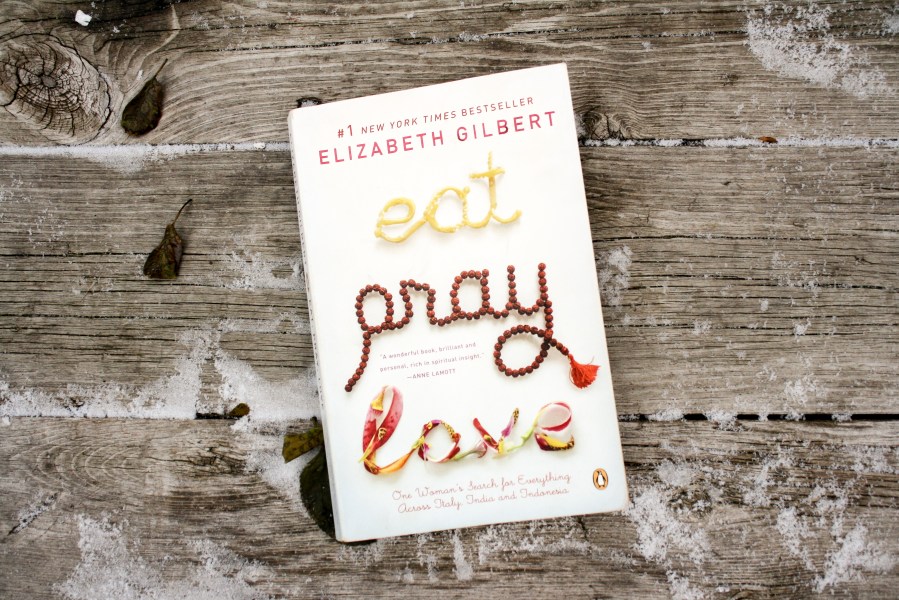
The author of “Eat, Pray, Love”, Elizabeth Gilbert, interestingly experienced the “success” of her book to provoked the same sense of anxiety and discomfort that is often associated with failure. She explained that the success carried a large looming cloud of expectations from her readers that she feared she wouldn’t be able to live up to in her next book. “Failure catapults you abruptly [into] the blinding darkness of disappointment,” Gilbert said. “Success catapults you just as abruptly, just as far, into the equally blinding glare of fame, recognition, and praise.”

For Gilbert, your subconscious cannot tell the difference between these two opposing poles, because they are both so far from the spectrum of our everyday, normal existence. Taking that into account, I think it is important to transform the idea of success into something more normal, more everyday, rather than something that just comes from world-wide recognition for our work.

eat pray love elizabeth gilbert

Re-conceptualizing Success

While finishing a book or having it fly off the shelves should be appreciated as a success, this is a very long-term and difficult goal to achieve. To put this into perspective, let’s say you were training for a marathon and never considered any of your training days leading up to it as successful because they weren’t the big day–logging those miles is going to start to feel hollow and unrewarding. Sure, that first training run over ten miles isn’t a marathon, but that is a huge success compared to sitting on your couch at home, and should be celebrated as such!

Having your vision of success span from the time you begin your project, to the time you complete it will definitely keep you in a better head space and keep you more motivated and excited with each leap and bound you make! Hence why we like to stress the importance of dividing up that overarching goal into smaller, more bite-sized pieces that you can achieve along the way and count as successful mile markers to your grand finale, which may be a finished book.

What are some short-term mile-markers that should be perceived as successes for a writer?

  • An outline completion
  • A chapter completion
  • A first draft completion
  • A marketing plan
  • Winning a writing competition
  • Writing an awesome Tweet, blog post, or other social media post that gets a lot of traffic
  • Your first piece of fan mail
  • Your first royalty check
  • Getting a gleaming endorsement for your back cover
  • And countless other examples.

Let’s make success part of our everyday. Let’s make small goals for ourselves that we can objectively look at and say, “You know what, I succeeded today” when we’ve accomplished them. Success doesn’t have to be this epic thing that becomes almost intimidating, as Gilbert describes it in her TED talk, and nor does failure. If we become at home in our everyday successes and failures, the monumental ones won’t seem so shocking to us.

“Success means doing the best we can with what we have. Success is the doing, not the getting; in the trying, not the triumph. Success is a personal standard, reaching for the highest that is in us, becoming all that we can be.”

– Zig Ziglar


Thank you for reading!  If you have any questions, comments, suggestions, or contributions, please use the comment field below or drop us a line at selfpublishingadvice@gmail.com.  And remember to check back each Wednesday for your weekly dose of marketing musings from one indie, hybrid, and self-published author to another. ♠


Kelly

ABOUT KELLY SCHUKNECHT: Kelly Schuknecht is the Executive Vice President of Outskirts Press. In addition to her contributions to the Outskirts Press blog at blog.outskirtspress.com, Kelly and a group of talented marketing experts offer book marketing services, support, and products to not only published Outskirts Press authors, but to all authors and professionals who are interested in marketing their books and/or careers. Learn more about Kelly on her blog, kellyschuknecht.com

From the Archives: “A New Year’s Manifesto”

Welcome back to our Tuesday segment, where we’ll be revisiting some of our most popular posts from the last few years.  What’s stayed the same?  And what’s changed?  We’ll be updating you on the facts, and taking a new (and hopefully refreshing) angle on a few timeless classics of Self Publishing Advisor.

∗∗∗∗∗

[ Originally posted: December 30th, 2015 ]

Around this time last year, I was busy making resolutions for the new year–2015, the year we’ve just finished–and in some cases I have actually managed to make good on those resolutions (see the list here and here).  This year, however, I’m pushing back a little against the instinctual attraction to “list-fever,” that special kind of holiday mania that leaves us mellow and warm and happy once the list is complete (it always feels good to write up a list, doesn’t it?) but panicked and anxious as the year reaches its end and we haven’t yet accomplished all that we set out to do.  And so it is that this year, instead of compiling all of the things I want to do, I thought I’d sketch out a quick drawing of who I think we are, as self-publishing authors.

This is my self-publishing manifesto:

I hereby claim the mountain of content and the island of method for us, the (few, the mighty) self-publishing authors of the world.  I assert our right to write what we please in whatever manner we please and within whatever time frame we deem fit.  I declare nothing off-limits, nothing too “edgy” or “tame” or “niche” or “unique.”  We are the fearless in life, and we have the right, too, to write and publish as adventurously as we live.

I hereby claim the lake of responsibility and the waterfall of ethical treatment for us.  In the little skirmishes and give-and-take between the traditional and self-publishing worlds, we occupy the high moral ground, ground from which we foresee a future in which authors are treated with the respect that they have earned, simply by virtue of being authors, and in which no one–neither the authors nor the publishers, the editors, the graphic designers, nor any other professional involved in the industry–uses their influence to abuse or undervalue others and the services they offer.  I assert our support for a future in which no-one can claim a monopoly on distribution or quality of product.  I claim the right to creative freedom and creative control–as well as an ethical flow of profits to and from the right people–for us, the self-publishers.  And I also claim the collective right to not tolerate unethical behavior from the corporate publishing sector which routinely reneges on its commitments to writers, readers, and its own employees.

I hereby claim the plains of ambition and the foothills of inspiration for us.  We will write, to the best of our ability, the best books we are capable of writing.  We will create, to the best of our ability, the finest covers and illustrations and altogether visually pleasing objects of which we are capable of creating.  We will learn from our mistakes without damage to our sense of self or our ego; we will seek out expert feedback and emerge with a refreshed sense of purpose and vision for where to go next.

I also claim the right to act out of self-interest, collectively and individually, for us–the authors who have been told we don’t belong or aren’t good enough but most definitely do and are–while also upholding our commitment to generosity, compassion, and social responsibility.  I claim the right to take full advantage of the digital revolution, to look forward to and think with a futurist’s imagination about, a publishing world and a market that looks radically different from the one we work with now.

I hereby claim ownership of my own decisions.  I do not ask for permission from others to write what I write or publish what I publish; I write and publish what brings joy to me and to my readers.  I do not ask for compliments or pats on the back or for any recognition which undervalues my skills and the intelligence of my readers.  I declare my obligation to respect, value, and represent the interests of others, and to balance this obligation with my own needs as an author and human being.  I recognize the privileges of my position as a person of influence, a person with the vocabulary to reflect and shape the world around me, and seek to put that privilege to good use for good ends.

I am not shy about recognizing my strengths, and I am not afraid of my weaknesses.  I hereby claim the valley of well-earned pride and the city of well-learned failures as my province.  I am proud to be a self-published author, and proud to be a part of a wider community of self-publishing authors as well as the readers who open their hearts and minds to the books we place in their hands.

– by Kelly Schuknecht


manifesto writing cheerfully

I think this one stands on its own—don’t you? What else can we claim in 2017 that we weren’t able to claim in 2015 or even 2016? The self-publishing industry hasn’t necessarily broken new ground, but it has built steadily upon its previous successes, and reports keep coming in that the market share division between digital and print books has leveled out and begun to run steady. But there’s a lot of tension in the air, politically, socially, and yes, metaphorically—tensions that have the power to shape our decisions. If I were to add any one “claim” to my original list, it would be this:

I hereby claim the fearlessness, both frantic and calm, of the entrepreneur, of the start-up, of the crowdfunded, cloud-built-and-stored, groundbreakers. I opt to place myself in the way of beauty, and in the way of success, by giving it all that I’ve got and taking no prisoners, taking no breaks from being myself and from pursuing my dreams, and yet taking a jackhammer to my bad habits with a sensitivity to my good ones, and to my body, mind, and soul’s needs. I claim the ambition of the space race, the empty-all-pocketbooks audacity of a world utterly bankrupt of fear, and the joy of knowing that whatever mistakes I make, whatever failures I slide into, I rush headlong into them knowing that I gave my absolute best and without fear that it’s the end. I will live with a future-mind, knowing that today’s fears and hardships will not hold me in place forever. I claim the right to unleash myself on this world, as an author and a purveyor of stories.

How’s that for an addition? I think I might just keep up this tradition. I might even codify our existing claims—along with any additions you, dear readers, might throw our way—into a document for year-round use. What do you think?

Thanks for reading.  If you have any other ideas, I’d love to hear them.  Drop me a line in the comments section below and I’ll respond as quickly as I can.  ♠


Kelly

ABOUT KELLY SCHUKNECHT: Kelly Schuknecht is the Executive Vice President of Outskirts Press. In addition to her contributions to the Outskirts Press blog at blog.outskirtspress.com, Kelly and a group of talented marketing experts offer book marketing services, support, and products to not only published Outskirts Press authors, but to all authors and professionals who are interested in marketing their books and/or careers. Learn more about Kelly on her blog, kellyschuknecht.com.