From the Archives: “6 Radio Interview Tips for Self-Publishing Authors”

Welcome back to our Tuesday segment, where we’ll be revisiting some of our most popular posts from the last few years.  What’s stayed the same?  And what’s changed?  We’ll be updating you on the facts, and taking a new (and hopefully refreshing) angle on a few timeless classics of Self Publishing Advisor.

∗∗∗∗∗

[ Originally posted: March 6th, 2013 ]

Radio interviews are a great way for self publishing authors to promote themselves and their books, but many people are nervous about doing radio interviews. With these great tips, you are sure to have a successful and fun experience.

1. Keep it fun!

Most radio listeners enjoy some humor and natural conversation. The easiest way to nail your interview is to not over think it. Just go with the flow and don’t take yourself too seriously. Listeners can tell if you are having fun, so don’t forget to smile and be enthusiastic. Even though you are on the radio, listeners can still sense your expressions.

2. Keep it natural!

Interviews that are over-rehearsed and presentation-like are boring and awkward. While you can practice a little bit ahead of time, don’t read from notes or memorize your talking points. Just act as if you were talking to a friend.

3. Don’t worry about silence.

Many people worry about moments of awkward silence. It is the radio host’s responsiblity to fill those gaps and keep the interview moving, so don’t worry. The pressure isn’t on you.

4. Be ready to go live.

If you are doing a phone interview, know that many hosts start the interview shortly after the call begins. Some hosts will give you a few minutes to listen and get comfortable, but be prepared to go live immediately.

5. Keep it short.

Keep your answers to 30 seconds or less. This allows for more questions and some commercial breaks, and it keeps the listeners from getting bored.

6. Be respectful.

You may get some callers who aren’t very pleasant. They may challenge or insult you, but you must stay professional. While it is okay to defend yourself or the topic when the caller is wrong, be sure to do so gracefully. The listeners will respect you if you remain respectful.

I’d love to know, do you plan on doing radio interviews?

– by Kelly Schuknecht

We’ve written about radio interviews occasionally here on Self Publishing Advisorhere, here, and here–but while the world has changed a great deal in respect to its usage of technology, we authors have yet to take full advantage of the changes that have taken place within the radio industry.

Take the changes in listenership, for example: according to Ryan Faughnder of The LA Times, “the millennials so desired by advertisers (specifically, people in the 18-34 age group) listen to an average of 11.5 hours of radio a week. That’s less than people in Generation X (those aged 35-49) and baby boomer (50-64) categories, who average 14 hours and 14.5 hours a week, respectively.”  Where have they gone?  As Faughnder goes on to explain, they’re still listening to audio–but they’re streaming it.  “While nine out of 10 millennials still listen to at least five minutes of traditional radio a week,” he says, “young adults are splitting their time with other audio options such as streaming services (including Spotify, Rdio and now Beats Music) and their personal music collections.”  In a world of streaming audio, self-curated content is king.

\After all, when you know what you like, why leave the soundtrack to your morning commute up to chance?  Radio is famous for operating somewhat independently of its listeners’ stated interests–NPR, for example, perceives itself as a discovery tool as much as it does programming for the people.  Much of the disconnect between Millennial listeners and traditional radio services can be chalked up to this difference in perception–but the good news is, they still listen, albeit not for long and not always by the same methods we are used to.  This means you must capitalize on the brevity of the format–keeping it short and vibrant for listeners who live with their finger on the radio dial–and you must also go looking for new marketing ideas in radio.  Remember podcasts?  Very often they feature specialized content that would complement your work perfectly–and they have a fairly wide reach, too, given that they’re archived online and available to stream through iTunes and other services.  And book bloggers who also run podcasts might be willing to work with you on a brief interview for on-air and a longer interview to be hosted on their website, allowing you the best of both worlds.  Check out the advertising options for radio programs and podcasts that you like, and consider paying for an ad instead of an interview, as ads are repeated often enough to reach multiple demographics.

Radio isn’t dead, but it’s evolving!  Even in the three years since I posted my original article, we’ve seen massive clusters of readers move from traditional radio to streaming services.  As Kobi Yamada writes in What Do You Do With a Problem? (one of my new favorite picture books, by the way!), don’t think of this as a problem–think of it as an opportunity!
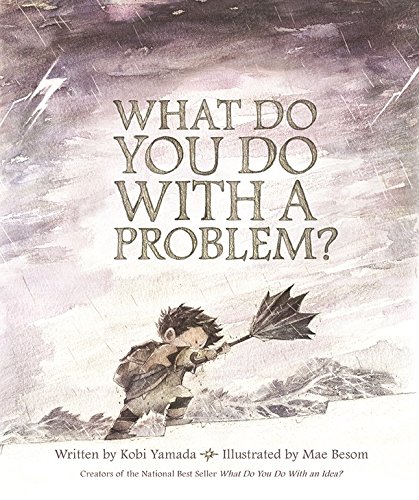
what do you do with a problem

Thanks for reading.  If you have any other ideas, I’d love to hear them.  Drop me a line in the comments section below and I’ll respond as quickly as I can.  ♠


KellyABOUT KELLY SCHUKNECHT: Kelly Schuknecht is the Executive Vice President of Outskirts Press. In addition to her contributions to the Outskirts Press blog at blog.outskirtspress.com, Kelly and a group of talented marketing experts offer book marketing services, support, and products to not only published Outskirts Press authors, but to all authors and professionals who are interested in marketing their books and/or careers. Learn more about Kelly on her blog, kellyschuknecht.com.
From the Archives: “How Much Do Illustrations Cost?”

Welcome back to our Tuesday segment, where we’ll be revisiting some of our most popular posts from the last few years.  What’s stayed the same?  And what’s changed?  We’ll be updating you on the facts, and taking a new (and hopefully refreshing) angle on a few timeless classics of Self Publishing Advisor.

∗∗∗∗∗

[ Originally posted: April 16th, 2012 ]

Like ghost writing or copyediting, illustrations take time and require a great deal of skill and talent. It is important to remember that illustrators must be paid fairly for their time and expertise. The price for illustrations can range from a few hundred dollars to a few thousand dollars. It depends on the size and complexity of your project. When considering illustrations, it is important to do some research, figure out your goals, and create a budget. Once you know your expectations, you’ll want to find an illustrator who meshes with your style. To do this, find out if your self publishing company offers illustration services and get a quote. You can also look at sites such as guru.com or elance.com to find a freelance illustrator. Be sure to always look at sample work before choosing an illustrator. There are many different styles, and you want to find an artist who matches your vision.

For more information on illustrations, check out these articles.

The Importance of Illustrations

What You Need to Know About Custom Covers

Illustrations Affect the Success of You Children’s Book

– by Cheri Breeding

I love Cheri’s post from 2012 in part because she has such a legacy on this blog of creating a space for illustration and fine art in the context of self-publishing.  Her attitude is not all that common!  Like many contractors with carefully curated skill sets, illustrators often struggle to make ends meet as well as earn the respect they deserve for a lifetime of work.  Why is this?  In part, it’s because illustrators often do not own the rights to the work that others commission, or pay for.  This depends on what contract they sign with the commissioner, of course, but self-publishing authors know all about what it’s like to sign away rights to something, and thereby lose access to future profits.  Illustrators also often struggle because making art for someone else just doesn’t have the social cachet or respect as making art for the sake of art.

The world can be an very unfair place.  But you don’t have to be!

To expand a little upon what Cheri rightfully included in her original post, I thought I’d provide a couple of resources to get you started calculating hard numbers–actual figures to pay any illustrator you hire.  And I won’t lie: good art doesn’t come cheap.  In fact, if you’re hiring someone and they’re not asking for much, you should always go back and re-read the fine print.  They may just be young illustrators starting out and looking to build their portfolios, or otherwise inexperienced in the market, or something more sinister.  It’s worth checking.

The first step is finding the illustrator whose art you like, right?  Between the Society for Children’s Book Writers and Illustrators (very respectable, high-end) and DeviantArt (a real mix of experienced and inexperienced illustrators) it’s fairly easy to find what you need.  If you’re still feeling a bit lost, this article from The Creative Penn provides a handy launchpad for further illustrator-sleuthing.

The second step is negotiating a commission fee and contract.  I find it’s most helpful to start from the same materials that illustrators are using to determine their requested charges, and this article from the Business of Illustration blog is one that my illustrator friends keep pointing me to.  It is thorough, and allows for multiple different scenarios.  Illustrators Online provides a handy chart to start your rough calculations–another excellent resource.  And Elizabeth O. Dulemba provides a list of questions to ask before hiring an illustrator, specifically geared towards authors.

Last but not least, it’s worth keeping bundles in mind.  I mean the service bundles provided by hybrid or self-publishing companies like Outskirts Press, which provides options for a custom-designed book cover as well as full-color illustrations.  If you’re already looking for an avenue to self-publish your book, keep an eye out for deals and price specials amongst these bundles–it’s a great way to save money and let someone else manage the fiddly bits.

No matter which option you choose, do your own calculations.  Price check your illustrators!  And most importantly of all, get in direct contact with every contractor who is going to design material for your book.  The more an illustrator knows your mind, the more quickly and easily he or she will be able to create artwork that meets or even exceeds your expectations!

Thanks for reading.  If you have any other ideas, I’d love to hear them.  Drop me a line in the comments section below and I’ll respond as quickly as I can.  ♠


KellyABOUT KELLY SCHUKNECHT: Kelly Schuknecht is the Executive Vice President of Outskirts Press. In addition to her contributions to the Outskirts Press blog at blog.outskirtspress.com, Kelly and a group of talented marketing experts offer book marketing services, support, and products to not only published Outskirts Press authors, but to all authors and professionals who are interested in marketing their books and/or careers. Learn more about Kelly on her blog, kellyschuknecht.com.

From the Archives: “Ask the Right Questions”

Welcome back to our Tuesday segment, where we’ll be revisiting some of our most popular posts from the last few years.  What’s stayed the same?  And what’s changed?  We’ll be updating you on the facts, and taking a new (and hopefully refreshing) angle on a few timeless classics of Self Publishing Advisor.

∗∗∗∗∗

[ Originally posted: March 6th, 2009 ]

Regardless of whether you are holding out for an old-fashioned publishing contract or taking matters into your own hands with custom self-publishing, here are 5 questions you should know the answers to when you decide to publish:

1 – What is the minimum number of books you have to purchase, and what does
each book cost you? Many require certain quantities to be purchased at highly marked up prices. That is how they ‘get you.’

2 – Who determines your retail price? How much is it? – Here’s another one
to look out for. You should have that control. Publishers that don’t allow that are often in the business to make money on your book. You’ve done the work. You should see the rewards.

3 – Who determines how much money you make from each book? Another good test.
Your publisher should pay 100% of the difference between the wholesale price and the
production price of the book. Most publishers pay anywhere from 5%-50%.

4 – Do you receive marketing support after publication? Free services like the Marketing COACH offered by Outskirts Press is an invaluable collection of proven tactics shared to help improve your book sales.

5 – Do you retain all the rights to your book? You definitely should. Check
the contract of wherever you publish.

Isn’t this fun!

– by Karl Schroeder

Karl was right back in 2009, and he’s still right today in 2016–when it comes to publishing your book, it’s better to ask the right questions ahead of time, so that you don’t end up locked into an unsatisfactory contract or stuck in a bad situation after the fact.  His five questions, too, were well-chosen, and if you’re just setting out to self-publish for the first time I recommend you start with his original list as a starting point; while the market and self-publishing process is always going to be something of a moving target, most of his fundamental assumptions  about the nature of self-publishing companies remain highly relevant.

And the most important assumption of all?

Self-publishing companies are out to make money.  

But of course they are!  If they weren’t, they’d operate as nonprofits–and I have actually worked alongside several nonprofits that publish as a part of their service mission, enough to know that they tend to be highly competitive as well as highly selective, and therefore look very much like a traditional publishing model.  Which brings us full circle, back to the self-publishing company as a wholly unique animal on the world stage.  If I were to add any question to Karl’s list, it would be:

How transparent is the company in question about how it makes its profit?

Because it’s one thing to partner with an ethical, reliable, and empowering company with sound business acumen which it places at your disposal as well as at the service of its shareholders–and it’s another thing altogether to sign on to a publishing venture which is out to pad its bottom line, no matter what the cost.

The takeaway?  It all comes down to research.  Talk with the company directly, and don’t hesitate to ask the tough questions.  Ask how they make their money, and what their internal corporate goals are.  Ask previous customers about their experiences, and specifically how well they felt they were treated.  Ask the company to treat you like an adult, which you are.  And if at any point you feel like the shareholders are the company’s priority and not the authors, take that as a sign and take your business elsewhere.  There’s no point in expecting a company to alter it’s corporate DNA for one customer–when it comes to self-publishing, you deserve to be at the heart of your own story.

Thanks for reading.  If you have any other ideas, I’d love to hear them.  Drop me a line in the comments section below and I’ll respond as quickly as I can.  ♠

From the Archives: “How to Get Your Self-Published Book in A Library”

Welcome back to our Tuesday segment, where we’ll be revisiting some of our most popular posts from the last few years.  What’s stayed the same?  And what’s changed?  We’ll be updating you on the facts, and taking a new (and hopefully refreshing) angle on a few timeless classics of Self Publishing Advisor.

∗∗∗∗∗

[ Originally posted: September 21st, 2011 ]

You have an ISBN. You have a LCCN. So libraries should be able to find your book, and therefore, will purchase your book, right? Wrong. Unfortunately, libraries rarely “order” self-published books. This doesn’t mean they don’t house self-published books and that they won’t stock your book. It simply means you need to do a little work to get on their radar. Here are a few ways to get your book in a library.

  • Donate a copy (or several copies) of your book to the library. Be sure to go through the proper donation channels.
  • Host a book reading at your library. This will not only introduce the library to your book but also introduce your book to potential readers.
  • If your book is geared towards children, give a school presentation on your book’s subject. School libraries are always looking for new books.
  • Connect with librarians via social networks. Twitter, Facebook, and LinkedIn are powerful ways to network.
  • Send promotional materials such as flyers and letters to local libraries. Be sure to include of the essential information about your book such as subject, genre, audience and purchasing information.
  • Try to get a book review in a local publication. This will bring positive attention to your book and encourage libraries to buy it.

Libraries are a powerful part of your book promotion strategy. Creative marketing tactics can increase your chances of a library stocking your book. They can also lead to great relationships with librarians and readers. The best way to find out what your local library wants is to talk to the librarians. Work on building an honest relationship, and you may just find one your book’s best promoters.

– by Cheri Breeding

Well, it’s 2016 and a lot has changed, both within the world of self-publishing and the world of libraries in America.  On the one hand, the opportunities and platforms available to authors looking to self-publish have only multiplied, whereas on the other hand, libraries have suffered from continuous cutbacks to budgeting–leaving libraries desperate for cost-effective ways to continue offering their core services.  And yes, that includes books.

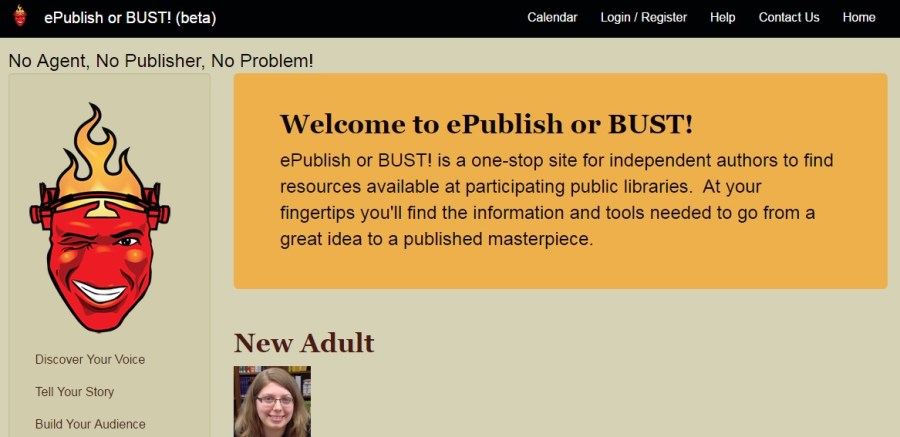
Luckily for everyone, necessity really is the mother of invention.  (Thanks, Plato.)  And in that same vein, a number of people much smarter than I happen to be have gone and made lemonade out of, well, a sub-optimal situation.  For example, if you live in the lovely state of Kentucky, you’re lucky enough to benefit from the collaboration between the director of Davies County Public Library (DCPL) in Owensboro, KY, andl librarian Jim Blanton of Henderson, who partnered up to create ePublish or Bust.  This website allows indie and self-published authors to book appearances at local libraries (there are 24 libraries in Kansas that participate, at present) and to access a variety of other resources.  While the website remainsin a beta stage as Blanton and others iron out the wrinkles with their system, it provides a glimpse of new possibilities as libraries and authors collectively look to prepare for a digitally-driven future.

epublish or bust

And ePublish or Bust is just one of several innovations in process.  There are also the SELF-e Literary Awards!  Librarians have long sought more guidance on self-published books as well as books by authors of color. Aiming to answer both needs is this new(ish) award offered by the Black Caucus of the American Library Association (BCALA) and BiblioBoard (the company that partners with LJ on SELF-e). It honors the top self-published fiction and poetry ebooks by African American authors who were born in the United States, with the winners receiving $500, formal recognition at the Black Caucus of the American Library Association (ALA) Literary Awards, and a BCALA Literary Award Seal to use on their books. Not only is the lauding of self-published books a first for the BCALA, the new award will also be the group’s first to recognize digital content. Awards are a great way for authors to gain exposure and credibility–especially within the library community.

Not surprisingly, Library Journal has become an anchor amidst the rapidly changing library & indie author relationship.  Over the last two years, they have published at least three articles (here, here, and here) detailing these changes and several other innovations in response to them.

The best news is this: libraries are taking note.  It’s not just a one-sided relationship!  The Springfield-Greene County Libraries of Missouri had over 300 self-published titles in their collection by 2014, and were working to continue building their catalogue of these specific kinds of item–because they recognize that there’s a demand for them.  I spoke to the Director at my local public library, and her policy is that she’ll put a self-published title into circulation if it meets four criteria:

  1. It has an ISBN (other libraries vary on this, but she requires it);
  2. It’s local (in respect to author or content);
  3. It’s a physical copy and not an ebook (our library subscribes to an online database of pre-selected titles for download, and only the parent company can opt to include specific title–that’s not a decision left up to the end user/library); and
  4. It’s free (i.e. donated.  She does not solicit self-published titles except in the rare case that the library is hosting a reading.  This has to do with a longstanding handshake agreement with the local indie bookstore: we buy through them to supply the stock for our readings, and they have to have access to the book in the right quantity.)

I realized rather quickly that the situation was far more complicated than I’d expected, and I’d forgotten one very crucial detail: Libraries are not bookstores.  They neither function like one (and in fact, often have very complicated relationships with local bookstore) nor do authors and distributors of self-published titles receive the same benefits from placing their books in a library as they do in a bookstore.  After all, libraries usually only stock one or two copies of any given book–they’re not going to account for a huge chunk of change anyway.  The bookstore is where you sell your books, and libraries are where you raise awareness about your books.  Exposure at the library can drive sales, but otherwise it doesn’t pad your bottom line.  This is why I recommend approaching the library as more than just a stock-it-and-run storage locker for your work.  Libraries have demonstrated they’re ready, eager, and waiting in the wings with a lot of innovative strategies to be your partners in promotion.  If you stop looking at them as a mediocre sales point, you’ll see them for what they really are: allies.

Thanks for reading.  If you have any other ideas, I’d love to hear them.  Drop me a line in the comments section below and I’ll respond as quickly as I can.  ♠

From the Archives: “Self-Publishing Statistics – Trends in E-book Consumerism”

Welcome back to our Tuesday segment, where we’ll be revisiting some of our most popular posts from the last few years.  What’s stayed the same?  And what’s changed?  We’ll be updating you on the facts, and taking a new (and hopefully refreshing) angle on a few timeless classics of Self Publishing Advisor.

∗∗∗∗∗

[ Originally posted: June 6th, 2012 ]

Since November 2009, Consumer Attitudes Toward E-Book Reading, a survey conducted by Book Industry Study Group’s (BISG), has been tracking the habits and preferences of book consumers who have acquired an e-book or a dedicated e-reading device within the past 18 months. The report shows important information for authors and publishers. Not only do the findings squash the pessimistic rumors that the publishing industry is dying, but the report also gives authors and publishers a glimpse at the future of publishing. Here is an overview of some of the most interesting and hopeful statistics.

  • Readers’ preference for designated e-readers has dropped from 72% to 58%, while readers’ preference for multi-functional tablets has increased from 13% to 24%.
  • The Apple iPad was not the preferred tablet; instead, readers choose non-Apple devices, such as those offered by Amazon and Barnes and Noble.
  • More than 62% of survey respondents reported an increase in dollars spent on e-books.
  • More than 72% of survey respondents reported an increase in the number of e-books they are purchasing.

The movement from e-readers to tablets is important for authors and publishers to be aware of because it offers insight to what readers want. As multi-functional tablet devices become more popular, authors and publishers will be expected to produce a richer, more interactive e-book experience. In addition, the increase in e-book sales is great news for authors and publishers. It shows that there is a demand for great writing and that publishing, though in a new format, is still alive. If you are considering self-publishing a book, be sure to consider offering both a print and electronic version of your book. This will ensure that you appeal to both e-book and print consumers.

– by Kelly Shuknecht

We’ve written about the changes in the long-term outlook for e-books more recently than this 2012 post, but I think it’s important to look a little further back in time–to a moment in the history of e-books when it looked as though both print and e-book models might have unlimited growth possibilities.  But of course, they don’t–unlimited growth often looks possible in the early stages of a new market, only to slow and eventually plateau when that market’s growth reaches a balance with existing ones.

Bowker Report

In the case of e-books, the market held steady through some fairly revolutionary changes within the distribution platform––from dedicated e-readers to iPads and tablets to mobile––but the bottom ultimately dropped out after Hachette and Amazon resolved their price-fixing dispute.  And I have to be careful when I weigh the consequences of this dispute, since one of the oft-quoted reasons Hachette brought its suit in the first place was to negotiate better terms for its authors.  One of the end results has been, of course, that booksellers and publishers were able to jack up their prices for e-books, often reducing the price difference between print and e-book editions to a pittance.  And if buying an e-book saves readers just two or three dollars off of a print price (often in excess of $20 for new books), the preference for the weight of a print book in hand wins out.

Or at least, that’s what sales figures are showing. People still read print books.  And they’re not about to stop reading e-books either, due to their portability.  But there’s no getting around it: “Consumer behavior has changed,” says Randy Petway, Chief Revenue Officer at Ingenta.  When asked by Publishing Perspectives what the greatest challenge facing publishers today might be, he responded that it’s “Understanding and adapting to the way content is bought and read since the rise of digital publishing.”  We may have reached a new equilibrium in the quantity of e-books sold, but we have yet to fully contextualize this new market in other ways––including finance and law. This place we’ve reached is a messy one, as Petway reminds us, but it’s also rife with opportunities.  What will be our next step forward?

Thanks for reading.  If you have any other ideas, I’d love to hear them.  Drop me a line in the comments section below and I’ll respond as quickly as I can.  ♠