News From the Self-Publishing World: 10/12/15

This week in the world of self-publishing:

We’ve mentioned the self-publishing and English-language translation phenomenon by Carl-Johan Forssén Ehrlin, The Rabbit Who Wants to Fall Asleep, before.  Yes, it’s now a solid success in the traditional industry as well, since its purchase and republication by one of the Big Five publishing houses–but once a self-published book, always a self-published book.  Right?  Right.  (We will always toast our fellow indie writers’ successes, even when those successes move them into a new mode.)  Well, it probably comes as no surprise that the press surrounding Forssen Ehrlin’s book has only continued to grow rowdier and rowdier as critics celebrate the book’s careful craft and grounding in scientific research and the field of child psychology. This week, Leanne Italie of the HeraldNet writes that the author was “as surprised as anybody that the book snowballed so quickly soon after climbing the Amazon rankings in the UK in August, where the site made it one of its weekly deals and helped hook Ehrlin up with a publicist who helped him arrange interviews there.”  All this goes to show that the debate of whether Amazon is an author’s best friend or enemy still has quite a lot of ground to cover!

Sharon Short over at My Dayton Daily News had a chance to sit down with self-publishing sensation Chris Woodyard for an interview published on October 8th.  (You already know how wonderful a good interview is for a discouraged indie author or someone seeking entry into the world of self-publishing!)  Woodyard, who is widely known for her spirit-haunted works of hybrid fiction, speaks directly to the evolution of the self-publishing industry since she first began in 1991–when the internet itself remained a somewhat “new” thing for the average middle-class (and non-military) citizen.  Says Woodyard, “There definitely wasn’t as much available as there is today. I met a representative from a printing company who helped me find a local typesetter and I found a printer in Cincinnati who’d produce the books. I did everything a traditional print publisher would do — hiring the typesetter, visiting the print company to review proofs, setting up a basic business model.”  Today, she’s quick to point out, authors have a whole host of options to choose from.  “Now, writers who want to self-publish can have ‘print on demand’ copies created through various services — if five people want the book, five can be printed; 20 buyers, 20 copies, and so on. Or they can opt to skip printing all together and create ebooks,” Woodyard tells us.  “That wasn’t the case in 1991. After my first “Haunted Ohio” was printed, the minimum print run of books was delivered to my garage.”  And a minimum print run amounted to 10,000 copies!  Luckily, Woodyard has sold her books, and with a little help from the internet has even managed to find an audience for her Ohio-based ghost stories outside of her home state.  That’s an encouraging thought indeed!  Check out Short and Woodyard’s full conversation at the link.

Last Thursday, Business Insider contributor Rob Price published an article about the newly updated interface of the blog platform Medium, whose founder and CEO Ev Williams also happens to be one of the cofounders of Twitter.  According to Price, Williams announced last Wednesday “that the company is introducing ‘a slew of updates to bring Medium to the next level and in the process make it more powerful, more fun, and more democratic.'”  As with other blogging platforms, like Tumblr and LinkedIn Pulse, it may not immediately seem like a big deal for indie and self-publishing authors, but … it is:

As Williams points out, everyone from Bono to Melinda Gates to author John Green has posted to the site in the last few weeks. The company says more than 20,000 people publish on Medium each week.

Medium’s clean interface also makes it a favourite for brands and promotional blogs looking to get their message out: “Medium has become a dumping ground for a different generation’s press releases,” my colleague Biz Carson wrote last month. In addition to its self-publishing tools, it has a number of in-house publications — including tech vertical Backchannel.

For more information, check out Price’s full article–and if you give Medium a chance, check in with us here at Self Publishing Advisor from time to time.  We’re definitely intrigued!

It’s not just J.K. Rowling keeping our spirits up these days (although she certainly remains wonderful).  Cultured Vultures columnist Andrez Bergen writes that while publishing is “still something Ben-Hur might shy from” for a variety of reasons, “it’s too easy to be put off by the wall that seems to stand between an amateur scribe and his debut publication. If I have any advice at all worth its salt, it would be this: persevere, be downright stubborn, believe in your craft, and be prepared to kick on doors (nicely) rather than knock sheepishly.  And in a worse-case-scenario, set up a shell-company to (self) publish and keep the secret under wraps.”  Bergen’s only half joking, here.  There are so many existing options these days, with dozens or possibly even hundreds of indie and hybrid and self-publishing companies to choose from–but there’s always room for innovation.  So if you can’t find exactly what you’re looking for, don’t forget that you will always have a cheer squad in me and in us here at Self Publishing Advisor if you choose to invent something from scratch.  Such as a self-publishing company of your own!  You can count on us to follow your adventure from start to finish with great interest, because we care.  We care that you are represented the way you want to be, by people and a brand that puts you first and profits second.


As a self-publishing author, you may find it helpful to stay up-to-date on the trends and news related to the self-publishing industry.This will help you make informed decisions before, during and after the self-publishing process, which will lead to a greater self-publishing experience. To help you stay current on self-publishing topics, simply visit our blog every Monday to find out the hottest news. If you have other big news to share, please comment below.

KellyABOUT KELLY SCHUKNECHT: Kelly Schuknecht is the Executive Vice President of Outskirts Press. In addition to her contributions to the Outskirts Press blog at blog.outskirtspress.com, Kelly and a group of talented marketing experts offer book marketing services, support, and products to not only published Outskirts Press authors, but to all authors and professionals who are interested in marketing their books and/or careers. Learn more about Kelly on her blog, kellyschuknecht.com.
The Current State of E-Readers | An Author’s Guide (Part II)

Last week, I launched us into a new series about e-readers, and the pros and cons of using each different e-device (don’t worry, this won’t be quite the epic saga that the Beginner’s Guide to Social Media primer turned out to be!).  This week, I’ll be taking a closer look at perhaps one of the most talked-about e-readers of all time, the Kindle.  No doubt you’ve heard a lot about Amazon’s entry into the e-book sphere before, and elsewhere, in part because it was launched by a massive company still on the upswing in popularity, with the built-in infrastructure to ensure a strong debut––and in part because it remains a solid performer, especially in its newer incarnation, the Kindle Fire.

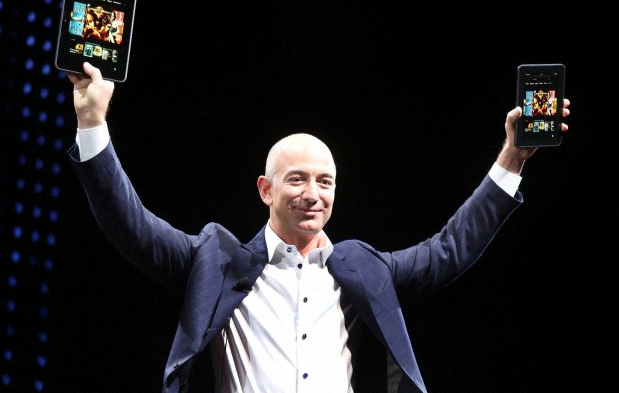
jeff bezos with the kindle
Amazon CEO Jeff Bezos with the new Kindle Fire HD

Just how many people own a Kindle?  A 2014 Forbes article reported that “roughly 43.7 million Kindle devices had been cumulatively sold till the end of 2013,” but, well, Amazon isn’t really talking, except when it’s super proud of itself, so the data Forbes was using may or may not be representative.  Even though in 2014 the Pew Research Center was marking an uptick in e-reader (specifically, Kindle) and everyone seemed, for the most part, highly optimistic about e-readers and therefore e-book distribution, some more recent data seems to indicate a plateauing of that trend … if not a slight reversal.  According to an article by Business Insider contributor James Cook, “for the first time ever the number of tablets shipped has decreased”––and Amazon’s Kindle line has been the hardest hit, with a decrease of some 69.9% in respect to shipments.  That’s a lot.  And the numbers are still so new that few tablet users are speculating yet as to why the Kindle has taken the brunt of the market change.  Is it because users have grown bored, or because Amazon hasn’t reinvented the wheel since the Kindle Fire was released two years (or two lifetimes, in today’s rapid-fire technology-hungry universe)?  But wait––what about the Kindle Paperwhite (the “Kindle 3”)?  Why does nobody seem to be getting on the Paperwhite train?  Is it because people are actively migrating away from Amazon, or from tablet computers, or from e-books?  The numbers seem to be holding mostly steady for e-books downloaded and read, so what’s the deal?

I’ll let you know as soon as I know.

Still, in the meantime, here’s what you need to know about the Kindle (Fire and Paperwhite):

They’re beautiful devices, designed and manufactured specifically to make thumbing through your digital library as tactile and responsive a practice as running a hand across a physical bookshelf––or at least, these e-readers are about as close as you can get without engaging your sense of smell.  (They do, however, make use of your fingertips and your ears as well as your eyes.  There’s some benefit to a multimodal interface, in terms of absorption of information, or so I’ve been told.)

And don’t forget that while sales may have dropped this last year (and significantly), the Kindle and Kindle Fire have out-sold almost every other dedicated e-reading device out there.  There are millions––dozens of millions––of Kindles out there already in use.  So yes, it still remains completely and absolutely worthwhile to sell your book as an e-book edition through the Kindle Store.  The total number of units sold alone should indicate this, but as the aforementioned Pew Research Center report also says, 3 in 10 American adults read an e-book last year, most of them on a tablet or dedicated e-reading device.  That’s a lot of e-books, my friends.  And Jim Tierney over at Loyalty360 reports that Amazon Prime Membership jumped by 53% in 2014––to around 40,000,000 (that’s 40 million) total adults.  And what with the advent of the Kindle Lending Library––a controversial offering, to be sure––Prime subscribers can opt to read certain select e-books for free.  That’s a lot of potential future readers.

Not much has changed when it’s come to the disadvantages of owning a Kindle, except for the fact that Amazon has taken away any grounds for complaint about the graphics, display quality, and user interface.  Their customer support system is pretty nifty, too, and users seem to like it.  No, you still can’t take the Kindle into the bathtub with you, and you probably don’t want to hurl it off the edge of a parking garage unless you actually want to watch it break, but these tablets do qualify as robust, insofar as tablets are allowed to.  Lending books to friends is possible, but still not quite intuitive.  Universities are starting to get on board with letting students use e-book editions for courses, but this still remains an underutilized possibility.  And no, it’s not an actual book you can hold in your hand and sniff for that “old-book” smell.  (But that’s what perfume is for, right?!)

I’m not about to try and sell you on buying a Kindle––or any e-reader, for that matter––but I do think it’s worth oohing and aaahing a little over the modern creature comforts technology has provided us.  An interlinked dictionary that I can access while reading?  Handy.  Highlighting and bookmarking?  Essential.  And much more difficult to “lose” when we’re speaking of a digital item.  And it’s nice, too, to have the option of reading multiple file formats on the same dedicated e-device without having to switch between apps.  PDFs?  No problem.  TXT?  DOC?  The Kindle’s got you covered.  And for now, people aren’t quite tossing them in a blender just to watch sparks fly, so I wouldn’t quite put up the crime scene tape just yet––if Amazon has proven anything, it’s proven just how much it loves to be on top!

Thank you for reading!  If you have any questions, comments, suggestions, or contributions, please use the comment field below or drop us a line at selfpublishingadvice@gmail.com.  And remember to check back each Wednesday for your weekly dose of marketing musings from one indie, hybrid, and self-published author to another. ♠

KellyABOUT KELLY SCHUKNECHT: Kelly Schuknecht is the Executive Vice President of Outskirts Press. In addition to her contributions to the Outskirts Press blog at blog.outskirtspress.com, Kelly and a group of talented marketing experts offer book marketing services, support, and products to not only published Outskirts Press authors, but to all authors and professionals who are interested in marketing their books and/or careers. Learn more about Kelly on her blog, kellyschuknecht.com.
From the Archives: “Using Listmania to Promote your Self-Published Book”

Welcome back to our new Tuesday segment, where we’ll be revisiting some of our most popular posts from the last few years.  What’s stayed the same?  And what’s changed?  We’ll be updating you on the facts, and taking a new (and hopefully refreshing) angle on a few timeless classics of Self Publishing Advisor.

∗∗∗∗∗

[ Originally posted: August 22nd, 2008 ]

If your self published book is available on Amazon.com, there are a lot of ways to promote it.  Since Amazon sales should account for a large percentage of your overall book sales, this site is a good place to concentrate a lot of your efforts.

I’m going to tell you about creating a “listmania” list on Amazon. Have you ever noticed when you browse for something on Amazon, there are lists that are related to that subject that are mentioning other books and/or products?

By strategically listing products on your lists, (including YOURS of course), you can start to generate more traffic to your book listing.

Here’s how YOU can create just such a list:

Sign up for an Amazon Author Connect account if you don’t have one yet. Or sign-in to your current account.

Click on your personal “store” on the top tabs. Then select “Your Profile” from the sub-menu.

You will see lots of things you can personalize, including your bio and your online photograph.

But scroll down and you will see a section called “Listmania!” And this is where you create a listmania list.

Creating a Listmania List is a good way to increase exposure for your book.

Obviously, you want to ensure that your book is on your list.

But the real trick to a successful Listmania list depends upon the OTHER books you put on your list, the ones written by other people.

There are two ways to go about it.

1 – Adding books to your list that are applicable to your subject. The idea behind this concept is easy — if someone reads your list because they were browsing a similar book, they’ll be more apt to buy YOUR book because they’re interested in the subject.

2 – On the other hand, you can add very popular books to your list, since more people may have a chance of seeing it, even if fewer of them will be interested in your book.

I recommend creating multiple lists and trying different tactics to see which is more successful. Amazon lets you track the number of times your list was viewed. Use these numbers to create better lists in the future.

If you have more specific questions about creating a listmania list, the Amazon FAQ will help you.

Amazon Listmania

So here’s the thing: Listmania doesn’t really exist anymore!  Back in 2013, Amazon ceased offering support and guidance on using the Listmania interface, and it was entirely dismantled and rendered unusable over the months following.  (Adrienne Dupree over at Leave The Corporate World Behind even wrote a lovely little lament to mark its final passing.)  And this fact means that, on the one hand, we have to throw the baby out with the bathwater when it comes to our original post … but on the other hand, this presents the perfect opportunity to present you with new and fresh ways of utilizing Amazon for your self-promoting and self-marketing ends (as a self-publishing author).

First, we need to break down exactly what Listmania offered the average author.  Essentially, this featured compiled lists–and this makes sense, given its name–but it was not to be confused with Amazon’s wish lists, gift lists, and registries, or even Goodreads’ Listopia lists (which still exist).  These lists were designed to focus a reader’s attention on products that were similar or in some way related to products that a customer had already been viewing. By strategically listing popular products on your lists, including your own book, you were–in theory–able to generate more traffic to your book listing when people viewed your Listmania lists.  This brings us full circle to that one key word I’ve been lobbing around a lot lately: findability.  An Amazon Listmania list was supposed to render you and your book more findable, but to many people it remained just another one of the giant retailer’s many algorithmic mysteries.

And yet … findability remains important.  There simply are better ways of going about it!

Here are my top 3 recommendations for filling that gaping hole in your heart once occupied by Amazon Listmania:

  1. Start a Pinterest page.  Not just any Pinterest page, mind.  (And I’ve written about Pinterest recently in depth, so I won’t make like a broken record and repeat myself too much here.)  Whip up a Pinterest page (or “pin” to a “board”) where you collect together other books along with other somehow related objects that your ideal reader might want to purchase.  For example, someone who reads Hugh Howey’s Wool might want to pick up some tickets to tour the Titan Missile Museum outside of Tucson, or perhaps some Wool-inspired art prints.
  2. Create a public Amazon Wishlist.  This is easy to do, and it serves much the same function as a Listmania list–only, you’ll have to do a touch more legwork to advertise the list’s existence, since these wishlists aren’t necessarily designed to be searchable.  For more information, hop on over to the Amazon how-to page for wishlists, and peruse at your leisure.  Each wishlist is shareable across any platform you might wish, and you can snag a web link to copy and paste into emails or Twitter, Tumblr, Facebook, Instagram, or any other kind of social media feed you can imagine.
  3. Take a stab at an entirely new social media platform.  The reason why Listmania disappeared is that nobody was using it, or at least, too few people were using it to make it worth Amazon’s efficiently allocated time to advertise and maintain.  It had a function, but it wasn’t one that really connected with Amazon’s user base.  To make yourself findable these days, you must needs throw yourself into the post-millennial age, and go where your readers are.  I’m not necessarily an advocate of just trying anything–you should always do a little cross-demographic market research to see if your readers actually are the sort who use Snapchat or Instagram or Tumblr or Twitter–but as a good friend told me last week, “Just doing what you’ve always done and expecting things to improve is a special kind of lunacy. Sometimes you have to innovate.”  So–innovate, with calm but cautious optimism. ♠
KellyABOUT KELLY SCHUKNECHT: Kelly Schuknecht is the Executive Vice President of Outskirts Press. In addition to her contributions to the Outskirts Press blog at blog.outskirtspress.com, Kelly and a group of talented marketing experts offer book marketing services, support, and products to not only published Outskirts Press authors, but to all authors and professionals who are interested in marketing their books and/or careers. Learn more about Kelly on her blog, kellyschuknecht.com.

Weekly Self-Published Book Review: “Chessman: And His Nine Lives on Death Row”

Book reviews are a great way for self-publishing authors to gain exposure. After all, how can someone buy your book if he or she doesn’t know it exists? Paired with other elements of your book promotion strategy, requesting reviews is a great way to get people talking about what you’ve written.

When we read good reviews, we definitely like to share them. It gives the author a few (permanent) moments of fame and allows us to let the community know about a great book. Here’s this week’s book review by Midwest Book Review:

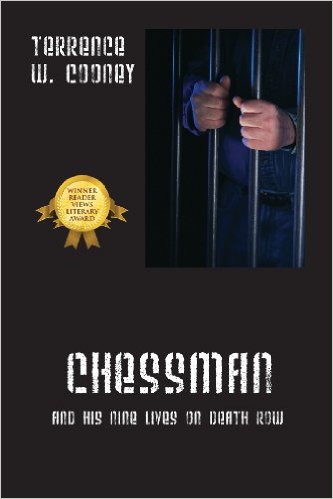
chessman

Chessman: And His Nine Lives on Death Row

Terrence W. Cooney

Publisher: Outskirts Press

ISBN:9781432795689

Synopsis:

On May 2, 1960, on its ninth attempt, the State of California finally executed Caryl Chessman. Terrence W. Cooney’s Chessman, told in the liberating form of a factually-informed novel, introduces the reader to all the players in a long odyssey that brought such infamy to the state and country. From Governor Edmund “Pat” Brown to the Chessman himself and to the landscape of a fast-changing California, Cooney anchors a chapter of the state’s history that for too long has meandered a-sea. Many of the facts of this hysteria-inducing ordeal were gleaned from archival histories, both oral and written. And while much of he dialogue is imagined, the times, attendees, and days of the meetings that hosted such conversations are not.

In 1956, the author was appointed by the California Supreme Court to serve as counsel representing a defendant who had pleaded guilty to two murders. It was, Cooney knew from the start, a death penalty case. Cooney argued that the arbitrary imposition of the punishment violated the 1791 Eighth Amendment of the Constitution’s Bill of Rights against “Cruel and Unusual Punishment.” His argument was rejected. Subsequently, the U.S. Supreme Court adopted that position in 1972 when it so ruled that the arbitrary imposition of the death penalty constituted cruel and unusual punishment. Four years later, still unable to shake the case, Cooney had become engrossed by the Caryl Chessman affair that had started to become headline news throughout California and beyond.

In 1960, Cooney produced the documentary: Justice and Caryl Chessman. The film was shown in more than 1,500 movie houses throughout the United States alone, and in countless theatres worldwide. During the filming of the documentary, Cooney met Chessman who was, at the time, the most famous resident of San Quentin’s death row. In the process, Cooney also met and conversed with Chessman’s attorneys, prosecutors, investigators and jailers. Calls for clemency came from all over: Norman Mailer, Ray Bradbury, Robert Frost, former First Lady Eleanor Roosevelt, and the Governor Brown’s own son and future two-time California Governor Jerry Brown. So strong was the worldwide vitriol over Chessman’s impending doom, that his eighth stay of execution was issued by Governor Brown mainly out of fear of retaliation against President Dwight Eisenhower who was scheduled to be traveling in South America at the time. Governor Edmund Brown later conceded that the Chessman affair cost him any real chance at a successful bid for the presidency of the United States of America.

After Chessman’s execution, Cooney was able to meet former Governor Edmund “Pat” Brown and members of his staff. After fifty years, after decades of anger, hysteria and misinformation, Terrence W. Cooney, has made the boldest move yet by placing all of these facts into the center of a novel that attempts to get to the heart of the matter.

Critique:

Death is final, and that makes many people uncomfortable with using it as a punishment in a flawed criminal justice system. “Chessman: And His Nine Lives on Death Row” spins a narrative drama of creative nonfiction from Terrence W. Cooney as he tells the story of Caryl Chessman, who faced a death sentence and had execution stayed eight times before the sentence was carried out, due to Cooney’s efforts. Arguing that the death penalty qualifies as cruel and unusual, he presents the long legal battle using the format of a novel to tell the tale. Intriguing argument about the status of life and death as punishment, “Chessman” is well worth considering for those seeking a different form of legal debate. [ reviewed by Mary Cowper ]

Here’s what some other reviewers are saying:

I’ve always been fascinated with the Chessman case, and this book gives an in-depth look at the behind-the-scenes workings of our justice system. While not promoting Chessman’s guilt nor innocence, the author instead looks into the curious reasons Chessman was prosecuted, and how he survived 12 years on Death Row, escaping the gas chamber 8 times. Revenge, religion, philosophy, and even ego all played roles in the very compelling saga of Caryl Chessman. I recommend this book to anyone who is not only interested in the case, but also to those who want to know more about the justice system, how the courts work, and to those who are concerned with the pros and cons of the death penalty.

Amazon Reviewer Mickey J. Allen

CHESSMAN, by Terrence Cooney, does justice to its compelling subject. The author deftly recounts events and juggles the many striking historical characters in this well-researched and illuminating book that’s not only about a man, but a state and legal system as well.

Amazon Reviewer Longwalk


Thanks for reading!  Keep up with the latest in the world of indie and self-published books by watching this space every Saturday!

Self Publishing Advisor

selfpubicon1

Self-Publishing & Merchandising : Working with Amazon.com

Much of the merchandising that we’ve examined over previous weeks has to do with the book as its own complete product, the sum of its parts (see: book covers and jacket design, interior design, special additions, and the blurb), feathered out around the edges with paraliterary addendums (see my posts on the book review, as well as how to get and give blog reviews).  But what about retailers?  Is there any work to be done there, when it comes to merchandising your self-published book?

Yes, absolutely!  Each retailer–including Amazon and Barnes & Noble–has its own built-in set of perqs and pitfalls, as well as its own custom-developed features designed to set it apart from the herd and create a better, more salable product.  I’m going to start with Amazon because it is, for better or worse, the most recognizable name in book retail and self-publishing right now.  And since it now owns CreateSpace, Amazon is even more a force to be reckoned with.  You want a starting point for launching your merchandising strategy?  Start with Amazon.

And, handily, Amazon has created a system which makes it easy to centralize all of your hard labor in merchandising.  It’s called “Author Central,” and every author gets one, whether you’re in the business of publishing physical books or ebooks or both.  Author Central allows you to create a biography, list your books, connect your blog and social media feeds, and generally create a polished platform for presenting yourself to the reading public.  Most of us know how to centralize our own personal digital presence using apps or other programs that condense down all of our different presences–Facebook and Twitter and Instagram and Flickr and Goodreads and Skype and iMessage and blog feeds from WordPress and Blogger are so interconnected that a post to one will ripple out through the others without any additional effort.  Author Central allows you to centralize your public presence in much the same way.  Readers will have incredible access if you take the time to set it up right early on–take advantage!

The second feature of Amazon you can use to your benefit is the book page.  Every book you publish through or list on Amazon will have its own unique book page, and the more information you input, the more findable you will be, as Amazon’s smart algorithms scan and index them to generate their internal linkages.  (Those “If you like …. you might try …” recommendations?  They happen because authors maximize their use of book pages and Author Central, among other things.)  The book page also has the power to make or break a reader’s decision to purchase–the more eye-catching, the more polished your book page, the more likely a reader is to click a button and buy your book.  It’s never a bad idea to use high-resolution images, strongly written excerpts, blurbs, book trailers, and the like.  It’s also worth checking into Amazon’s various “deals” features, including Amazon Associates and the Kindle Countdown promotion, though you must be willing to sacrifice some revenue in the short term by running specials to do so.  Amazon also allows you to offer pre-orders on your Kindle books, which is handy for generating preliminary interest.

The long and the short of it is, Amazon sells so many books because its interface and its algorithms really, for the most part, work well.  Now, Amazon may not always be working for you, the self-published author–and especially you, the brand spanking new self-published author without a wide reading base–but for the majority of authors, Amazon is the Starbucks of the indie book world.  It works well for most people, and exceptionally well for a few why pull the right strings.  Which isn’t to say it’s an irredeemable system–after all, just as Starbucks made mostly-delicious whole-bean coffee affordable for most people, Amazon has created a mostly-viable self-publishing program and made it possible for most authors to sell books through it.  It’s well worth studying their model before you decide how else you can elevate your game!

“Thinking outside of the box” will only take you so far if you think book trailers and social media connectivity is avant-garde.  You can bet that once a feature comes built-in with a company like Amazon, it’s assumed that these are just the “done things.”  They’re no longer innovative–they’re expectations. To be truly creative in your merchandising, you’re going to have to take the box apart and play to your strengths.  Do the “done things,” yes, but also the undone things.  What isn’t everyone else up to?  There may be an unexplored opportunity there. ♠

I’m realistic, or I like to think I am.  This topic is bigger than just me and my own thoughts.  I’d like to open the floor to you, dear reader.  If you have any thoughts to share on the topic of merchandising, or questions you’d like answered, send them my way via the comments box below!  I want to hear from you, and I love nothing more than a good excuse to do a little research if I don’t know something off of the top of my head.  Jump on in!

KellyABOUT KELLY SCHUKNECHT: Kelly Schuknecht is the Executive Vice President of Outskirts Press. In addition to her contributions to the Outskirts Press blog at blog.outskirtspress.com, Kelly and a group of talented marketing experts offer book marketing services, support, and products to not only published Outskirts Press authors, but to all authors and professionals who are interested in marketing their books and/or careers. Learn more about Kelly on her blog, kellyschuknecht.com.