In Your Corner: The Evolution of Self-Publishing!

robot sitting on books the future

Over the past 10 or so years working in publishing, I’ve watched self-publishing go from being the unwanted step-child in the publishing world to a full-fledged member of the family. Where there used to only be a stigma and a subtle pressure to pursue another path, now there are hundreds of blogs like ours (though of course I think ours is one of the best!) which offer assistance, support, encouragement, and resources to self-publishing authors of all shapes and sizes. It’s hard to believe now, but for a long time it looked as if self-publishing was doomed to be nothing more than a passing fad–a product of its time, not a shaper of the future.

Luckily for everyone, we know better now.

The statistics don’t lie! More and more people choose self-publishing every year, including authors that were traditionally published in the past. Many authors are finding that the freedom of self-publishing is like a breath of fresh air, a way to retain rights and privileges which we didn’t even know, once upon a time, that were ours to do battle for. But with traditional publishing so far in the hole–financially, and sometimes even ethically–an increasing number of hopefuls are taking inventory of their options and discovering the rich, diverse, and author-centric notion of self-publishing.

It doesn’t even have to be an either-or proposition, these days! Yes, many authors start out as traditionally published midlist authors and turn to self-publishing for the rights, privileges, and creative control. Authors looking to experiment with form or push the boundaries of genre are frequently among this number. But there’s also a goodly number of authors who start out as self-published authors and move into the world of traditional publishing once they prove that their books can sustain the kind of financial and editorial pressures that the Big Five inevitably exert. It doesn’t hurt that these authors are usually a little older, a little wiser for their self-publishing experience, and they drive hard bargains in their author contracts with the traditional publishing houses.

But there’s also a messy, all-over-the-place third group of authors–authors who maybe start in one camp and move to the other, then back, then dabble in something else altogether, and who don’t feel tethered to any one kind of “successful trajectory” with their publishing process. This is the future, I think. This is what I like to see. These are authors who know what they want, and who are willing to “shop around,” so to speak, and create a publishing experience which suits them and not some third party. If we want to hold traditional publishing accountable–this is the future. If we want to keep competition high and costs low in self-publishing–this is the future. If we want to keep satisfying our ever-increasingly-voracious reading public satiated with fresh, unexpected, and diverse literature–this is the future. 

And yes, the future is messy.

But then, any mother of toddlers or teenagers could tell you that.

For now, it looks like the way forward is to keep demanding those aspects of publishing which benefit the authors the most. With self-publishing, authors keep their book rights, control what changes are made to their book and/or title and keep more of their book royalties than if they choose to publish through a traditional publishing house. Traditional publishing, on the other hand, still packs a mighty wallop in terms of distribution reach and marketing muscle–although, it must be stated, that this is a gap which is rapidly being closed by self-publishing companies looking to expand their portfolios and service offerings. Self-publishing is now an option that is embraced by much of the publishing community, and while self-publishers are learning rapidly from their traditional forbears–after all, they came into being as a direct response to the failures of the Big Five–the traditional publishing houses are slowly but steadily learning from these smaller, more nimble, more innovative cousins.

I guess what I’m saying is … there’s a lot to look forward to in the world of publishing as we stare down the long path into the 2020s. Yes, it’s a messy future. But it’s a future with plenty of room for me and you.

You are not alone. ♣︎


Elizabeth

ABOUT ELIZABETH JAVOR: With over 18 years of experience in sales and management, Elizabeth Javor works as the Manager of Author Services for Outskirts Press. The Author Services Department is composed of knowledgeable publishing consultants, pre-production specialists, customer service reps and book marketing specialists; together, they all focus on educating authors on the self-publishing process to help them publish the book of their dreams. Whether you are a professional looking to take your career to the next level with platform-driven non-fiction or a novelist seeking fame, fortune, and/or personal fulfillment, Elizabeth Javor can put you on the right path.

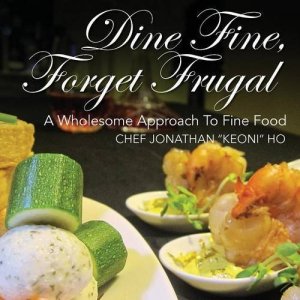
Tuesday Book Review: “Dine Fine, Forget Frugal”

Book reviews are a great way for self-publishing authors to gain exposure. After all, how can someone buy your book if he or she doesn’t know it exists? Paired with other elements of your book promotion strategy, requesting reviews is a great way to get people talking about what you’ve written.
When we read good reviews, we definitely like to share them. It gives the author a few (permanent) moments of fame and allows us to let the community know about a great book. Here’s this week’s book review:

dine fine forget frugal cookbook jonathan keoni ho

Dine Fine, Forget Frugal

by Chef Jonathan Ho

Publisher: Outskirts Press

ISBN: 9781478765158

cipa evvy award

a CIPA EVVY Award Nominee!

Synopsis*:

Food…Everyone’s First Love… Frugal cooking, imitation ingredients, or family meals in a few minutes…appropriate for some, but not for me. A delicious dish crafted with natural ingredients, time, and technique will win their hearts (and stomachs) every time. If you want to impress your family, friends, and guests with wholesome and unique dishes you’ll love this cookbook! With today’s Internet, it seems a shame not to take advantage of fast shipping from distant markets and vast access to new, exotic ingredients rife for the picking. These far-away foods may be a bit pricier than something you can pick up at the corner store, but getting hold of these delectable morsels is well worth the effort. The recipes in this cookbook aren’t fast and frugal, but they are works of culinary art you’ll be glad you got your hands on. Life is too short to deprive yourself and your loved ones of a little wholesome indulgence…

You deserve it!

 * courtesy of Amazon.com

Featured Review:

A fusion chef presents 30 high-end hors d’oeuvres. “I’ve committed my career to celebrating the US culinary melting pot,” Ho (That’s the Spirit, 2012) declares. He grew up in Hawaii, where he helped in his father’s Honolulu restaurant, and at age 16 moved to Pennsylvania’s Amish country. Both influences are evident in his recipes—“Hapa-Ham” Burgers and Rock Salt Plum Ribs; and an unusual take on Pennsylvania Dutch chicken and waffles—alongside a range of other American food cultures, including Tex-Mex, Southern, and various Asian cuisines. The book focuses exclusively on appetizers and soup shots. Even familiar foods like macaroni and cheese are reworked with piquant flavors to make them special-occasion dishes—in this case, using a blend of fine cheeses and adding crab meat, saffron, and caviar. Ho delights in blending the traditionally savory and sweet in playful combinations that will be “confusing to the palate,” like filling a donut with chicken, beans, and cheese, or flavoring a potato-corn cupcake with vanilla and chamomile tea. One of the best examples of the fusion food approach is his “terichanga,” a fried burrito stuffed with teriyaki-marinated rib eye beef and topped with mango-avocado salsa. Best not to look too closely at the nutritional information—the figures are slightly alarming, even for amuse-bouche serving sizes. Each recipe is accompanied by an appealing color photograph, background information, substitution advice, and details on how to source unusual ingredients. Some explanatory notes (for hoisin sauce, Berkshire pork, and the Amish) are repeated in multiple recipes; they could all be collected into a glossary at the end. Fractions would be more useful than decimals when measuring ingredients, and the ornate font becomes a challenge to read. But these small quibbles cannot detract from the quality of these truly indulgent dishes. In many cases, the ingredients are so expensive that these recipes are likely to be reserved for a blowout dinner party, perhaps around Christmastime—a perfect occasion for Turkish-style reindeer meatballs. A final section of musings gives strategies for creating harmonious dishes and pleasing picky eaters. A mouthwatering collection of decadent appetizers.

– Review on Keoni Cookbooks


tuesday book review

Thanks for reading!  Keep up with the latest in the world of indie and self-published books by watching this space!

Self Publishing Advisor

selfpubicon1

Self-Publishing News: 9.4.2017 – The Company Files!

september

And now for the news!

Some highlights from this month in the world of self-publishing, specifically news from or regarding self-publishing companies!

You might have guessed the answer to this most provocative of questions, posed by Cath Everett of Personnel Today: there will be some who say yes, and some who say no, with a slow and steady progression toward embracing our tech-savvy future whether we like it or not. According to Everett, one company has already made the switch and might provide some important guidance for others looking to make the leap: Reedsy, a self-publishing company based out of the United Kingdom–but with staff in at least 15 countries. Reedsy has, says Everett, “taken this [trend] to the extreme,” with co-founder Emmanuel Nataf going on record to say “having people in the same room means there are more issues to manage and deal with,” a problem which is easily resolved by moving toward a fully remote model. There are additional benefits, Everett records Nataf as saying: “There’s less directed management with a remote team because everyone has objectives and know what they are [….] So results are the only thing we look at, not how much time people spend in the office.” That’s all well and good, but are there any downsides? “[Employees] need to be enthusiastic and know how to manage their time,” Nataf acknowledged: “If they’re only 50% into the idea, it simply won’t happen.” A word of caution in an otherwise enthusiastically pro-remote article, and if our own experience is any guide, this is a subject which will cycle back into relevance over the coming years.

Literature has no monopoly on the self-publishing method; games and art collaboratives have made inroads into today’s market using the exact same model, and in the case of KO_OP, they’re seeing phenomenal success. In this article for Cartoon Brew, correspondent David Calvo delves into the sort-of-cooperative, sort-of-corporation’s latest game came into being, and how KO_OP’s recent successes fall into place with the gaming world’s longstanding (but often tortuous) relationship with self-publishing. The game in question, GNOG, “ends up being a weird psychedelic journey in expressivity, a warped cosmogony holding more questions than answers,” writes Calvo: “Such a carefully crafted game could only emerge from a quiet, hopeful place. Montreal game studio KO_OP’s survival as a perpetual start-up is somewhat baffling, in a professional world of self-interests and coteries.” Perhaps the most profound connection between KO-OP’s GNOG and self-publishing is their shared philosophies. Says Calvo, “The refusal to engage in the trap of games as art (an already stale debate), the willingness to avoid the traditional pitfalls of gamemaking, like burnout or overthinking processes, are powerful tools.” Indeed they are–for everyone in the art-making business, whether visual or written or something else entirely. We can’t wait to play GNOG, and can’t recommend this article enough!

I know, I know, isn’t this just another gimmick from a member or the traditional enclave of media-production companies to boost diminishing sales? Maybe. But it’s kind of cool how Lonely Planet is going about it, especially if you look to Hassan Butt’s fascinating article on Transform (which touts itself as “The only global magazine for rebranding and brand development”). According to Butt, Lonely Planet’s “Trips” is, in fact, a “self-publishing content platform that aims to reimagine photo-sharing.” That’s quite a thought. What have we been doing with our Facebook photo albums, our Picasa accounts, our Twitter feeds, if not “self-publishing content” of a visual nature? It may just be a matter of semantics, but it looks as if Lonely Planet will be publishing quite a few of its well-regarded travel guides online for ease of use during travel. Butt’s article hits on all the right buzzwords: “storytelling,” “interactive user engagement,” “original, authentic outlook,” and “trustworthy reputation” all make a strong case for new users to give the app a chance. If you’re looking to travel abroad, let us know your thoughts!


spa-news

As a self-publishing author, you may find it helpful to stay up-to-date on the trends and news related to the self-publishing industry.This will help you make informed decisions before, during and after the self-publishing process, which will lead to a greater self-publishing experience. To help you stay current on self-publishing topics, simply visit our blog every Monday to find out the hottest news. If you have other big news to share, please comment below.

Conversations: 9/1/2017 (on Labor Day!)

SEPTEMBER HOLIDAYS CELEBRATE WRITERS!

Labor Day

Many years ago, at a writing workshop, one of the author/speakers shared the following words, which continue to inspire me today: When no one is watching, always write from your heart and with excellence; for those pages become the fruit of your labor.

Do your friends (and family) understand the labor intensive work you’re doing when you’re writing? Unless they are also writers, most folks have no clue. However, not long after I heard the above statement, I adopted the Labor Day Holiday as one of significance for me and I’ve used its history to help “other people” gain a better understanding of my profession as a WRITER. Here are a few thoughts for you to share with others, too.

labor day

  • The first Labor Day holiday was celebrated on September 5, 1882, in New York City, a highly promoted event connected to factory labor union workers who were definitely under-appreciated at the time.
  • The idea to celebrate “workingmen” and their labor quickly spread across the country and by 1885 most every industrial center across America participated.
  • The celebration of Labor Day soon expanded to workers in every physically laborious industry from laundry workers to construction and dock workers.

The component of Labor Day that speaks to me—as an author—is the basic definition: Labor Day “honors the contributions that workers have made to the strength, prosperity and well-being of their country.” It honors “the vital force of labor in the U.S. that has contributed substantially to the highest standard of living and the greatest production the world has ever known.”

Writers, and the labor we engage in on a daily basis, are absolutely part of that “vital force of labor” who make valuable contributions matching that definition to a “T.”

The greatest contribution we offer to the world is IDEAS!

  • Author Jean-Jacques Rousseau was a prolific writer in the 18th century who greatly influenced many of the writers of the U. S. Declaration of Independence.
  • Benjamin Franklin’s writings not only influenced the early U.S. colonies (politically) but gave clear ideas for the development of the Postal Service
  • Thomas Paine in his books, The Rights of Man and Common Sense, continue to contribute to the “prosperity and well-being” of the world.
  • George Orwell’s novel, 1984, remains a best seller today as it offers a thought-provoking “what if” scenario.

YOUR WRITING LABORS are producing more IDEAS right now. Whether in the genre of Memoir, like Anne Frank (The Diary of a Young Girl) or the realm of other worlds like Ray Bradbury (Fahrenheit 451) and C.S. Lewis (The Narnia Chronicles), the writing we accomplish today will sow ideas into the future for generations yet unborn.

I am often asked why I believe so much in self-publishing and the answer I offer contains all of what I’m sharing today. I believe every writer is inspired to create the specific piece they’re working on. However, traditional publishing simply takes TOO LONG to get books “in print,” their selection process DROPS TOO MANY excellent authors, and their books have a finite lifespan. With the support of self-publishing presses our books can literally STAY IN PRINT, period. ⚓︎


Royalene

ABOUT ROYALENE DOYLE: Royalene has been writing something since before kindergarten days and continues to love the process. Through her small business—DOYLE WRITING SERVICES—she brings more than 40 years of writing experience to authors who need “just a little assistance” with completing their projects. This is a nice fit as she develops these blogs for Outskirts Press (OP) a leading self-publisher, and occasionally accepts a ghostwriting project from one of their clients. Her recent book release (with OP) titled FIREPROOF PROVERBS, A Writer’s Study of Words, is already receiving excellent reviews including several professional writer’s endorsements given on the book’s back cover.
Royalene’s writing experience grew through a wide variety of positions from Office Manager and Administrative Assistant to Teacher of Literature and Advanced Writing courses and editor/writer for an International Christian ministry. Her willingness to listen to struggling authors, learn their goals and expectations and discern their writing voice has brought many manuscripts into the published books arena.

A Very Fond Farewell!

Last week, I hinted that I might have some news to share in my usual bi-weekly Wednesday blog post. Now the time has come to share that news, and I’m anxious. I’m excited. I’m a bundle of emotions!

Simply put, I’m leaving my current position with Outskirts Press and moving on to work closely with my husband, who runs a coffee business. I know, I know … what is it about authors and coffee? In all seriousness, though, I found myself facing some tough decisions–Leave or stay? Work with friends or family?–and found myself excited by the opportunities this new work will give me, as an author and publishing professional.

In short, it’s time.

I’m going to miss everyone! I am grateful to Outskirts Press for providing me years of great experience and opportunity. I’m grateful to have been invited to take part in this blog–I just checked, and my first post went up in August of 2008. Nine years! NINE. That’s amazing. You, dear readers, are amazing. I will miss writing for you, but in ending my work at Outskirts Press I find I must also focus on my private writings, which you can keep up with on my own personal blog (www.kellyschuknecht.com).

In the meantime, keep following the lovely folks here at Self-Publishing Advisor! I’m honored that I got to work with Lisa, Elizabeth, Royalene, and all the authors who came before us on the blog. They have plenty of exciting ideas for the future, and I can’t wait to see what the coming years have in store for the self-publishing industry. ♠

kelly schuknecht


ABOUT KELLY SCHUKNECHT: Kelly Schuknecht is the outgoing Executive Vice President of Outskirts Press. In addition to her contributions to the Outskirts Press blog at blog.outskirtspress.com, Kelly and a group of talented marketing experts offer book marketing services, support, and products to not only published Outskirts Press authors, but to all authors and professionals who are interested in marketing their books and/or careers. Learn more about Kelly on her blog, kellyschuknecht.com