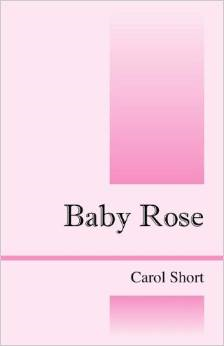
Book reviews are a great way for self-publishing authors to gain exposure. After all, how can someone buy your book if he or she doesn’t know it exists? Paired with other elements of your book promotion strategy, requesting reviews is a great way to get people talking about what you’ve written.
When we read good reviews, we definitely like to share them. It gives the author a few (permanent) moments of fame and allows us to let the community know about a great book. Here’s this week’s book review by Midwest Book Review:
On a rough start, life can only grow even more difficult. “Baby Rose” is a novel from Carol Short, as she crafts a story of two half-sisters Heidi and Ali, born from a struggling mother as they face life together and try to overcome the struggles of a rough upbringing and the search for happiness. “Baby Rose” is a fine novel, very much recommended reading, not to be missed.
This morning marks the fourth installation and therefore the fourth author in my ‘late greats’ series.I’ve already examined the lives of Johannes Gutenberg (b. ca 1390), Jane Austen (b. 1775), and Alexandre Dumas (b. 1824), with a specific eye for the ways in which these authors do or do not conform to the archetype of the self-published author, and an ear for lessons they have to teach us in the current world of self-publishing.
This week, I want to examine someone a little more … controversial.A lot of names get thrown around in the self-publishing world as antecedents for us to look up to, glittering stars on the horizon that prove it can be done, it will be done, and thou shalt do it too—but often, it seems as though we play a little too fast and loose with the facts in an attempt to provide a sense of solidarity and affirmation.(And indeed, the knowledge that one’s favorite author or authors have gone through the same struggles can be a powerful incentive to carry on.)You might not, then, be surprised to find out that the case of Henry David Thoreau (b. 1817) has provoked claims that he is both the prototypical self-published author—and that he is no such thing at all, but rather an incredibly mainstream example of the traditionally published author.
Thoreau, circa 1856
Unfortunately, we’re unlikely to clear up the matter, even with all of the facts in hand.Thoreau’s earliest publications were comprised of a motley mess of short pieces, of which some were published (anonymously) in respected print journals and some were (sort-of?) self-published in Dial, a local Concordian Transcendentalist journal with only two editors, of which he was one.For the majority of his life, he was known mostly for his impassioned speech in defense of the violent abolitionist John Brown—and for his equally impassioned delivery of “Slavery in Massechusetts” at a rally in Framingham.He then published a whole clutch of articles and essays and books around the same time, of which he self-financed at least one (A Week on the Concord and Merrimack Rivers).But the waters are muddied when it comes to public lectures and rally speeches: where do they fit on the Traditional vs. Self-Published spectrum?We may never have a definitive answer to that question.
At the site of Walden Pond (courtesy of Wikipedia)
So if the waters are muddied, what can we learn from Thoreau?I have two primary takeaways from the Thoreauvian saga, both of which I hope embody the spirit of his work as much as the fact:
1) Optimism is a discipline, not a fragile state to be moved through and discarded.“There is an incessant influx of novelty into the world,” wrote Thoreau in his conclusion to Walden, “and yet we tolerate incredible dulness.”His primary interest—or rather the locus of this particular chapter—was political in nature, but what element of life isn’t?(In some small way, at least.)And yet for Thoreau, admitting the nature of politics and even our stagnant investment in politics was not a cause for ultimate despair.Invoking his own amazement, he writes also that “We do not believe that a tide rises and falls behind every man which can float the British Empire like a chip, if he should ever harbor it in his mind.”The implication being, of course, that such a tide does indeed rise and fall—in you.I don’t know about you, but I can’t quite resist such a potent call to arms!
To be clear, Thoreau didn’t equate optimism with naïveté or ignorance.It was a virtue to be cultivated, as a mental and physical and even spiritual posture.He wasn’t a success by worldly standards, particularly as a writer, and he knew it.But instead of succumbing to a broken system with its equally broken standards of success, he chose to reframe and redefine both system and standard.He operated on the assumption that humanity is a force of nature, and that we therefore have the agency to invest our choices with meaning.That sounds about right to me.
2) We must write what we feel compelled to write.Thoreau didn’t believe in catering to trends, or to any external systemic expectations.This isn’t to say he endorsed opposing every element of the system simply to oppose it; but he did believe in acting according to individual conscience (“…I am as desirous of being a good neighbor as I am of being a bad subject…”), in questioning everything (and I mean everything), and in seeking out a richly textured life.
Our interests may indeed align with those that have reached critical mass at the popular level—which currently includes Young Adult literature, dystopias, romance, and a number of other genres—or they may not.We must allow ourselves the opportunity to color in and outside of the lines—and live in fervent belief that we define the framework of our own success (as self-published authors, among other things).This is Thoreau’s legacy, as muddled of a self-publishing icon as he may be: writing is not a game of comparison, in which we win or lose.
Thoreau’s fusty vocabulary and complex argumentative structure might prove a barrier to a modern reader of Walden, but it has routinely defied the odds and repeatedly surged in popularity.This is a book that hasn’t been out of print since 1862, the year of Thoreau’s death.(It was originally published in 1854.)Still, he rattles off a few zingers that leave me breathless.I’m going to close today’s blog in his words—and in what I think makes for a resounding metaphor for rejecting any institution—including, perhaps, the institution of traditional publication?—that has lost touch with its participants:
“Rather than love, than money, than fame, give me truth.I sat at a table where were rich food and wine in abundance, and obsequious attendance, but sincerity and truth were not; and I went away hungry from the inhospitable board.The hospitality was as cold as the ices.I thought that there was no need of ice to freeze them.They talked to me of the age of the wine and the fame of the vintage; but I thought of an older, a newer, and purer wine, of a more glorious vintage, which they had not got, and could not buy.The style, the hosue and grounds and ‘entertainment’ pass for nothing with me.I called on the king, but he made me wait in his hall, and conducted like a man incapacitated for hospitality.There was a man in my neighborhood who lived in a hollow tree.His manners were truly regal.I should have done better had I called on him.”
* NOTE: all quotations sourced from The Norton Anthology of American Literature, Vol. I (2008 edition).
If you have any comments, reflections, or suggestions for this new series, I’d love to hear them. Drop me a line in the comments box, and watch this space on Wednesdays in 2015!
ABOUT KELLY SCHUKNECHT: Kelly Schuknecht is the Executive Vice President of Outskirts Press. In addition to her contributions to the Outskirts Press blog at blog.outskirtspress.com, Kelly and a group of talented marketing experts offer book marketing services, support, and products to not only published Outskirts Press authors, but to all authors and professionals who are interested in marketing their books and/or careers. Learn more about Kelly on her blog, kellyschuknecht.com.
If you are like many writer’s, publishing a book is probably on your 2015 to-do list. You’re probably feeling inspired, excited, maybe a little scared or overwhelmed, and you’re hoping your dream won’t become another failed resolution that gets pushed to the back burner after the thrill of the new year wears off.
Each week in January I offered tips and tricks to help you accomplish your goal of publishing a book this year. (Be sure to check out the previous weeks’ posts if you missed them.) Now that the end of January is here, I think it’s a good time to look back at the goals you set and evaluate where are you. Ask yourself these questions:
Have you accomplished the goals you set for January?
Has your vision for your writing project changed?
Do the goals you set still seem realistic?
Are you still motivated to accomplish your goal?
What obstacles have you faced so far?
What excuses have kept you from writing?
Be honest with yourself when answering these questions. Consider what you need to change in order to be successful throughout the year. It’s okay to change your goals to make them more achievable.
I encourage you to do this check at the end of every month throughout the year. Hold yourself accountable, and re-evaluate your goals. Make changes that will help you be successful. Remember, writing is a marathon, not a sprint.
ABOUT JODEE THAYER: With over 25 years of experience in sales and management, Jodee Thayer works as the Director of Author Services for Outskirts Press. The Author Services Department is composed of knowledgeable customer service reps and publishing consultants; together, they all focus on educating authors on the self-publishing process in order to help them publish the book of their dreams. Whether you are a professional looking to take your career to the next level with platform-driven non-fiction or a novelist seeking fame, fortune, and/or personal fulfillment, Jodee Thayer can put you on the right path.
This headline is part of a Thomas Edison quote: “Genius is 1% inspiration and 99% perspiration.” I’ve met too many writers who accept that premise for themselves—replacing the word “genius” with the words “a writer” (or their own name), then believing they do not have the “inspiration” to finish their book. This usually happens when they are in the midst of weaving together the final elements of an intricately woven and/or deeply researched plot and they are teetering on the edge of quitting. Of course, there is work to be done in creating the writing projects that become noticed and successful. So it is that I offer my perspective on the division between “inspiration” and “perspiration.” I believe they are much more equal—45% to 55% on any given day—often re-balancing their positions within each hour that a writer is at the computer.
One of my favorite authors (who happens to be a highly respected American statesman and retired 4-star Army General) Colin Powell said: A dream doesn’t become reality through magic; it takes sweat, determination and hard work.” His life experiences proved this point. They also inspired him to say: “Perpetual optimism is a force multiplier. Stay forward looking, focus on solutions…the spirit of possibility is contagious.”
SO MUST the writer be—a dreamer who taps in to the inspiration discovered in their dreams and visions; a hard worker who is not resentful of the work (research); a positive thinker who keeps-on-keepin’-on; anda solution seeker (plot and character developer).
It is my premise that people who are gifted with the desire to be writers are multitaskers who have access to left/right-brain thinking during most of their waking and sleeping hours. They may not yet recognize that writing is their true vocation. However, the mental and emotional motivation will come and must be acted upon or those individuals will be most unhappy as their lives progress.
One of my former advanced writing students has been developing her career in the area of social services. She has received high accolades from professors and coworkers in her intern placements. Her natural ability to be inspired by what she’s learning combined with her sincere work ethics—being unafraid of the hard work—is giving her a strong foundation for whatever path she chooses. At the same time, she’s writing! Yes, most of her writing is class-assignment-related. However, her emails (sharing life’s adventures) are rich with metaphor and simile. Her concise yet strikingly unique descriptions of people and places make me want to be there and meet those folks. Oh, yes, the writer lives within her and will bring her much joy today and into her future!
So, today, I leave you with another Thomas Edison quote—one that I wholeheartedly agree with: “The three great essentials to achieve anything worthwhile are first, hard work; second, stick-to-itiveness; third, common sense.” It is, indeed, common sense to build upon one’s strengths and—for the writer—that means taking that step forward to complete the first book and launch their writing career!
ABOUT ROYALENE DOYLE: Royalene Doyle is a Ghostwriter with Outskirts Press, bringing more than 35 years of writing experience to authors who need “just a little assistance” with completing their writing projects. She has worked with both experienced and fledgling writers helping complete projects in multiple genres. When a writer brings the passion they have for their work and combines it with Royalene’s passion to see the finished project in print, books are published and the writer’s legacy is passed forward.
Book reviews are a great way for self-publishing authors to gain exposure. After all, how can someone buy your book if he or she doesn’t know it exists? Paired with other elements of your book promotion strategy, requesting reviews is a great way to get people talking about what you’ve written.
When we read good reviews, we definitely like to share them. It gives the author a few (permanent) moments of fame and allows us to let the community know about a great book. Here’s this week’s book review by Midwest Book Review:
War against your countrymen is not a war one seeks to fight. “A Voice in the Wind” is a collection of short stories from Donald Risho as he presents many tales of the four years in which America clashed and nearly destroyed itself. With its own poignant moments of a very human conflict, “A Voice in the Wind” is a strong addition to any historical fiction collection, highly recommended reading for fans of civil war stories and short fiction.