Conversations With A Self-Publishing Writer: 10/16/2015

THE NOAH WEBSTER LEGACY – PART III

WHEN we publish our books we are wisely advised to promote them in every venue we can access—to even pre-promote to the Readers we know will be interested in our topic and/or genre. When Noah Webster was writing his book A Collection of Essays and Fugitiv Writings on Moral, Historical, Political and Literary Subjects, he promoted it right into the office of President of the United States.

webster

  • First he talked to his friends and acquaintances about his soon-to-be-published book and enlisted them in “subscribing” to it. It is understood that many of these people financially supported (subscribed) the work.
  • Secondly, he published their names on the first several pages of the book—in alphabetical order. These scribers included: Vice President John Adams (indicating that he received two copies of the book), as well as many Senators, Representatives, Aldermen, Attorneys, Physicians, Merchants, Judges and ordinary folks from every location he’d visited.
  • Then, following the list of “subscribers,” Webster addressed this book as if he were writing a personal letter to: “The President, The Vice President, The Senators, and The Representatives of the United States of America, The following PUBLICATION, designed to Aid the Principles of the Revolution, to Suppress Political Discord and to Diffuse a Spirit of Enquiry, Favorable to Morals, to Science, and Truth, Is most humbly inscribed as a Tribute of Respect for their Characters, of Gratitude for their Public Services, and a Pledge of Attachment to the Present Constitution of the American Republic, by their most obedient and most humble servant, The Author.”

Now THAT is marketing—book promotion with flare! Certainly everyone was talking about this book and the boldness of the author. For Webster, the reality was that his often abrasive and know-it-all attitude kept him from being IN the “in-crowd.” However, it is widely accepted that Webster’s passionate nationalism was a major influence on the Founding Fathers. Reading his essays, newspaper articles, and dictionary word definitions gave them much food-for-thought in their daily lives and formation of our country.

So, where are you in pre-production planning for the book(s) you are writing? In today’s publishing world the group of supporters (subscribers) that Webster had would be called a Tribe. These are the folks who know you are writing—know a little about the story—and could be Tweeting about it or posting Facebook comments about how much they are anticipating the book’s arrival in their hands.

And, if you need financial support I know of several self-publishing presses who offer GIFT CARDS that family and friends can purchase to be applied to the publishing process and marketing of your book. The teams of marketing experts in these self-publishing houses can be a great help in connecting with Readers through the Internet and other media which takes the burden off your shoulders giving you the time to write your next book.

May the writing legacy left to us by authors such as Noah Webster give you encouragement and inspire you to accomplish great things with your writings. ⚓︎

RoyaleneABOUT ROYALENE DOYLE: Royalene has been writing something since before kindergarten days and continues to love the process. Through her small business—DOYLE WRITING SERVICES—she brings more than 40 years of writing experience to authors who need “just a little assistance” with completing their projects. This is a nice fit as she develops these blogs for Outskirts Press (OP) a leading self-publisher, and occasionally accepts a ghostwriting project from one of their clients. Her recent book release (with OP) titled FIREPROOF PROVERBS, A Writer’s Study of Words, is already receiving excellent reviews including several professional writer’s endorsements given on the book’s back cover.  

Royalene’s writing experience grew through a wide variety of positions from Office Manager and Administrative Assistant to Teacher of Literature and Advanced Writing courses and editor/writer for an International Christian ministry. Her willingness to listen to struggling authors, learn their goals and expectations and discern their writing voice has brought many manuscripts into the published books arena.

Conversations With A Self-Publishing Writer: 10/09/2015

THE NOAH WEBSTER LEGACY – PART II

Noah Webster was (as the saying goes) a complicated man. After graduating from Yale with a B.A. degree in 1778 he couldn’t seem to hold a job. He was qualified to teach the basic liberal arts studies (back in a one-or-two-room school house) but wanted to study Law so he resigned. In order to go back to school—being instructed by Oliver Ellsworth (the future Supreme Court Chief Justice)—he needed financial income so again began teaching full-time. However, the load of teaching and law studies was too much to handle. History tells us that he fell into a depression when quitting both positions.

blue book speller

How many writers have experienced this emotional component of reaching for their dreams only to discover the heaviness of the challenge as they’ve balanced full-time jobs while developing their book or book series? This is rarely discussed, and yet Webster is an excellent example of fighting his way back—tapping into his educated, emotional and passionate self which he expressed in writing.

As the Revolutionary War continued, George Washington passed through the New Haven area and Webster (who played the flute) joined a group of supporters/students who serenaded Washington and his troops. Shortly thereafter, Webster, his brothers and father tried to join the Battle of Saratoga in New York but by the time they got there, the battle had been won by the American troops.

  • Thus it happened that Noah turned to writing as a way to channel his patriotic ambitions and he began writing a series of articles for a New England newspaper encouraging citizens and their American Revolution resolve.
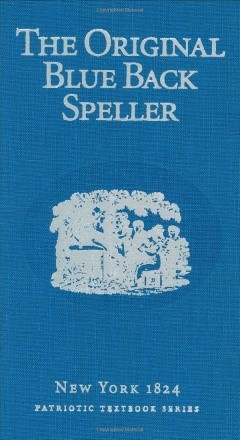
  • Between 1783-1785 he also wrote his “Blue-Backed Speller” spending most of his time getting it published and announced. (It was later published in 1824 as “The Original Blue Back Speller: A Patriotic Textbook Series.”)
  • At the same time he was writing these books, Webster was also working on copyright legislation to protect the works of all writers.
  • His relentless book promotion pioneered now common techniques like the author tour, the fabricated blurb and the aggressive stoking of manufactured controversy,” says New York Times book reviewer Jesse Sheidlower, the editor at large of the Oxford English Dictionary and the president-elect of the American Dialect Society.
  • Webster was known for writing constantly under various pseudonyms. Doing so he would often praise his own works and deconstruct the arguments of his critics. This is still being done today on the Internet under the label of “sock puppetry.”

So here is what I’ve learned from Noah Webster today: (1) write myself out of melancholy; (2) focus my writing efforts on subjects that tap into my passions, compassions, interests and ambitions; (3) don’t hesitate to self-publish; (4) use every avenue available to promote my books; and (5) if necessary, be willing to face critics with straightforward discussion.

Webster strongly promoted what he called American-English building an American linguistic style of spelling and pronunciation that lives and continues to grow to this very day. Without intentionally setting out to do so I believe he has given all writers permission to utilize our language in new ways; to create new words and combined words and related definitions; to write beyond our current skills, develop concepts for generations yet unborn, and publish in paper books, on the Internet and venues yet to be discovered. ⚓︎

RoyaleneABOUT ROYALENE DOYLE: Royalene has been writing something since before kindergarten days and continues to love the process. Through her small business—DOYLE WRITING SERVICES—she brings more than 40 years of writing experience to authors who need “just a little assistance” with completing their projects. This is a nice fit as she develops these blogs for Outskirts Press (OP) a leading self-publisher, and occasionally accepts a ghostwriting project from one of their clients. Her recent book release (with OP) titled FIREPROOF PROVERBS, A Writer’s Study of Words, is already receiving excellent reviews including several professional writer’s endorsements given on the book’s back cover.  

Royalene’s writing experience grew through a wide variety of positions from Office Manager and Administrative Assistant to Teacher of Literature and Advanced Writing courses and editor/writer for an International Christian ministry. Her willingness to listen to struggling authors, learn their goals and expectations and discern their writing voice has brought many manuscripts into the published books arena.

Conversations With A Self-Publishing Writer: 10/02/2015

THE NOAH WEBSTER LEGACY

It was a gift from a friend—the 1828 American Dictionary of the English Language by Noah Webster.  Somewhere in my memory I recalled that Mr. Webster’s name appeared in a list of our nation’s Founding Fathers, however, I remembered nothing about the details of his life or legacy. The dictionary that has always resided on my shelf is the Merriam-Webster version and any association of the hyphenated name to Noah Webster had escaped me.

american dictionary of the english language

Yet, over the last decade of my writing endeavors (after receiving this gift), my appreciation of Mr. Webster continues to grow. Without his push toward education and his extensive work in defining words my abilities to develop such pieces as this blog would be sorely strained.  Here are a few facts to chew on…

  • Born in Hartford, Connecticut, Noah Webster, Jr. was raised in a very active environment, being homeschooled by his mother in spelling, math and music and observing his father’s activities beyond farming as Noah, Sr. was always intellectually curious and a supporter of education for everyone. He even mortgaged their farm so that Noah Jr. could attend higher education classes.
  • By the age of six, Noah joined neighborhood children in a dilapidated one-room primary school which could have dissuaded him from seeking further education because of teachers he later referred to as “the dregs of humanity.” (Are children today faced with that, too?) However, this experience only fortified his later desires to improve the educational experiences of future generations.
  • At the age of fourteen he was tutored in the languages of Latin and Greek preparing him for enrollment in Yale just before his sixteenth birthday.
  • This timeframe was also the season of our country’s revolution. Food shortages and the threat of the British invasion of mass military forces caused the president of Yale to scatter teachers to various towns where classes could safely be held.
  • Attempting to keep up with his classes, Noah still joined the Connecticut Militia. He believed that American nationalism was superior to Europe because American values were superior. Thus began his pamphlet writing career publishing them under the pen name “A Citizen of America.”

My hope in sharing this information with you today is to encourage you to KEEP WRITING even in the midst of life’s challenges.  The living (survival) conditions for folks in the late 1700s early 1800s left little time for “learning letters” let alone studies at “higher education” levels.  However, Webster (and many of his compatriots) knew that unless people were given the opportunity communicate with words (spoken or written) that carried a specific definition—a distinctly American definition—many more battles would be fought and lives needlessly lost.

Yes, word lists were being produced 2300 years ago in regions of Samaria. Yet many believe that it wasn’t until approximately 400 BC that a “vocabulary list…with meanings of rare Homer-style words and other words from local dialects” was produced. You and I live in an AGE OF WORDS with access to online dictionaries from around the world—times past and times present. How marvelous to enjoy such finger-tip definitions giving us the ability to creatively exercise our writing skills and produce the books that will inform and bring enjoyment to future generations. ⚓︎

RoyaleneABOUT ROYALENE DOYLE: Royalene has been writing something since before kindergarten days and continues to love the process. Through her small business—DOYLE WRITING SERVICES—she brings more than 40 years of writing experience to authors who need “just a little assistance” with completing their projects. This is a nice fit as she develops these blogs for Outskirts Press (OP) a leading self-publisher, and occasionally accepts a ghostwriting project from one of their clients. Her recent book release (with OP) titled FIREPROOF PROVERBS, A Writer’s Study of Words, is already receiving excellent reviews including several professional writer’s endorsements given on the book’s back cover.  

Royalene’s writing experience grew through a wide variety of positions from Office Manager and Administrative Assistant to Teacher of Literature and Advanced Writing courses and editor/writer for an International Christian ministry. Her willingness to listen to struggling authors, learn their goals and expectations and discern their writing voice has brought many manuscripts into the published books arena.

Diversity & Self-Publishing (ep. 3)

Week before last, I began to examine the ongoing conversation centering on diversity in self-publishing that has sprung up over the last couple of years, and only risen in importance and visibility since then.  Last week, I addressed two questions:

  1. What’s the track record of diversity in publishing? (and)
  2. What about within self-publishing, specifically?

This week, I want to address two more questions.  The first, as you’ll see, follows on immediately from number two, above:

Are there differences between the track records of traditional publishing and self-publishing in regards to diversity, and why or why not?

As MediaShift’s correspondent Miral Sattar notes in her excellent article for PBS, diversity has always had a little bit more of a foothold in the world of self-publishing than it has elsewhere.  In large part, this can be traced back to the blue-collar, anti-establishmentarian streak that gave rise to the self-publishing industry in the first place.  Wanting to place profits in the hand of an individual author as opposed to a company or a collective?  When it comes to books, that’s a radical idea.  Wanting control over the entire authorial, publishing, and marketing process?  That, too, falls outside the established framework provided by traditional publishing.  All of this independent thinking and hungering after self-realization has led to an environment that fosters rebels and self-starters and free-thinkers and otherwise marginalized peoples.  That includes, of course, people of diverse origins, pursuits, and identities.

In her article, Sattar mentions a whole host of self-published authors, including CJ Lyons, Orna Ross, Lara Nance, HM Ward, Kailin Gow, Margarita Matos, Abdul Qayum Safi, Lozetta Hayden, Manuela Pentagelo, Tejas Desai, and Aleysha Proctor.  And these are just a very few of a very great many self-published authors currently putting their books out there.  There are others: Mary Sisney, Liz Castro, Nadeem Aslam, Johnny Townsend, Qasim Rashid, and so, so many more.  The fact is, if you want to publish something that the mainstream publishing industry isn’t prepared to market, and which isn’t angling to be a blockbuster seller, then the generous spirit of the self-publishing world is always waiting.  We live in a day and age, thankfully, when the self-published book is no longer synonymous with “I’m selling this out of the trunk of my car” (although that may still be the case), and with a whole host of resources out there, from internet forums to hybrid publishing firms, the self-publishing author can count on sending a high-quality–if radically counter-cultural–product out there into the world.

Why does diverse representation in literature and the industry matter?  Why should we authors and readers and (self-)publishers care?

This fourth question is, in some ways, a much harder one to answer.  As with many things in life, it might seem easy to fall back on a rote answer (you either do or you don’t), or to fall into the trap of trying to heavy-handedly preach readers into one perspective or another (because I said so!).  The fact of the matter is, caring about something as radically life-changing as diversity and representation is more than just a private act, but it’s also something you can’t just tell people to do.

When someone leans in over the dinner table and asks me why they should care about diversity–as has happened fairly often this last year–I fall back on a whole retinue of explanations: the statistics about social stratification and advancement or regression, the ethical and moral ground upon which we build healthy and just societies, and the anecdotes of people I know who have found themselves on the wrong side of the line when it comes to representation.  And of all of these arguments, the most effective one is, appropriately enough, one that requires a little imagination.

Imagine you are a child, any child who doesn’t look like a descendant of a hundred Caucasian family trees, who maybe doesn’t tip the scale quite to quite the same number as any of a thousand Disney Channel stars, who maybe comes from a faith background or an ethnic background that isn’t mainstream Christianity or undecided, who maybe has physical or emotional disabilities, who maybe identifies as something other than cisgendered or “straight” or is questioning their identity, who maybe comes from a dysfunctional family or society.  Imagine you have any one of these attributes, or a whole heady cocktail of them, and ask yourself this question: Have you seen yourself in a popular book lately?  How about on TV or in a movie–as the main character?  Have you seen yourself anywhere but in the bathroom mirror and have you seen yourself compassionately rendered there?

I remember the first time I found myself in a book, the first time I encountered a character who looked and felt and acted and believed like me.  It was absolutely, entirely, 100% life-changing.

Why should we care about diversity in publishing and self-publishing?  Because we want our children to grow up knowing that they don’t have to live in the shadows.  That they are lovable and loved.  That they don’t need to bleach their skin or get rid of their accent or faith or private struggles in order to be a whole human being.

Explaining to a child who has never seen a familiar face or life story told on television or in books or in music why they’ve never seen that story is absolutely heartbreaking, not to mention difficult.  One hopes that we don’t have to end that conversation with “…and it looks like it’s going to stay that way for a while.”  One hopes we can end that conversation with: “But see?  We’ve made progress, and here is a whole host of stories to get you started.”  Others have put together powerful arguments why diversity in publishing (of any kind) is important, too, so I think there’s a lot of hope we’ll see change within our lifetimes.

These thoughts barely scratch the surface of these questions, much less the conversation as a whole.   As I continue pondering how to go about touching on the other questions I posed two weeks ago, please drop me a line in the comments section below with your own thoughts or suggestions!  And of course, check back next week as we explore still more of this complicated tangle!

KellyABOUT KELLY SCHUKNECHT: Kelly Schuknecht is the Executive Vice President of Outskirts Press. In addition to her contributions to the Outskirts Press blog at blog.outskirtspress.com, Kelly and a group of talented marketing experts offer book marketing services, support, and products to not only published Outskirts Press authors, but to all authors and professionals who are interested in marketing their books and/or careers. Learn more about Kelly on her blog, kellyschuknecht.com.

Diversity & Self-Publishing (ep. 2)

Last week, I launched a series of questions addressing the nature and role of diversity in publishing, specifically within the self-publishing industry.  Before I return to those questions, a quick proviso: there’s been a lot of mud-slinging on both (or all?) sides of this debate, which can be both wild and wonderful (and occasionally, deeply problematic for all of us involved in getting words out of our heads and dispersed into the world).  But we’re not here to sling mud at anyone.  We’re here to ask questions and, hopefully, to listen.

Some of the mud-slinging can be interesting to read, or in some cases, listen to: just last month, NPR and Intelligence Squared U.S. hosted a debate over Amazon’s incredibly complex role in the whole mess of traditional versus self-publishing paradigms.  As I sat listening to the podcast this last week, I found myself both shocked and perfectly unsurprised at the ferocity of the debate––shocked, because we’re not used to our literary spokespeople literally shouting each other down on the debate floor, and unsurprised because, well, we’re talking about books and reading and literacy and therefore something both deeply, intensely personal, and also universal.  The debates over diversity in publishing are proving equally impassioned, and rightfully so.  Which brings me to last week’s first question:

What’s the track record of diversity in publishing?

It’s not a good one, particularly if we’re talking about publishing in the Western tradition, what with it being so interwoven the various other Institutions (with a capital “I”) that shape and influence society.  Which is not to say I advocate treating publishing artificially as if it has been cut away from every other element of life––not at all.  I do advocate paying close attention to how the social, political, and cultural institutions interact.  Hashtags like #WeNeedDiverseBooks have evolved beyond mere declarations of personal unhappiness to creating safe spaces for ongoing discussion about these complexities, and the data being mined is revealing.

Take the University of Wisconsin’s article on “Children’s Books by and about People of Color Published in the United States,” which shows that of the 2,500 children’s (trade) books published in the United States in 1985, only 18 were written by African Americans.  When you consider the demographics of the United States, wherein African Americans represent 13.1% of the population, that number should have been a lot higher.  Closer to 325 books.  Progress has been made, along all sorts of vectors, but of the 5,000 trade children’s books published in 2014, the CCBC reports that only 84 were written by African Americans and 180 were written about African Americans.  The percentages of other minority groups––ethnic, religious, gender, and others––show similar levels of underrepresentation.  Right now, a debate is raging over the representation of mental and physical well-being, and the current ways in which the publishing institution reinforces ableism and neuro-normativity.  Young Adult (or “YA”) literature has proven to be a particularly rich medium for addressing these growing concerns.

What about within self-publishing, specifically?

I’m so glad you asked!  Self-publishing (and all of its hybrid forms) has proven to be another haven for the marginalized author and all sorts of minorities––both in terms of authors and readers.  Because one point of the publishing triangle has been erased––or at least drastically altered––there has always been more room for the nonconformist, the outcast, and the malcontent within the welcoming arms of the self-publishing industry than there has been elsewhere.  Without fear of expulsion, ostracization, or censorship, the self-published author can write what needs to be written, and publish what needs to be heard!  The welcoming legacy of self-publishing is one I’ve examined before––in fact, many of the Late Great authors I’ve written about over the last few weeks either found themselves unwelcome within, or otherwise distanced from, traditional publishing.

I don’t have any numbers for you about diversity in self-publishing.  It’s practically impossible to collate the data, given the diverse forms and outlets and types of self-publication out there.  Many self-published works aren’t catalogued the way traditionally published books are, and so the data set just isn’t there.  But as Daniel José Older writes so beautifully in his BuzzFeed article (“Diversity is Not Enough: Race, Power, Publishing”), “it’s not just a question of characters of color, [and] it’s not a numbers game. It’s about voice, about narrative flow. […]  We see diverse futures, laden with the tangled past of oppression and we re-envision models of empowerment and survival. But only a few of us make it through. There is a filter and the filter is white culture.”  Suffice it to say, it seems as though the self-publishing industry has provided a platform for diverse voices to be heard, and diverse readers to be reached.  There are ways to change the institution from the inside, but in the meantime, authors can count on finding at least a modicum of representation within the self-publishing industry.

These thoughts barely scratch the surface of these questions, much less the conversation as a whole.   As I ponder how to go about touching on the other questions posed in last week’s blog post, please drop me a line in the comments section below with your own thoughts or suggestions!  And of course, check back next week as we explore still more of this complicated tangle!

KellyABOUT KELLY SCHUKNECHT: Kelly Schuknecht is the Executive Vice President of Outskirts Press. In addition to her contributions to the Outskirts Press blog at blog.outskirtspress.com, Kelly and a group of talented marketing experts offer book marketing services, support, and products to not only published Outskirts Press authors, but to all authors and professionals who are interested in marketing their books and/or careers. Learn more about Kelly on her blog, kellyschuknecht.com.