Growing Pains: Part VI

Together, we conquer, divided we fall. This is true is many aspects of life, and it is especially true in business. With that thought in mind, I wanted to discuss how joining forces with another business is a great way to grow and promote your company (and hopefully theirs too!).

Networking is crucial in the book marketing and writing world. Through networking, you can make important connections with other authors that can lead to new insights for marketing strategies that the two authors, before meeting, may never have considered. Sharing ideas is the first way to join forces with another “business”/author. Talk about what has worked best for you on your website and social media pages and ask how another author runs a successful marketing campaign for their books.

If, through sharing ideas, you decide that you could benefit one another’s business, start strategizing with them. Two heads are always better than one, and it always takes an army just to get a book in published form in the first place. Working with someone else can open up possibilities that might seem too daunting to take on alone.

For example, if you want to host an event but don’t want to do so alone, joining up with another local author who will help with the logistics, social outreach and hosting of the event, it becomes a much more reasonable task. This benefits both of your businesses (if the event is a success), because both of your names will be attached to it and you can both promote your work during and after the event as well.

Another key way to utilize another business is to team up when creating discounts and/or giveaways. Strategically place your books on sale and promote one another’s at the same time during the holiday season and beyond! You scratch my authorial back…kind of thing.  You then both gain access to one another’s clientele that you would not have had otherwise.

Utilize the online sphere and host one another on each of your blogs and/or websites, social media pages, etc. You can do this by featuring a review of that author’s book on your blog and then asking them to do the same for you in exchange. Or simply write up a bio of them with a link to their website page as an equally effective means of promoting them (and in turn, yourself). You could also promote a vlog style interview of that author and vice versa, featuring them as an author in general or asking them specifically about their latest or greatest release.

Whatever you do, always make sure that the joining of forces is mutually beneficial and not parasitic on one end or the other. It is equally as important to make sure you hold true to your end of the plan as it is to hold the other person accountable for them. Being taking advantage of, or taking advantage of another person is unacceptable and a great way to burn bridges and leave you swimming in high tide with no life vest…at peak runoff…in a lightning storm. Or something like that.

handshake


Thank you for reading!  If you have any questions, comments, suggestions, or contributions, please use the comment field below or drop us a line at selfpublishingadvice@gmail.com.  And remember to check back each Wednesday for your weekly dose of marketing musings from one indie, hybrid, and self-published author to another. ♠


Kelly

ABOUT KELLY SCHUKNECHT: Kelly Schuknecht is the Executive Vice President of Outskirts Press. In addition to her contributions to the Outskirts Press blog at blog.outskirtspress.com, Kelly and a group of talented marketing experts offer book marketing services, support, and products to not only published Outskirts Press authors, but to all authors and professionals who are interested in marketing their books and/or careers. Learn more about Kelly on her blog, kellyschuknecht.com

Conversations: 6/6/2017

{{ Normally, we publish Royalene’s posts on Friday mornings. Last week, we made a clerical error, and will be doubling up for the week. Look for Royalene’s next post on Friday! }}

WRITE THEIR STORIES:

Developing the Biography

Just a few days ago I sat on a bench with one of my neighbors who—with exuberant animated arm gestures—told me how much she enjoyed the biography she’d just finished reading. Her instant replay of one of the events in that “real” person’s life made me realize (once again) how much we human beings can learn from the journeys experienced by those who have walked this life before us. Even though I’m listening to my husband’s deep sighs (as he wonders where we’ll find room for more books on our shelves) I’ve now ordered several new biographies. “No worries,” said I to Hubby, “these books will inspire me to write better.” I believe your biography selections will inspire you, too.

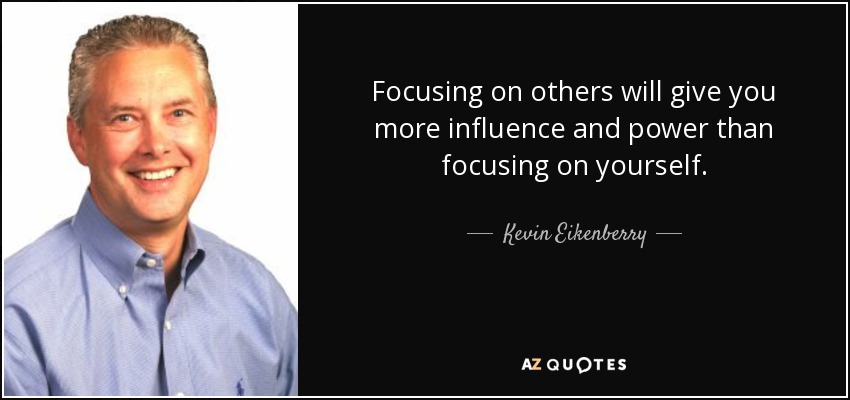
As I continued my research in biography writing, I came across a blog by Kevin Eikenberry who wrote about why Readers are gobbling up biographies (and autobiographies). His thoughts also tell writers why it is a good idea to be writing them. Here are my paraphrased points of his main thoughts…

  • We Benefit From Seeing Into The Past. In the 1670’s Sir Isaac Newton gave us this memorable quote: “If I have seen further, it is by standing on the shoulders of giants.” Newton—and every other academic—could not succeed in their careers without reading about the lives (actions and events) of people who had previously achieved various elements they searched to understand.
  • Biographies Give Us Clear Timelines Of Repeat Events. In 1905, George Santayana wrote “Those who cannot remember the past are condemned to repeat it.” This statement is as true today as it has been throughout human existence. The biography that demonstrates the consequence of actions and choices made by others will at least give us the opportunity to consider different options.
  • The Biographical True Story Is A Tool for Self-discovery. Readers discover ideas and approaches to life through the stories and experiences of others. When biographies are developed with the techniques of fiction writing, many discover that the learning process is often far more satisfying. It is also more lasting and instructs us in behaviors that are things we don’t want to do—ever.
  • Different Perspectives Inspire Us. Step away from your favorite genre or profession and pick up a biography about someone who exists “outside” your way of thinking. Most great innovations come from taking an idea from one situation, discipline or industry and adapting it to another.

Eikenberry makes one more statement that has greatly encouraged me as a writer: “Reading a great biography (or autobiography) can be as exciting as your favorite thriller, provide more valuable and useful [life] lessons…and offer more professional development wisdom than you can likely apply.”

As I work toward being the best writer/author I’m capable of being, I now plan to add—and read—multiple biographies of authors I admire, as well as historic figures like Abraham Lincoln, Harriet Jacobs, Samuel Clemens, Maya Angelou, C.S. Lewis and others. I will listen carefully to their voices hoping to share their wisdom within the pages of my to-be-written manuscripts.

So, how many book concepts are waiting in the wings of your imagination today? Pausing to read a biography or autobiography may just flesh out those ideas for you! Go for IT! Read! Write! Publish. The whole process will bring you great joy! ⚓︎

Kevin Eikenberry


Royalene

ABOUT ROYALENE DOYLE: Royalene has been writing something since before kindergarten days and continues to love the process. Through her small business—DOYLE WRITING SERVICES—she brings more than 40 years of writing experience to authors who need “just a little assistance” with completing their projects. This is a nice fit as she develops these blogs for Outskirts Press (OP) a leading self-publisher, and occasionally accepts a ghostwriting project from one of their clients. Her recent book release (with OP) titled FIREPROOF PROVERBS, A Writer’s Study of Words, is already receiving excellent reviews including several professional writer’s endorsements given on the book’s back cover.  

Royalene’s writing experience grew through a wide variety of positions from Office Manager and Administrative Assistant to Teacher of Literature and Advanced Writing courses and editor/writer for an International Christian ministry. Her willingness to listen to struggling authors, learn their goals and expectations and discern their writing voice has brought many manuscripts into the published books arena.

Growing Pains: Part V

When a business is young and small, it is easy enough to care for on one’s own. However, when it starts to grow, you may find yourself unable to keep up with all the different aspects of the business that make it flourish; this can be anything from answering emails to sending out mail, writing blog posts, keeping up on your social media presence and well, writing your book. Sometimes the key to keeping a business growing, and keeping it from falling under its own weight, is to hire someone to help you out.

Hiring someone may sound intimidating, but it doesn’t have to be anything too serious; you can hire your husband, wife or kids to make social media posts or to help you get organized. If you want something more involved, getting an employee freelancer, intern or independent contractor to act as secretary, editor, assistant, etc. is something you should absolutely consider. Just think if you had someone to answer emails and calls for you, edit your work or manage your social media and marketing for you. Of course, Outskirts Press can help you in a lot of those avenues with our marketing packages and author consulting, but maybe you want someone who you can get some serious face-to-face time with that you see on a regular basis.

growth chart

As with most businesses, hiring extra help makes the business run smoother. In a busy coffee shop, if the owner has to manage all the ordering of beans, cups, syrups, foodstuffs, etc. and act as barista, baker, manager, etc., the business is going to be hectic and seem ill-prepared when things get busy. With enough staff to cover the front of the house, a business owner can return to the managerial tasks that keep the business running smoothly. That means first and foremost, hiring people you trust to uphold the values of your business, and with whom you would want your business associated with. Hire people who are professional, who will show up on time, do the tasks you’ve assigned to them and not leave you hanging when you need their help most.

Again, if you only need this person’s assistance for a few simple tasks and only need help for a few hours a week, be clear with your future employee that this is just a side job that will help you out tremendously. Always offer a stellar reference (especially if you’re hiring an intern), treat them well, and pay them accordingly. A few hours of work a week might not seem worth it for a lot of people, so it’s best to be able to offer an awesome work environment (and boss) so as to justify the time they spend assisting you. Writers often find joy in helping other writers achieve their dreams and keep from getting too stressed out along the way, but remember to express your gratitude for anyone who ends up helping you along the way. You, and your business, are better off with their help.


Thank you for reading!  If you have any questions, comments, suggestions, or contributions, please use the comment field below or drop us a line at selfpublishingadvice@gmail.com.  And remember to check back each Wednesday for your weekly dose of marketing musings from one indie, hybrid, and self-published author to another. ♠

Kelly

ABOUT KELLY SCHUKNECHT: Kelly Schuknecht is the Executive Vice President of Outskirts Press. In addition to her contributions to the Outskirts Press blog at blog.outskirtspress.com, Kelly and a group of talented marketing experts offer book marketing services, support, and products to not only published Outskirts Press authors, but to all authors and professionals who are interested in marketing their books and/or careers. Learn more about Kelly on her blog, kellyschuknecht.com

From the Archives: Quick Start Guide to Marketing Your Kindle eBooks Like a Pro!

Welcome back to our Tuesday segment, where we’ll be revisiting some of our most popular posts from the last few years.  What’s stayed the same?  And what’s changed?  We’ll be updating you on the facts, and taking a new (and hopefully refreshing) angle on a few timeless classics of Self Publishing Advisor.

∗∗∗∗∗

[ Originally posted: March 10, 2011 ]

What are the differences between marketing a Kindle ebook and marketing a printed book?

The promotional methods used to drive traffic to your website and your sales page on Amazon are similar to that of printed books, but there are some differences in marketing Kindle ebooks:

  • There are fewer competing books in the Kindle store, so you may have a greater chance of your book standing out in search results. The Kindle publishing platform makes it very easy for you to enter appropriate keyword tags for your ebook.
  • Consumers expect ebook prices to be significantly lower than print books, especially for fiction. You can experiment with different price points, but for fiction books many indie authors report that they sell at lot more books at $2.99 than at higher prices. If you price your ebook between $2.99 and $9.99 (and it’s priced at least 20% less than the printed version) you can opt to receive a 70% royalty from Amazon, which is much higher than what you’d make on a printed book.
  • The audience for Kindle ebooks is smaller, because not everyone has a Kindle, but it’s growing rapidly. Remind potential customers that they don’t need a Kindle to read Kindle ebooks—they can download a free reading app to use on their PC, Mac, iPad, iPhone, Blackberry and other devices.

What are the best ways for an author to capitalize on Kindle edition sales?

  • Be sure to prominently state on all of your book marketing materials that your book is also available in Kindle format, and provide links directly to your Kindle page on Amazon. You can use a link shortening service to create a short, customized link to use for marketing purposes, such as http://bit.ly/AmazonEbook.

To make a customized link like this, go to http://bit.ly, paste the URL of your book’s Kindle sales page into the large blue box, click the blue “customize” button (beneath the blue box), enter a name for your link (such as AmazonEbook in the example above), and click on the “customize” button.

  • Make sure that your print book and your ebook are linked together on the Amazon website. For example, the reviews for your print book should be showing up on your Kindle page, and the sales page for your print book should indicate that the book is also available in Kindle format. If you don’t see that linkage within a couple of weeks, contact kdp-support@amazon.com.
  • Earn a little extra on each print and ebook sale on Amazon when you sign up for the Amazon Associates affiliate program at https://affiliate-program.amazon.com.

What are some common mistakes in marketing Kindle ebooks?

  • One common mistake is failing to write compelling sales copy and enter the right keywords. The great thing about the Kindle publishing platform at https://kdp.amazon.com is that it’s easy to make changes. Don’t be afraid to experiment with different sales copy, keywords and price points.
  • Other mistakes include pricing ebooks too high, failing to promote them as much as printed books, and failing to take advantage of the promotional opportunities available on the Amazon website.

– by Dana Lynn Smith.

ebooks

Quite a lot has changed in the world of Kindle ebooks since 2011, including the percentages and the eminence of Amazon Associates and even which devices we use these days (cue the Blackberry exit, stage left). But many things have remained the same, such as Dana Lynn Smith’s admonition to write compelling sales copy, and pricing books perfectly to sell.

Most importantly of all, since Dana Lynn’s original post in 2011, print books have seen a resurgence in popularity. These days, it’s more important to view ebooks not as an end to their own means, but as a part and component of a much larger, much more fully rounded-out sales strategy encompassing print as well as digital. Ebooks aren’t the only answer you need, although they certainly enrich an author’s portfolio.

For more on that, I recommend checking in on Small Business Trends‘ annual report on the situation and balance between print and digital, available here: smallbiztrends.com/2017/02/printed-books-vs-ebooks.html.

small business trends the future of books
Infographic by Small Business Trendssmallbiztrends.com/2017/02/printed-books-vs-ebooks.html

Once you know your place in the “future of books,” you’ll know how to structure your sales and marketing strategies to take advantage of these trends.

Thanks for reading.  If you have any other ideas, I’d love to hear them.  Drop me a line in the comments section below and I’ll respond as quickly as I can.  ♠


Kelly

ABOUT KELLY SCHUKNECHT: Kelly Schuknecht is the Executive Vice President of Outskirts Press. In addition to her contributions to the Outskirts Press blog at blog.outskirtspress.com, Kelly and a group of talented marketing experts offer book marketing services, support, and products to not only published Outskirts Press authors, but to all authors and professionals who are interested in marketing their books and/or careers. Learn more about Kelly on her blog, kellyschuknecht.com.

Self-Publishing News: 5.29.2017

And now for the news!

Some highlights from this week in the world of self-publishing:

This week’s Publisher’s Weekly features a piece by Calvin Reid which highlights Jason Pinter, the man who founded the indie publishing house, Polis Books. Pinter found himself inspired by the 2016 election and has decided to return to his passion–writing books. The Castle, Pinter’s political thriller, will be a self-published title and be kept separate from the Polis Books list.

Pinter’s reason for self-publishing? The feeling of the books immanent importance in the wake of our current political situation. Publishing a book by traditional means can take over a year, and this was a book he felt should be published now, and right now. According to Pinter, “several editors liked the book, but said it needed to be out now. I agreed with them.” Another reason for self-publishing was that Pinter didn’t want to cut in front of other authors trying to publish through Polis Books, nor did he want to overshadow the other titles currently being publishing by his press.

Once Polis books got up and running–it will be publishing 27 books in 2017!–Pinter decided that he would make time to return to his passion for writing, which is why he’s devoted himself to publishing The Castle. Don’t expect Pinter to quit working on his publishing company though, he is instead hoping to have the best of both worlds working as an author and a publisher.

In this touching piece by Fiona Ashe, we see the story of a daughter helping her father’s dream come true. When Fiona’s father wrote 31 Years of Hell, documenting the history of the two world wars, she decided that she would edit, produce and self-publish the book herself. While an extremely rewarding process, Fiona wanted to share how it was that she also was able to make this an extremely successful process.

First Fiona reminds us of the importance of having a good editor whom you can trust and whose opinion your trust. Calling the editor “your book’s bouncer,” Fiona says, “It’s completely reasonable to be emotionally attached to your favourite paragraph in which you injected clever humour, shared a personal anecdote and created a slick metaphor. But if it doesn’t serve the story, it has to be consigned to the literary cutting room floor.”

After explaining the im portance of editing, she goes on to elaborate on the stylistic and interior formatting components of self-publishing. She says,“One thing to consider when designing the interior pages of your book is whether you understand your target market’s reading habits. Do they binge-read the way people binge-watch TV drama on Netflix? Or do they dip in and out of books periodically?” It was decided that the audience of a WWI/II book would most likely dip in and out of it, “In order to facilitate this episodic reading behaviour, we chose to break up the text with subheadings and add timelines at the end of each chapter.” Further, Fiona says she “also illustrated the book with maps and emotionally evocative photographs to enhance the storytelling.”

Read more from the article above for some more stellar advice from Fiona, the daughter of the year!


spa-news

As a self-publishing author, you may find it helpful to stay up-to-date on the trends and news related to the self-publishing industry.This will help you make informed decisions before, during and after the self-publishing process, which will lead to a greater self-publishing experience. To help you stay current on self-publishing topics, simply visit our blog every Monday to find out the hottest news. If you have other big news to share, please comment below.

KellyABOUT KELLY SCHUKNECHT: Kelly Schuknecht is the Executive Vice President of Outskirts Press. In addition to her contributions to the Outskirts Press blog at blog.outskirtspress.com, Kelly and a group of talented marketing experts offer book marketing services, support, and products to not only published Outskirts Press authors, but to all authors and professionals who are interested in marketing their books and/or careers. Learn more about Kelly on her blog, kellyschuknecht.com.