Weekly Self-Published Book Review: “Escape from Eternity”

Book reviews are a great way for self-publishing authors to gain exposure. After all, how can someone buy your book if he or she doesn’t know it exists? Paired with other elements of your book promotion strategy, requesting reviews is a great way to get people talking about what you’ve written.

When we read good reviews, we definitely like to share them. It gives the author a few (permanent) moments of fame and allows us to let the community know about a great book. Here’s this week’s book review, courtesy of the Genre Go Round Reviews blog:
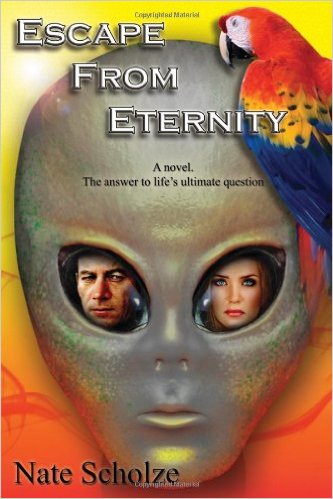
Escape from Eternity

Escape from Eternity

Nate Scholze

Publisher: Outskirts Press

ISBN: 9781432789060

Synopsis:

Set in the modern era, a humanoid alien entity, Adrian Antagon, arrives on Earth with a specific mission in mind. He must locate his long lost brother and cohort Menonan Antagon, who disappeared 60,000 years ago on Earth after trying to put down a rebellion of creative aliens who were supposed to be the stewards of the world, of which he was Supreme Commander at the time. Adrian assimilates the body of the first person who comes upon his tiny cylinder-shaped spacecraft and journeys from London, England to the beautiful water-front resort area of Door County, Wisconsin.

In Ephraim he meets up with an old man who recognizes but is not happy to see him. Emil Bitterman says that Adrian has never brought anything but heartache to him and he should leave immediately, but Adrian tells Bitterman he has other plans and requests that he assist him because of a former commitment. The old man refuses, but refers him to a young woman with a messed up life. Laura Whitmore is dealing with an overbearing father, a restaurant employer who’s paying too much attention to her, and the recent death of her cherished boyfriend.

She is not happy when Adrian asks for her help. Tired and depressed, Laura just wants to be left alone, but Adrian is determined to win her over and relays information about strange creative endeavors that changed our world. He explains that all humans are eternal and Earth is simply a place to escape the boredom of eternity and to forget about the problems associated with living forever for a while. Laura is rattled by his bizarre commentary and decides to try to avoid him, so she seeks out her sister Michelle, and her best friend, Colin Benton, a burned-out druggy.

Meantime, the family of the man whose body Adrian had assimilated has discovered he is missing, and to their horror determines their beloved family member now resides in Wisconsin, U.S.A. Bewildered and hurt, Katherine Nolan and friend, John Barrington, make the trip from the U.K. to recover him, but realize when they arrive that the man they think they know is now very different. Adrian kills Laura’s boss for assaulting her, and he is arrested and jailed, but then discloses what he has really come for: To reveal a mysterious truth that will change Laura’s life forever, and send her scurrying for safety. But Adrian needs her, and discloses that she has been chosen to play the central role in his plan whether she wants it or not, and as far as he is concerned, her involvement is not optional.

Laura’s father vows to see Adrian dead and in a bizarre turn of events Adrian is fatally shot by the sister of the now deceased Emil Bitterman. As Adrian is dying at Laura’s feet she discovers, to her horror, the strange and unnatural connection she has to the lost Menonan Antagon, and realizes that the information she receives could cost her more than her sanity, it could cost her her life.

[ courtesy of Amazon ]

Critique:

University of London math Professor William Nolan investigates an object that fell from the sky near his home. He returns to the house ordering his wife Katherine to give him his passport before leaving. Shocked by his out of character behavior she calls family friend John Barrington.

Calling himself Adrian, William flies to Chicago and from there goes to Ephraim, Wisconsin to see Teddy Bitterman. Adrian tells Teddy that Caleb lives in the Cycle and demands he help him rescue him. Teddy refuses as he lost his beloved wife Audrey and his sibling Caleb when he tried to assist Adrian years ago rescue the alien’s missing brother Menonan. Pleading for his sister and him to be left alone, Teddy tells his visitor to look for the oldest Whitmore sister. Adrian locates depressed Laura Whitmore and asks for her assistance, but she refuses as her dreams died in a car accident. He explains why he needs her to find Menonan who vanished after putting down a coup attempt by creative aliens on planet earth many millennia ago. While she turns to her younger sister Michelle and her BFF Colin Benton, her father Howard vows to kill the alien and Katherine and John follow William’s trail to Door County only to learn he killed Laura’s abusive Adam Blake.

Escape from Eternity is a gripping science fiction thriller starring a strong cast with diverse tsuris in a Close Encounters of the Third Kind scenario adding to their woes. The complex twisting storyline built on an eternal cosmological premise is character driven starting with Adrian’s possession of William’s body and never slows down as the audience anticipates a confrontations in Wisconsin and beyond.

reviewed by Harriet Klausner ]

Here’s what some other reviewers are saying:

I believe this will become a cult classic because this book brings a new scape to answer the “why am I here?” question that everyone has.
This book has a plot line that leaves you guessing and the way he has written his characters makes you understand the choices they have made without the normal “I know where this is going” being correct.
Every time I guessed wrong it pulled me further into the story, or is it a story? it makes you wonder,”did this guy figure it out?”
I think it should be read even by people who aren’t the normal sci-fi readers,it has a story that can make anyone ask questions they haven’t asked before. I can’t wait until its picked up by someone for a movie.
The way he paints the landscapes and surroundings of his characters makes you use your imagination knowing that he was trying to portray exactly what you are thinking.

I am a person who keeps books on a shelf that I love so I can read them again, this is a definite re-read. Pick it up with an open mind and you wont be disappointed!

Amazon Reviewer callmetim

In this read we meet Laura Whitmore, her sister and parents. They appear to be a normal family yet a secret circles their lives, one that only the father fully knows, but never told his family. In a strange visit from a space craft a man runs to see what it is only to be taken over by something or is that someone, with a mission. This now possessed man, who calls himself, Adrian, seeks out Laura who holds the key to the future. Who really is this creature and what secrets does he hold for mankind, and why is Laura so important to him?

I have to say this was a different read with twists and turns I did not expect. The author kept you running forward with the desire to know who Adrian really was and why was he so intent on finding Laura. The characters in this story were interesting and well developed and tied together nicely as the read progressed. I think a little more information should have been given on who this character, Adrain, was a little sooner in the story. Perhaps a few more hints dropped here and there. As I said this was a different twist on ‘earth visiting’ characters and I feel our author plans to take this into another book, or so I assume from the ending of this one. The ending was a surprise in so many ways, I really did not see this ending coming, and it appears Laura is in for other visitations. If you enjoy a read that is a little different than the norm, this one is for you. The foundation is laid and ready to be built upon. I will be watching to see how our author continues this story.

Amazon Reviewer Shirley Priscilla Johnson


Thanks for reading!  Keep up with the latest in the world of indie and self-published books by watching this space every Saturday!

Self Publishing Advisor

selfpubicon1

Conversations With A Self-Publishing Writer: 09/18/2015

OUR RIGHT TO WRITE AND PUBLISH III


FOR Novel and Non-Fiction book authors, let’s talk shop. My first two blogs this month focused on writers who enjoy the article/essay, short story and magazine venues AND their right to write and publish. However, unless authors are “frequent flyers” in those publishing circles, the more accurate term for their process would be to submit for publication. Those publishers and editors have total power with it comes to selecting what their Readers will see.  However, writers of book-length manuscripts may (underline may) hold a slight advantage simply because they have the additional option of self-publishing.

protesters

To encourage “book writers” I’d like to begin by defining the power of A BOOK, as outlined many years ago by American author, astrophysicist, astronomer, science communicator, Carl Sagan.

  • A flat object made from a tree;
  • Having flexible parts on which are imprinted dark squiggles;
  • Yet with one glance the reader is inside the mind of another—someone who might have been dead for thousands of years.
  • Books break the shackles of time.
  • A book is proof that humans are capable of working magic.

Sagan adds that “Writing is perhaps the greatest of human inventions, binding together people who never knew each other, as they become citizens of distant epochs.”

Of course, the power of a book is really the power of the written word that lingers in the hearing of readers from the moment of publication until—well, hopefully, forever—which, considering technology advances may be possible. This brings us to our right to write and publish. The old cliché that “with rights come responsibilities” is especially true for authors. E. B. White, author of the little book The Elements of Style, offers his thoughts.

“A writer has the duty to be good, not lousy; true, not false; lively, not dull; accurate, not full of error. He should tend to lift people up, not lower them down…A custodian…charged with the safekeeping of all unexpected items of worldly or unworldly enchantment [so that] even a small one is not lost. Writers do not merely reflect and interpret life, they inform and shape life.

I love to write. When my thoughts (scenes, characters, plots) flow upon page I feel a rush of excitement and can hardly wait for someone to read it. However, when I paused to consider Mr. White’s statements, I took a big gulp. Then I realized that I’d always known about these responsibilities. They resided within me—and all the authors I know—without putting “words” to them. These are the writing goals that inspire writers to learn better writing skills and dig deep through layers of research to include accurate and descriptive details.

So it is that I close today’s blog with a few thoughts of my own:

  • Being reminded of my personal writing/authorship responsibilities is a good thing.
  • Incorporating these concepts into my writing life leads me to produce quality work that will attract more readers!
  • Considering these responsibilities will help me research my best publishing opportunities.
    • Is a particular manuscript meant to be published by a “traditional” publisher?
    • What responsibilities do they set for themselves and/or take away from me?
    • Is self-publishing best for me? For the book? For readers to have the opportunity to enjoy it sooner rather than later? ⚓︎
RoyaleneABOUT ROYALENE DOYLE: Royalene has been writing something since before kindergarten days and continues to love the process. Through her small business—DOYLE WRITING SERVICES—she brings more than 40 years of writing experience to authors who need “just a little assistance” with completing their projects. This is a nice fit as she develops these blogs for Outskirts Press (OP) a leading self-publisher, and occasionally accepts a ghostwriting project from one of their clients. Her recent book release (with OP) titled FIREPROOF PROVERBS, A Writer’s Study of Words, is already receiving excellent reviews including several professional writer’s endorsements given on the book’s back cover.  

Royalene’s writing experience grew through a wide variety of positions from Office Manager and Administrative Assistant to Teacher of Literature and Advanced Writing courses and editor/writer for an International Christian ministry. Her willingness to listen to struggling authors, learn their goals and expectations and discern their writing voice has brought many manuscripts into the published books arena.

An Indie Author’s Social Media Primer | Facebook

It should come as no surprise that we’re going to take a quick look at Facebook as we work our way down the list of social media platforms the digitally-savvy indie or self-published author should consider using when launching a comprehensive self-promotion campaign.  And it probably is similarly unsurprising that we’ve looked at Facebook beforeseveral timesso many times–and that we’re just one blog among many to have done so.

Facebook

There are, in fact, so many resources out there about how indie authors can make use of Facebook, that the greater challenge is not in finding information–in contrast to, say, my posts about Etsy and Snapchat and so on–but in discerning which information is actually useful!  To that end, I’ve compiled and curated some of the better (and more well-maintained, that is, up-to-date) resources below for your easy review, as opposed to listing our own “best practices.”  My hope is that you’ll find all the appropriate details you might need at your disposal in order to navigate the intricacies of the complex proposition that is Facebook.

Debunking the Great Facebook Myth: “It’s just one giant moving target–there’s no point to trying to master anything about Facebook, because it’s just going to change again in a few months!”

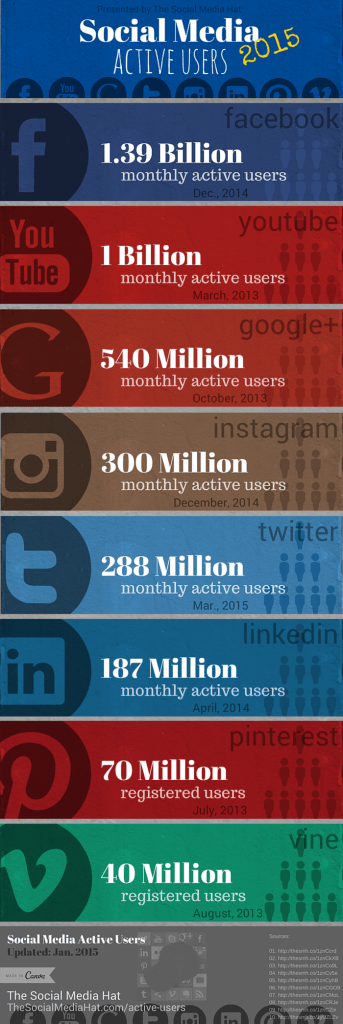
While Facebook’s developers are constantly tweaking the algorithms and codes and format of things (it’s true, we must admit), the website itself remains fairly stable in a number of ways.  First of all, the fact remains true that Facebook is where the people are–the people, the relationships, the possible connections, and the real market for your books.  Consider this infographic, courtesy of Rebekah Radice:

Social-Media-Active-Users

The people are staying put, and sticking by Facebook, despite the not-uncommon doomsday forecasts to the contrary.  But that’s not the only aspect of Facebook that is stable: the features may alter a bit in form and function, but the concept of what you’re using those features for remains the same.  I’ve written a great deal throughout this series of primers about social media marketing targeting certain specific pillars of the online experience: findability, adaptability, usability, and authenticity.  If any of these four aspects is missing from an author’s social media presence, they’re bound to suffer.  If, however, you are conscientious in maximizing your Facebook presence, as these resources should help you to do, then you’re practically guaranteed to grow your reading audience.

Top 5 Best Resources:

1. “The Power of Facebook for Authors” by David Henry Sterry over at The Author Online.

2. “30 Ways to Build Your Fanbase with Facebook” by the folks over at Duolit.

3. “My Experiments with Facebook Ads” by Rami Ungar over at Self-Published Authors Helping Other Authors.

4. “Facebook Ads: Should Indie Authors Buy Them?” by Joel Friedlander over at The Book Designer.

5. “7 Essential Elements for an Author’s Facebook Page” by Antonella Iannarino over at the David Black Agency’s official blog.

And a bonus additional resource:

The tag archive for “Facebook” over at ALLi‘s “How-to For Authors” blog.

Please keep us posted of your own successes as you experiment with new platforms.  You’re our most inspiring innovators, and the internet is your laboratory.  We can’t wait to see what you do!  And make sure to check back next week, as I wrap up this social media primer with the all-important summary edition!

If you have any questions, comments, suggestions, or contributions, please use the comment field below or drop us a line at selfpublishingadvice@gmail.com.  And remember to check back each Wednesday for your weekly dose of social media know-how. ♠

KellyABOUT KELLY SCHUKNECHT: Kelly Schuknecht is the Executive Vice President of Outskirts Press. In addition to her contributions to the Outskirts Press blog at blog.outskirtspress.com, Kelly and a group of talented marketing experts offer book marketing services, support, and products to not only published Outskirts Press authors, but to all authors and professionals who are interested in marketing their books and/or careers. Learn more about Kelly on her blog, kellyschuknecht.com.

Apologies!

Dear Readers,

We wanted to drop you a line in apology for the jumbled post earlier today–something didn’t translate correctly from the offline world to our online one, and we’re working hard to fix the error and prevent it from happening again.  The primer post for Facebook will be up later today!

And as always, we thank you, dear readers, for your continual support.  Your presence makes what we do a joy and a pleasure!
Warm wishes and regards,
the Self Publishing Advisor Team

From the Archives: “The Book Doctor on Poetry and Publishing”

Welcome back to our new Tuesday segment, where we’ll be revisiting some of our most popular posts from the last few years.  What’s stayed the same?  And what’s changed?  We’ll be updating you on the facts, and taking a new (and hopefully refreshing) angle on a few timeless classics of Self Publishing Advisor.

∗∗∗∗∗

[ Originally posted: July 1st, 2010 ]

Q: How would I go about publishing an original one-hundred-page poetry book? Generally how much would the profit be from such a book?

A: You have quite a few options and potential paths when it comes to publishing. Before you decide to self-publish or try to sell a book to a publisher, first you must know your goals and assess your abilities. My fifty-minute seminar on CD called “I Finished My Book; What Should I Do Next?” covers the decision-making process, so you’ll know which way to go, whether you want to self-publish or attempt to find a publisher, and if you self-publish, whether you want to use a traditional printer, print-on-demand (POD), or a company that helps in the publishing process. I crammed the seminar with information and included many pages of supplemental printed material, so you can understand why I can’t answer your question in detail in only a few paragraphs.

Here’s a little information to help, though.

If you already know you want to self-publish, your next step depends on whether you want to handle all the pre-printing details, such as editing, internal and cover design, ISBN numbers, and finding a printer, or whether you prefer to rely on a company that handles those details for you—for a price. Read a good book on self-publishing and learn all aspects of it before you make your decision. Also carefully scrutinize the company you choose as a printer or publisher—know there is a difference—and carefully ensure that the services the company provides are the services you need.

You also asked how much profit to expect. Let me first ask a question: When did you last buy a poetry book? If you are like most Americans, you have not bought a single poetry book in the last ten years. Although millions of people write poetry, not many write it well, and even fewer buy poetry books. Poetry books rarely make any profit at all.

Although few Americans make much if any money from poetry, it is the highest form of literary art. Once writers master poetry, they can apply those skills to their fiction and nonfiction and increase their chances of making money with their prose.

My news should not discourage you, however. If you put a great deal of time and effort into marketing, you might make some money after all. At least one poet I know used POD for his books and travels the country giving readings. He writes excellent poetry and performs it well, and he has sold close to a thousand copies of his book. He chose POD, which gives him less profit per book than if he had chosen a traditional printer, but he did not have to invest a huge amount of money up front or store thousands of books, so the tradeoff suits his needs.

As you can see, the answer to both questions—how to go about getting a poetry book published and how much you might profit—are the same: It depends on what you are willing and able to do, and none of the paths are simple. Educate yourself first and then decide what works best for you.


When Bobbie Christmas (author of Write in Style, printed by Union Square Publishing, and owner of Zebra Communications) first wrote this question-and-answer post for us back in mid-2010, the self-publishing market was still young enough that authors could rely on readers to purchase the big “staples” of the book market––meaning fiction, and especially genre fiction––but the so-called “niche” markets and genres were still somewhat a) underdeveloped, b) undiscovered, or c) the data wasn’t available to analyze their profitability.

Luckily, we have on board our Tuesday “From the Archives” vehicle a time machine which allows us to jump five years forward from 2010 … to 2015.  (Please allow me to pretend there’s actual time travel involved!  It’s a Tuesday, after all.)  And when it comes to self-published poetry, we have a great deal more information at our fingertips today than ever before.

First, I might point you to the experience of Mirtha Michelle Castro Marmol, whose book of poems (Letters, to the Men I Have Loved) has not only done moderately well––it has done so exceptionally well as to remain on Amazon’s bestseller lists for months.  MMCM published through Outskirts Press, a hybrid publishing company based out of the Denver area, and OP ran a feature and interview piece with her on their official blog.  “The most rewarding part [of being published] is and will always be the ability Letters has to touch people,” says MMCM. “It’s crazy because I didn’t think people really read books anymore. But for me, having these girls go and buy my book, and spend their twenty dollars or so on Letters––it’s amazing, that someone believes in things still.”  Readers have been snapping up copies of her book, both in physical and digital forms, at such a rate as to firmly prove that people still “really read books”––including poetry.

Secondly, I might point you to this blog post by self-published poets Terri Kirby Erickson and Michelle True.  (Every day there are more and more useful online resources like theirs that are sent out into the aether, and now the greater struggle is not just to find information, but to determine which information is actually useful.)  This particular post is handy, not because it provides a template or how-to guide to put you on a path to success (though it might also do that, in a sense) but because it provides an anthology of the ways in which these two self-published poets have already found ways to sell their books.  If you needed affirmation that you can be a poet, and a self-published poet at that, and find your readers––well, take a look.  Articles like the one Denise Enck wrote for the Empty Mirror is much more prescriptive, and may help fill in the gaps.

Lastly, I might also point you to a bit of anecdotal evidence: Yesterday, I was in my local library, browsing the new additions, when I overheard a patron talking with one of the librarians at the front desk.  “Where would I find the poetry?” she asked.  “I don’t see much of it here.”  The librarian pointed out that the poetry was mixed in with poetry, nonfiction, and even young adult, junior fiction, and junior nonfiction.  “But why?” asked the patron.  “All I want to read is some poetry.  It’s the only kind of book that I actually enjoy!”  The library did happen to have a section dedicated to local authors, many of whom were self-published.

What Bobbie Christmas wrote back in 2010 still holds true: “none of the paths are simple.”  But today we have the benefit of knowing that, while writing remains a highly personal and sometimes borderline crazy endeavor, writers of all types and creeds and genres and niche markets are finding success, finding readers, and finding their true voice.  Keep writing, dear readers.  And keep publishing! ♠

KellyABOUT KELLY SCHUKNECHT: Kelly Schuknecht is the Executive Vice President of Outskirts Press. In addition to her contributions to the Outskirts Press blog at blog.outskirtspress.com, Kelly and a group of talented marketing experts offer book marketing services, support, and products to not only published Outskirts Press authors, but to all authors and professionals who are interested in marketing their books and/or careers. Learn more about Kelly on her blog, kellyschuknecht.com.