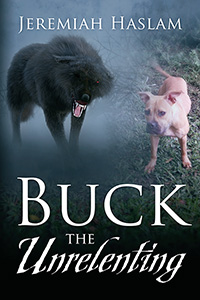
Virtual Book Tour Blog Post – BUCK The Unrelenting by Jeremiah Haslam

Faith, courage, and the bond between humans and their loyal companions take center stage in Jeremiah Haslam’s inspirational novel BUCK The Unrelenting. A powerful tale that channels the spirit of classics like The Call of the Wild and White Fang, Haslam’s story reminds readers that even in the face of loss and hardship, faith can light the way forward. As part of his virtual book tour, we’re celebrating this moving debut with a few fun and thoughtful extras that bring the world of Buck and his family to life.

Top 5 Reasons Readers Love BUCK The Unrelenting

  • A story of faith and perseverance that uplifts and inspires through every chapter.
  • The unforgettable bond between Buck and his family, showing the redemptive power of love.
  • A deeply human portrayal of loss and courage set during the Great Depression.
  • A faithful message woven naturally into a powerful, adventure-driven story.
  • Its universal themes of hope and resilience, appealing to readers of all ages.

Soundtrack for BUCK The Unrelenting

Every great story deserves a great soundtrack. If BUCK The Unrelenting had one, it might sound like this:

  • “Eye of the Storm” by Ryan Stevenson – for its message of perseverance through faith.
  • “You Raise Me Up” by Josh Groban – echoing the spirit of renewal after hardship.
  • “Brother” by NEEDTOBREATHE – a tribute to loyalty and family bonds.
  • “Oceans (Where Feet May Fail)” by Hillsong UNITED – capturing the courage to trust in divine strength.
  • “Amazing Grace (My Chains Are Gone)” by Chris Tomlin – symbolizing redemption and faith’s triumph.

Character Introduction: Meet Buck

Buck isn’t just a dog—he’s a symbol of steadfast courage and unbreakable faith. Born on a small mountain farm and raised by a God-fearing family, Buck’s journey mirrors our own struggles and triumphs. If Buck could speak, here’s what he might say:

  • What drives you, Buck?
      – “My family. Their love gives me purpose, and their faith gives me strength.”
  • What’s the hardest challenge you’ve faced?
      – “Losing my mother. But I learned that even through pain, there’s purpose.”
  • What lesson do you want readers to remember?
      – “Never stop fighting for what’s right. Stay strong. Stay faithful. Stay unrelenting.”

Jeremiah Haslam’s Book Club Picks

If you loved BUCK The Unrelenting and want to explore similar stories of faith, perseverance, and the beauty of God’s creation, Jeremiah recommends these inspiring reads:

  • White Fang by Jack London – A classic about nature, loyalty, and redemption.
  • The Yearling by Marjorie Kinnan Rawlings – A tender story of love and loss in the natural world.
  • Where the Red Fern Grows by Wilson Rawls – A coming-of-age story defined by courage and compassion.
  • The Shack by William P. Young – A spiritual journey of healing and faith.
  • Because of Winn-Dixie by Kate DiCamillo – A heartwarming reminder that love and friendship can heal all wounds.

Bookish Fun Facts about BUCK The Unrelenting

  • Jeremiah Haslam named Buck after a real dog he owned as a teenager—a tribute to the pet who taught him unconditional love.
  • The story’s small-town setting was inspired by Haslam’s own rural upbringing and love for community.
  • Many of Buck’s heroic acts were inspired by true stories of dogs who saved their owners’ lives.
  • Jeremiah wrote parts of the novel during quiet reflection and prayer, believing God guided the story’s tone and message.
  • Readers often say Buck reminds them of their own pets—their loyalty, strength, and faith in times of trial.

Filled with heart, hope, and divine purpose, BUCK The Unrelenting is more than a story—it’s an uplifting journey about faith’s power to overcome adversity. For anyone who has ever loved a dog, faced a hardship, or believed in second chances, Buck’s story will remind you that you, too, can stay unrelenting.

Available now through Outskirts Press, Amazon, and major online retailers. Learn more at OutskirtsPress.com or wherever books are sold.

This content was enhanced through collaboration with AI-powered creativity applications.

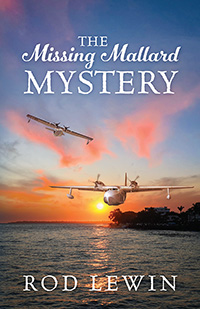
Buckle Up: 5 Reasons to Dive into Rod Lewin’s The Missing Mallard Mystery

Adventure lovers, aviation enthusiasts, and fans of fast-paced fiction—get ready to take off with Rod Lewin’s thrilling new novel, The Missing Mallard Mystery. As part of his Virtual Book Tour, we’re inviting readers to climb aboard the Wayward Wind, the vintage World War Two flying boat piloted by series hero Mitch Blaine and his brilliant (and often begrudging) sidekick, Beyer. Together, they soar into the skies over Australia’s Outback to solve the disappearance of a Grumman Mallard loaded with millions in pearls.

This blog post isn’t just a spotlight—it’s a full-throttle, multi-sensory celebration of The Missing Mallard Mystery. From playlists to characters, lists to club picks, here’s your exclusive guided tour into the world of Rod Lewin’s aviation-fueled fiction.

Top 5 Reasons to Read The Missing Mallard Mystery

  1. It’s like Clive Cussler meets Indiana Jones… with wings.
    If you love high-stakes treasure hunts, daring escapes, and globe-trotting thrills—this one’s for you.
  2. The setting is refreshingly unique.
    Western Australia’s pearl-diving coastlines and crocodile-filled Outback aren’t your typical thriller backdrops. They’re vivid, dangerous, and fascinating.
  3. You don’t have to be an aviation geek to enjoy it.
    Lewin weaves technical authenticity into the narrative with ease, offering just enough detail for plane buffs without ever slowing the pace.
  4. The duo at the heart of the story is unforgettable.
    Mitch Blaine is a rugged, world-weary pilot with quick instincts, while Beyer is an erudite, reluctant co-adventurer with a dry wit that makes every scene sparkle.
  5. It’s based on real-life experience.
    Lewin is a veteran aviator, and it shows. The realism in flight scenes and atmospheric tension comes from decades in the sky.

The Missing Mallard Mystery: Soundtrack for an Aerial Adventure

What might be playing in the background as Mitch and Beyer skim across the Timor Sea or outwit pirates in the bush? Here’s a fitting playlist:

  • “Into the Wild” – LP
  • “Run Through the Jungle” – Creedence Clearwater Revival
  • “Sons of the Sea” – Bear McCreary (instrumental)
  • “The Passenger” – Iggy Pop
  • “Outback” – Midnight Oil
  • “Skyfall” – Adele (for a touch of espionage and cinematic flair)
  • “High Hopes” – Pink Floyd
  • “Far Side of the World” – Jimmy Buffett
  • “Brothers in Arms” – Dire Straits
  • “No Time for Caution” – Hans Zimmer (from Interstellar)

This soundtrack matches the novel’s blend of edge, elegance, and emotional lift.

Meet Mitch Blaine: A Character Introduction

Mitch Blaine is the kind of protagonist who feels instantly iconic. A seasoned pilot with a steel exterior and occasional glints of heart, he’s not in it for the fame—he’s in it because someone has to fly the mission. Whether it’s navigating through typhoons or evading pirates, he thrives in peril and chaos.

Q: What drives you to get involved with something as dangerous as this pearl heist mystery?
“I’m not a hero. I just know how to fly into trouble and—on good days—out of it. But when an old mate calls for help, I don’t say no.”

Q: What’s your biggest weakness?
“Aside from trusting Beyer to pack the right coffee? Probably my inability to leave a mystery alone.”

Rod Lewin’s Book Club Picks

Wondering what kinds of books Rod Lewin might recommend between flights? These titles align with the energy, intelligence, and heart of The Missing Mallard Mystery:

  1. The Eye of the Needle by Ken Follett – A masterclass in suspense.
  2. Sahara by Clive Cussler – A globe-trotting treasure hunt with vintage vehicles.
  3. Flight of the Intruder by Stephen Coonts – For aviation lovers who crave action.
  4. The River of Doubt by Candice Millard – True-life exploration meets peril and discovery.
  5. The Martian by Andy Weir – For readers who enjoy brilliant problem-solvers in extreme situations.
  6. The Lost City of Z by David Grann – If you liked the jungle elements of Mallard, this is a must.

Bookish Fun Facts

  • The Grumman Mallard flying boat featured in the book is a real aircraft, used historically in pearl diving operations in Australia.
  • Mitch’s aircraft, the Wayward Wind, is a PBY Catalina, one of the most famous seaplanes of WWII.
  • Rod Lewin has flown all over the world, including the Virgin Islands, the Great Barrier Reef, and the Greek Islands—and those landscapes inspire the scenery in his novels.
  • The Missing Mallard Mystery is the fourth book in the Mitch Blaine series, but it also works as a stand-alone adventure.
  • The author’s autobiography, Steel Spine, Iron Will, is based on his real-life recovery from a plane crash.

Ready to Join the Adventure?

If you love smart, atmospheric fiction full of grit, danger, and heart—The Missing Mallard Mystery is ready for takeoff. Whether you’re a book club host, an armchair traveler, or someone who just loves a good, old-fashioned mystery with a fresh twist, this novel delivers.

Explore more, including author info and tour updates, at:  www.outskirtspress.com/rodlewinpby

#MissingMallardMystery #RodLewinBooks #VirtualBookTour2025 #AdventureReads #AviationFiction

This content was enhanced through collaboration with AI-powered creativity applications.

In Your Corner: What is Criticism & What Can It Do For Me?

The latent question lurking under the title of this post is perhaps a more honest one, but we’ll talk about honesty versus insight in a moment. You might say we’re going to spend this post looking at:

Can Criticism Be Anything Other Than A Tool Of The Snob & A Misery For Everyone Else?

But as you can see, that title is a bit too long to fit, despite feeling more accurate (to me, anyway. I suppose I’m projecting some of my fears here. Apologies if that doesn’t hold true for you!).

The last time I was in a setting where I was exposed to criticism of my writing from multiple points of view was during my last stint as a student. For many of you, that will also be true, but some of you are lucky enough to have stumbled across writing clubs and manuscript exchanges where you can get some of the same experiences outside of academia. This post is geared towards any author who is looking to develop some serious skills in giving and taking constructive criticism, however, not just those in structured group environments.

Here’s a truth:

No matter how well-prepared you are to receive it, any kind of correction or less-than-enthusiastic take on your writing can fall like a blow. The only times where this hasn’t felt true to me were when I was completely wiped out from pulling all-nighters and didn’t have the emotional capacity to take in what I was hearing. (Don’t be that person. Don’t stay up all night to get this effect! It comes with other problems. It’s not an admirable skill to cultivate.) Accept that it’s going to hurt, or feel uncomfortable, or at the very least come awkwardly.

If you relax too much, you might fall into the trap of being honest instead of insightful.

What do I mean by this? I mean that not everything is useful to hear. I’m being serious here. Not everything is useful to hear. The key to giving constructive criticism is in paying attention to both your own personal needs and to the expressed needs and wishes of your fellow writers. Don’t, for example, spend a lot of time breaking down spelling errors and grammatical issues if the author whose manuscript you’re reviewing has asked you to pay attention to plot holes and characterization. Maybe the spelling stuff can be dealt with later, or will naturally resolve itself as the author moves into his or her next draft. But it’s not something that will help that author right now, so it’s best to focus on what will.

Pro tip: when you’re the one receiving the criticism, you can’t always get people to act this way toward you … but you should always be free to lay some ground rules and boundaries for what sort of feedback you want. I’ve had professors give caveats at the beginning of every semester about how to respect and support other authors, so it’s worth approaching whoever is facilitating your group meetings and requesting this, or if you’re doing it digitally you can store some guidelines as a file on Dropbox.com or Google Docs for easy access. If your consortium is a little more casual than this, maybe take a line from Christopher Nolan’s movie, Interstellar:


Cooper: Hey TARS, what’s your honesty parameter?
TARS: 90 percent.
Cooper: 90 percent?
TARS: Absolute honesty isn’t always the most diplomatic nor the safest form of communication with emotional beings.
Cooper: Okay, 90 percent it is.

But look, you’re not a robot or a space-farer (probably), and you are in need of the support and guidance of your fellow authors. So how do you take part in that community in a way that produces construction (the building of something good and new) rather than a cataclysm of doubt?

Simplicity is the enemy.

Seriously, though. Saying “this story was badly written and I dislike it” is definitely critical, but it leaves no room for construction. Along the same lines, unabashed praise–“I loved it! It’s great!”–creates a similar vacuum of opportunity. A few small compliments throughout a critique may be helpful for keeping morale high, but they’re not your stock and trade. They can’t be your bread and butter, or no work will get done.

So complicate it. And ask for people to complicate their feedback, if it’s too simple.

Giving is as good as receiving, if not better.

Okay, maybe not better. But it’s important, this giving thing. Honing your critical capacities on someone else’s work–and seeing how other authors receive specific kinds of insights–will help you understand what to do with criticism when you’re on the receiving end of it … and it will also help you spot flaws in your own work before anyone else even looks at it. As other, wiser people have said: It’s one thing to develop a nagging sense that something is wrong with a work, but to be able to figure out where that sense of wrongness is coming from–character, language, plot, or something else–and then act to address it is what differentiates good authors from great authors.


It’s not personal.

It’s not, we promise, but it will sure feel like it is–especially if, as we mentioned earlier, someone takes a snobby approach (they’re no doubt working on some personal crisis of identity or insecurity of their own). Still, try to put aside your personal feelings, and bring an objective lens to what you’re looking at. Your manuscript and the manuscripts of others are mysteries waiting to be deconstructed and reconstructed. And even if you’re not a fan of the genre of manuscript you’re reading, you can still be useful to the author by putting your personal tastes aside and looking at the bricks and mortar of what makes for universally good storytelling.

Take notes.

Many workshops limit the author being critiqued from responding during the main critique session, but every group looks different. I’ve found that even without that restriction, simply watching and observing is more useful than trying to guide the conversation myself–if I do, I end up missing out on really useful advice I didn’t even think to consider asking for! So … take notes. It will distract you when the criticism is too pointed or your feelings too close under the surface, and it’s also just good advice for retaining detailed memories of the event. You can dispense with any advice that isn’t useful once you’re out and away from the session, or some advice might leap out to you later that didn’t in the moment. Time and distance is a great healer, no?

Lead with the positive.

Choose a handful of things the author did well–specific things–before diving into the rest of your critique. It’s also a good idea to end with a positive, for mood boosting effects. You can’t control how others do this on your work, of course, unless you make it a part of your collectively-agreed-upon rules for critiquing, as mentioned earlier. But remember, specific is vital. If you liked a character, what did you love about her? Was it her snappy dialogue, her peculiar tics and traits, or her back story as a mathematician during the Space Race that fascinated you?

Find your ideal reader(s).

Every workshop has one or two people who really know how to give good, useful, smart, and insightful constructive criticism. Latch on to those people and never let them go. Some of the people who were ideal readers while I was in college are still in touch today, and we still do good work together. There’s something symbiotic about it, of course–they get my work, and I get theirs, so the feedback goes both ways–but these people have become something more than just workshop fellows. They’ve become friends.


Joining a critique session is anxiety-inducing, there’s no mistake. But when everyone participates in good faith, it can be one of the most enriching experiences of your life as a writer.

“Don’t trust a mirror that only tells you how wonderful you look.”

― Matshona Dhliwayo
criticism


You are not alone. ♣︎


Elizabeth

ABOUT ELIZABETH JAVOR: With over 18 years of experience in sales and management, Elizabeth Javor works as the Manager of Author Services for Outskirts Press. The Author Services Department is composed of knowledgeable publishing consultants, pre-production specialists, customer service reps and book marketing specialists; together, they all focus on educating authors on the self-publishing process to help them publish the book of their dreams. Whether you are a professional looking to take your career to the next level with platform-driven non-fiction or a novelist seeking fame, fortune, and/or personal fulfillment, Elizabeth Javor can put you on the right path.

Conversations With A Self-Publishing Writer: 11/27/2015

SEASONS Part IV


Thomas Edison once said, “The three great essentials to achieve anything worthwhile are, first, hard work; second, stick-to-itiveness; third, common sense.” This clear and truthful statement applies to every writer/author no matter what season of life we are in. If you’ve read any of my previous blogs you may remember me writing about Lois Beebe Hayna. This author of poetry, fiction, essay and gardening advice will soon be 102 years young—and she continues to write and publish her poetry.

royalene5

So how do we who are much younger (yes, if you’re 92, you are much younger) encourage ourselves to keep writing? How do we avoid looking at the winter season of our lives and write for all seasons? Here are a few quotes I’ve saved to encourage myself. I hope they will encourage you, too.

  • From Laura Ingalls Wilder, who published her first novel at the age of 65:
    • “The real things [of life] haven’t changed. It is still best to be honest and truthful; to make the most of what we have; to be happy with simple pleasures and to be cheerful and have courage when things go wrong.”
      • When my characters are arguing with me (the writer), this statement brings them in line.
  • From C.S. Lewis, author of The Chronicles of Narnia series and Screwtape Letters, who wrote until his passing at the age of 65:
    • “A pleasure is full grown only when it is remembered.” “Love is something more stern and splendid than mere kindness.”
      • The many layers of meaning within these thoughts continue to help me create authentic characters. Plus, Lewis’ life-journey and his “collection of author-friends” is an example for all authors to consider.
  • From Alice Ann Munro, a Canadian short story author who, in 2013 at the age of 82, was awarded the Nobel Prize in Literature:
    • “People are curious.…They will be driven to find things out, even trivial things.” “Always remember that when a man goes out of the room, he leaves everything in it behind… When a woman goes out she carries everything that happened in the room along with her.” “…if she let go of her grief even for a minute it would only hit her harder when she bumped into it again.”
      • These statements give me even deeper insights into the creation of characters and the circumstances that can be written for them—the corners to back them into.


After Munro received her Nobel Prize, the Swedish Academy applauded her as the “master of the contemporary short story.” When asked about that statement, she gave writers further encouragement: “I would really hope that this would make people see the short story as an important art, not just something that you played around with until you’d got a novel written.”

So it is that in closing this month’s series of Blogs on Seasons, I hope you’ve been inspired in your own writing life. Being a writer is part of our DNA and becoming the best writer we can be is a life-long process—a process that leads us to be published authors at a variety of steps along the way. ⚓︎

RoyaleneABOUT ROYALENE DOYLE: Royalene has been writing something since before kindergarten days and continues to love the process. Through her small business—DOYLE WRITING SERVICES—she brings more than 40 years of writing experience to authors who need “just a little assistance” with completing their projects. This is a nice fit as she develops these blogs for Outskirts Press (OP) a leading self-publisher, and occasionally accepts a ghostwriting project from one of their clients. Her recent book release (with OP) titled FIREPROOF PROVERBS, A Writer’s Study of Words, is already receiving excellent reviews including several professional writer’s endorsements given on the book’s back cover.  

Royalene’s writing experience grew through a wide variety of positions from Office Manager and Administrative Assistant to Teacher of Literature and Advanced Writing courses and editor/writer for an International Christian ministry. Her willingness to listen to struggling authors, learn their goals and expectations and discern their writing voice has brought many manuscripts into the published books arena.

Conversations With A Self-Publishing Writer: 11/20/2015

SEASONS Part III


Whether our writing environment provides us with the blessing of looking out upon nature’s changing seasons or we have set up a laptop on the laundry basket next to the basement washer and dryer, we can always imagine the seasons of setting, plot, and the lives of each individual character.

I must confess that my writing space looks nothing like this beautiful illustration. It is often cluttered beyond my ability to deal with the stacks and I am forced to take-a-day and reorganize it, much to my husband’s delight. You see, he shares one side of the narrow desk in our 10×10 office and tries to demonstrate organization by keeping his side “neat” with everything in its place. However, until I discover a way to keep each of my on-going projects within easy reach (not in closet filing cabinet), my stacking system will remain. I’m one of “those” writers who allows my imagination free reign giving me the opportunity to jump from one project to another at any time of the day. When something I’m researching and/or critiquing triggers a thought relating to another project, I immediately place that piece (concept, website source, person-to-contact) with the appropriate stack.

royalene3

THERE ARE, however, as many writing space concepts as there are writers.  Following are a few that I’ve discovered are helpful to my author friends.

  • BABY BOTTLE READINESS. This space is nestled next to the rocking chair and the crib in the new baby’s corner of the family room. Whether the author is Mom or Dad, when it is their time for baby-watch, they have acknowledged that their creative ideas rarely pause during those specific hours. The “desk” can be an actual writing desk or a TV tray just as long as it provides space for pen, paper, laptop and/or tape recorder.
  • DINING ROOM/KITCHEN TABLE. One of my best friends wrote her plays while seated at her long, rustic-style family table. This space was actually added to the kitchen and designed with windows on three sides. Her view—throughout each season of the year—was of a mountain meadow, aspen and fir trees and the occasional white-tail deer family. She kept her developing projects in a box (emptied of paper reams) and cleared the table every day.
  • PET PARTNERS. Sometime soon, I suggest you do a Google search of Authors and their pets. It will make you smile! There are stories told about John Steinbeck and his standard poodle, Charley. Ernest Hemingway was a great fan of cats and “owned” several—or, rather, they owned And then there is my cat, Sadie, a tabby lady who has shared my writing days from her cushion these past eighteen years. The presence of these critters in our lives can bring about just the right amount of pause and reflection we writers need in order to grab hold of the next complete sentence and/or thought.
  • THE RETREAT or HAVEN. George Bernard Shaw built is own very private retreat, converting a tool shed into his writing space. It worked for him. However there are other get-away locations that might serve your needs. Again, do a Google search of “writing retreats.” You’ll find luxurious places in castle towers or tack-rooms in big red barns converted for the writer who enjoys the scent of horse and cattle for their inspiration.

royalene4

Bottom line…don’t hesitate to move about while developing your writing project. Becoming TOO settled, TOO comfortable in one chair or at one desk could stifle your imagination and lock you into one season of writing. ⚓︎

RoyaleneABOUT ROYALENE DOYLE: Royalene has been writing something since before kindergarten days and continues to love the process. Through her small business—DOYLE WRITING SERVICES—she brings more than 40 years of writing experience to authors who need “just a little assistance” with completing their projects. This is a nice fit as she develops these blogs for Outskirts Press (OP) a leading self-publisher, and occasionally accepts a ghostwriting project from one of their clients. Her recent book release (with OP) titled FIREPROOF PROVERBS, A Writer’s Study of Words, is already receiving excellent reviews including several professional writer’s endorsements given on the book’s back cover.  

Royalene’s writing experience grew through a wide variety of positions from Office Manager and Administrative Assistant to Teacher of Literature and Advanced Writing courses and editor/writer for an International Christian ministry. Her willingness to listen to struggling authors, learn their goals and expectations and discern their writing voice has brought many manuscripts into the published books arena.