Conversations With A Self-Publishing Writer: 08/07/2015

[UPDATE: Apologies for the posting error this morning!  It should be corrected now.

– SPA Blogrunner]

WHY SHOULD I PUBLISH?

Isn’t the world turning to their iPads and Kindles for research and pleasure reading?  WHY should anyone jump through all those book-publishing hoops these days? Last time I attempted to break through the walls and cross the motes to reach a traditional publisher every door slammed shut! No agent would take the time to even read my manuscript because “the main topic is too obscure.” The one publishing house editor who might have read the first few pages sent me a form rejection letter with a scrawled note at the bottom. “We’re packed to the gills with contracted publishing projects for at least the next five years.” OH, the cry of the writer who is unpublished today or who has barely stepped into the published author arena.  Within my sphere of writer-acquaintances I have two examples to share with you today. One author was “accepted” by a small (yet mainstream) publishing house and one made the decision to self-publish with an established “press.”

The “house” author was so excited to have the backing of a known publishing house.  However, as the months and years went by her enthusiasm dwindled. It was two months shy of three years before the book reached bookstores.  The eBook and online presence came along much later.  Then came the realities of marketing.  Yes, this book wore the label of the mainstream publishing house.  Yes, it was listed in their catalog of New Releases that went to bookstores around the world.  Yes, they offered a helper to “get the marketing off and running.”  However, (SURPRISE!) the actual marketing beyond their label and catalog would have to be done by the author—or a “contract” marketing team-for-hire.

The self-publishing “press” author held her finished book in her hand 98-days after submitting the manuscript with immediate availability to bookstores, major online book sites and as an eBook. That time-frame comparison alone has brought many new champions to the field of self-publishing.  Here are a few other contrasts that will help all writers in making their publishing decisions.

PROS

  • Traditional Publisher (TP): There is NO upfront expense to the author who is accepted by and signs a contract with a mainstream publisher—and often there is an “advance payment” based on expected sales.
  • TP handles development (editing, rewrites, enhancements, etc.) of your manuscript as well as onset marketing, distribution and some traditional “warehousing.”
  • Self-Publishing Presses (SP) have developed priced “packages” of publishing options for authors to select from—from bare bones “print my book” to full-assistance Custom Cover and Interior design.
  • SP Authors maintain 99% of the control in developing their book. I say 99% because there still remains some printer guidelines regarding the finished “trim-size” of books.

CONS

  • The days of the 6-figure advances are gone.  Plus, authors are beginning to consider their lost income due to the years it takes to get a book in print through Traditional Publishing.
  • There is also the very real concern that TP editors and book developers/marketing specialist will turn an author’s work into something it was never meant to be.  TPs will deny this happens—yet too many authors tell a different story.
  • Because Self-Publishing presses consider their main goal is to get the book OUT and available to readers QUICKLY, many do not have a printed Galley Proof for authors to hold in their hands and actually “proof.”  Although online Galley Proofing is an excellent way to manage corrections and changes, it is not always the easiest process for the Author.

These are the first of the Pros and Cons I will share with you this month.  However, I will add here that for me personally, the biggest factor to overcome as an author is actually releasing my work into the hands of ANYONE else—whether traditional publisher or self-publishing press.  Other eyes (professional publishing eyes) will be looking at what I’ve created.  So, bottom line, I search for the right fit within current publishing options. That means research into the publishing field beyond what I ever expected so that the heart of my words will reach the hearts of my readers. ⚓︎

RoyaleneABOUT ROYALENE DOYLE: Royalene has been writing something since before kindergarten days and continues to love the process. Through her small business—DOYLE WRITING SERVICES—she brings more than 40 years of writing experience to authors who need “just a little assistance” with completing their projects. This is a nice fit as she develops these blogs for Outskirts Press (OP) a leading self-publisher, and occasionally accepts a ghostwriting project from one of their clients. Her recent book release (with OP) titled FIREPROOF PROVERBS, A Writer’s Study of Words, is already receiving excellent reviews including several professional writer’s endorsements given on the book’s back cover.  

Royalene’s writing experience grew through a wide variety of positions from Office Manager and Administrative Assistant to Teacher of Literature and Advanced Writing courses and editor/writer for an International Christian ministry. Her willingness to listen to struggling authors, learn their goals and expectations and discern their writing voice has brought many manuscripts into the published books arena.

An Indie Author’s Social Media Primer | YouTube

You already use it to watch every video your friends send you on Facebook, Twitter, Tumblr, and elsewhere.  Chances are, nine out of every ten video links you’re ever going to click (in this decade, at least) will link to something on YouTube.  It’s about time that indie and self-published authors get in on the action, don’t you think?  Only, wait a minute: they already are!

YouTube Screenshot

But before we dive into just how you can use YouTube to launch your self-marketing campaign, let’s address some of the basics.  What is YouTube?  It’s a video storage and hosting service which allows pretty much anyone who signs up for a free account to upload video files for public consumption (or private; like every other good social media platform, YouTube allows its users to toggle a number of privacy settings for each individual video as well as for their profile pages).  Once a video is posted to YouTube, fans and followers can distribute the link themselves, which makes it a great platform for viral campaigns.  And because videos are visceral in a way text sometimes isn’t, they make a fantastic impact on viewers’–and readers’!–imaginations.

Debunking the Great YouTube Myth: “It’s all cats, cats, cats.”

While I’m not above clicking a link to a good cat video every now and again (see what I did there?), I do think we’re doing a great disservice to the platform by claiming it’s all cats, because pretty much anyone who is anyone worth knowing about has a YouTube channel.  I’m talking VICE, John Green, Oprah, CNN, The New York Public Library … the list goes on, and on, and on, and on, and on … ad infinitum.

Top 5 Best Practices:

1. Post a book trailer.  We here at Self Publishing Advisor have written about the merits of book trailers before (here and here), but I just can’t emphasize enough how awesome a book trailer is–especially as regards your self-promotion and self-marketing agenda.  A book trailer provides a bite-sized (or “eye-sized”) bundle of information about your book to new readers for easy consumption.  A good book trailer will add drama and flair to your book’s public image … and it will also reach far more people.  YouTube’s algorithms will ensure that its users will stumble across your book whenever they search for similar videos or book trailers by other authors in the same genre.  Just make sure to take advantage of the metadata!

2. Post regularly, if not weekly.  You may or may not be familiar (and comfortable) with the term “vlogging,” internet slang for “video blogging.”  Authors like John Green verge on being professional video bloggers, in that they post videos of themselves with updates on their writing, answers to readers’ questions, or more generally, responses to fans, fandoms, and greater cultural trends.  You may not be a titan of Young Adult Literature like John Green, but you can definitely walk away with a few ideas from his channel.  Namely: provide new content on a regular basis (feed your followers!), consider tweaking your on-camera surroundings so that posts are well-lit and free of visual clutter (keep it simple!), and edit your posts before they go up in order to re-craft the posts for easy consumption (keep it short!).

3. Ask to join an existing station as a guest speaker.  Many channels such as Self-Publishing Roundtable will invite authors to serve as “guests” on their YouTube channels, in part to promote variety, and in part because they welcome the opportunity to provide new authors a voice.  Run a quick search on YouTube for channels to do with self publishing, navigate to that channel’s “About” page, and then click the “Send Message” button to contact the people on that channel directly.  You have literally nothing to lose and everything to gain by putting out feelers for folks who might be interested in helping you launch your new (or existing) book.  A few might say “No,” but there are (as my grandmother used to remind me) plenty of fish in the sea.

4. Pay attention to the details.  I mentioned lighting, time length, and editing before.  A good way of figuring out how to frame and film your first couple of YouTube posts is to watch a whole bunch.  Not just Lady Gaga music videos, mind, but videos that are doing something similar to what you aim to do.  Find those self-publishing-related YouTube channels and see what they get up to in terms of audio quality, clutter, editing techniques, and so forth.  You can always choose what to take and what to leave from these videos–they’re just a sounding board, not a structured guide, but they’ll still give you ideas.  You’re not chained to anything that they do!  Just make sure that you’re making conscious and conscientious decisions about content and presentation.

5. Don’t overdo it … on your first video, or any following video.  You’ll notice that some of the most successful author-related YouTube channels preserve an element of spontaneity, of freshness, and of personality.  You definitely don’t want to scrub your YouTube videos of what makes you you.  But another, less acknowledged quality of successful YouTubers is that they pay attention to length.  A long video, even a long and professionally-made video, is daunting to the average watcher.  In 2014, Adweek ran an article full of infographics about the ideal length of everything digital (I’m not even kidding), from Twitter tweets to hashtags to YouTube videos.  And what did they find?  That of the top 50 videos on YouTube at the time, the average length fell somewhere close to 2 minutes and 50 seconds.  Amazing.  Any longer, and the video is no longer “eye-sized” and runs the risk of losing a new reader’s interest.  Once you have built up a substantial network of faithful YouTube subscribers, you can fudge around with limits and goals and things, but for a newcomer?  Stick to a quick hearty blend of style and substance that will hook new readers in without taking up too much of their time.

Most Overlooked Feature:

Without a question, the most feature most authors forget about when it comes to YouTube is the playlist.  What’s more, there are plenty of great resources out there that will walk you through the minutiae of how to set one up (this one, for example).  It’s not an “undiscovered” feature for hearty and dedicated YouTube users, but it is overlooked by many content providers.  Essentially, a playlist allows authors to group together videos to be played by others in a specific order.  It creates a narrative out of your video collection, and helps a lot with the whole “findability” thing.  They’re sharable on social media just like individual videos, and they’re easy to create and edit.  Really, there’s no reason not to use playlists to organize your files on YouTube.

I hope you’ll join me in building this Social Media Primer!  If you have any questions, comments, suggestions, or contributions, please use the comment field below or drop us a line at selfpublishingadvice@gmail.com.  And remember to check back each Wednesday for your weekly dose of social media know-how. ♠

KellyABOUT KELLY SCHUKNECHT: Kelly Schuknecht is the Executive Vice President of Outskirts Press. In addition to her contributions to the Outskirts Press blog at blog.outskirtspress.com, Kelly and a group of talented marketing experts offer book marketing services, support, and products to not only published Outskirts Press authors, but to all authors and professionals who are interested in marketing their books and/or careers. Learn more about Kelly on her blog, kellyschuknecht.com.

From the Archives: “4 Myths About Self-Publishing Today”

Welcome to our new Tuesday segment, where we’ll be revisiting some of our most popular posts from the last few years.  What’s stayed the same?  And what’s changed?  We’ll be updating you on the facts, and taking a new (and hopefully refreshing) angle on a few timeless classics of Self Publishing Advisor.

∗∗∗∗∗

[ Originally posted: December 2nd, 2009 ]

There is a lot of confusion, controversy, and questions surrounding the terms self-publishing, vanity press, print-on-demand, etc. As you decide the best publishing path for you, let’s clarify some misconceptions some may have propagated.

1. MYTH: Whoever owns the ISBN owns the rights.
FACT: This used to be true. Nowadays, it is no longer true. Good self-publishing options assign the ISBN for the authors’ convenience, but still allow authors to keep 100% of the rights to their books. Be sure to check the contract.

2. MYTH: Independent self-publishing is different from publishing with an established organization because that publisher owns the ISBN.
FACT: It is true that the ISBN identifies the publisher of record. With reputable options, authors can supply their own ISBN as an option. Of course, if an author prefers the publisher to assign an ISBN for them, that should be an option too. And that’s what self-publishing is about – author choice and author control.

3. MYTH: New York publishers promote and market all their books.
FACT: New York publishers usually devote the lion’s share of their marketing budget to the top 1% (Harry Potter, for example) of the books they publish. The other books published during that season are victims of the sliced marketing budget. The majority of traditionally published authors are referred to as “mid-listers” and don’t get much support from their publisher at all.

4. MYTH: Printing a book with an off-set printer is the same as self-publishing it.
FACT: Printing a book is one facet of publication. Before a book can be printed, it needs to be designed. Then it needs to be printed. Then it needs wholesale distribution through Ingram and availability online with retailers like Amazon and Barnes & Noble. Then it needs fulfillment of orders and invoicing.

Printing a book with an offset printer accomplishes one of those steps. Publishing a book with a leading self-publishing option accomplishes all of them. Almost anyone can “print” a book, but what about all the other stuff that is required?

∗∗∗∗∗

So how many of these facts, as originally written, still hold true today?

Myth #1 remains a myth.  

This is because copyright laws and ownership rights act independently of ISBNs.  Your book, no matter when you purchase the ISBN, is copyrighted as soon as it is written.  You can buy the ISBN before, during, or after the book is written!  An ISBN is, quite simply, a numeric identifier for your book that renders it both salable and more findable (creating an ISBN creates a whole lot of metadata!).  Copyright is the larger issue when it comes to rights, so you always want to read the fine print of any publishing or self-publishing contract you sign.

Myth #2 remains … complicated.  

With the explosion of both “hybrid” and “indie” publishing companies, there’s a lot more range in 2015 in terms of options than there was only six years ago, in 2009.  Usually these companies offer “packages” or “bundles” that allow you to choose whether you want the company to handle your ISBN purchase or not.  For most companies, an ISBN purchase is part of even the more basic packages–but you can usually choose to opt-out.

Myth #3 remains a myth, at least to an extent.  

As indie, hybrid, and self-publishing firms grow more competitive, the traditional publishers have had to step up their game.  Even mid-listers get some attention–usually, at least–if on a much more limited basis than those books which end up being the top 1% … and according to industry experts like Russell Smith, mid-list authors have more reasons to despair than ever.

Myth #4 remains a complete and total myth. 

You might–might–be one of the lucky few authors who also possesses stellar design and printing skills, not to mention has a handle on ISBNs and copyright law.  You might even be one of those dauntless authors who has woven together a rich and active following on social media, and who knows how to self-market using more than just a couple of websites.  But most people aren’t.  One also has to consider how absolutely vital a professional editor is to a successful publication.  There are a lot of factors at play, and we’re not always the best judges of our own work.  In fact, we’re often our own harshest critics!

∗∗∗∗∗

So there you have it–at least as far as those particular myths go.  But I think it bears mentioning that we have some new myths these days!  Here are my top two propositions for New Myths of Self-Publishing:

Myth #5:  You will never make money off of your work unless you find a traditional publisher. 

Uh-uh, nope!  I think we’re far enough along in terms of industry development to see a range of stories from successes to failures, just as you do in any industry, traditional publishing included.  And also farming, sheep-herding, graphic designing, investment banking … and the list goes on.  But there are some big advantages that a self-publisher in 2015 has on a self-publisher back in 2009: namely, that self-published books are infinitely more findable now that there are enough resources and communities built around the indie, hybrid, and self-publishing concepts.  No author is guaranteed success, it is true, but with a good game plan and a lot of energy, you will make money off of your work.  How much is entirely up to you and whoever else you choose to bring on board the project.

Myth #6:  No one reads, reviews, or notices self-published books when they share a (possibly digital) shelf with traditionally published works.

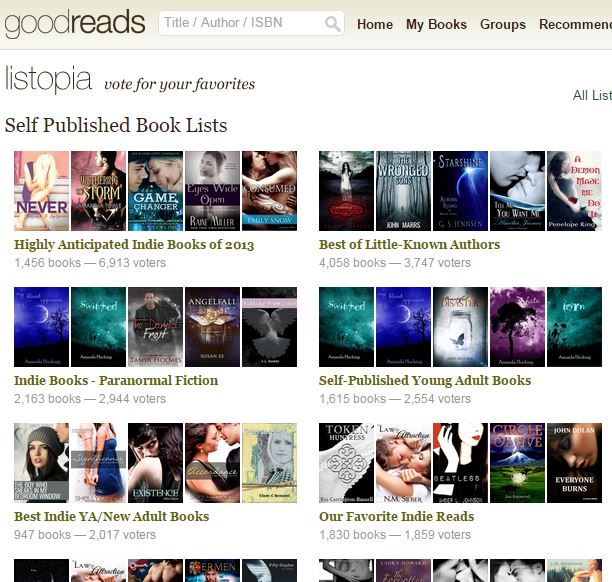
Oh, my.  Where to begin?  These days, with so many players dipping into the indie, hybrid, and self-published market, the production quality of many self-published books is on par with that provided by traditional publishers for even their A-list books (and we’re leaving aside the fact that they often neglect their mid-listers to a tragic degree).  And as for the argument that nobody reads self-published books, look at the data: in 2011, one retailer alone distributed over 2.5 million self-published books.  And that was in 2011!  The fact that authors like Hugh Howey end up being poached away from self-publishing into traditional publishing just goes to show you that plenty of people read and take note of a good self-published book.  Even Goodreads has dozens of book lists dedicated to self-published titles!  If it looks good on the inside and the outside, and if it’s written well, and if it’s promoted in the most effective ways that you can manage, then your book will find its readers.

Goodreads' self-published book lists

When push comes to shove, what lies behind many of these myths are two simple questions: Is it worth it?  And, will I fail?  The honest truth is that yes, self-publishing is 100% worth the work, especially if you’re passionate about putting the power and profit of reading into the hands of the people who deserve it most (and these people are of course, readers and writers).  And while failure and success are both subjective measures we dream up for ourselves, you will never be a failure.  You will simply be, as we all are, a work in progress. ♠

KellyABOUT KELLY SCHUKNECHT: Kelly Schuknecht is the Executive Vice President of Outskirts Press. In addition to her contributions to the Outskirts Press blog at blog.outskirtspress.com, Kelly and a group of talented marketing experts offer book marketing services, support, and products to not only published Outskirts Press authors, but to all authors and professionals who are interested in marketing their books and/or careers. Learn more about Kelly on her blog, kellyschuknecht.com.

On Self-Publishing and Merchandising

You are a self-published author.  Fantastic!  And you’re a self-published author looking to boost your book sales through strategic self-promotion, and by diving into the ofttimes terrifying world of … merchandising.  You’ve written your book, which everyone told you was the hardest part of the whole writing-and-publishing process, and you’ve plugged it into a self-publishing engine like Amazon’s Kindle Direct Publishing, or BookSurge, or Xlibris, or Outskirts Press, or any one of a dozen other self- or hybrid publishing websites.  But what comes next?  For most writers, it’s not automatic instant success.  For most writers, what comes next involves a lot of hard work, and finesse.  Because for most writers, what comes next will involve merchandising.

So what is merchandising?

Simply put, merchandising is any and all practices and methods which boost product sales in a retail environment.  Once you get used to thinking of and treating your book as a retail product–which is harder than it may seem, in personal experience–the process of selling and marketing your book becomes infinitely easier.  Why is this?  Since books are more than just a piece of wood pulp and ink–because books are ideas and stories and occasionally, magnificent works of art–we understandably think about them as these things, these intangible things.  And it can seem, well, rather low-brow to treat an idea the same way that I treat a sandal or a bottle of shampoo.  Low-brow, and possibly even vulgar.  But the fact of the matter is, we want our books to sell, not just to sit all neat and pretty on our own private bookshelves awaiting discovery after we pass on.  We want–no, need–our books to sell for all sorts of reasons: the dissemination of ideas, the collection of profits, and so on.  We need to sell our books, and merchandising helps sell books.

Unfortunately, self-published authors often find themselves daunted by the notion of self-promotion via merchandising.  Authors who survive the knuckle-bruising process of traditional publication have an entire company to help them navigate merchandising, if not take it on entirely.  Self-published authors face the same fears, the same doubts, the same tangle of fine print–only, without the clout and muscle and well-fleshed-out personnel of a publishing firm at their back.  And it’s virtually impossible to know where to begin.  Do you begin with mugs and notepads and tee shirts?  Do you begin with book design or haggling with local retailers?  You may not have a publishing firm’s PR department on hand, but you do have us.  (Not to mention, your legions of fans.)  You have us, your loyal digital cheer squad and sounding board for ideas.  We’re here to help.

Over the coming weeks, I’m going to unwind a few key strategies for merchandising success, specifically in regards to self-published authors seeking entry into the world of merchandising that the privileged traditionally-published author never has to think twice about.  A few of these strategies will include:

  1. Extras & special edition releases
  2. Book & jacket design
  3. Blurbs, reviews, and blog reviews
  4. Dealing with Amazon, CreateSpace, and others
  5. (And yes, we’ll deal with mugs and notepads and tee shirts, too.)

Suffice it to say, this is a big topic.  Epically, profoundly, unmentionably big.  (Which is exactly why we’re here, reading this blog, isn’t it?)  It will take us a while to step through all of the angles, so plan on checking this space every Wednesday morning as we dive in!

I’m realistic, or I like to think I am.  This topic is bigger than just me and my own thoughts.  I’d like to open the floor to you, dear reader.  If you have any thoughts to share on the topic of merchandising, or questions you’d like answered, send them my way via the comments box below!  I want to hear from you, and I love nothing more than a good excuse to do a little research if I don’t know something off of the top of my head.  Jump on in!

KellyABOUT KELLY SCHUKNECHT: Kelly Schuknecht is the Executive Vice President of Outskirts Press. In addition to her contributions to the Outskirts Press blog at blog.outskirtspress.com, Kelly and a group of talented marketing experts offer book marketing services, support, and products to not only published Outskirts Press authors, but to all authors and professionals who are interested in marketing their books and/or careers. Learn more about Kelly on her blog, kellyschuknecht.com.

Last Name Grammar Tips for Self Published Writers

I usually write about general topics related to editing rather than offering advice on specific on grammar issues. I highly recommend all self-published writers invest in hiring a professional editor to assist them with their books, but I also think that writers should be well-educated on writing, spelling, and grammar. After all, your editor will greatly appreciate a manuscript that is already professionally written.

One of the most common mistakes I see is the misuse of the plural and possessive “s” with last names. This is because almost every mailbox you see or Christmas card you receive is incorrect. Here are some examples on how to properly use the plural and possessive “s” with last names.

If it is strictly plural, do not use an apostrophe.

Ex. We ate dinner with Craig Wilson and the rest of the Wilsons.

Ex. I went shopping with Jill Jones to buy presents for the rest of the Joneses.

Ex. Paul English said all of the Englishes love Christmas.

If it is plural and possessive, it needs an apostrophe.

Ex. We ate at the Wilsons’ house.

Ex. We rode in the Englishes’ car.

If the name ends in an s, the plural possessive for book style is to add an apostrophe and an s.

Ex. The Jones’s house is painted white.

To show possession with singular names, simply add an apostrophe and an s.

Ex. Mike Wilson’s dad is a legend.

I’d love to know, what grammar issue is the most confusing to you? Please comment below.

ABOUT WENDY STETINA: Wendy Stetina is a sales and marketing professional with over 30 years experience in the printing and publishing industry. Wendy works as the Director of Author Services for Outskirts Press. The Author Services Department is composed of knowledgeable customer service reps and publishing consultants; and together, they all focus on educating authors on the self-publishing process in order to help them publish the book of their dreams. Whether you are a professional looking to take your career to the next level with platform-driven non-fiction, or a novelist seeking fame, fortune, and/or personal fulfillment, Wendy Stetina can put you on the right path.