Self-Publishing News: 4.4.2016

This week in the world of self-publishing:

In the world of self-publishing, we know just how important precedents can be–and we have a lot to learn about and deal with when it comes to the legal ramifications of going solo.  And well–another precedent has just been set, as reported in this April 1st article for the National Law Review by Jeffrey Neuburger, a Partner in the New York office as well as co-head of the Technology, Media & Communications Group and a member of the Privacy & Data Security Group.  In short, Neuburger is an expert.  He knows what he’s about, and he takes the conversation about self-publishing’s future seriously.

Writes Neuburger, “We live in a world that has rapidly redefined and blurred the roles of the ‘creator’ of content, as compared to the roles of the ‘publisher’ and ‘distributor’ of such content.”  And what exactly is the nature of this precedent?  In short: “This past month, an Ohio district court ruled that several online self-publishing services were not liable for right of publicity or privacy claims for distributing an erotic (and so-called “less than tasteful”) book whose cover contained an unauthorized copy of the plaintiffs’ engagement photo because such services are not publishers.”  The plaintiff brought suit not just against the author but against Amazon’s Kindle Digital Publishing, Barnes & Noble’s Nook Press, and Smashwords.  Luckily for self-publishing, the suit was dismissed on the grounds that the author had signed agreements with all three companies stating he owned the rights to all material he published–and therefore bore sole responsibility for violating the plaintiff’s privacy.  But the implications, should a similar case be brought against self-publishing authors and companies in the future, are massive.  And in an industry that is increasingly hybridizing–with companies offering book cover design packages among many others–the boundaries become even more blurred.

Have you ever wondered if there might be a hidden cost to the self-publishing industry’s near-rampant success?  Well, there is one, but it might not be what you think: The rise of self-publishing and the high demand for uber-cheap stock photos of steamy men to grace the covers of new (self-published) romance novels has cut the bottom out of the industry that used to supply these photos.  Or at least that’s what Laura Holson argues in this March 30th article for the New York Times Business Day.

The demand for steamy cover photos has never been higher–but indie authors aren’t willing or able to pay what traditional publishing companies have paid in the past, so the (mostly male) cover models make less per photo.  Holson quotes Liz Pelletier, “the chief executive of the romance novel company Entangled Publishing” as saying: “I never thought I would say this […] but I am so tired of looking at men’s abs. I don’t know if these ones are sexier than those other ones.”

Most telling of all is the average income for these models, and Holson singles out a Mr. Baca to illustrate the difficulties facing them now: “Few romance models, if any, make enough money to eke out a living. Mr. Baca, for example, works at the Housing Authority of the Santa Clara County, Calif., as a customer-service clerk. And although he has an agent, he said he earned only $20,000 in his best year. This, despite the fact that he is a tireless self-promoter who fancies himself the next Fabio.”  And appeared on the cover of Playgirl in 2004. While you may or may not be a romance novelist in addition to being a self-publishing author, Holson’s article serves as a useful reminder that every change in the status quo or in a market trend is bound to have some kind of human cost.  To read the rest of Holson’s article, follow the link.

In his March 31st interview with self-publishing sensation Elyse Salpeter for The Island Now, Adedamola Agboola begins with the author’s rocky path to improvement. “I wasn’t always a great writer but I had great ideas,” Agboola quotes Saltpeter as saying, after recounting her early humiliation at the hands of an unkind schoolteacher.  And more importantly, Saltpeter never gave up: “Since 2011,” writes Agboola, “Salpeter has self-published nine books in four different genres from thrillers, horror, fantasy to young adult novels.” Nine books!  And all of them brought into existence as the final product of a creative mind set at liberty to realize its full potential–without the limitations and criticisms systemic to traditional publishing.  But Saltpeter didn’t start with self-publishing; as Agboola recounts, she published her first book through the traditional imprint of Coolwell Press.  But over time, her relationship with her editors deteriorated, and after they “trashed” another round of drafts, it took “almost 15 years to hit [her] strides” again–and she did so by going indie.  While Saltpeter is honest about the challenges facing self-publishing authors in a crowded marketplace, she sticks by her decision.  For more information about Saltpeter and her latest book, The Call for Mount Someru, you can access Agboola’s full interview here.


spa-news

As a self-publishing author, you may find it helpful to stay up-to-date on the trends and news related to the self-publishing industry.This will help you make informed decisions before, during and after the self-publishing process, which will lead to a greater self-publishing experience. To help you stay current on self-publishing topics, simply visit our blog every Monday to find out the hottest news. If you have other big news to share, please comment below.

KellyABOUT KELLY SCHUKNECHT: Kelly Schuknecht is the Executive Vice President of Outskirts Press. In addition to her contributions to the Outskirts Press blog at blog.outskirtspress.com, Kelly and a group of talented marketing experts offer book marketing services, support, and products to not only published Outskirts Press authors, but to all authors and professionals who are interested in marketing their books and/or careers. Learn more about Kelly on her blog, kellyschuknecht.com.

Marketing Missteps Episode 2: Confusing the Sales Message with the Marketing Campaign

Those of you who have been following my Wednesday posts here on Self Publishing Advisor for a while will probably have picked up on a couple of my habits by now, and one of them is diving into series that examine the many facets of an issue under a microscope.  I like to see every angle, follow every lead, and to be thorough.  Which is why, in continuing this new series that began with last week’s post on the subject of “Marketing Missteps” I want to do full justice to the heart of the matter.

What, then, is the heart of marketing?

This is the question that has rightfully dominated boardroom discussions at the top traditional publishing houses as well as the living rooms and kitchens and offices of thousands of entrepreneurial independent authors’ homes. Marketing, when push comes to shove, is about raising both awareness about and motivated interest in your product.  And by “motivated interest,” I mean the kind of interest that leads to product sales.  But note one thing: the sales come after the awareness.  To push for sales with a mercenary if understandable motive is, as an author, to do both your book and your readers a disservice.

To prioritize sales above the human being on the other end of the Facebook group, the email listserv, the Twitter feed, the phone line, the book signing table, and the Goodreads book page is to declare your financial gain to be more important than quality human communication, and art.  Readers, like everyone else in the market for new acquisitions, have a sixth sense about pushy and over-eager sellers.  And here’s a fact:

Your readers want you to be a storyteller, not the stereotype of a used-car salesman.

sales

So, what does “pushy” look like and how can you avoid it?

Many first-time self-publishing authors release a book accompanied by persistent announcements across all social media platforms––and not just cute little notices, but noisy and self-interested announcements.  (And if you’ll remember, we talked about the self-centered marketing campaign last week in detail.)  Marketing is a more subtle endeavor than a Sears Factory Clearance ad, however.  You are entering a crowded market––with around five hundred thousand new books released each year––with every other entry clamoring for readers to spend money.  When you as an indie author begin shouting into the void, cramming shotgun marketing messages into every available Tweet and post and picture and conversation––well, you do nothing but damage.  You have become part of the background noise readers must filter through every day, in search of a story they actually connect with.

And how not to become yet another unheard voice?  Lead with your wit and your humanity.  Look to the authors you admire on social media and their blogs and elsewhere––how much space do they dedicate to explicitly sales-related messaging?  I guarantee you it’s not much.  Instead of constantly pushing links to sales pages, the successful self-publishing author and marketer is increasing the value proposition of both their own personal brand––as an author and person––as well as the value proposition of the their work (published and ongoing).

We’ve mentioned it many times before and elsewhere that the best marketing strategy is to write another book and to talk about that process instead of constantly pushing sales for an already published book––readers will have their interest piqued by a work still in progress in a way they won’t be by something they can simply hop on to Amazon or Goodreads to read detailed reviews about.  The mystery of an unfinished novel is an incredible asset!  Whatever else you do, don’t stop writing––offline.

Don’t confuse sales messaging with a healthy and engaged marketing campaign.  Do remember how you first fell in love with a book, an author, and filling your bookshelves.  That is the kind of positive impulse that you want to tap into.

sales


Thank you for reading!  If you have any questions, comments, suggestions, or contributions, please use the comment field below or drop us a line at selfpublishingadvice@gmail.com.  And remember to check back each Wednesday for your weekly dose of marketing musings from one indie, hybrid, and self-published author to another. ♠

KellyABOUT KELLY SCHUKNECHT: Kelly Schuknecht is the Executive Vice President of Outskirts Press. In addition to her contributions to the Outskirts Press blog at blog.outskirtspress.com, Kelly and a group of talented marketing experts offer book marketing services, support, and products to not only published Outskirts Press authors, but to all authors and professionals who are interested in marketing their books and/or careers. Learn more about Kelly on her blog, kellyschuknecht.com. 10:00 AM

Self-Publishing News: 03.28.2016

This week in the world of self-publishing:

We’ve written before about how self-publishing is thriving in eastern markets, but the story of Jalan Jalan‘s author Mike Stoner might take the cake for success stories––as recounted by Tim Hannigan in this March 25th article for The Guardian.  (Talk about fame and recognition––The Guardian has been a go-to resource for literary aficionados for decades.)  Stoner’s novel––which “follows a heartbroken young Brit through Indonesia, where he finds himself embroiled in a murky world at the bottom of the expat barrel after accepting a teaching job at a dodgy language school after a five-minute telephone interview”––won The Guardian‘s much coveted self-published book of the month award in December of 2014, and it didn’t stop there.  After a year or more picking up momentum in social media and overseas markets, Jalan Jalan found a second home with Tuttle and Periplus, one of southeast Asia’s biggest distributors of English-language books. If it seems like your average rags-to-riches indie-to-traditional stories, hold on a moment: Stoner says that he was only able to reach such a large audience because he first chose to self-publish.  “I’d recommend self-publishing to anyone who writes and gets dejected about being rejected,” he says, “because you never know where it might lead. If I hadn’t made the effort I’d never have won the Guardian award.”  For the complete article in The Guardian, follow the link.

“In 2015, I celebrated my 18th birthday in quite an unconventional way: by debuting my first authored book on Amazon,” begins this March 25th article by Julia Schemmer for HuffPost Books.  The teen entrepreneur continues: “I decided to take the road more traveled by self-publishing my work, 20 Seconds of Insane Courage instead of seeking a publisher and pursuing printed copies. Looking back, it is a decision I still stand behind, and am proud of.”  If this seems like an unconventional way to begin a defense of self-publishing, chew on this for a moment, too: in a world where teens are constantly competing to be heard on issues ranging from the controversial to the mundane, self-publishing provides one of the few paths forward in the evolution from private to public voice.  It would be easy to see Schemmer as an exception to the rule, a Truly Gifted Individual and not the exact model for many of her generation hope to do, but one of the largest demographic groups within the world of self-publishing authors is, in fact, teens.  So when Schemmer speaks in defense of self-publishing, she’s speaking as more than just one teen who hit a lucky streak––she’s speaking as an advocate for many others.  And what does she have to say?  Quite a lot!  With points ranging from creative control to broader access for readers, Schemmer’s article is well worth a read–and you can find it here.

The conversation about improving diverse representation within the publishing––specifically, the self-publishing––industry is ongoing, but significant inroads are being made and there’s no better example of people leading the change through decades of hard work than 24-year publishing veteran Erika Berg, writes Drucilla Shultz in this March 21st article for Publisher’s Weekly.  Berg, who crowd-funded and then self-published Forced to Flee: Visual Stories by Refugee Youth from Burma and launched a companion website, looks to use her experience and her skills as an author “as an advocacy tool for giving voice to refugees” and other often-silenced minority groups.  Asked about her advice for other indie authors, Berg advises going “off the beaten path”:

When it comes to marketing, again, be alert to possible win-win partnerships. Forced to Flee’s most fruitful events haven’t been at bookstores; they have been hosted by school districts, universities, organizations, etc. that had even more to gain from a large turnout and media coverage than I did.

For more of her stellar advice, check out Shultz’s entire interview and article on the Publisher’s Weekly website.


spa-news

As a self-publishing author, you may find it helpful to stay up-to-date on the trends and news related to the self-publishing industry.This will help you make informed decisions before, during and after the self-publishing process, which will lead to a greater self-publishing experience. To help you stay current on self-publishing topics, simply visit our blog every Monday to find out the hottest news. If you have other big news to share, please comment below.

KellyABOUT KELLY SCHUKNECHT: Kelly Schuknecht is the Executive Vice President of Outskirts Press. In addition to her contributions to the Outskirts Press blog at blog.outskirtspress.com, Kelly and a group of talented marketing experts offer book marketing services, support, and products to not only published Outskirts Press authors, but to all authors and professionals who are interested in marketing their books and/or careers. Learn more about Kelly on her blog, kellyschuknecht.com.

Marketing Missteps Episode 1: The Self-Centered Campaign

You’re a self-publishing author, recently come out with a new book, and you’ve already decided to throw yourself into marketing in a serious capacity.  So what next?  Finding that starting point is a tough first act, but it’s always helpful to know a couple of false starts that others have made before you, isn’t it?  That way, at least you know a couple of places not to start, and you can find a path to success that fits your own indie experience, bolstering your skills and steering clear of your weaknesses.

Today, I’m going to begin a new series that will take a close look at several of the most important marketing missteps to avoid; the story doesn’t end here, of course, but hopefully this series will prompt you away from the edge of a few abysses.  One or two of the mistakes I’ll point out may strike you as “common sense” points, but as my dad once whispered to ten-year-old me on a sidewalk corner facing a four-way stop in heavy traffic where nobody could quite figure out the correct right-of-way: “Common sense ain’t so common now, is it?”  Even if a mistake strikes you as obvious, every reminder is a good one!

This week’s post is going to examine one of the most pernicious of all marketing missteps: that of the self-centered campaign.  At its simplest distillation, the self-centered campaign will alienate you from your readers quicker than a ten-year-old at a traffic stop.  Why?  Because readers are smart.  (I find it’s a wise policy to always assume my readers are smarter than I am, and they always seem to notice even the tiniest of continuity errors in my work before I do!)  They will pick up on the arrogance–intentional or unconscious–of an author who makes their marketing campaign all about his or her excellence instead of shining the spotlight on the real stars of the show: the book itself, and the readers who have so cleverly fallen in love with it.

arrogance in marketing

Here’s a hard fact to swallow: Your readers won’t always care about you, the author.  You might be able to persuade them to, a little, over time, simply by virtue of writing excellent social media posts or demonstrating sensitivity to others.  One crucial misunderstanding that self-publishing authors make is believing that they and their readers value the same things.  Hopefully, your readers will care about your humanity and the work you produce, but beyond that is murky waters.  How do we un-murkify them?  By doing the work.  By doing the research.  By figuring out what you do for your readers that no one else can.

To successfully market your indie book, don’t sell the customer your product (or book) … sell them your solution to their needs.  What issues interest your readers?  What subjects compel them?  These are the basic components with which you can build a successful marketing campaign.

Market research, even basic, is more than just helpful.  It’s necessary.  It is the one magical ingredient that will move your strategy away from something self-centered and toward something that is product- and consumer-centered.

But how to get there?  What are the best strategies for research?  One consideration might be to craft a simple survey with SurveyMonkey, or to poll a small focus group.  I recommend steering clear of using friends or family as focus group members, since their personal connections to you will skew how they answer.  And besides, online crowd-sourcing platforms like the aforementioned SurveyMonkey (as well as Facebook Groups and Google Forms) make for an inexpensive replacement for focus groups.  What you ask depends on what you find useful, but it might be worth crafting a few questions that speak to your readers’ genres of interest, the amount of time they spend reading or on social media, and how they like best to engage with fellow fans and their favorite authors.

Whichever avenue you pursue, these basic data-gathering methods should give you new insight into your readers, and help you shape your marketing message to focus less on you and more on the them.


Thank you for reading!  If you have any questions, comments, suggestions, or contributions, please use the comment field below or drop us a line at selfpublishingadvice@gmail.com.  And remember to check back each Wednesday for your weekly dose of marketing musings from one indie, hybrid, and self-published author to another. ♠

KellyABOUT KELLY SCHUKNECHT: Kelly Schuknecht is the Executive Vice President of Outskirts Press. In addition to her contributions to the Outskirts Press blog at blog.outskirtspress.com, Kelly and a group of talented marketing experts offer book marketing services, support, and products to not only published Outskirts Press authors, but to all authors and professionals who are interested in marketing their books and/or careers. Learn more about Kelly on her blog, kellyschuknecht.com. 10:00 AM

From the Archives: “Should You Pay for a Book Review?”

Welcome back to our Tuesday segment, where we’ll be revisiting some of our most popular posts from the last few years.  What’s stayed the same?  And what’s changed?  We’ll be updating you on the facts, and taking a new (and hopefully refreshing) angle on a few timeless classics of Self Publishing Advisor.

∗∗∗∗∗

[ Originally posted: April 15th, 2011 ]

As an author in the self-publishing industry, reviews for your book are very important.  A book published by an unknown author has little chance of gaining attention, while the same book (and the same “unknown” author) with a number of positive reviews can begin to gain momentum.  Those positive reviews can help persuade potential new readers to buy the book and the word-of-mouth continues.

You may have already received reviews from some of your friends or colleagues, so what next?  There are some free review services where you can send a copy of your book.  These services are a great resource; however, because they are free, the reviewers get inundated with books and can’t review every book they receive.  Their services can also take several months and the reviews are not guaranteed to be good.

In addition to free review services, there are some services available where you can pay to be guaranteed a review.  That said, the review is still not guaranteed to be good, but if you are confident in your book (which you should be, after all you wrote and published it!), you shouldn’t need to worry about that.

Here are three pay-for-review services you can start with:

BLUE INK REVIEW

Standard Review is $395 for the review to be completed in 7-9 weeks.

Fast Track Review is $495 for the review to be completed in 4-5 weeks.

BlueInk considers for review any book that has been published (self-published and indie published).  They review e-books, on-demand books, printed books in any format, English translations and English-language submissions from outside the United States, as well as galleys. They do not review manuscripts pre-publication.

FOREWORD CLARION REVIEW

The cost is $305 $499* and turnaround time is 6-8 4-6* weeks.

Open to all books and publishers, Clarion promises an objective 400 – 500 word review/critique with a quick six to eight week turnaround. The review will be posted on the ForeWord website (if the publisher desires), licensed to the three top wholesale databases, and made available to the book’s publisher. This service is ideal for books that haven’t received review attention elsewhere.

KIRKUS INDIE REVIEW


Standard review is completed in 7-9 weeks for $425.
Express review is completed in 3-4 weeks for $575.

The Kirkus Indie program gives independent authors a chance to obtain an unbiased, professional review of their work, written in the same format as a traditional Kirkus review. A book review can be an essential and powerful tool for promoting your book to literary agents, traditional publishing houses, booksellers, and, most importantly, potential readers.

by Kelly Schuknecht

When it comes to reviews, there’s so much to say that it’s almost inevitable that I would have to update and expand upon what I wrote back in 2011–after all, the world doesn’t hold still for anyone, and that’s certainly true of both the internet and the publishing industry, as well!  You will note that I have already made note of several changes in regards to pricing and timing for the ForeWords Clarion review options (marked with an * each time), but what about the larger picture?  Can we still mount a defense for paid reviews in a world where Amazon and Goodreads are king, where product pages provide ream after ream of short, easy-to-digest reviews from laypeople like you and me–and FREE reviews at that?

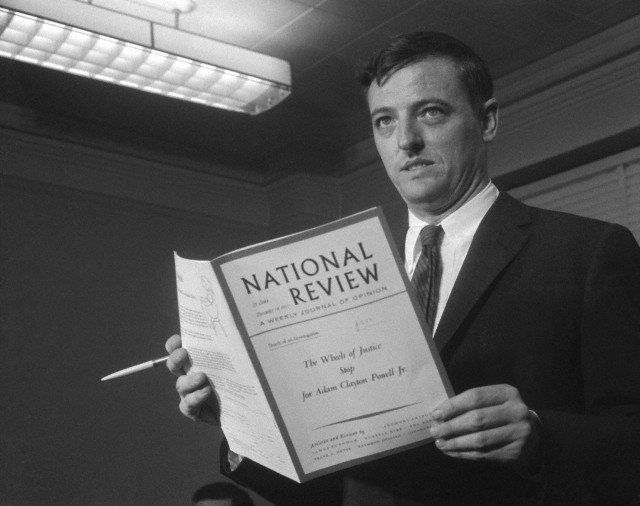
national review book reviews

If you suspected I might have a simple and short answer for you, I’m sorry to let you down.  Saying “yes” casts aside all of my many thoughts about the value of those unpaid product reviews on Amazon and Goodreads, and saying “no” discounts the ongoing benefits that longform paid reviews still offer.

Let’s start with Amazon and Goodreads.

I’ve written in detail about the virtues of garnering lots of good reviews on Amazon and Goodreads before, specifically in my series on Self-Publishing and Merchandising from May of 2015, where I broke down the distinctions between these kinds of reviews and blog-based reviews.  And the statistics speak with resounding and repeated certainty that readers use the metrics provided by Amazon and Goodreads as one of their first and most important decision-making tools.  If readers search for a title they’re fairly certain they’re going to like, only to find that it has lots of poor reviews on Goodreads or a low star rating on Amazon, they’re not likely to follow through and buy it, no matter what else they’ve read that’s positive.  And if readers stumble across a title by accident that they weren’t actually looking for, but it ends up having fabulous reviews, they’re actually fairly likely to pay money to purchase it!  Search engines like Google have tweaked their algorithms to push books that are rated highly on Goodreads and Amazon to the top of their index, so you should never, never discount the importance of asking friends, family members, and other members of the public to post a positive review to these sites.

And what about paid reviews?

While longform essay book reviews have largely become the province of periodicals with paid subscription models like the London Review of Books or the New York Review of Books, they are far from dying out in terms of popularity–they’ve merely found their niche readership, and a powerful one at that.  It’s hard to estimate the exact impact of one positive longform review, but collectively, consider: the discerning reader needs an evaluation of content, of structure, of tone, and of many other aspects of a book’s nature than what can be provided in a brief burst of opinion on Amazon.  The discerning reader wants to know: what do the experts think?  Not everyone is looking for the lowest common denominator of shared public opinion (or so one of my college professors once opined) … sometimes they want to hear from one learnéd voice, in detail, the full warp and weft of a book.  This is why paid reviews are still worth their money–they reach the discerning reader.  And guess what?  Discerning readers are very likely to be a go-to resource to their friends and families, access points for dozens upon dozens of other new readers.  Discerning readers are amplifiers, advocates, and arbiters of your book’s larger footprint.  So yes, we shouldn’t forget about the paid review.  It has a place in the larger scheme of things, the larger framework of reviews and marketing.

They do not determine or reflect the actual value of your book, but good reviews–both paid and unpaid–do determine who is likely to buy it next.


If you have any other ideas, I’d love to hear them.  Drop me a line in the comments section below and I’ll respond as quickly as I can.  ♠

KellyABOUT KELLY SCHUKNECHT: Kelly Schuknecht is the Executive Vice President of Outskirts Press. In addition to her contributions to the Outskirts Press blog at blog.outskirtspress.com, Kelly and a group of talented marketing experts offer book marketing services, support, and products to not only published Outskirts Press authors, but to all authors and professionals who are interested in marketing their books and/or careers. Learn more about Kelly on her blog, kellyschuknecht.com.