From the Archives: Self-publishing vs. Independent Publishing

Welcome back to our Tuesday segment, where we’ll be revisiting some of our most popular posts from the last few years.  What’s stayed the same?  And what’s changed?  We’ll be updating you on the facts, and taking a new (and hopefully refreshing) angle on a few timeless classics of Self Publishing Advisor.

∗∗∗∗∗

[ Originally posted: July 28th, 2010 ]

Guest Post: The Book Doctor on Self-Publishing vs. Independent Publishing

Q: When you spoke at a conference recently, I heard you refer to self-publishing. Isn’t “independent publishing” the correct term now?

A: Yes and no. An independent publisher is a small publisher that may or may not publish the works of the owner, but it always publishes the works of other authors, as well. When you publish only your own books, you are self-publishing. I know the distinction is vague; in either case you have to set up a company and be a publisher, but an independent publishing house accepts the works of others, as well as the works of the owner.

Also, when you use a firm that helps you publish, so that you don’t have to set up your own company, you are a self-published author, as opposed to a traditionally published author.

In the end, we are simply talking semantics. If you spend any money at all toward the printing of your book, you are self-published. Being self-published used to carry a stigma, and perhaps that’s why some people don’t want to use the term, but the market has changed over the years, and people’s attitudes have changed with it. At a time when selling a book to a traditional publisher is almost impossible, yet printing your own book has become easier than ever, self-publishing has taken on a whole new character and lost much of its prior poor image. Nowadays the only stigma comes from a poorly written or unedited self-published book. If the book looks good, reads well, is thoroughly edited, and sells well, who cares who paid for the printing?

While the words of the Book Doctor remain as true in 2016 as they were in 2010, I’d like to play devil’s advocate for a moment and argue that no, we’re not just “talking semantics” when we talk about the distinction between “independent publishing” and “self-publishing”–and in part I’m inspired by yesterday’s news compendium, or more specifically, Alex Palmer’s “Indie Authors Business Guide” for Publisher’s Weekly.  A self-publishing author who does not run an indie press may or may not choose to pursue becoming a limited liability corporation (LLC), but an independent publisher has no choice in whether or not to run his or her work as a business.  (Besides, passions run hot when it comes to these distinctions, as Judith Briles of AuthorU explains at length.)

And there’s an additional wrench in the works: “independent publishing” is not the same thing as being an “indie author.”  As Joanna Penn of The Creative Penn writes, “The term ‘indie author’ has been increasingly claimed by authors who want a new label, one that does justice to the work involved.”  This isn’t a matter of semantics, but of self-identification and empowerment.

As Penn goes on to point out, the proliferation of publishing platforms and models means that there’s a lot more confusion between the clear-cut definitions that we have relied on in the past, as we did in our 2010 Book Doctor post.  “Indie” could mean someone who publishes online and cuts out the middleman entirely, someone who publishes through an indie press, someone who partners up with other self-publishing authors to create a micro-business, someone who publishes through unpaid digital platforms and relies on sponsorships and donations, and so on and so forth.

One of the things I like best about using the term “indie” is that it takes the heat out of the situation.  There’s a tendency to consider self-publishing the opposing binary or even “enemy” of traditional publishing, but the savvy author knows that it’s less about the inherent components of the model than it is about the people working within that model and how well they serve the author.  Self-publishing may be “friendlier” on the whole to its authors by design, but that does not mean every traditional publishing option is inherently evil or that every hybrid or self-publishing company treats its authors well.  Indie authors take control of their publishing experience by finding the right option and team of professionals for them, without pitching publishing models against each other in some kind of Game of Thrones death match.  Indie authors are entrepreneurs as well as consummate businessfolk, and I respect them so much!

Close up of innovate definition

Thanks for reading.  If you have any other ideas, I’d love to hear them.  Drop me a line in the comments section below and I’ll respond as quickly as I can.  ♠

KellyABOUT KELLY SCHUKNECHT: Kelly Schuknecht is the Executive Vice President of Outskirts Press. In addition to her contributions to the Outskirts Press blog at blog.outskirtspress.com, Kelly and a group of talented marketing experts offer book marketing services, support, and products to not only published Outskirts Press authors, but to all authors and professionals who are interested in marketing their books and/or careers. Learn more about Kelly on her blog, kellyschuknecht.com.

Self-Publishing News: 4.25.2016

This week in the world of self-publishing:

Once upon a time, Chris-Rachael Oseland turned to self-publishing for the same reasons as many other authors: she faced a litany of rejections from the world of traditional publishing for creating work that was “too niche” in its content, and decided her work deserved to see the light of day anyway.  And what a vindication!  Unlike many other authors who find incredible success in self-publishing, Oseland has decided to stick with indie.  As Jennifer McCartney writes for Publisher’s Weekly in this April 22nd article, Oseland’s “self-published Din­ing with the Doctor: The Unauthorized Whovian Cookbook has sold more than 35,000 print copies.”  In addition, McCartney writes, Oseland “went on to publish a Hobbit-inspired cookbook (An Unexpected Cookbook) as well as one inspired by the Settlers of Catan board game (Wood for Sheep). Her books have been featured by Paste Magazine, Wired, Nerdist, and the Daily Dot.”  That’s a lot of acclaim.  But McCartney’s article isn’t just a record of Oseland’s accomplishments: it’s a record from the ever-evolving front lines of publishing, where Kickstarter and niche content is king, where readers can participate in and interact with their favorite authors’ projects from conception through funding through publication and purchase.  You might not be interested in cooking Deadpool’s chimichangas, but it’s well worth checking out McCartney’s article for its insight into what’s next for Oseland and innovative self-publishing authors at the link!

“For an aspiring scientist, being published in a creditable journal is a major step towards gaining respect in the field,” writes Jon Card in this April 21st piece for the Guardian.  “But for Mark Hahnel, founder and CEO of Figshare, this old system was drastically in need of an update. ‘The internet was built for sharing academic data but the way scientific papers are published had hardly changed since the early days of the printing press,’ he says.”  But Hahnel, writes Card, was able to dream up and bring to fruition a plan for mixing things up–and providing an innovative new platform for scientists and college students in the sciences to publish, share, and access scientific documents without having to cowtow to the traditional publishing rigamarole.  Inspired by websites like Github and Flickr, Hahnel created Figshare to be a multimodal platform, friendly to various forms of non-written media including videos and audio files, as well as intuitive to use and capable of adapting to the ever-changing landscape of the internet.  Broken links?  Not a problem, according to Card.  Figshare has code that will take care of those so that the article’s author doesn’t have to.  “But the most important aspect of Figshare,” writes Card, “is that it has created a model that disrupts the current method, where universities pay publishers to see the work that they have created.”  Food for thought, right?  And there’s a lot more to chew on in the original article, which you can find here.

“With the recent end of tax season, many self-published authors have likely done some thinking about whether they could be saving more money or better protecting themselves from IRS scrutiny,” begins Alex Palmer’s April 22nd article for Publisher’s Weekly.  And according to Palmer, “becoming a limited liability company (LLC) or Subchapter S corporation (S corp) can provide distinct tax benefits, but can carry added costs and potential inconvenience.”  Palmer goes on to analyze several pertinent elements of such a decision at length, including tax advantages (and disadvantages) as well as the effect it can have on an author’s “legitimacy” in the eyes of third-party businesses (such as those selling ISBNs) or in a courtroom.  Palmer breaks down the three major types of business entities open to self-publishing authors: sole proprietorships, limited liability companies, and subchapter S corporations.  His article provides a balanced perspective on both the pros and cons of each, and altogether makes for a great starting point for those interested in taking the plunge but who are looking for a few of the basic facts, carefully considered.  You can find the whole of Palmer’s business guide for indie authors at the link.


spa-news

As a self-publishing author, you may find it helpful to stay up-to-date on the trends and news related to the self-publishing industry.This will help you make informed decisions before, during and after the self-publishing process, which will lead to a greater self-publishing experience. To help you stay current on self-publishing topics, simply visit our blog every Monday to find out the hottest news. If you have other big news to share, please comment below.

KellyABOUT KELLY SCHUKNECHT: Kelly Schuknecht is the Executive Vice President of Outskirts Press. In addition to her contributions to the Outskirts Press blog at blog.outskirtspress.com, Kelly and a group of talented marketing experts offer book marketing services, support, and products to not only published Outskirts Press authors, but to all authors and professionals who are interested in marketing their books and/or careers. Learn more about Kelly on her blog, kellyschuknecht.com.

Marketing Missteps Episode 5 : Printing Anything Other Than On Demand

This series is my love letter to marketing for self-publishers.  But you know what’s more fun than reading love letters?  Reading hate mail.  So while I remain a firm advocate of thinking positively and of making as many innocent errors as is necessary to refine our techniques to perfection, I have been framing this series–now four weeks gone–in the context of the dangerous and the deadly in terms of marketing missteps. Thus far, I have addressed the following errors:

As I mentioned last week, each of these things can tank your book sales singly and for a long time, and a combination of these mistakes will leave you struggling to recover years in the future.  And while some other steps off of the narrow path to success won’t necessarily damage you irrevocably–a few mistakes are, as I said, useful for making adjustments–these ones just might.  These are the Big Bads, the missteps you don’t want to make.

So today, I’m writing hate mail to self-publishing packages that lock you into massive initial print runs.  The error?

Printing Anything Other Than On Demand

Some authors out there will caution you against doing a print run without already having  solid distribution deal in place, but I’ll take it one step further and caution you against buying into any publication package that locks you into an unsupportably large print run.  The average hybrid publishing company (also sometimes and misguidedly referred to as a “vanity press”) will offer a range of packages to choose from, depending on your budget, and many of them include these massive print runs in order to set you up to compete with traditional publishers and their even more massive print runs.

The problem is this: we can’t compete with traditional publishers by replicating their behaviors.  Self-publishers simply don’t have the same budget, and the same margin for error.  Traditional publishers want to flood the market with a book in order to sell as many copies as possible by simple exposure alone, but they also have the distribution deals to get their books into a lot of different markets to do so.  These distribution deals mean that if a book sells poorly in one corner of the world, Hachette or Penguin or whoever can simply bundle up all of those books and send them somewhere where they are selling well.  Or, if they’re selling poorly everywhere, the loss is attenuated by the profits from other books entirely–books that are selling well.

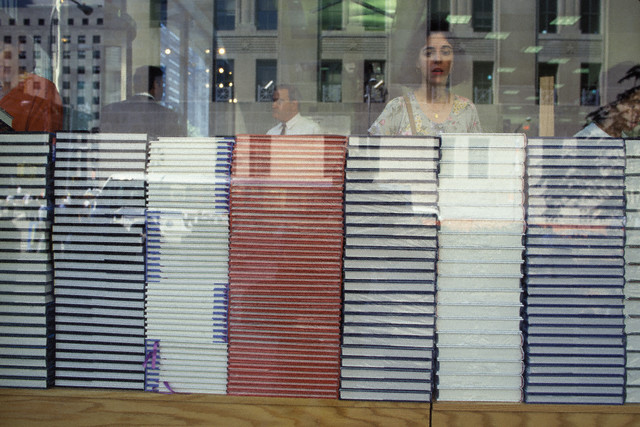
Campus Bookstore at University of Pennsylvania

Unless you have the reach and courier services of a traditional publishing company, I caution against these massive initial print runs.  I am a firm advocate for printing some copies of your book from the outset–they’re useful for ARCs, for book readings, and for giveaways–but they should be a tool, not a burden.  If your garage is stacked floor to ceiling with printed copies of your book that you can’t sell and can’t move, that benefits no one–and it’s a needlessly expensive price to pay in a market where ebooks continue to be a profitable source of income for the self-publishing author.

I’m not saying that there aren’t benefits to printing your books in bulk: you do save money.  But what do you lose?  You end up covering shipping expenses later, and having to manage distribution through your own personal website.  That’s a lot of work, and most authors don’t have the time or resources after that initial purchase to operate within luxurious margins.

So: keep that first print run small, until you can gauge future demand.  Better to sell out that first print run entirely and put in another order via Print on Demand (POD) copies than to end up sending your books to landfill.  (And believe me, this is such a common experience among my self-publishing acquaintance.)  Better yet, start with POD instead of turning to it as a second option.  Hybrid publishing companies like Outskirts Press, my own employer, offer several packages that allow you to cut back on the numbers–or to start without a built-in print run, with the option of going straight to POD copies purchased wholesale.  Other hybrid publishing companies offer similar deals with some variation, but the fact remains: this kind of plan helps keep initial costs down, and frees up your money for other, more carefully targeted marketing strategies.


Thank you for reading!  If you have any questions, comments, suggestions, or contributions, please use the comment field below or drop us a line at selfpublishingadvice@gmail.com.  And remember to check back each Wednesday for your weekly dose of marketing musings from one indie, hybrid, and self-published author to another. ♠

KellyABOUT KELLY SCHUKNECHT: Kelly Schuknecht is the Executive Vice President of Outskirts Press. In addition to her contributions to the Outskirts Press blog at blog.outskirtspress.com, Kelly and a group of talented marketing experts offer book marketing services, support, and products to not only published Outskirts Press authors, but to all authors and professionals who are interested in marketing their books and/or careers. Learn more about Kelly on her blog, kellyschuknecht.com. 10:00 AM

From the Archives: Self-publishing, Literature and Pop Culture

Welcome back to our Tuesday segment, where we’ll be revisiting some of our most popular posts from the last few years.  What’s stayed the same?  And what’s changed?  We’ll be updating you on the facts, and taking a new (and hopefully refreshing) angle on a few timeless classics of Self Publishing Advisor.

∗∗∗∗∗

[ Originally posted: August 19th, 2009 ]

I opened the Books section in yesterday’s New York Times “Urban Eye” to read the headline, “Why Literature Doesn’t Matter.” Really? How sad. It matters to me. It matters to my family, friends, and colleagues. It matters to the self-publishing authors I work with every day. Literature doesn’t matter… I wish someone would have told me.

According to “Urban Eye,” a recent Sunday Book Review article penned buy novelist Kurt Anderson was to fill me in. Anderson writes, “During the 1960s and ’70s…people who hadn’t read a word of a first-rate contemporary novel — no Cheever, no Bellow, no Salinger, Heller, Styron, Doctorow, Updike or Roth — nevertheless knew the novelists’ names… And then everything changed.”

But book sales in the US have remained strong, and are even growing over previous years in Europe. Despite the current recession effects, statistics show that readers are still buying books. Not matter? Anderson goes on to claim, “But irony of ironies, after literature was evicted from mass culture, pop culture itself began to fragment and lose its heretofore defining quality as the ubiqui­tous stuff that everybody consumed.”

Ah, I’m seeing to whom, or rather to what, Literature doesn’t matter to – pop culture. Wait, then this is a good thing for authors and readers. The fragmentation that Anderson talks about is the segmenting of consumers into smaller, more clearly defined profiles. What that means to self-publishing authors of fiction, non-fiction, etc., is not that your work doesn’t matter, that Literature doesn’t matter, but that it doesn’t matter to everyone. Perfect, now you can coordinate and focus your subject matter and marketing efforts to readers who will benefit from, and buy your books.

Talk to your self-publisher early on about your custom marketing plan.

– by Karl Schroeder

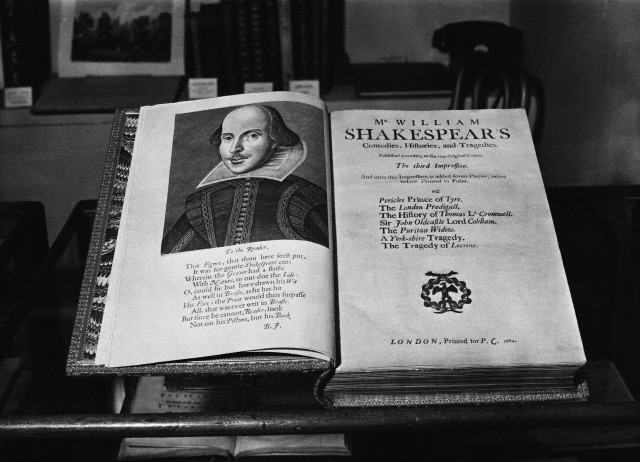
These days, when someone refers to “Literature,” most people think of only one thing:
third folio

But the Classics, I would argue, are not the sole proprietors of the word “Literature”–and they never have been.  And “Literature,” as defined by Merriam-Webster, can mean “written works (such as poems, plays, and novels) that are considered to be very good and to have lasting importance” or simply “books, articles, etc., about a particular subject.”  I know some of my professors in years past would argue that there’s a profound distinction between “literature” (with a lower-case “l”) and “Literature” (with an upper-case “L”)–but then we’re getting into that dreaded world of semantics, where words are bent to match whichever connotations the arguing parties need them to.

I think there are two primary reasons why books become classics:

  1. Someone in a position of power decides they’re worth preserving, and
  2. They continue to make a lasting impression on readers, across cultures and decades.

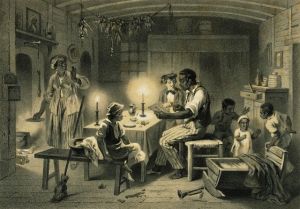
The first item explains why a great number of quality works (by women, or people of color, and so forth) have been excluded from what is considered “Canon Literature,” and which even today comprises a large part of every American schoolkid’s reading list.  And the second item explains the gaps in the first: many works that were not considered appropriate for lasting acclaim have survived through the centuries for seemingly no other reason than they still connect with people.  The first item is an exercise in the mind, and the second in the heart. I have a couple of examples in mind, but I don’t want to turn today’s post into an exercise in literary theory.  (As much as I love it!)

uncle tom's cabin

The fact of the matter is, books mean a lot to people.  Today.  In the here-and-now. The generation lauded as bringing about the “end of literature”–the generation that cut its teeth on supposedly un-literary books like Harry Potter and The Hunger Games–reads more than any generation prior.  And they not only read, they write.  That’s right–they have created a vast market for new stories, and they have stepped up to flood that market with material.  Best of all, they understand one simple and very important truth: a self-published book like The Martian or Wool or Eragon can move them in ways that “Canon Literature” sometimes can’t.  Stigma has lost its power over “kids these days,” and they’re proud to be voracious readers of books that mean something to them, not to the folks putting together SAT reading lists.

I can’t tell you the last time I cried over Vanity Fair or The Adventures of Tristram Shandy.  I appreciate a good dollop of Jane Austen and Charles Dickens and Shakespeare, but I haven’t wept over them recently.  I have wept over The Martian.  (I won’t even hint at my reaction to Harry Potter when I re-read the series this last winter.)  I don’t think there’s room to despair over the “Death of Literature,” or any more support for the argument that literature “doesn’t matter” today than there was when Karl wrote this post back in 2009.  Our definitions of literature have been too narrow, and our expectations of the current generations of readers have been wrong.  Literature is more diverse, more colorful, and more exciting than anyone ever gave it credit for–and it means more now than ever!

And … I’ve made this post run long.  Next week I’ll revisit it, because there’s one crucial component I’ve failed to address today: How literature’s continued “mattering” impacts you as an author, and how you can use it to your advantage!

Thanks for reading.  If you have any other ideas, I’d love to hear them.  Drop me a line in the comments section below and I’ll respond as quickly as I can.  ♠

KellyABOUT KELLY SCHUKNECHT: Kelly Schuknecht is the Executive Vice President of Outskirts Press. In addition to her contributions to the Outskirts Press blog at blog.outskirtspress.com, Kelly and a group of talented marketing experts offer book marketing services, support, and products to not only published Outskirts Press authors, but to all authors and professionals who are interested in marketing their books and/or careers. Learn more about Kelly on her blog, kellyschuknecht.com.

Self-Publishing News: 4.18.2016

This week in the world of self-publishing:

“The past few weeks have been a busy period for the publishing industry,” write Publisher’s Weekly correspondents Jim Milliot, Andrew Albanese, and Diane Roback in this April 15th article. Milliot, Albanese, and Roback report from the far afield as they cover the events taking place at the Bologna Children’s Book Fair and the London Book Fair as well as the 28th Independent Book Publishers of America (IBPA) Publishing University, held in Salt Lake City. While the book fairs are not themselves specifically focused on indie, hybrid, and self-publishing authors, certain self-publishing-related events proved extremely popular, “with the popular Authors HQ once again facing overflowing audiences for its presentations on best practices and services, how to find an agent, and more. Emerging technology was also prominent, with sessions on virtual reality, and on artificial intelligence,” write Milliot, Albanese, and Roback. The IBPA’s Publishing University, unlike the two book fairs, is all to do with independent publishing–and “approximately 230 independent publishers and self-published authors turned out,” cutting across all demographics and disciplines.  Newbery-winner Kwame Alexander delivered a keynote on his own road to success as a self-publishing author running his own small press.  For the full report from Publisher’s Weekly on these international book festivals, visit the original article here.

“Everybody has a novel in them, so they say,” begins this April 15th article by Guy Kelly for the Telegraph: “Yet even if the idea for a book comes easily, the challenge of having that dormant masterpiece accepted by iron-clad publishing houses has long seemed a Herculean task, even for the most promising manuscripts.”  Kelly goes on to explain how this landscape is slowly but irrevocably shifting under the influence of self-publishing, a process which removes obstacles and allows “anybody to become an entirely self-reliant, published author in a matter of minutes. And if you’re prepared to be shrewd about it, the move could prove extremely lucrative.”  He goes on to paint a portrait of Mark Dawson, a 42-year-old self-publishing author whose books have been downloaded over two million times, and whose sales are in excess of six figures–each year. Dawson, writes Kelly, has now launched something called “The Self-Publishing Formula, a range of courses designed to advise others on how best to monetise their writing in the modern, internet-driven world.”  His journey to success was a long one, giving him plenty of insight into the traditional publishing model which he left in order to pursue his own course.  To follow that entire journey, follow the link.


In this April 15th article for the South China Morning Post, contributor CNBC writes that “The e-book business is thriving, despite the competition between digital, print and audible books, according to the boss of an e-reader company.” The “boss” CNBC mentions is Michael Tamblyn, the CEO of Kobo, “which sells e-reader apps and devices, as well as e-books.” And importantly, the market CNBC mentions is the international e-book market, giving us insight into a world much larger and much more diverse than the standard American publishing outlook.  Tamblyn, according to the article, “also discussed the increasing success of self-published books on the market. Last year, 22 per cent of e-books sold in the U.K. were self-published.” 2015 was in many ways a recovery year for the international book market–not just in terms of ebooks, but in terms of overall print and digital sales, traditionally or independently published–after a two-year slump. “Agents and publishers still dominate the market but self-published has become a real, viable channel,” CNBC quotes Tamblyn as saying: “More often than not the customer who’s buying this doesn’t necessarily know they are buying a self-published book. They are so well produced, so well edited, so well designed that they just sit on the shelf with everything else.” The fact is this: self-published books are beginning to lose their stigma, and that’s a very good thing for everyone.  Well, everyone who is invested in making sure authors get their due.  For more of CNBC’s article, you can find the South China Morning News piece here.

spa-news

As a self-publishing author, you may find it helpful to stay up-to-date on the trends and news related to the self-publishing industry.This will help you make informed decisions before, during and after the self-publishing process, which will lead to a greater self-publishing experience. To help you stay current on self-publishing topics, simply visit our blog every Monday to find out the hottest news. If you have other big news to share, please comment below.

KellyABOUT KELLY SCHUKNECHT: Kelly Schuknecht is the Executive Vice President of Outskirts Press. In addition to her contributions to the Outskirts Press blog at blog.outskirtspress.com, Kelly and a group of talented marketing experts offer book marketing services, support, and products to not only published Outskirts Press authors, but to all authors and professionals who are interested in marketing their books and/or careers. Learn more about Kelly on her blog, kellyschuknecht.com.