From the Archives: “How Much Do Illustrations Cost?”

Welcome back to our Tuesday segment, where we’ll be revisiting some of our most popular posts from the last few years.  What’s stayed the same?  And what’s changed?  We’ll be updating you on the facts, and taking a new (and hopefully refreshing) angle on a few timeless classics of Self Publishing Advisor.

∗∗∗∗∗

[ Originally posted: April 16th, 2012 ]

Like ghost writing or copyediting, illustrations take time and require a great deal of skill and talent. It is important to remember that illustrators must be paid fairly for their time and expertise. The price for illustrations can range from a few hundred dollars to a few thousand dollars. It depends on the size and complexity of your project. When considering illustrations, it is important to do some research, figure out your goals, and create a budget. Once you know your expectations, you’ll want to find an illustrator who meshes with your style. To do this, find out if your self publishing company offers illustration services and get a quote. You can also look at sites such as guru.com or elance.com to find a freelance illustrator. Be sure to always look at sample work before choosing an illustrator. There are many different styles, and you want to find an artist who matches your vision.

For more information on illustrations, check out these articles.

The Importance of Illustrations

What You Need to Know About Custom Covers

Illustrations Affect the Success of You Children’s Book

– by Cheri Breeding

I love Cheri’s post from 2012 in part because she has such a legacy on this blog of creating a space for illustration and fine art in the context of self-publishing.  Her attitude is not all that common!  Like many contractors with carefully curated skill sets, illustrators often struggle to make ends meet as well as earn the respect they deserve for a lifetime of work.  Why is this?  In part, it’s because illustrators often do not own the rights to the work that others commission, or pay for.  This depends on what contract they sign with the commissioner, of course, but self-publishing authors know all about what it’s like to sign away rights to something, and thereby lose access to future profits.  Illustrators also often struggle because making art for someone else just doesn’t have the social cachet or respect as making art for the sake of art.

The world can be an very unfair place.  But you don’t have to be!

To expand a little upon what Cheri rightfully included in her original post, I thought I’d provide a couple of resources to get you started calculating hard numbers–actual figures to pay any illustrator you hire.  And I won’t lie: good art doesn’t come cheap.  In fact, if you’re hiring someone and they’re not asking for much, you should always go back and re-read the fine print.  They may just be young illustrators starting out and looking to build their portfolios, or otherwise inexperienced in the market, or something more sinister.  It’s worth checking.

The first step is finding the illustrator whose art you like, right?  Between the Society for Children’s Book Writers and Illustrators (very respectable, high-end) and DeviantArt (a real mix of experienced and inexperienced illustrators) it’s fairly easy to find what you need.  If you’re still feeling a bit lost, this article from The Creative Penn provides a handy launchpad for further illustrator-sleuthing.

The second step is negotiating a commission fee and contract.  I find it’s most helpful to start from the same materials that illustrators are using to determine their requested charges, and this article from the Business of Illustration blog is one that my illustrator friends keep pointing me to.  It is thorough, and allows for multiple different scenarios.  Illustrators Online provides a handy chart to start your rough calculations–another excellent resource.  And Elizabeth O. Dulemba provides a list of questions to ask before hiring an illustrator, specifically geared towards authors.

Last but not least, it’s worth keeping bundles in mind.  I mean the service bundles provided by hybrid or self-publishing companies like Outskirts Press, which provides options for a custom-designed book cover as well as full-color illustrations.  If you’re already looking for an avenue to self-publish your book, keep an eye out for deals and price specials amongst these bundles–it’s a great way to save money and let someone else manage the fiddly bits.

No matter which option you choose, do your own calculations.  Price check your illustrators!  And most importantly of all, get in direct contact with every contractor who is going to design material for your book.  The more an illustrator knows your mind, the more quickly and easily he or she will be able to create artwork that meets or even exceeds your expectations!

Thanks for reading.  If you have any other ideas, I’d love to hear them.  Drop me a line in the comments section below and I’ll respond as quickly as I can.  ♠


KellyABOUT KELLY SCHUKNECHT: Kelly Schuknecht is the Executive Vice President of Outskirts Press. In addition to her contributions to the Outskirts Press blog at blog.outskirtspress.com, Kelly and a group of talented marketing experts offer book marketing services, support, and products to not only published Outskirts Press authors, but to all authors and professionals who are interested in marketing their books and/or careers. Learn more about Kelly on her blog, kellyschuknecht.com.

Self-Publishing News: 6.13.2016

This week in the world of self-publishing:

“There was a time when a small, independent movie studio was looked down upon by the industry,” writes Bud Simpson in this June 10th article for the Logan Daily News.  “Because it was produced with a small budget and, most of the time, unknown actors, it was considered an inferior product.”  He goes on to draw comparisons between the indie film engine and self-publishing, noting that while indie film has reached critical acclaim and a kind of legitimacy within the larger movie industry, self-publishing has not achieved the same thing within the world of traditional publishing.  “It still ‘don’t get no respect!'” he declares, quoting American stand-up comedian Rodney Dangerfield.  What follows is a litany of self-publishing successes as well as a list of blockbuster successes (in traditional publishing, at least) which began with plentiful rejection slips.  Simpson makes a convincing case for self-publishing as a tool worth considering; check out his complete article here.

As a presenting panelist for the Bay Area Book Festival, Brooke Warner was recently confronted with the question: “A question surfaced from the audience: Do some people avoid self-publishing because they don’t qualify for awards?” as she recounts in this June 10 piece for HuffPost Books.  One of her fellow presenters, with the best intentions, responded with a statement that awards are open to self-published works–and what follows shows just how much misinformation is out there.  “I almost felt bad to have to inform him of his industry’s bias,” writes Warner: “that no, you can’t just submit, and that countless awards programs bar self-published authors (and any author, in fact, who’s invested in their own work) from entering.”  As founder of an author-subsidized publishing model, Warner serves as a lightning rod for those looking to define their work as something more than a less-respectable ripoff of traditional publishing.  She writes:

As independent authors and publishers, we need to repair a broken system, and we can’t do that by trying to “pass” as traditionally published authors in order to benefit only ourselves. When one indie author rises, we all rise. When one awards program or review outlet lifts their ban on self-published authors, others take notice, and eventually the measure of author-subsidization as a way to determine which books are worthy will fall. To me, this is the goal, to level the playing field in an industry that is hellbent on keeping self-published authors contained and separate.

To that end, she presents a list of five ways authors can better advocate for themselves.  I won’t repeat them here, as they really shine in full context.  You can catch Warner’s full article by following the link!

In this current political climate–in America at least–the battle lines are so clearly drawn and the arguments so rife with strong emotion that you can well imagine people are on the hunt for new ways to express their (very strong) opinions.  As Kim-Mai Cutler details in this June 9 article for Tech Crunch, that demand is soon to be filled by at least one new entry into the increasingly crowded–and specialized!–self-publishing world.  You may already have heard of OpenVote, a political startup from software powerhouses Bobby Goodlatte and Sean McCann.  Now OpenVote is “unveiling a larger publishing platform where people can debate policies and pledge their votes,” as Cutler puts it: “OpenVote comes out of the concern that political communication hasn’t really evolved or been fully translated into online or social networking mediums. People see news stories, they get enraged, but that doesn’t exactly translate into votes or political commitments.”  In other words, OpenVote is looking to boost voter turnout amongst undervoting groups, particularly the tech-savvy “Millennials.”  How are they going to do this?  Says Cutler, “Think Medium, but centered around politics and with widgets that let you pledge and recruit votes. Goodlatte brought on different political bloggers to do hot takes on issues like marijuana legalization or the 2016 presidential race.”  The hope is to to use the controversial issues to draw users in, and then present them with more curated, more neutral content to promote actual conversation and long-term engagement.  For now it looks as though the material published will mostly be in thinkpiece essay formats, but watch this space!  As a startup, OpenVote may eventually diversify into publishing longer formats.  If you write politically-charged or reflective material, this might provide an opportunity for you in the future.


spa-news

As a self-publishing author, you may find it helpful to stay up-to-date on the trends and news related to the self-publishing industry.This will help you make informed decisions before, during and after the self-publishing process, which will lead to a greater self-publishing experience. To help you stay current on self-publishing topics, simply visit our blog every Monday to find out the hottest news. If you have other big news to share, please comment below.

KellyABOUT KELLY SCHUKNECHT: Kelly Schuknecht is the Executive Vice President of Outskirts Press. In addition to her contributions to the Outskirts Press blog at blog.outskirtspress.com, Kelly and a group of talented marketing experts offer book marketing services, support, and products to not only published Outskirts Press authors, but to all authors and professionals who are interested in marketing their books and/or careers. Learn more about Kelly on her blog, kellyschuknecht.com.

Marketing Master Strokes Episode 1: What do ears, geysers, and self-publishing have in common?

Another Wednesday, another series!  For the last eleven weeks, we have been examining the missteps that can land a self-publishing author in hot water.  And hot water can be dangerous!

So:

You’re an indie author who’s recently published a new book, and you’re committed to marketing in the most serious way–doing what you can to ensure your book sales reflect the same hard work that you put into the crafting of your book itself.  What next?  Getting started is often the hardest part, in the same way that staring at a blank page is enough to give me writer’s block on the spot.  We’ve spent time examining the benefits and risks to a couple of false starts, and we’ve discussed the relief that comes with knowing you have permission to make mistakes … and in knowing that every writer, whether midlist or a blockbuster success, has made them.

So:

Mistakes aren’t the end of the story!  This fact is an unassailable truth.  At the same time, it’s important to note that there’s a difference between an honest mistake or a misstep … and deliberately ignoring the reality of a situation.  Remember how I mentioned that hot water can be dangerous?  I’m writing this episode just hours after a man fell into a Yellowstone hot spring in the Norris Geyser Basin–neither the first nor the last fatality to take place in our National Parks this year.  Every year, several people slip over the edge of the Grand Canyon and fall from cliffs in Glacier National Park, despite clearly posted signs stating the dangers these areas have to offer.  What’s the connection to self-publishing?

Paying attention to the signs can save you from disaster.  

You’ll be able to spot the difference between a misstep and regular self-delusion by paying attention to your decision-making process.  Is there a pattern being established?

Today I begin a new series, a mirror image of our last: we’ve looked at ten of the most important marketing missteps to avoid in order to avoid disaster–working with the negative things in life–and now we will examine positive steps–master strokes–that can ensure your success.

The first master stroke?

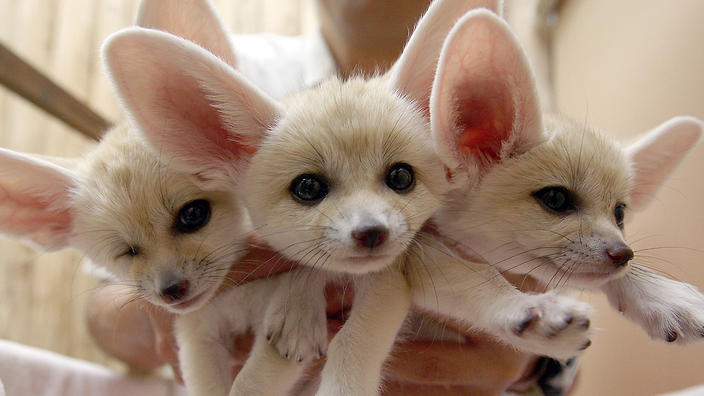
Be all ears.

baby foxes

By which I mean: Cultivate an attitude of respect towards and listen with sincere interest to the stories of other authors, marketers, and industry professionals.  And most importantly, keep your mind open to what they have to say.  There’s a very real difference between appearing to listen, and actually allowing your own opinions to be modified by the shared experiences of others–and I promise you, your marketing will be MUCH more effective if you internalize the successes and failures that you haven’t encountered yet … but others have.

I think a lot of self-publishing authors are incredibly humble.  I have certainly met dozens upon hundreds upon thousands of authors throughout my decades working with them who are willing and eager to mentor new or struggling authors, and I know for a fact that you can access still more wisdom born from experience just by throwing a couple of keywords into a Google search engine or browsing the archives of any number of self-publishing-centered blogs.  There’s uncountable gigabytes of wisdom at your fingertips, and the first marker of master marketers is the metaphorical size of  their ears.

Get listening!


Thank you for reading!  If you have any questions, comments, suggestions, or contributions, please use the comment field below or drop us a line atselfpublishingadvice@gmail.com.  And remember to check back each Wednesday for your weekly dose of marketing musings from one indie, hybrid, and self-published author to another. ♠

KellyABOUT KELLY SCHUKNECHT: Kelly Schuknecht is the Executive Vice President of Outskirts Press. In addition to her contributions to the Outskirts Press blog at blog.outskirtspress.com, Kelly and a group of talented marketing experts offer book marketing services, support, and products to not only published Outskirts Press authors, but to all authors and professionals who are interested in marketing their books and/or careers. Learn more about Kelly on her blog, kellyschuknecht.com. 10:00 AM

From the Archives: “Ask the Right Questions”

Welcome back to our Tuesday segment, where we’ll be revisiting some of our most popular posts from the last few years.  What’s stayed the same?  And what’s changed?  We’ll be updating you on the facts, and taking a new (and hopefully refreshing) angle on a few timeless classics of Self Publishing Advisor.

∗∗∗∗∗

[ Originally posted: March 6th, 2009 ]

Regardless of whether you are holding out for an old-fashioned publishing contract or taking matters into your own hands with custom self-publishing, here are 5 questions you should know the answers to when you decide to publish:

1 – What is the minimum number of books you have to purchase, and what does
each book cost you? Many require certain quantities to be purchased at highly marked up prices. That is how they ‘get you.’

2 – Who determines your retail price? How much is it? – Here’s another one
to look out for. You should have that control. Publishers that don’t allow that are often in the business to make money on your book. You’ve done the work. You should see the rewards.

3 – Who determines how much money you make from each book? Another good test.
Your publisher should pay 100% of the difference between the wholesale price and the
production price of the book. Most publishers pay anywhere from 5%-50%.

4 – Do you receive marketing support after publication? Free services like the Marketing COACH offered by Outskirts Press is an invaluable collection of proven tactics shared to help improve your book sales.

5 – Do you retain all the rights to your book? You definitely should. Check
the contract of wherever you publish.

Isn’t this fun!

– by Karl Schroeder

Karl was right back in 2009, and he’s still right today in 2016–when it comes to publishing your book, it’s better to ask the right questions ahead of time, so that you don’t end up locked into an unsatisfactory contract or stuck in a bad situation after the fact.  His five questions, too, were well-chosen, and if you’re just setting out to self-publish for the first time I recommend you start with his original list as a starting point; while the market and self-publishing process is always going to be something of a moving target, most of his fundamental assumptions  about the nature of self-publishing companies remain highly relevant.

And the most important assumption of all?

Self-publishing companies are out to make money.  

But of course they are!  If they weren’t, they’d operate as nonprofits–and I have actually worked alongside several nonprofits that publish as a part of their service mission, enough to know that they tend to be highly competitive as well as highly selective, and therefore look very much like a traditional publishing model.  Which brings us full circle, back to the self-publishing company as a wholly unique animal on the world stage.  If I were to add any question to Karl’s list, it would be:

How transparent is the company in question about how it makes its profit?

Because it’s one thing to partner with an ethical, reliable, and empowering company with sound business acumen which it places at your disposal as well as at the service of its shareholders–and it’s another thing altogether to sign on to a publishing venture which is out to pad its bottom line, no matter what the cost.

The takeaway?  It all comes down to research.  Talk with the company directly, and don’t hesitate to ask the tough questions.  Ask how they make their money, and what their internal corporate goals are.  Ask previous customers about their experiences, and specifically how well they felt they were treated.  Ask the company to treat you like an adult, which you are.  And if at any point you feel like the shareholders are the company’s priority and not the authors, take that as a sign and take your business elsewhere.  There’s no point in expecting a company to alter it’s corporate DNA for one customer–when it comes to self-publishing, you deserve to be at the heart of your own story.

Thanks for reading.  If you have any other ideas, I’d love to hear them.  Drop me a line in the comments section below and I’ll respond as quickly as I can.  ♠

Self-Publishing News: 6.6.2016

This week in the world of self-publishing:

“Many authors who sell their work directly on platforms like Amazon are having their stories plagiarized, which can take an emotional and financial toll,” writes Joy Lanzendorfer in this June 5th article for the Atlantic.  Lanzendorfer recounts the story of self-publishing author Rachel Ann Nunes, whose work was plagiarized by one ‘Sam Taylor Mullens’ (an alias), who took her novel (A Bid for Love), repackaged it under a new title (The Auction Deal), and distributed it under his own name with only superficial changes.  This trend is becoming all too common, writes Lanzendorfer, who adds: “The offending books often stay up for weeks or even months at a time before they’re detected, usually by an astute reader.”  This is no joke for self-publishing authors, who operate without much of the safety net enjoyed by traditionally published authors, with the might and heft of corporate lawyers at their backs.  For other authors, like Opal Carew, “finding out their book has been plagiarized can be traumatic.”  And this is, quite literally, just the tip of the iceberg!  Lanzendorfer’s marathon of an article weighs the various factors at play, including Amazon’s various ranking logarithms.  To read more, follow the link!

Self-publishing has been around awhile, it would seem–far longer than most readers even know, according to this June 3rd piece for Publisher’s Weekly.  The article, which serves as a digital summary of a printed piece in the June 6th edition of the magazine, alleges: “Self-publishing is hardly a new idea, as evidenced by an editorial we published 100 years ago.”  The editorial in question went to print on June 3rd, 1916, and detailed the advantages and disadvantages of midlist authors finding alternative ways to market.  “‘The practice of allowing the author to pay in whole or in part for the publication of his manuscript is by no means confined to certain of the smaller and less-known publishing houses,'” the original 1916 article states: “‘These books are not of such a nature as to make a wide appeal, and consequently, however worthy they may be, we cannot afford to publish them without the author’s assistance.'”  Worthy, albeit niche works–this is indeed the heart and soul of indie publishing!  To catch a taste of 100 years of self-publishing progress, check up on the modern Publisher’s Weekly piece here.

Self-publishing authors who publish outside of a select number of companies and are not counted in traditional e-publishing surveys “exist in this near-invisible economy,” writes Russell Smith for The Globe & Mail, according to this June 1st article.  A pretty turn of phrase for a not-so-pleasant experience, as it turns out: says Smith, the challenge these authors face is most plain in the matter of promotion.  How to market a book that flies under the radar of the traditional bait-and-reward system?  “The answer,” he writes, “is in niches.”  But this type of approach is exhausting–or as Smith puts it: “Ah, engagement – a concept dreaded by writers of my generation. It means we have to have a personality that readers think they are interacting with; it means we have to seem like their friend.”  This kind of labor may be easier for some than others, he writes, but it’s still work–especially to those who do not have an easy niche market to identify, much less sell books to.  But the challenge is as much one of personality as it is substance, as Smith makes clear in his self-comparison to another indie author (Tudor Robins), whose boundless optimism leaves Smith questioning his own experience.  Could he do more?  Should he do more?  To find out his conclusions, tap into the original article at the link!


spa-news

As a self-publishing author, you may find it helpful to stay up-to-date on the trends and news related to the self-publishing industry.This will help you make informed decisions before, during and after the self-publishing process, which will lead to a greater self-publishing experience. To help you stay current on self-publishing topics, simply visit our blog every Monday to find out the hottest news. If you have other big news to share, please comment below.

KellyABOUT KELLY SCHUKNECHT: Kelly Schuknecht is the Executive Vice President of Outskirts Press. In addition to her contributions to the Outskirts Press blog at blog.outskirtspress.com, Kelly and a group of talented marketing experts offer book marketing services, support, and products to not only published Outskirts Press authors, but to all authors and professionals who are interested in marketing their books and/or careers. Learn more about Kelly on her blog, kellyschuknecht.com.