From the Archives: “6 Ways Watching Real Housewives of New York Can Help You Market Your Book”

Welcome back to our Tuesday segment, where we’ll be revisiting some of our most popular posts from the last few years.  What’s stayed the same?  And what’s changed?  We’ll be updating you on the facts, and taking a new (and hopefully refreshing) angle on a few timeless classics of Self Publishing Advisor.

∗∗∗∗∗

[ Originally posted: July 27th, 2011 ]

Do you watch Real Housewives of New York? If not, surely you’ve seen all the press about the show. Did you know that you can learn a lot about how to market your book and build your author brand by watching it? Here are just a few of the lessons to be learned when watching the show for any period of time (some old and some new):

  • Follow trends: Take note from Ramona and her jumping on the “renew your vows” trend. Sure, it is a good idea to be unique most of the time, but sometimes you have to “do the stuff everyone else is doing” in order to get your momentum going. After all – it works well for everyone else – isn’t it at least worth a “try”?
  • Defend the grapes: Bethenny offered to “stomp the grapes” to make wine. Not if Kelly had anything to do with it – she planned to eat those grapes. If you take a stand on some issue or cause that you really believe in and make this public knowledge, that’s a good way to network and build demand for you and your book.
  • Start your own team: It works for the Twilight saga (remember “Team Edward” and “Team Jacob”?) and is even working for RHONY with the “Team Blonde” and “Team Brunette” fiasco. Have you considered starting “teams” for the main characters in your book? This will build audience excitement for sure because people love to choose sides.
  • Refer to yourself in the third person: Did you see how Sonja referred to herself in the third person on the recent reunion show? Well, don’t do it that way, but this is a great way to write an effective author bio that will stand out amongst the crowd. Author bios should never be written in first person (neither should social media profiles and the like).
  • Toss modesty to the wind: Also in the recent reunion show, Kelly mentioned that Cosmo rated her as one of the Five Nicest Celebrities. Why can’t you do the same as an author? Naturally, you don’t want to tout your achievements at inappropriate times, but don’t be afraid to brag a little – especially when it comes to your bestselling author status.
  • Wear cream to the wedding: This is not the best thing to do in “real life”, but it can be very effective when promoting a book. Don’t allow other authors in your genre to get all of the spotlight. It’s OK to steal the show just a bit for yourself.

Many newly-published authors are faced with the question of: “How do I market my book?” Believe it or not, your answer could be as close as your nearest TV set.

– by Elise L. Connors

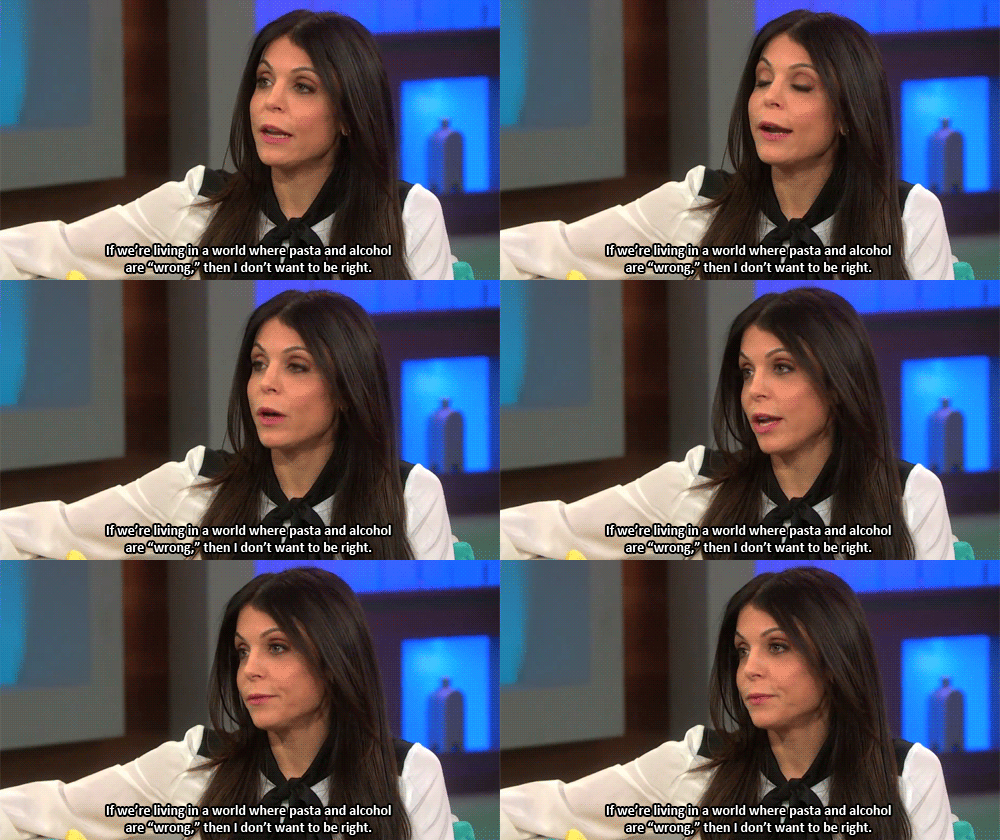
Does anyone still watch reality television these days?  I remember the day, back in 2008, when Real Housewives of New York premiered–and even further back, it must be said, to a day before any of the Real Housewives cluster of shows aired.  Since Real Housewives of Orange County is now in its eleventh season, you can imagine that that’s quite a ways further back!  But let’s face the facts.  A show that births such classic one-liners as:

dbcaa06f-7682-48d4-90bf-41d61ccef42d

… and:

tumblr_mzwkifYkUB1qk08n1o1_500

… just can’t die.  I won’t let it.  That’s not a world I want to live in–a world of sincerely self-aware nature documentaries is a fine and wonderful thing, but it can never rival a world in which the absurdly rich are given finely scrulpted eyebrows and scripted lines worthy of Homer.  And Bravo, home to all things Real Housewives, has some of the most loyal fans out there.  Over 1.4 million people proved their loyalty by tuning in for the premier of last season, the weakest yet.  But 1.4 million?  That’s still a lot of people.  And while the jury’s out on whether sticking around for another round of brunches and office tours with the rich and famous qualifies Real Housewives of New York marks quality decision-making, the show’s longevity puts the proof in the pudding of Elise’s 2011 blog post, above.

Track_15_3

Don’t take this as a drawn-out advertisement for a television show that I don’t even watch–but do take it as a reminder not to turn off your “out-of-the-box” skills when it comes to strategizing and marketing your self-published book.  Elise found value and inspiration in a television show because she refused to just sit back and “shut off.”  Her mind was active and engaged–even when watching reality television!  Maybe your inspiration will come through some other unorthodox channel, like a podcast or a nature walk or a recipe in a kitsch 80’s cookbook.  But it’s still valid.

It doesn’t matter how good ideas come to us, not nearly so much as it matters that we put them into real-world application.  When push comes to shove, the television we watch and the books we read and the lines we repeat to ourselves in moments of crises aren’t what define our success or failure as self-publishing authors.  Only we get to draw the line, and make the call, and cast the judgment.  What matters is the work, and that we stick with it–and keep coming back with new ideas to move that work forward!  Find your inner diva, dear readers.  Find your Real Housewives.  Be innovative.  Defy the critics, and the numbers.  Be indomitable!

Thanks for reading.  If you have any other ideas, I’d love to hear them.  Drop me a line in the comments section below and I’ll respond as quickly as I can.  ♠

From the Archives: “7 THINGS TO KNOW ABOUT TRADITIONAL PUBLISHERS”

Welcome back to our Tuesday segment, where we’ll be revisiting some of our most popular posts from the last few years.  What’s stayed the same?  And what’s changed?  We’ll be updating you on the facts, and taking a new (and hopefully refreshing) angle on a few timeless classics of Self Publishing Advisor.

∗∗∗∗∗

[ Originally posted:June 18th, 2010 ]

Things every author consider when considering self-publishing vs. the old-fashioned model…

7 – Traditional publishers lose money on over 85% of the books they publish, so they only accept around 2% of those that are submitted.

6 – They typically accept manuscripts only from established authors who have demonstrated a proven track record.

5 – Authors lose content control of their work during the editing process.

4 – Authors must still invest an enormous amount of time, energy, and money promoting a traditionally-published book.

3- Authors typically receive 5-10% royalty on the wholesale price of the book, and from that have to give 15-25% to their agent. Do the math.

2 – The majority of books published by old-fashioned publishers go out of print within 3 years. Many books that are stocked on book shelves remain stocked for as little as five weeks before being returned, unsold, to the publisher.

1- Old-fashioned publishers acquire all rights to your book and keep them, even when the book goes out of print or the publisher goes out of business. Yikes.

Publishing is hard and weird, and the process takes far more energy and attention than it rightfully should.  If you’re lingering in the balance between opting in to the traditional publishing mechanism or choosing to pursue a self-publishing option, this list from 2010 may just provide the last swing vote.  To pretend that we are unbiased would be disingenuous, I know, but isn’t there another side to this list?  Isn’t there some dirty laundry to air about indie, hybrid, and self-publishing companies, too?

Yes, no doubt.  That’s the honest answer.  The self-publishing model isn’t for everyone, and there are certainly the requisite number of soulless opportunists who have spotted a new means to exploit newcomers, as there are in any industry, but for the most part I do find that the people who work with and alongside self-publishing authors are a good lot.  They’re genuinely interested in helping you succeed–according to your own standards and expectations, not under the unrealistic ones set by traditional publishing.

So here’s my claim for the day, with a proviso:

When self-publishing is done right and all of the people involved in a project operate by the foundational tenets of the indie spirit, the experience provides authors the exact opposite experience of traditional publishing.

7: Self-publishing has no gatekeepers, censors, or men in suits wagging their fingers at innovation.

6: Anyone can self publish, no matter their background or prior experience with publishing (traditionally or otherwise).

5: Authors retain full artistic and legal control over their work.

4: Authors get to see a direct proportional relationship between the time, energy, and money they spend promoting and marketing their book–and sales figures.

3: With no middleman to split the earnings, self-publishing authors can keep anywhere up to 100% of their own royalties.  That’s, well, a lot better.

2: Self-publishing authors have a weapon in their artillery that traditionally published authors do not which resolves both the overstocked and the understocked problems facing traditionally published authors and their distributers: Print on Demand (POD).  Because you can always go back and print more copies of your book, there’s no danger of running out.  And because you get to choose how many books you print in the first place and how they’ll be distributed, you’re not shipping crates of untouched books to distributers who will never be able to move copies.  Precision targeted sales, that’s what POD enables!

1: Nobody will ever own your work except you.  Nobody.


When you cast things in a certain light, it gets really and truly hard to see the benefits of opting in to a broken system that has yet to meet the rapidly-evolving needs of a digital market where they live.  And I’m not just saying this because I’m biased–I am biased, 100%–but because I’ve been through the wringer of traditional publishing.  I know what it’s like.  Like most self-publishing authors, I’ve dipped my toe into the world of traditional publishing and come away angry, hurt, and disappointed.  And I’m committed to making sure as many authors get to move on to far better and more positive things, as I have.  I’m committed to making sure authors know they have another, better option.

And yes, it’s called self-publishing.

Thanks for reading.  If you have any other ideas, I’d love to hear them.  Drop me a line in the comments section below and I’ll respond as quickly as I can.  ♠

From the Archives: “Contest for Self Publishing Authors: 2013 Global Ebook Awards”

Welcome back to our Tuesday segment, where we’ll be revisiting some of our most popular posts from the last few years.  What’s stayed the same?  And what’s changed?  We’ll be updating you on the facts, and taking a new (and hopefully refreshing) angle on a few timeless classics of Self Publishing Advisor.

∗∗∗∗∗

[ Originally posted: October 15th, 2012 ]

Contests are one of the best ways for self-publishing authors to promote their book and improve their credibility. If you want to increase your book’s exposure and prove that you are an accomplished writer, check out the 2013 Global Ebook Awards. This contest does more than just offer an award sticker to put on your book’s cover; it is truly a great way to market your book and self.

By entering your ebook, you will receive the following benefits:

  • An official Nominee “sticker” on your ebook cover, website, Amazon page, and promotion materials
  • A free listing in Publishing Poynters Marketplace, offering copies of your book for reviews on prestigious ebook dealers’ sites such as Amazon.com, Barnes&Noble.com, and others
  • The Global Ebook Awards comes with a six-step publicity program. Each week, they show you how to publicize your ebook.
  • Media coverage for your book and you
  • Winners and finalists will be listed on the official Global Ebook Awards site.
  • Winners and finalists are eligible to receive Global Ebook Award certificates attesting to their honor.
  • Winners will be announced to the media in news releases.
  • Discounts on video trailers for YouTube, Amazon, and your website
  • Discounts on other services for authors and publishers
  • And much more…

To be eligible, your book must have been released anytime in 2011, 2012, or 2013. The application deadline is March 12, 2013, but it is recommended that you submit your ebook as soon as possible.

To learn more, visit http://globalebookawards.com/.

– by Wendy Stetina

Once in a while, it’s worth reassuring ourselves that just because the normal state of self-publishing is one of change–that the definitions of publishing and authorship are moving targets–some things do remain constant.  And Dan Poynter’s Legacy Award for the 2016 Global eBook Awards is one of those things!

Screen Shot 2016-05-03 at 12.06.05 AM

You heard me: he’s still at it!  Three years the older and wiser, Poynter’s award remains a benchmark for ebook success, and I have some additional good news:

Registration is open.

That means you should submit your book, by the way.  Because I know, and you know, that your book deserves a chance to shine in the international arena–and I know, and you know, that one of the best ways to reach new audiences is to flesh out your marketing plan with a competition (or two, or three!) of strategic importance.  This is one of those strategically important opportunities, and really, the rewards are worth the effort.

The winnings have changed a little, but they’re even more splendid than ever.  To quote Poynter’s website, in addition to an award in any of eight “best-of” categories and dozens (no literally, dozens!) of fiction and nonfiction categories, participants also receive the following benefits:

  • Putting an official “sticker” on your ebook cover, pbook cover, blog, website and promotion materials.
  • Winners will be announced to the media via social media and news feeds.
  • Six ebook Promotional “Lessons”
  • Everyone receives an official “nominee sticker” for their ebook cover or for other use.
  • An invitation to the Global Ebook Awards Winner’s Reception in Santa Barbara, CA
  • Winners will be listed on the official Global Ebook Awards site.
  • Winners will be eligible to purchase Global Ebook Award certificates attesting to their honor.
  • Discounts on ebook setup, conversions, and website development.
  • Discounts on other services for authors and publishers.

Entry is $79 USD per category but there are discount offers available, and if you miss out on this year’s registration it may be well worth budgeting the expense for next year!  The 2016 awards are open to any books published 2014 and onward, so it would stand to reason that the next round of awards in 2017 will be open to books published from 2015 onward.  Your book may still qualify next year!

For more information on this year’s round of awards, check out the Global eBook Awards website and registration page.  And make sure to update us if you enter!  We’ll track your progress and be your cheer squad along the way.  We hope to see your book on the winner’s lists!

Thanks for reading.  If you have any other ideas, I’d love to hear them.  Drop me a line in the comments section below and I’ll respond as quickly as I can.  ♠

KellyABOUT KELLY SCHUKNECHT: Kelly Schuknecht is the Executive Vice President of Outskirts Press. In addition to her contributions to the Outskirts Press blog at blog.outskirtspress.com, Kelly and a group of talented marketing experts offer book marketing services, support, and products to not only published Outskirts Press authors, but to all authors and professionals who are interested in marketing their books and/or careers. Learn more about Kelly on her blog, kellyschuknecht.com.

From the Archives: Self-publishing vs. Independent Publishing

Welcome back to our Tuesday segment, where we’ll be revisiting some of our most popular posts from the last few years.  What’s stayed the same?  And what’s changed?  We’ll be updating you on the facts, and taking a new (and hopefully refreshing) angle on a few timeless classics of Self Publishing Advisor.

∗∗∗∗∗

[ Originally posted: July 28th, 2010 ]

Guest Post: The Book Doctor on Self-Publishing vs. Independent Publishing

Q: When you spoke at a conference recently, I heard you refer to self-publishing. Isn’t “independent publishing” the correct term now?

A: Yes and no. An independent publisher is a small publisher that may or may not publish the works of the owner, but it always publishes the works of other authors, as well. When you publish only your own books, you are self-publishing. I know the distinction is vague; in either case you have to set up a company and be a publisher, but an independent publishing house accepts the works of others, as well as the works of the owner.

Also, when you use a firm that helps you publish, so that you don’t have to set up your own company, you are a self-published author, as opposed to a traditionally published author.

In the end, we are simply talking semantics. If you spend any money at all toward the printing of your book, you are self-published. Being self-published used to carry a stigma, and perhaps that’s why some people don’t want to use the term, but the market has changed over the years, and people’s attitudes have changed with it. At a time when selling a book to a traditional publisher is almost impossible, yet printing your own book has become easier than ever, self-publishing has taken on a whole new character and lost much of its prior poor image. Nowadays the only stigma comes from a poorly written or unedited self-published book. If the book looks good, reads well, is thoroughly edited, and sells well, who cares who paid for the printing?

While the words of the Book Doctor remain as true in 2016 as they were in 2010, I’d like to play devil’s advocate for a moment and argue that no, we’re not just “talking semantics” when we talk about the distinction between “independent publishing” and “self-publishing”–and in part I’m inspired by yesterday’s news compendium, or more specifically, Alex Palmer’s “Indie Authors Business Guide” for Publisher’s Weekly.  A self-publishing author who does not run an indie press may or may not choose to pursue becoming a limited liability corporation (LLC), but an independent publisher has no choice in whether or not to run his or her work as a business.  (Besides, passions run hot when it comes to these distinctions, as Judith Briles of AuthorU explains at length.)

And there’s an additional wrench in the works: “independent publishing” is not the same thing as being an “indie author.”  As Joanna Penn of The Creative Penn writes, “The term ‘indie author’ has been increasingly claimed by authors who want a new label, one that does justice to the work involved.”  This isn’t a matter of semantics, but of self-identification and empowerment.

As Penn goes on to point out, the proliferation of publishing platforms and models means that there’s a lot more confusion between the clear-cut definitions that we have relied on in the past, as we did in our 2010 Book Doctor post.  “Indie” could mean someone who publishes online and cuts out the middleman entirely, someone who publishes through an indie press, someone who partners up with other self-publishing authors to create a micro-business, someone who publishes through unpaid digital platforms and relies on sponsorships and donations, and so on and so forth.

One of the things I like best about using the term “indie” is that it takes the heat out of the situation.  There’s a tendency to consider self-publishing the opposing binary or even “enemy” of traditional publishing, but the savvy author knows that it’s less about the inherent components of the model than it is about the people working within that model and how well they serve the author.  Self-publishing may be “friendlier” on the whole to its authors by design, but that does not mean every traditional publishing option is inherently evil or that every hybrid or self-publishing company treats its authors well.  Indie authors take control of their publishing experience by finding the right option and team of professionals for them, without pitching publishing models against each other in some kind of Game of Thrones death match.  Indie authors are entrepreneurs as well as consummate businessfolk, and I respect them so much!

Close up of innovate definition

Thanks for reading.  If you have any other ideas, I’d love to hear them.  Drop me a line in the comments section below and I’ll respond as quickly as I can.  ♠

KellyABOUT KELLY SCHUKNECHT: Kelly Schuknecht is the Executive Vice President of Outskirts Press. In addition to her contributions to the Outskirts Press blog at blog.outskirtspress.com, Kelly and a group of talented marketing experts offer book marketing services, support, and products to not only published Outskirts Press authors, but to all authors and professionals who are interested in marketing their books and/or careers. Learn more about Kelly on her blog, kellyschuknecht.com.
From the Archives: Self-publishing, Literature and Pop Culture

Welcome back to our Tuesday segment, where we’ll be revisiting some of our most popular posts from the last few years.  What’s stayed the same?  And what’s changed?  We’ll be updating you on the facts, and taking a new (and hopefully refreshing) angle on a few timeless classics of Self Publishing Advisor.

∗∗∗∗∗

[ Originally posted: August 19th, 2009 ]

I opened the Books section in yesterday’s New York Times “Urban Eye” to read the headline, “Why Literature Doesn’t Matter.” Really? How sad. It matters to me. It matters to my family, friends, and colleagues. It matters to the self-publishing authors I work with every day. Literature doesn’t matter… I wish someone would have told me.

According to “Urban Eye,” a recent Sunday Book Review article penned buy novelist Kurt Anderson was to fill me in. Anderson writes, “During the 1960s and ’70s…people who hadn’t read a word of a first-rate contemporary novel — no Cheever, no Bellow, no Salinger, Heller, Styron, Doctorow, Updike or Roth — nevertheless knew the novelists’ names… And then everything changed.”

But book sales in the US have remained strong, and are even growing over previous years in Europe. Despite the current recession effects, statistics show that readers are still buying books. Not matter? Anderson goes on to claim, “But irony of ironies, after literature was evicted from mass culture, pop culture itself began to fragment and lose its heretofore defining quality as the ubiqui­tous stuff that everybody consumed.”

Ah, I’m seeing to whom, or rather to what, Literature doesn’t matter to – pop culture. Wait, then this is a good thing for authors and readers. The fragmentation that Anderson talks about is the segmenting of consumers into smaller, more clearly defined profiles. What that means to self-publishing authors of fiction, non-fiction, etc., is not that your work doesn’t matter, that Literature doesn’t matter, but that it doesn’t matter to everyone. Perfect, now you can coordinate and focus your subject matter and marketing efforts to readers who will benefit from, and buy your books.

Talk to your self-publisher early on about your custom marketing plan.

– by Karl Schroeder

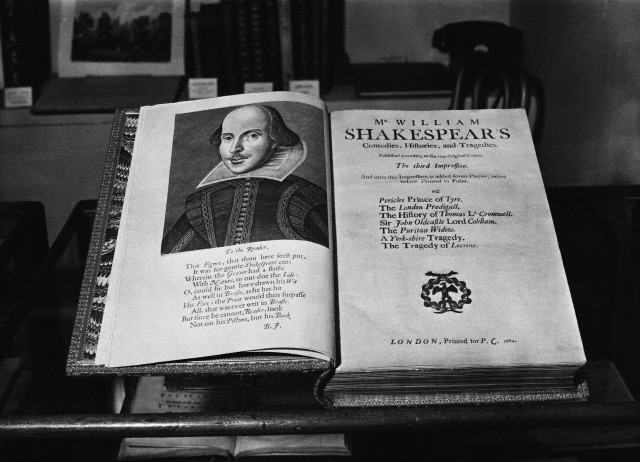
These days, when someone refers to “Literature,” most people think of only one thing:
third folio

But the Classics, I would argue, are not the sole proprietors of the word “Literature”–and they never have been.  And “Literature,” as defined by Merriam-Webster, can mean “written works (such as poems, plays, and novels) that are considered to be very good and to have lasting importance” or simply “books, articles, etc., about a particular subject.”  I know some of my professors in years past would argue that there’s a profound distinction between “literature” (with a lower-case “l”) and “Literature” (with an upper-case “L”)–but then we’re getting into that dreaded world of semantics, where words are bent to match whichever connotations the arguing parties need them to.

I think there are two primary reasons why books become classics:

  1. Someone in a position of power decides they’re worth preserving, and
  2. They continue to make a lasting impression on readers, across cultures and decades.

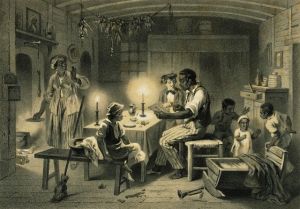
The first item explains why a great number of quality works (by women, or people of color, and so forth) have been excluded from what is considered “Canon Literature,” and which even today comprises a large part of every American schoolkid’s reading list.  And the second item explains the gaps in the first: many works that were not considered appropriate for lasting acclaim have survived through the centuries for seemingly no other reason than they still connect with people.  The first item is an exercise in the mind, and the second in the heart. I have a couple of examples in mind, but I don’t want to turn today’s post into an exercise in literary theory.  (As much as I love it!)

uncle tom's cabin

The fact of the matter is, books mean a lot to people.  Today.  In the here-and-now. The generation lauded as bringing about the “end of literature”–the generation that cut its teeth on supposedly un-literary books like Harry Potter and The Hunger Games–reads more than any generation prior.  And they not only read, they write.  That’s right–they have created a vast market for new stories, and they have stepped up to flood that market with material.  Best of all, they understand one simple and very important truth: a self-published book like The Martian or Wool or Eragon can move them in ways that “Canon Literature” sometimes can’t.  Stigma has lost its power over “kids these days,” and they’re proud to be voracious readers of books that mean something to them, not to the folks putting together SAT reading lists.

I can’t tell you the last time I cried over Vanity Fair or The Adventures of Tristram Shandy.  I appreciate a good dollop of Jane Austen and Charles Dickens and Shakespeare, but I haven’t wept over them recently.  I have wept over The Martian.  (I won’t even hint at my reaction to Harry Potter when I re-read the series this last winter.)  I don’t think there’s room to despair over the “Death of Literature,” or any more support for the argument that literature “doesn’t matter” today than there was when Karl wrote this post back in 2009.  Our definitions of literature have been too narrow, and our expectations of the current generations of readers have been wrong.  Literature is more diverse, more colorful, and more exciting than anyone ever gave it credit for–and it means more now than ever!

And … I’ve made this post run long.  Next week I’ll revisit it, because there’s one crucial component I’ve failed to address today: How literature’s continued “mattering” impacts you as an author, and how you can use it to your advantage!

Thanks for reading.  If you have any other ideas, I’d love to hear them.  Drop me a line in the comments section below and I’ll respond as quickly as I can.  ♠

KellyABOUT KELLY SCHUKNECHT: Kelly Schuknecht is the Executive Vice President of Outskirts Press. In addition to her contributions to the Outskirts Press blog at blog.outskirtspress.com, Kelly and a group of talented marketing experts offer book marketing services, support, and products to not only published Outskirts Press authors, but to all authors and professionals who are interested in marketing their books and/or careers. Learn more about Kelly on her blog, kellyschuknecht.com.