In Your Corner: Nom de Plume (Part II)

Last week, I launched a short new series on the pen name, AKA the nom de plume. I examined some of the reasons, historically, why some authors have been drawn to the partial anonymity it provides—as well as some of the “pros” to doing so today. (Hint: some of the old reasons don’t apply any more, so it’s worth knowing that time has not been kind to nom de plume-rs.)

But what are some of the “cons”? What are some of the reasons not to use a pen name for you, the self-publishing author?

pseudonym pen name nom de plume

PEN NAME CONS:

Some reasons which lead authors to publish under a pseudonym can lead to problems, whether legal, ethical, or moral—or might simply be bad for business. If your motivation for using one involves any of the following reasons, you might want to reconsider:

  • Skipping libel lawsuits. Lambasting your rivals under a pen name will not keep you from facing a libel or slander lawsuit in the slightest. The libelees may not be able to personally identify you, but your publisher can be subpoenaed and forced to turn over your name, and you should never underestimate the regular old information highways of the Grapevine and social media to reveal you to fans and foes alike.
  • Riding on someone else’s coattails. Adopting the name of some other, more famous writer can land you in serious trouble for identity theft, or for copyright infringement. So don’t give yourself a nom de plume like “Edgar Poe” or “Stephen King” unless you’re prepared by the original (or the original’s estate, in the case of deceased persons). Besides, that’s just confusing. Some authors whose real and actual names are shared with other, more famous authors will even choose a pseudonym simply to differentiate their works from their more famous namesake’s.
  • Tax evasion. Nope. Don’t do this. It’s dangerous! Tax fraud is something which the IRS takes very seriously, and authors are not exempt from the law. As with other legal issues, your publisher or publishing company can be subpoenaed for your information if the government has fair reason to suspect you (or your pseudonym) of doing something shady.

There are, of course, other “cons” which have nothing to do with misdemeanors. They include:

  • Making the processing of your advances and royalties more complicated, thus complicating your relationship to both your agent (or company) and bank, as well as complicating the sale of your reprints and subsidiary rights, the administration of your personal estate, and the transfer of title to heirs upon your decease.
  • Making marketing an acrobatic act. If you’re trying to maintain anonymity, it is hard to take advantage of your personal and social networks for promotional purposes without immediately giving up your actual identity. Your real name carries a weight with family, friends, coworkers, and even more tenuous connections that a pseudonym won’t. How will you maintain anonymity at readings or signings, if anyone you know might see your face in pictures or other coverage? (And remember: Facebook can ruin things for you too, with its face-matching algorithms which “suggest” name matches to faces in uploaded pictures.)
  • Shortening your copyright protection. This will only apply if you fail to register your pseudonym with the Copyright Office, but it’s a very real concern since so many people do.
  • Not seeing your name in print. I mean, come on! It’s half of the fun.

All of this is not to say that not choosing to publish under a pen name is the only good way to go … but it is to say that you ought to be cautious, and make sure you’re willing to take on all of the challenges associated with doing so.

So: You’re ready. What next?

Don’t worry, that’s what next week is for! We’ll go over how to choose a nom de plume, and best practices for doing so. It’s going to be fun!

You are not alone. ♣︎


Elizabeth

ABOUT ELIZABETH JAVOR: With over 18 years of experience in sales and management, Elizabeth Javor works as the Manager of Author Services for Outskirts Press. The Author Services Department is composed of knowledgeable publishing consultants, pre-production specialists, customer service reps and book marketing specialists; together, they all focus on educating authors on the self-publishing process to help them publish the book of their dreams. Whether you are a professional looking to take your career to the next level with platform-driven non-fiction or a novelist seeking fame, fortune, and/or personal fulfillment, Elizabeth Javor can put you on the right path.


In Your Corner: Nom de Plume (Part I)

What is a nom de plume, and why should you care?

First of all, we’re talking about pen names.

Ever since J.K. Rowling began writing adult fiction under the pseudonym Robert Galbraith, there has been a resurgence of interest in pen names and what they can do for authors. But the practice predates her and has quite a long legacy; many of your favorite authors are probably using pseudonyms. The author who is Nora Roberts writes romance under that name, futuristic science fiction under another (J.D. Robb), and still more under the names Jill Marsh and Sarah Hardesty. Her real name is Eleanor Marie Robertson. And then there’s Elena Ferrante, who remains as-yet “unknown” in that the author’s real name has not yet been revealed, and James S.A. Corey, which is a collaborative pen name for authors Daniel Abraham and Ty Franck.

But there’s a right and a wrong way to go about using a nom de plume.


Back in the 18th Century, a pen name enabled writers, journalists, and artists to publish controversial and even illegal articles, letters to the editor, and other works of protest without being discovered––but these protections don’t necessarily hold true today, when publishing houses and companies can be subpoenaed for your contact information, among other things. A pen name can help you avoid overexposure, yes––as both Dean Koontz and Stephen King can attest––or to conceal your gender in a still-occasionally-sexist industry––as both Rowling and George Eliot were known to do––but it should never be used as cover for illegal activities, or trusted to protect you from political exposure.

Pen names are tied up with identity politics, and that’s a fact. But new authors should be focusing on the work itself, not on being “exposed” in the public eye, right? Well … probably. Maybe. If you’re writing a tell-all about the mafia, you still might want to consider a nom de plume.


PEN NAME PROS:

  • You can put together a name which no one else “owns.” The world is unlikely to need two David Baldaccis, and you can avoid painful confusion by picking a pen name to differentiate yourself.
  • You legitimately need to conceal your identity. Say you’re a physics teacher in a small town and you want to publish steamy romance books. It’s not illegal, but you want to avoid uncomfortable questions at work. Or perhaps you’re part of the LGBTQIA+ community, and you are afraid of reprisals from friends or family as you write your memoirs. There are reasons for concealment that have nothing to do with “lying.”
  • Your branding is “off” for the genre. You know how it goes … you walk into a bookstore and you can immediately tell what section you’re in by the kinds of names on the shelves. Yeah, that’s a thing. And sometimes, having a catchy name which hints at your genre can be an important selling point. This point leaves room for those of us with difficult to pronounce or remember last names. Findability is key; “weird” names are sometimes perfectly memorable, and there’s zero shame in either sticking to yours or changing it up––but ultimately that’s a decision you might be forced to make.
  • Your last book … didn’t go over so well. It happens. And when it does, sometimes you may need to put out your next book under a new name, to break old associations.


Next week, we’re going to take a look at some “cons” of choosing to use a pen name, like how obnoxious it can be to live and correspond with people under two or more names, and the legal side of things, too. Pen names aren’t the easiest thing in the world to pick up and use … but we’re confident that with the right information, you’ll make the right choice for yourself! So check back next week for Part II in this series on noms de plume!

screen-shot-2017-03-02-at-7-12-09-am

You are not alone. ♣︎


Elizabeth

ABOUT ELIZABETH JAVOR: With over 18 years of experience in sales and management, Elizabeth Javor works as the Manager of Author Services for Outskirts Press. The Author Services Department is composed of knowledgeable publishing consultants, pre-production specialists, customer service reps and book marketing specialists; together, they all focus on educating authors on the self-publishing process to help them publish the book of their dreams. Whether you are a professional looking to take your career to the next level with platform-driven non-fiction or a novelist seeking fame, fortune, and/or personal fulfillment, Elizabeth Javor can put you on the right path.
In Your Corner: Understanding Copyright

I won’t lie:

Copyright is Hard

So: never let the world beat you down into thinking poorly of yourself for not fully understanding every detail of copyright law. We’ll summarize some of the “greatest hits” of copyright for self-publishing authors here, including when it is important to register your copyright, and what it might look life if you do not pursue acquiring a copyright on your next book … but there’s a lot more out there than we can cover in one blog post, so we’ll provide some of our favorite resources at the end of the post as well.

copyright

The Starter Pack: Basics You Should Know

Copyright was introduced in order to protect intellectual property, and draws directly from the US Constitution, which grants this protection for original works in any tangible medium of self-expression (including books, of course, and art, music, film, et cetera). Copyright covers both unpublished and published works.

Copyright is not something you apply for. It is not something the government issues like tickets at the DMV. Copyright law protects your work from being claimed by others as their own, or from being exploited by others who seek to profit from your work without your explicit permission. Instead, your work is protected under copyright laws from the moment of its creation.

Copyright does not protect everything. It doesn’t cover facts, ideas, systems, or methods of operation, although it will protect a textbook or operating manual explaining those things. Make sense? And copyright does not protect the title of your book. You might attempt to trademark a title if it qualifies for that fully separate protection, but that is a lengthy, uncertain, and pricey process. It’s better to know going into publication that your title does not belong to just you. (But then, that can be a freeing thought. You won’t be served papers for accidentally replicating someone else’s title. With so many millions of books in print, that is a good bet.)

Copyright is good in most international cases. As in, there are some countries with whom the United States has not yet worked out mutually beneficial copyright recognition agreements. But the majority of US-allied countries respect US copyright laws.

So What’s This About Registration?

While there’s no requirement to register your copyright—it’s not strictly mandatory, that is, to register—there is a registration service provided by the Library of Congress in order to record claims to copyright. This establishes precedence, and legal standing if someone should ever violate your copyright—it will help you prove that the book in question was first registered by you and you alone. This is one of those “not required but STRONGLY recommended OR ELSE you might lose in a court case” situations. The world is not always a fair place, so we have to protect ourselves whenever we can.

After registration, you will receive a certificate proving your copyright information and placing your copyright record into the public record. In the off chance you face litigation, you will become eligible for statutory damages and attorney fees, among other things. You don’t have to do this right away, although the sooner the better; if you register with the LoC within five years after your initial publication, you are considered covered under prima facie evidence in a court of law.

Don’t rely on the old trick of mailing yourself a copy of your manuscript in order to acquire proof of copyright; this is considered the “poor man’s registration” but it doesn’t always hold up in court.

If You Do Not Register for Copyright …

Your book might be stolen, knowingly or unknowingly.

How unknowingly??

These days, there are hundreds of automated scripts scanning the web and indexing (or storing old copies of) websites and digital content for archival purposes. Many of these scripts are designed with honorable purposes in mind (wanting to preserve uncorrupted copies of websites in case material is taken offline or corrupted somehow) … but some are not. And some operate in a very grey area. You might remember the trouble Google landed in several years ago for making digital copies of recently published books available through the Google Books platform—the intent was to make all published content searchable, but it ended up making all published content purchasable … and through a website which hadn’t purchased the rights to begin with. It was messy. And it remains messy: the US court system ruled in favor of Google and against the Authors Guild.

Many scripts replicate what Google Books has done, but with even fewer safeguards and protections. This means that you have zero standing if you do not register your book with the Library of Congress and find that a website is running a digital copy of your book pulled from the ether by an algorithm without your permission, and literally anyone can now read your book without consent.

And of course there are much nastier cases, where people intentionally steal copyrighted material or otherwise exploit published material for profit. The point is … give yourself a leg to stand on, even if there’s no judge on your doorstep compelling you to do so this afternoon. There might be one in the future, and you want to be well positioned for that.

Resources

Some of our favorite copyright resources include:

And as always ….


You are not alone. ♣︎


Elizabeth

ABOUT ELIZABETH JAVOR: With over 18 years of experience in sales and management, Elizabeth Javor works as the Manager of Author Services for Outskirts Press. The Author Services Department is composed of knowledgeable publishing consultants, pre-production specialists, customer service reps and book marketing specialists; together, they all focus on educating authors on the self-publishing process to help them publish the book of their dreams. Whether you are a professional looking to take your career to the next level with platform-driven non-fiction or a novelist seeking fame, fortune, and/or personal fulfillment, Elizabeth Javor can put you on the right path.
In Your Corner: Doing the Subtitle … Right

subtitle

Subtitles are tricky things, aren’t they?

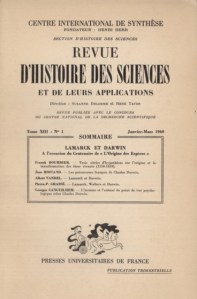
No, we’re not talking about the ones at the bottom of that Netflix show you’ve been binge-watching lately (though we totally get it). We’re talking about book subtitles, those handy descriptive phrases which come after the colon in a book’s title on the front page. They often hint at a book’s content in terms of subject or theme or atmosphere, but each author approaches the subtitle differently. For example, you have the original fancy-pants subtitle, invented pretty much around the same time as the novel and the bound book. A classic example is pretty much anything scientific from the 19th Century, such as Revue D’Histoire Des Sciences: Et De Leurs Applications ….

subtitles

More current examples might include:

  1. Tangled In Life: A Lainey Kelso Mystery, by Mary Meckler (in which the subtitle clarifies the book’s genre as well as indicating that it is part of a series);
  2. Wednesdays With Jerry: A teacher, a student, and lessons to bring about the greatest of life’s stories, by Eane Huff (in which the subtitle sketches out some basic content points as well as placing the book as an inspiration memoir);
  3. Turnings: Love In A Time of War, by Chloe Canterbury (in which the subtitle sets the tone and names the stakes of the book);
  4. When KIWIs Flew: The Diary of a Mad Airline Entrepreneur, by Bob Iverson (ditto, only in this case the subtitle also hints at the book’s style and atmosphere too–light, wild, and intensely funny); and
  5. BULLYING: Applying Handwriting Analysis to Detect Potential Danger Signs and Effects, by David J. DeWitt, CGA (in which the subtitle takes a very serious approach to describing the book’s field of study, as is appropriate for a book which will keep company with peer-reviewed journals, textbooks, and medical handbooks).

As you can see, subtitles perform a variety of different functions–some of them more specifically coded for a particular genre than others, as in the case of strictly descriptive subtitles in the research-driven nonfiction area and more emotive subtitles in the case of fiction. (This would hold true for poetry, too.) Subtitles may not be the first thing potential readers see when they first pick up a copy of your book, but they’re an important follow-up punch to a well-crafted cover, and serve as a bridge between your title and the blurbs and descriptions which readers will find on your back cover. They often make a difference in whether a shopper will commit to buying your book on a deeply instinctual level!

There are, of course, some instances in which a subtitle is not necessary: when the author is a celebrity (and has widespread name recognition, like Kim Kardashian) or famous within a specific field and the book is addressed to people in that field (such as a book written by a famous doctor for doctors), and when a book is a straight-up literary fiction novel. Of course, these authors may still choose to take advantage of the benefits of a subtitle! (We won’t hold it against them.)

A good subtitle is succinct, to-the-point and crystal clear. Subtitles are not the zone for hazy atmospheric inferences and poetic rambles! A strong one will duplicate nothing in the regular title, but will instead expound upon what may be found between covers. The best subtitles provide a digital boost, too, in that they’re a playground for keywords which will better enable readers to find your book (and buy it, of course). Keyword-enriched subtitles make your book marketable, and this is not a benefit to be ignored!

And a side note:

Your book’s title is not protected by copyright, so neither is your subtitle. Its role must be to capture the interest of your audience and to make your book stand out among its peers on a crowded bookshelf, so it’s well worth taking a gander through some of your local libraries and bookstores to see what titles are already trending. You want yours to resonate with current trends–but also to strike a note of contrast, to set your book apart.

My recommendation? Don’t come up with your subtitle until after your book is complete. And if you feel insecure about the direction your title and subtitle are headed, don’t hesitate to reach out. We’re here for you! And we love being your sounding board.

You are not alone. ♣︎


Elizabeth

ABOUT ELIZABETH JAVOR: With over 18 years of experience in sales and management, Elizabeth Javor works as the Manager of Author Services for Outskirts Press. The Author Services Department is composed of knowledgeable publishing consultants, pre-production specialists, customer service reps and book marketing specialists; together, they all focus on educating authors on the self-publishing process to help them publish the book of their dreams. Whether you are a professional looking to take your career to the next level with platform-driven non-fiction or a novelist seeking fame, fortune, and/or personal fulfillment, Elizabeth Javor can put you on the right path.

In Your Corner: Battling Burnout

What is burnout? I love this definition from Merriam Webster, which draws inescapable comparisons to combustion engines:

burnout definition

But chances are, if you’re a writer, you’re already well-acquainted with burnout–its symptoms, and its effects. This is because the act of writing is itself exhausting, even when it is also necessary and therapeutic and good for us. Writing saps a person’s physical and emotional energy reserves, tapping into both left and right brain by requiring both creative and analytical thinking … simultaneously.

Writing is work. It can be fun and wild and wonderful, but writing is work.

Luckily, there are ways to combat burnout and to write past the sticking point. Emmy Award winning Gene Perret, in a 2011 interview with Psychology Today‘s Carolyn Kaufman, says that writers are “not people who can be superb 24 hours a day. We must allow ourselves to be mediocre at times…maybe even semi-terrible at times.” He cites Shakespeare as an example of a famous author who was still constrained by the same laws of time and energy–and self-criticism. “Burnout,” he says, “is a real phenomenon. Writers get weary of turning out so much similar material. The best cure I’ve found for this situation is to retreat to some sort of vacation. Get away from it all.” He continues with an anecdote:

However, I’m talking more about a brief vacation. Get away from your desk and take a walk, watch something on television, read a chapter or two of a book, take a brief nap. Then come back to your task refreshed. Many times my partner and I would struggle to get a new sketch idea. It would be so hard that we would often have words with one another and sometimes partners almost came to blows. Then we go to lunch, tell each other a few stories, trade insults, pay our bill, come back to work, and discover that one or the other had come up with a great idea for a sketch. – Gene Perret

And look, we’re not all Gene Perret. We’re all going to require different means of getting over the hump and back into a place where we can write comfortably. But taking our cue from Perret’s suggestion of taking a break or a short “vacation,” here are five tips for combating burnout:

  1. Know the signs. Burnout can present differently from person to person, but generally it shows up as a constellation of symptoms: exhaustion, lack of motivation, an unfocused general negative attitude towards people and situations you normally enjoy or tolerate, memory and perception troubles, poor health, and quality fade in your writing. There are plenty of other things which might cause these symptoms, of course, so it’s well worth reaching out to a professional to help verify that your problems stem from burnout and not depression, chronic fatique, Lyme’s, or any of the other possibilities.
  2. Accept that this is burnout, and don’t be too hard on yourself. Everyone runs out of gas sometimes, and it’s not a sign that you’re in the wrong profession or somehow otherwise “messing up.” It’s a sign that you need a break–nothing more or less.
  3. Unplug. You won’t truly ever get away from your writing unless you make a couple of big changes and physically distance yourself from the act of writing for a while. But you’ll also need to distance yourself from those sources of frustration and inspiration which remind you of writing, so it’s best to unplug not just the computer you type on but the smartphone or tablet you use to browse Twitter and Facebook and Instagram … and read New York Times Book Review and other works of literary criticism. A break means a break. A total distancing of yourself from the act of writing.
  4. Do something you’ve been putting off. For me, this is usually cleaning the house. I know, it’s disgusting. But I find cleaning does a good job of getting me out of my head and back into my body where I belong, and it also … well, it cleans the house. And having a clean, uncluttered workspace is vital to my own mental health, I’ve discovered. But maybe cleaning isn’t something you put off–maybe it’s going to the doctor, or the vet, or meeting up with friends. Maybe it’s a camping trip you’ve always wanted to go on but haven’t ever found the time for. Do the thing you never have time for when you’re chained to your writing desk!
  5. Remember your audience. As Pettit tells us in his interview, “Writing is a solitary profession. Many of us sit in a quiet room with only a keyboard for company. But to be a good writer, you must remember that there are readers out there. They’re waiting for what comes out of your printer. Keep them in mind and your writing will be all the better for it.” And your readers are why you do what you do, so don’t forget as you return from your break that you’re not just combating burnout because it feels bad and lowers your productivity–you’re in the battle because burnout alters your relationship to your readers, and they are a precious part of what you do.

burnout matchsticks

You are not alone. ♣︎


Elizabeth

ABOUT ELIZABETH JAVOR: With over 18 years of experience in sales and management, Elizabeth Javor works as the Manager of Author Services for Outskirts Press. The Author Services Department is composed of knowledgeable publishing consultants, pre-production specialists, customer service reps and book marketing specialists; together, they all focus on educating authors on the self-publishing process to help them publish the book of their dreams. Whether you are a professional looking to take your career to the next level with platform-driven non-fiction or a novelist seeking fame, fortune, and/or personal fulfillment, Elizabeth Javor can put you on the right path.