The Importance of the Publishing Package

How much an author chooses to invest in the publishing of his or her manuscript is a very personal decision. Most of us are on a budget, and in today’s economic climate, such an investment needs to be given careful consideration.

All self-publishing companies offer different packages that accommodate your budget. When choosing a publishing company and picking a package, it is important to consider both the price and the services included. You need to pick a package that is affordable but still offers the services you want and need. To get started, here is an overview of the packages available at Outskirts Press. 

At Outskirts Press, packages prices range from $199.00 to $4,979.00. I rarely recommend our lowest priced package; The Emerald ($199.00) does not include an ISBN number. An ISBN number is a requirement for distribution in the publishing community. The One-Click Publishing Package ($4,979.00) is designed specifically for professional authors that want it all with the push of a button. Authors that want a full color interior publish with the Pearl Package for $1099.00. That leaves the Diamond ($999.00), the Ruby ($699.00) or the Sapphire ($399.00) for authors that have black and white interiors. The difference between these packages involves the amount of flexibility that is allowed in book sizes and cover choices as well as the options that are included.

Beyond the flexibility and options, it is important for authors to understand how the mathematics work. I regularly advise authors to decide when and how they want to spend their hard-earned money. Diamond authors, compared to Ruby or Sapphire authors, pay the most initially;however, their royalties are $1.00 more per book sold than a Ruby author and $2.00 more per book sold than a Sapphire author. Additionally, a Diamond author pays $1.00 less for a copy of his or her own book compared to a Ruby author and $2.00 less than  a Sapphire author.

 Authors need to decide if they want to spend less on the front-end and more on the back-end verses spending more on the front-end and less on the back-end. I always recommend the second option. Most authors are investing in their manuscript in the hope of selling lots of books. Logically, one would want the highest royalty and lowest per book cost.

Regardless of your budget or needs, there is a package that will make your publishing dreams come true.

 

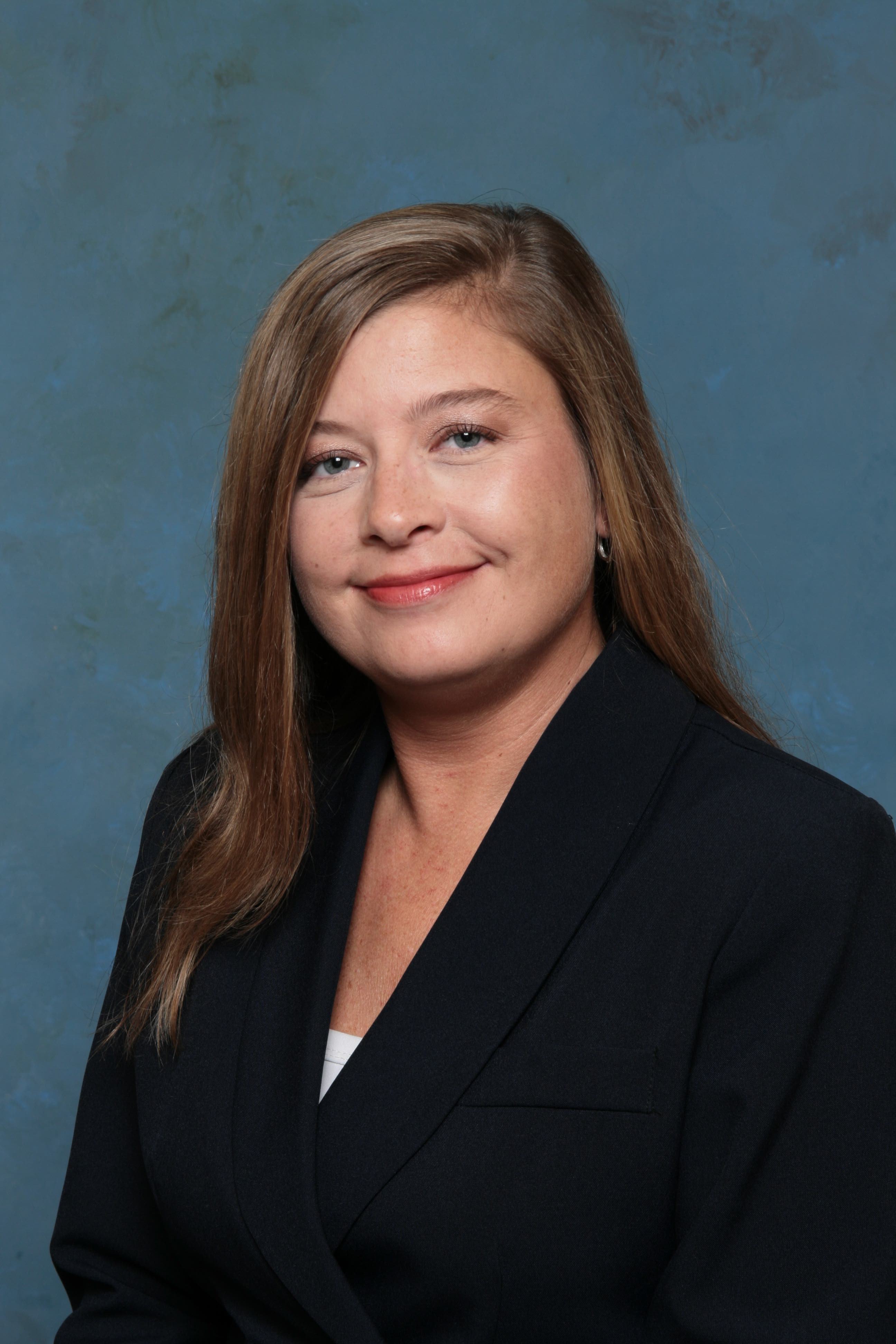
ABOUT WENDY STETINA:
Wendy Stetina is a sales and marketing professional with over 30 years experience in the printing and publishing industry. Wendy works as the Director of Author Services for Outskirts Press. The Author Services Department is composed of knowledgeable customer service reps and publishing consultants; and together, they all focus on educating authors on the self-publishing process in order to help them publish the book of their dreams. Whether you are a professional looking to take your career to the next level with platform-driven non-fiction, or a novelist seeking fame, fortune, and/or personal fulfillment, Wendy Stetina can put you on the right path.


Self-Publishing Weekly Book Review: Digging Deep

Book reviews are a great way for self-publishing authors to gain exposure. After all, how can someone buy your book if they don’t know it exists? Paired with other elements of your book promotion strategy, requesting reviews is a great way to get people talking about what you’ve written.

When we read good reviews, we definitely like to share them. It gives the author a few (permanent) moments of fame and allows us to let the community know about a great book. Here’s this week’s book review by Midwest Book Review:

Digging Deep: A Writer Uncovers His Marriages

Boyd Lemon

Publisher: Outskirts Press

ISBN: 9781432768461

Genre: Autobiography

Review: Michael J. Carson

Boyd Lemon’s autobiography, “Digging Deep,” shares insight about his three marriages and his perspective on their failures. Each of Boyd’s wives shared a unique place in his life.

Growing up as an only child, Lemon did not have to compete for attention with siblings. His mother was slender, and he tried to find women who emulated her physically.

Each of the marriages had the same problem, which was finances. He was a successful attorney who had a penchant for spending, and his wives were no better with their buying habits. Furniture, houses, and animals were his anathema. He was constantly trying to pay his bills, forcing him to work long hours, and his personal life suffered.

Lemon desired to live a lifestyle near the water but felt it necessary to sacrifice what he wanted in his early relationships in order to live within his means. He acknowledged that in order for him to cope with his relationships at home, he would drink far too much so that he could block out discussing with his wives how to resolve their problems.

This book also delves into his sexuality and at times gets to be more specific than necessary. Lemon used this book as a cathartic diary written after events occurred. At times, he rambled on in an apparent attempt to resolve old problems.

Some of the anecdotal material is quite interesting. Especially, when he described his last marriage and how he had gotten into raising racehorses. The last wife seems to have been his real nemeses with her love of animals to Boyd’s total detriment with regard to finances. One of the key themes he describes with regard to raising horses is that it was fortunate to break even when breeding or racing. One of their horses won a race, so they invested in quality training, veterinarian fees, and boarding. After ten years, Boyd and his wife invested one million dollars for the luxury of winning a minimal number of races.

When you read this autobiography, keep in mind that the problems he describes are one-sided. Boyd Lemon is giving his viewpoint with regard to how the marriages ended. A collaborative effort by both Boyd Lemon and his three ex-wives would have made this a more meaningful expose’. Each could have given their insight from either a male or a female point of view, which would have given a more interesting storyline.

This is an interesting perspective of Lemon’s life as he experienced it through three failed marriages. This is a two star book.


How to Get Your Self-Published Book in a Library

You have an ISBN. You have a LCCN. So libraries should be able to find your book, and therefore, will purchase your book, right? Wrong. Unfortunately, libraries rarely “order” self-published books. This doesn’t mean they don’t house self-published books and that they won’t stock your book. It simply means you need to do a little work to get on their radar. Here are a few ways to get your book in a library.

  • Donate a copy (or several copies) of your book to the library. Be sure to go through the proper donation channels.
  • Host a book reading at your library. This will not only introduce the library to your book but also introduce your book to potential readers.
  • If your book is geared towards children, give a school presentation on your book’s subject. School libraries are always looking for new books.
  • Connect with librarians via social networks. Twitter, Facebook, and LinkedIn are powerful ways to network.
  • Send promotional materials such as flyers and letters to local libraries. Be sure to include of the essential information about your book such as subject, genre, audience and purchasing information.
  • Try to get a book review in a local publication. This will bring positive attention to your book and encourage libraries to buy it.

Libraries are a powerful part of your book promotion strategy. Creative marketing tactics can increase your chances of a library stocking your book. They can also lead to great relationships with librarians and readers. The best way to find out what your local library wants is to talk to the librarians. Work on building an honest relationship, and you may just find one your book’s best promoters.

Cheri Breeding ABOUT CHERI BREEDING:
Since 2005 Cheri Breeding has been working as the Director of Production for Outskirts Press. In that time, she has been an instrumental component of every aspect of the Production Department, performing the roles of an Author Representative, Book Designer, Customer Service Representative, Title Production Supervisor, Production Manager and, Director of Production. She brings all that experience and knowledge, along with an unparalleled customer-service focus, to help self-publishing authors reach high-quality book publication more efficiently, professionally, and affordably.

Trade Discounts and Distribution: One of the Many Self-Publishing Perks

The self publishing industry is a reaction to the traditional publishing industry. For years, the only option for authors to see their manuscripts published was to hire an agent and/or submit their manuscripts to the traditional houses in hopes of being selected for publication. In most cases, this process took many years, involved substantial changes to the manuscript and most importantly, forced the author into giving up the rights. Retail pricing and the author’s royalties were out of the author’s control as well. Self-publishing allows authors to maintain control over their material and allows them to select the type of distribution that is appropriate to their material and marketing goals.

Speaking of distribution the desire for shelf space is always a popular subject for new authors, and its requirements are very strict. Books that make it onto the shelves of the brick and mortar chain book stores have to carry a very high trade discount (50% to 55%). “Trade discount” is our industry specific term for “profit margin.” For example, when you purchase a book within a Barnes & Noble bookstore for $14.95, 55% of the retail price ($8.22) is divided between the store and the wholesale distributor for their profit. When you subtract the $8.22 from the $14.95, you are left with $6.73. This remainder covers the cost of the actual book. The balance that is left after the price of the book is the author royalty. Typically, authors receive very low royalties in these scenarios.  

In addition to needing a high trade discount, authors also need to provide the bookstore with a “Retail Returns Program.” This program allows the bookstores to return books to the wholesaler and get their money back if the books do not sell. You must provide this program to the retailers, but having it is no guarantee that they will agree to stock your book. 

Conversely, authors that elect to focus on internet sales may select a much lower trade discount as the internet book sites do not require as large of a profit margin. So that same $14.95 retail priced book under a 25% trade discount would look like this mathematically: $14.95 – $3.74 (25% of the retail price) = $11.21 – the actual cost of your book = your royalty. Obviously, $11.21 is a larger number than $6.73. Therefore, your royalty will be greater if sold by an online distributor, assuming the cost of your book remains the same in each equation.

Freedom to choose your trade discount and distribution center is just one of the many perks of self publishing. To learn more about trade discounts, check out Cheri’s post titled Trade Discounts 101. It provides a great overview of industry standards and questions to ask yourself before setting your discount.

ABOUT WENDY STETINA:
Wendy Stetina is a sales and marketing professional with over 30 years experience in the printing and publishing industry. Wendy works as the Director of Author Services for Outskirts Press. The Author Services Department is composed of knowledgeable customer service reps and publishing consultants; and together, they all focus on educating authors on the self-publishing process in order to help them publish the book of their dreams. Whether you are a professional looking to take your career to the next level with platform-driven non-fiction, or a novelist seeking fame, fortune, and/or personal fulfillment, Wendy Stetina can put you on the right path.

Self-Publishing Weekly Book Review: A Conspiracy of Mirrors

Book reviews are a great way for self-publishing authors to gain exposure. After all, how can someone buy your book if they don’t know it exists? Paired with other elements of your book promotion strategy, requesting reviews is a great way to get people talking about what you’ve written.

When we read good reviews, we definitely like to share them. It gives the author a few (permanent) moments of fame and allows us to let the community know about a great book. Here’s this week’s book review by Midwest Book Review:

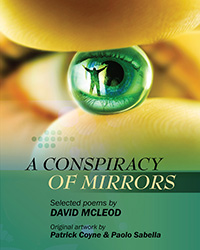
A Conspiracy of Mirrors

David McLeod

 Publisher: Outskirts Press

ISBN: 9781432771331

Genre: Poetry

Everyone is the sum of their lives, a reflection of those around them. “A Conspiracy of Mirrors” is a collection of poetry from David McLeod who discusses these reflections and their impact on our lives as a whole. Also blended in throughout the poetry is color artwork from Patrick Coyne & Paolo Sabella. “A Conspiracy of Mirrors” is worth checking out for poetry fans.