There is No Such Thing as Free Lunch

Have you heard the cliché “There is no such thing as a free lunch”? Everything has a cost, even if it appears to be free. This true for self publishing as well as all other areas of life.

While there are companies who say they publish your book for free, there are still costs to you. For instance, you may have to buy large amounts of merchandise after the book is printed, or you will have to spend vast amounts of time marketing your own book. In addition, a “free” publishing company could harm your reputation has an author if your book is not of professional quality.

Authors who want their books to be taken seriously need to invest in their projects. This means you’ll at least need a good copy editor and possibly an experienced graphic designer. Depending on your skills and goals, you may also require marketing services. Not all self publishing companies offer these extra services.

Authors should invest in their books by choosing a full-service self publishing company that offers a variety of production and marketing services as well as excellent customer service. This will ensure that you have access to skilled professionals who will help make your book a masterpiece.

I’d love to know, what additional services do you plan to use when self publishing your book?

ABOUT WENDY STETINA: Wendy Stetina is a sales and marketing professional with over 30 years experience in the printing and publishing industry. Wendy works as the Director of Author Services for Outskirts Press. The Author Services Department is composed of knowledgeable customer service reps and publishing consultants; and together, they all focus on educating authors on the self-publishing process in order to help them publish the book of their dreams. Whether you are a professional looking to take your career to the next level with platform-driven non-fiction, or a novelist seeking fame, fortune, and/or personal fulfillment, Wendy Stetina can put you on the right path.

Weekly Self-Published Book Review: ELCO

Book reviews are a great way for self-publishing authors to gain exposure. After all, how can someone buy your book if he or she doesn’t know it exists? Paired with other elements of your book promotion strategy, requesting reviews is a great way to get people talking about what you’ve written.

When we read good reviews, we definitely like to share them. It gives the author a few (permanent) moments of fame and allows us to let the community know about a great book. Here’s this week’s book review by Midwest Book Review:
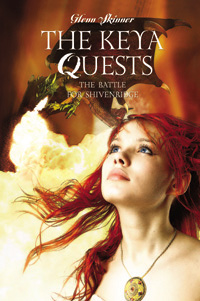
ELCO

Leslie Brudvig

Publisher: Outskirts Press

ISBN: 9781432767273

Reviewer: Beverly Pechin

The book begins in the trenches of war during World War II and introduces you to a motley crew of men in the “L” Company. As you meet each of the characters, you realize that war is handled differently by different people. We all have our ways to cope with death around us and although the men are at the end of war-time, they still have a sense of completion; they feel the need to finish the job until they’re told otherwise.

The pranks, wise cracks, and death that surround each character differ depending upon personality. One is determined to leave with tons of silver coins confiscated from a “Jap Camp” they raided, certain to become rich with the end of the war. One can find a way to get just about anything you can imagine; the deal is you just pay the price and don’t ask how. The characters are shared in detail with the reader, giving you the opportunity to truly know each one as if you were truly there meeting them. As the war ends though, much like many war buddies, they go about their own way but always seem to keep in touch at some point. These men are no different and decide that they will become a corporation called ELCO, named after their military unit “L Company,” and utilize their friendships to create an organization to disperse literally millions of dollars to various charities.

In this book, it’s interesting to follow the lives of some of the men as they move on to civilian life and become everything from a U.S. Senator to a crime lord. You’re led into the boardroom with one of the men who made his fortune from Wall Street to the unscrupulous behind the scenes of one of them who became a Porn King. Not wanting to give away who becomes what in civilian life, I’ll leave names out, but the story is intriguing and touching as well. It’s hard to believe that these same men that kept their hard-core exterior during the war realized how important it was to take their benefits in life to help others in the world. You’re touched with their stories, amazed by their chosen paths in life, and never left without feeling a tug at your heart that this big, burly group of men who made it in the war wanted to honor their company and those from their company that didn’t come home alive by being charitable beyond dreams.

It’s an amazing story that truly takes you from the trenches of battle, hearing the fear in the voices of the same men that later in life strive to be some of the most powerful men in the world. It is heart-wrenching, touching, and definitely written with such talent that you walk away from the last page yearning for more.

The author’s ability to create characters so true to life and so realistic in war gives you a feeling he speaks from experience, and he does,  having been a rifleman in WWII. While the book is fiction, the characters are a lot like those he created a bond with during the war. It’s amazing that out of war comes such a wonderful thing as the bonds of friendship and determination to do well for so many others. This is a must read book for anyone; if you’re a not a typical reader of war stories I still strongly suggest this as a great read.  It’s not written in horrid gory fashion and doesn’t disgust you, but instead it make you a part of “L” Company or “Love” Company as they complete their mission and move on in life. It truly is unlike any war story turned Cinderella story I’ve ever read because of that fact. Most think that they need to be very gruesome with intricate details of the war, but the reality is we know war isn’t pretty and we don’t necessarily need or want those details.

When we read a book like this we know how horrible the war aspect is, and yes, it is touched on by the author but not the focus of the book. The focus is the organization created later when this group of extraordinary men come together to make a difference in the world. “ELCO” is going to bring your mind to a point of realizing that while war is horrible, some people can actually make something beautiful come out of it in their friendships and their determination that continues from the battlefield to the job back home.

The Rise of POD Publishing

In 2010, traditional print publishing grew a mere 5%, up from 4% in 2009, but non-traditional publishing, such as print on demand (POD) and self-publishing, grew a whopping 169%, according to a Bowker report. The report estimates that non-traditional publishing will continue to grow in the future.

POD publishing first surpassed traditional publishing in 2008. Since then, POD publishers have been able to produce eight times the output of traditional publishers. This is great news for aspiring authors! It means that there are vast opportunities to write, publish, and sell quality books.

Most writers are overwhelmed with constant rejection from agents and editors or fear that their books will never be seen in print because of the difficult world of publishing. This doesn’t have to be the case. POD is a great option for many writers, and there are no agents or editors telling you your book isn’t good enough. If you believe in your book, you can see it in print.

ABOUT KELLY SCHUKNECHT: Kelly Schuknecht is the Vice President of Outskirts Press.  In addition to her contributions to the Outskirts Press blog at blog.outskirtspress.com, Kelly and a group of talented marketing experts offer book marketing services, support, and products to not only published Outskirts Press authors, but to all authors and professionals who are interested in marketing their books and/or careers. Learn more about Kelly on her blog at http://kellyschuknecht.com.

Five Tips for a Great Synopsis

One of your responsibilities as a self-published author will be writing a synopsis for your books. This is the text that will convince book sellers (such as agents and distributors) to purchase and sell your book. It is different from the copy on the back cover of your book, which persuades the reader to purchase your book. To write a winning synopsis, remember these five tips.

1. Reveal everything that happens in the book, including the ending. Heck, revealing the story’s ending is a synopsis’s defining unique characteristic. You shouldn’t find a story’s ending in a query or in-person pitch, but it does leak out in a synopsis.  A synopsis is designed to explain everything that happens, not to tease, so avoid language such as “Krista walks around a corner into a big surprise.” Don’t say “surprise;” instead say exactly what happens.

2. Make your synopsis two pages, double-spaced or one page, single-spaced. There is always some disagreement on length. This stems from the fact that synopses used to trend longer (up to 12 pages!). But over the last five years, agents have requested shorter and shorter synopses — with most agents finally settling on one to two pages. If you write a one page, single-spaced synopsis, it’s the same length as two pages, double-spaced; either are acceptable. There will be the occasional agent who requests something strange, such as a “5-page synopsis on lime green paper that smells of cinnamon!” But for  most agents, a one to two page document is perfect.

3. Take more care and time if you’re writing genre fiction. Synopses are especially difficult to compose if you’re writing character-driven (i.e., literary) fiction because there may not be a whole lot of plot in the book. Agents and editors understand this and put little (or no) weight into a synopsis for literary or character-driven stories. However, if you’re writing genre fiction — specifically categories like romance, fantasy, thriller, mystery, horror or science fiction — agents will look over your characters and plot points to make sure your book has a clear beginning, middle, and end as well as some unique aspects they haven’t seen before in a story. So if you’re getting ready to submit a genre story, don’t blow through your synopsis; it’s important.

4. Feel free to be dry, but don’t step out of the narrative. When you write your prose (and even the pitch in your query letter), there is importance in using style and voice in the writing. A synopsis not only can be dry, but probably should be dry. The synopsis has to explain everything that happens in a very small amount of space. So if you find yourself using short, dry sentences like “John shoots Bill and sits down to contemplate suicide,” don’t worry. This is normal. Lean, clean language is great, but do not step out of the narrative. Agents do not want to read things such as “And at the climax of the story,” “In a rousing scene,” or “In a flashback.”

5. Use all caps for  character names the first time they are introduced. Use normal text on other references. Also, avoid naming too many characters because this can get confusing;  try to set a limit of five or six. I know this may sound tough, but it’s doable. It forces you to exclude small characters and subplots from your summary, which actually strengthens your synopsis.

If you follow these tips, you will write a great synopsis.

Cheri Breeding ABOUT CHERI BREEDING: Since 2005 Cheri Breeding has been working as the Director of Production for Outskirts Press. In that time, she has been an instrumental component of every aspect of the Production Department, performing the roles of an Author Representative, Book Designer, Customer Service Representative, Title Production Supervisor, Production Manager and, Director of Production. She brings all that experience and knowledge, along with an unparalleled customer-service focus, to help self-publishing authors reach high-quality book publication more efficiently, professionally, and affordably.

Print Books Will Endure

Digital books are great! You can carry around a library in your purse and read anywhere. Plus, digital books are often cheaper to produce (and therefore, cheaper to buy) and are environmentally friendly. Still, paper books will endure. Here are three reasons why.

They Make Great Gifts

Print books make great gifts. I often give friends and relatives books for holidays and birthdays. There is nothing better than the gift of reading.

They are Easy to Share

People love sharing books with their friends and family. How many times have you read a great book and passed it along to someone else? The ability to share is one of the pleasures of reading. Sharing digital books is possible, but it’s not as easy.

There is Nothing Like a Print Book

Many readers love the feel and smell of print books. Reading is an opportunity to escape our chaotic lives and enter another world. There is just something about sitting outside or laying on the couch with a paper book and getting lost in a story. Reading a digital book just isn’t the same.

If you are considering publishing, your best option is have a print and digital copy of your book. This will make sure you please both types of customers. Which do you prefer: digital or print books?

ABOUT WENDY STETINA: Wendy Stetina is a sales and marketing professional with over 30 years experience in the printing and publishing industry. Wendy works as the Director of Author Services for Outskirts Press. The Author Services Department is composed of knowledgeable customer service reps and publishing consultants; and together, they all focus on educating authors on the self-publishing process in order to help them publish the book of their dreams. Whether you are a professional looking to take your career to the next level with platform-driven non-fiction, or a novelist seeking fame, fortune, and/or personal fulfillment, Wendy Stetina can put you on the right path.