From the Archives: “Seven Ways to Make NaNoWriMo More Enjoyable”

Welcome back to our Tuesday segment, where we’ll be revisiting some of our most popular posts from the last few years.  What’s stayed the same?  And what’s changed?  We’ll be updating you on the facts, and taking a new (and hopefully refreshing) angle on a few timeless classics of Self Publishing Advisor.

∗∗∗∗∗

[ Originally posted: October 31st, 2012 ]

I am so proud of all the self-publishing authors who are beginning the NaNoWriMo challenge TOMORROW! It takes courage and dedication to commit to writing a book, especially when your timeline is only 30 days. To make the task easier, it is important to stay organized and focused. Here are seven tips to make the NaNoWriMo experience more enjoyable for all self-publishing authors.

1. Get in the “write” mindset. Before you begin each writing session, prepare yourself mentally. Everyone has a different approach that works for them. If you aren’t sure what is best for you, try different tactics. Some ideas include reading a few pages written by one of your favorite authors, listening to inspiring music, or doing a few yoga poses. The goal is to clear your  mind and get focused on your book.

2. Create a schedule and write it on the calendar. Decide exactly when and where you will write, and make sure friends and family know when you’ll be unavailable. You may have to pass on a few social events this month to fit in extra writing time. If you do have events you have to attend, schedule writing time elsewhere during that day.

3. Don’t forget about your outline. While your story may morph into something you didn’t expect, it is a good idea to keep the outline you created prior to NaNoWriMo on hand at all times. It is your road map to finishing your book and will keep you from getting off course. There will be time to make changes to your manuscript after NaNoWriMo has ended. For now, your goal is to finish the manuscript.

4. Keep an idea notebook with you at all times. As you write your story,  you may think of ideas for later chapters. Be sure to have a spot where you can joint down any ideas that come to mind. It is a good idea to keep this notebook with you even when you aren’t writing. Sometimes the best ideas appear when you aren’t working on your book at all.

5. Give yourself a break. Writing a book in a month is time-consuming. This is not the month to hold yourself to unrealistic expectations. It is okay to order take-out for dinner, accept your mother-in-law’s offer to switch your laundry, and let the kids watch an extra hour (or two) of TV. For now, focus all of your energy on your book.

6. Get moving. Sitting at a computer all day is tough on your body, so be sure to schedule in some time to exercise. Go a for a short walk, or do some stretches. Not only is it good for your body, but exercise can else help clear your mind and break through writer’s block.

7. Reward yourself. When you reach your writing goals each day, acknowledge your success and reward yourself. Treat yourself to a bubble bath, ice cream sundae, or other special reward. You deserve it.

Writing a book can be challenging, so you need to have a plan, be surrounded by supportive people, and take care of your mind and body. Doing so will help you stay on track and focus on your book. It is when we let ourselves become overwhelmed and exhausted that we aren’t able to stay organized and successfully finish our manuscripts.

I’d love to know, how do you plan to make NaNoWriMo more enjoyable?

– by Kelly Schuknecht

By  now you’re more than halfway through November and your NaNoWriMo challenge—congratulations!! I couldn’t be more proud to be part of this fantastic community of authors than I am today, in November of 2016. Let’s talk a little about how it’s going!

nanowrimo

(That badly, huh? Well, let’s hope not. There are a gazillion “Keep Calm and …” memes out there and I will use all of them if I have to in order to cheer you up and keep you motivated. I say “you” but really I mean “me, too.”)

What are the challenges we face most often in the midst of November? I can’t necessarily speak for you, but I can speak for myself and those writers who I keep in close contact with—and we all seem to suffer most from three concrete struggles:

  1. Low energy.
  2. Lack of direction.
  3. Low confidence.

You’ll note that all three of these issues are touched on, even if only obliquely, in my original post from 2012. The ways to conquer low energy include getting up and moving around and giving yourself a break. The ways to find a sense of direction include putting yourself in the “write” mindset and working from an outline (if you haven’t written one ahead of time, it’s still a good idea to set aside an hour or two to sketch out something mid-November). And the ways to combat low confidence? Let’s just say one of the first things I write in my “idea notebook” each year is a list of quotes and facts about authors I love, many of whom have faced the exact same challenges and overcome them.

There’s no one way to “Keep Calm and Carry On”—instead, there are many, many ways. Not all of them will work for you, and even the ones that used to work for you four or five years ago might not work now. I find that the older I become, the more I struggle with maintaining my sense of focus and direction, which puts the related coping mechanisms under a lot of strain. Take a moment this November to evaluate where you’re at and what struggles you face, and tailor your approach to those needs—objectively, and with an eye out for how you’ve changed. Consider it the writing equivalent of your yearly physical exam at the doctor’s!

Thanks for reading.  If you have any other ideas, I’d love to hear them.  Drop me a line in the comments section below and I’ll respond as quickly as I can.  ♠


Kelly

ABOUT KELLY SCHUKNECHT: Kelly Schuknecht is the Executive Vice President of Outskirts Press. In addition to her contributions to the Outskirts Press blog at blog.outskirtspress.com, Kelly and a group of talented marketing experts offer book marketing services, support, and products to not only published Outskirts Press authors, but to all authors and professionals who are interested in marketing their books and/or careers. Learn more about Kelly on her blog, kellyschuknecht.com.

Self-Publishing News: 11.21.2016

And now for the news!

This week in the world of self-publishing:

Ben Arzate provides a unique perspective as a self-publishing poet. Arzate felt that rejection from publishing companies was inevitable after his first, “Sorry, but no,” afterwhich he made the conscious decision that he would prefer to pour his time directly into crafting his book, rather than soliciting companies who (he thought) had no interest.

What I most enjoyed about reading Arzate’s first-person account of his experience with self-publishing what that it reminded me of the naivete a lot of us are forced to come to terms with when it comes to actually putting a book together. I found myself laughing at the idea of Arzate formatting his book according to Microsoft Word, which is based on an 8 ½ x 11 inch page, not because it was ridiculous, but because most of us are so enormously and entertainingly ignorant about the intricacies of formatting a book before we’ve had a hand at it ourselves. Arzate’s piece provides an informative, amusing and honest look at a first go in the self-publishing world.

Hank Quense has been an author for over 20 years, and a successful self-publishing author at that. The simple errors that can be made on someone’s first go at self-publishing (see previously reviewed article) are the subject of Quense’s ebook, “The Complete Self-Publishing Guide.” Quense says, “My books are dedicated to providing clear, concise information and procedures on the publishing process,” which is great for those of you new to self-publishing who are feeling overwhelmed by all of the pieces to the publishing puzzle.

It is easy to be overwhelmed by the prospect of self-publishing, Quense admits that it’s hard work that people often want to find some easier way around, but he insists that there is no easy way out and that good results come from hard work. Quense bemoans the authors who simply upload their manuscripts to Kindle or Amazon without proofing or providing cover art, and he insists that your sales will suffer from that sort of indolence. Putting in the time and money to publish something that you can be proud of will result in better sales, according to Quense. While an editor and an artist cost a fair amount of money, they are a necessary investments, according to Quense. In this vein, Quense compares books to companies; with that comparison in mind, the talk of investments, marketing strategies and customer base become more relevant.

Jonathan Kile taps into the unspoken issue of what he calls “editor’s block.” As far as he’s concerned, there is no writer’s block, this is merely an excuse people use to procrastinate writing. Writing, as far as Kile is concerned, is the easy part–just get words on the page, or more likely, on the computer screen.

Kile makes a candid political reference to pre-edited writing saying, “while the initial draft can be a Trumpian stream of consciousness making little to no sense, editing requires the quality of the prose and the ideas contained within to be compelling and tell a great story.” Providing some great advice for getting over “editor’s block,” Kile says that we should look at our work as if it isn’t our own. Obviously this is a pretty difficult mindset to enter; you wrote the damn manuscript and assuming you haven’t suffered from amnesia, then you presumably know it all too well. However, Kile wants to implore that you try to get into the shoes of your readers. Will they wish you had developed a certain character more? Will they have longed for a different ending? These questions, among others posed by Kile, are the types of questions you need to ask yourself when editing.


spa-news

As a self-publishing author, you may find it helpful to stay up-to-date on the trends and news related to the self-publishing industry. This will help you make informed decisions before, during and after the self-publishing process, which will lead to a greater self-publishing experience. To help you stay current on self-publishing topics, simply visit our blog every Monday to find out the hottest news. If you have other big news to share, please comment below.


Kelly

ABOUT KELLY SCHUKNECHT: Kelly Schuknecht is the Executive Vice President of Outskirts Press. In addition to her contributions to the Outskirts Press blog at blog.outskirtspress.com, Kelly and a group of talented marketing experts offer book marketing services, support, and products to not only published Outskirts Press authors, but to all authors and professionals who are interested in marketing their books and/or careers. Learn more about Kelly on her blog, kellyschuknecht.com.

Saturday Book Review: “Paradox Effect”

Book reviews are a great way for self-publishing authors to gain exposure. After all, how can someone buy your book if he or she doesn’t know it exists? Paired with other elements of your book promotion strategy, requesting reviews is a great way to get people talking about what you’ve written.

When we read good reviews, we definitely like to share them. It gives the author a few (permanent) moments of fame and allows us to let the community know about a great book. Here’s this week’s book review, courtesy of Amazon reviewer faience:

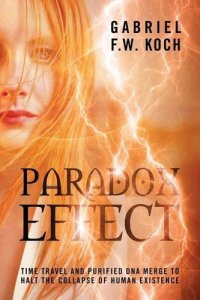
Time Travel and Purified DNA Merge to Halt the Collapse of Human Existence gabriel koch

Paradox Effect: Time Travel and Purified DNA Merge to Halt the Collapse of Human Existence

by Gabriel F. W. Koch

Publisher: Outskirts Press

ISBN: 9781478756224

Synopsis:

In 2554, the World is Coming to its End, unless an impossible mission through 600 years of time travel succeeds. Maternal instinct knows no boundaries, including the nano-neural-net intravenously installed in Dannia Weston’s mind to repress her identity, allowing her to perform a mission 300 years before her time. Transported to the year 1954, Dannia becomes a woman with a mid-twentieth century persona, college educated with an aptitude for mechanical invention. Due to her work during the war, she is employed by the U.S. government on a secret project. But what no one knows-including Dannia or those who sent her back to tinker with the mechanical past to reduce future pollution-is what might happen should she become emotionally involved in 1954. The 2254 science team programmed the nano-net to prevent the possibility of pregnancy, but each person reacts to strong emotional stimuli differently, and using birth control not available in 1954 is out of the question. When Dannia falls in love with Peter Hersh and becomes pregnant, her hormones erode a small section of the nano-chained network that stabilizes her new identity, triggering a mild memory rebirth…and threatening her mission and the fate of the world.

Critique:

I’m picky about science fiction, but this time travel novel does three things that won me over. It willingly faces the question of whether changing history is an absolute wrong. The plot and the characters are complex. And the heroine is awesome.

In the year 2254 CE humanity has had a brush with near-destruction. The surviving remnant of political order decides it’s not only right, but vital, to develop time travel and use it to tweak history. Carefully chosen people with skills that can nudge humanity toward a better end are sent back to various times in history where they can make a difference.

One of those people is Dannia Weston, a government researcher working a top secret technology project in 1950’s America, and thank heaven the novel does NOT dredge up cliches about gender roles in the ‘fifties. Dannia, and the people she encounters and works with, are still the generation that worked together during World War II and earned each other’s respect.

Transplanting people from 2254 CE to the extinct culture of 1954 is tricky business. Their own memories are suppressed and replaced with personal histories that fit in the historic period to which they’re sent, and their knowledge is tailored to the period as well, advanced enough to dial back the doomsday clock, but not spectacular enough to draw dangerous attention.

Dannia’s particular assignment is an invention that will advance energy efficiency. If it can be implemented in the 1950s, the benefits for both environment and world peace are huge.

But a glitch occurs in this little interference with history. Dannia’s suppressed memory begins to awaken. Why? The answer – her unplanned pregnancy – comes early in the book, but produces more dangerous paradoxes that need delicate handling. Can this child be born? Can Dannia be extracted and brought back to 2254? Can her child? The passage in which the project directors talk about the paradox that would create was a mind-bender.

The other thing I liked is that the story doesn’t build its plot on stock-character bad guys. At worst, the man sent to hunt her is overzealous and ill-equipped to make the judgements he has to make, and his commanders are naive. What seems like a simple question of conflict between Dannia’s two lives in different centuries is actually a multi-layered, multi-century problem in which authorities are flying blind.

The book raises questions about fate and choice, about how many of the cards we deal ourselves and how many are dealt by an unseen hand. The story is exciting, mind-expanding, and often funny, with some amusing cameo appearances by historic figures, and the secondary characters are as unpredictable and interesting as the main ones. It’s a fun read.

reviewed on Amazon by faience ]

2016 CIPA EVVY Awards

3rd Place Winner in the Science Fiction/Fantasy Category!

CIPA EVVY Award 3rd place

Book Trailer


saturday self-published book review

Thanks for reading!  Keep up with the latest in the world of indie and self-published books by watching this space every Saturday!

Self Publishing Advisor

selfpubicon1


Conversations: 11/18/2016

FEEDING THE SPIRIT of IMAGINATION II

I love imagining what my life would be like IF space travel was possible! What IF other people—on other planets—lived, worked, loved, and dreamed about that same thing?  WHAT IF “evolved” technologies and medical care and transportation were real—today? OH, I love the “What If’s” and the development of answers from wonderful writers who have been imagining these same things for generations. Did you know that C.S. Lewis wrote Science Fiction? The story goes like this: Lewis’ friend, J.R.R. Tolkein “bated” him into writing other world novels and in response, Lewis used Tolkein as his “character type” for the main character of these three books adventures. The titles are: Out of the Silent Planet, Perelandra, and That Hideous Strength. How wonderful to be nudged into writing in this genre. I believe all writers should give it a try.

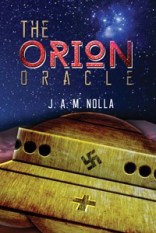
There is something exciting, rebellious, and mthe orion oracle j a m nollaost certainly adventurous in allowing our imaginations fly! One present-day author, J.A.M. Nolla, has done just that in his novel, The Orion Oracle. Nolla has researched WWII history, learned the facts behind Hitler’s fascination with other worlds and expanded those into interesting scenarios. His story carries readers, along with allied troops, deep into the Libyan Desert to investigate a secret abandoned German base. Will what they find there totally change how humans will view themselves in the future? Nolla has, indeed, developed multiple “What if’s” for readers to enjoy.

The power of IMAGERY is at the top of my list for developing strong Science Fiction novels. The great authors of this genre include: Ray Bradbury, Isaac Asimov, H.G. Wells and Jules Verne.  We’ve all seen many of the films made from their novels. However, a study of the writing techniques they used on the actual pages of their novels is where we learn the most valuable lessons.  Here are three points they might offer to us today.

  • Like exposing a masterpiece of artwork by removing the velvet covering, give Readers bits of vividly described information about the scene/setting paragraph by paragraph. Allow them the opportunity to imagine it for themselves—because each of your Readers will design it in their own unique way. This gives them an actual place in the story.
  • Write the action/events scenes as if you’re experiencing it with your characters. SEE through their eyes and describe what you are seeing, touching, tasting, hearing…and imagining is coming around the next corner.
  • Expose the DETAILS bit-by-bit. Every nuance, every degree of shade and shadow, is a valuable tool that will draw Readers through the experiences you’re writing about.

Another of my favorite authors is Frank Peretti. Although he produces more novels in the Mystery/Suspense/Christian/Inspirational genres, he utilizes all of the above techniques to the max providing spellbinding novels that literally leave Readers breathless. As a master-storyteller, he incorporates what Readers know or assume as fact, with possibilities they’ve rarely (or never) imagined before—while giving them detailed descriptions of what he’s imagined.

Aren’t these the goals all writers have? To touch our Readers with information (nonfiction) combined with our own unique perspective (fiction) so that they might imagine other possibilities? Peretti tells writers, “Practice doesn’t make perfect. It makes better.” He is certainly an excellent example having authored more than 20 books. SO CAN YOU! ⚓︎


Royalene

ABOUT ROYALENE DOYLE: Royalene has been writing something since before kindergarten days and continues to love the process. Through her small business—DOYLE WRITING SERVICES—she brings more than 40 years of writing experience to authors who need “just a little assistance” with completing their projects. This is a nice fit as she develops these blogs for Outskirts Press (OP) a leading self-publisher, and occasionally accepts a ghostwriting project from one of their clients. Her recent book release (with OP) titled FIREPROOF PROVERBS, A Writer’s Study of Words, is already receiving excellent reviews including several professional writer’s endorsements given on the book’s back cover.  

Royalene’s writing experience grew through a wide variety of positions from Office Manager and Administrative Assistant to Teacher of Literature and Advanced Writing courses and editor/writer for an International Christian ministry. Her willingness to listen to struggling authors, learn their goals and expectations and discern their writing voice has brought many manuscripts into the published books arena.

Ringing in the Holidays: Christmas Edition!

We all know how wonderful it is to have holiday traditions, those things we do year after year and never tire of because they bring us nostalgia for our youth or for holidays in general. However, in book marketing, tradition in the holiday season might mean stagnation. So this year, when you’ve finished your traditions of decorating your Christmas trees, drinking egg nog, wearing tacky sweaters, caroling and hanging your stockings by the chimney with care, let us help you brainstorm some new ways to market your book.

christmas

I remember a favorite tradition of mine growing up was making a long list of books that I wanted  for Christmas; it was long enough that I’d only get some from the list, so I was always excited to see what ones they had chosen! I remember the year when I saw that tradition, which I loved so dearly, come to an end. When I ripped open the box I presumed would be full of books, I discovered that my parents had chosen to give me a Kindle that year instead. Though my attachment to tradition made my reaction seem slightly disappointed I’m sure, I realized that this was a thoughtful break from tradition on my parent’s part, because in their eyes, this provided me “all the books I could ever want.”

I tell this story, because there are ways in which we can revamp holiday traditions so that they remain in tact, but also serve our book marketing strategies. A lot of people will be putting Kindles, ChromeBooks or iPads under their Christmas trees this year, so it’s best to: first, get an ebook version of your book if you haven’t done so yet, and second, promote your ebook both before and after the holidays to boost your sales!

If one of your traditions is sending holiday cards, think about tweaking that tradition by getting custom made stamps with your very own book cover on them. Also consider adding custom book marks promoting your book, or coupons for your friends and family to download your ebook, to your holiday cards.

Heck, if you want to make book-themed ornaments, those would be great stocking stuffers too! That’d be a yearly reminder for those close to you that you are a writer, and that you might have something new out by the time they’re hanging your ornament from an evergreen branch next holiday season.

Another age old tradition that I’ve always loved is advent calendars. While that’s probably mainly because I love candy, there is something exciting about counting down the days to Christmas. Give you readers the same kind of excitement by releasing an “advent series” of your own on your blog and social media accounts. Give pieces of your story each day leading up to Christmas. Hopefully each piece of your story only further encourages people to add your book to their shopping lists!

The main message I want to send for this Christmas is: think outside the pleasantly gift-wrapped box and get creative with traditions. Don’t be afraid to try adding new twists to timeless customs.


Thank you for reading!  If you have any questions, comments, suggestions, or contributions, please use the comment field below or drop us a line at selfpublishingadvice@gmail.com.  And remember to check back each Wednesday for your weekly dose of marketing musings from one indie, hybrid, and self-published author to another. ♠


Kelly

ABOUT KELLY SCHUKNECHT: Kelly Schuknecht is the Executive Vice President of Outskirts Press. In addition to her contributions to the Outskirts Press blog at blog.outskirtspress.com, Kelly and a group of talented marketing experts offer book marketing services, support, and products to not only published Outskirts Press authors, but to all authors and professionals who are interested in marketing their books and/or careers. Learn more about Kelly on her blog, kellyschuknecht.com