Growing Pains: Part VIII

We all know how bombarding the marketplace can be. Ads are constantly smacking us in the face every time we open a webpage or app on our phones, computers, iPads, Kindles, turn on the TV, drive down the road, attend an event, etc. etc. Some ads just hit us and go in one ear and out the other, but some ads really stick out (for better or worse), and those are the ones we remember. In a world where you have a few seconds to make an impression, you need to embrace being different and standing out, because the first impression may be the only one you get to make before you blend into the white noise of the everyday marketing buzz.

This week, I’d like to talk about how being different can help you grow your business as a self-published author. You want to be able to hook customers off of more than just a random purchase based on your book cover. Yes, do stand out and hook customers with a unique book cover, but don’t be a one-hit wonder. Being “different” (whatever that really means) is something that you need to aim for in the long term, on a bigger scale. You want your readers to feel like they are consuming a product that also makes them different via consumption. We all know those niche, cult-classics that those really “hip” and “in tune” readers flock to just so they can say they read it, and when they do people will nod and say “oh yeah, I’ve heard about that!”. The kind of books people read in busy coffee shops so that everyone knows they’re reading it. You want to be produce that book.

Think in terms of 80s and 90s Apple ads, where Apple stressed how different they were from other companies, and how using Apple products would make you different too. Was this marketing effective? Take a look at everyone in your immediate vicinity and see if they aren’t staring into an iPhone, iPad or MacBook and you tell me. Is it possible for books to have this same effect? Think Fight Club, Infinite Jest, V for Vendetta, On the Road. People want to say they’ve read these books and they want to tell you how these books transformed them when they read them in highschool, college, on a road trip, etc.

How do you become a book like that? Well, it’s not easy, to be perfectly honest. But those authors probably didn’t know they were writing a cult classic when they wrote it, they just wanted to try something different. If you have a creative instinct that doesn’t follow the normal plot line, character structure, story structure, format, etc. — follow it. It could give you that “different” edge that will set you apart from the slew of book titles that people are bombarded with at bookstores and on Amazon every day. Be the different you want to see in the marketplace…to distastefully appropriate a Ghandi quote.


Thank you for reading!  If you have any questions, comments, suggestions, or contributions, please use the comment field below or drop us a line at selfpublishingadvice@gmail.com.  And remember to check back each Wednesday for your weekly dose of marketing musings from one indie, hybrid, and self-published author to another. ♠


Kelly

ABOUT KELLY SCHUKNECHT: Kelly Schuknecht is the Executive Vice President of Outskirts Press. In addition to her contributions to the Outskirts Press blog at blog.outskirtspress.com, Kelly and a group of talented marketing experts offer book marketing services, support, and products to not only published Outskirts Press authors, but to all authors and professionals who are interested in marketing their books and/or careers. Learn more about Kelly on her blog, kellyschuknecht.com

From the Archives: Google Book Settlement & Registering your Self-published Book

Welcome back to our Tuesday segment, where we’ll be revisiting some of our most popular posts from the last few years.  What’s stayed the same?  And what’s changed?  We’ll be updating you on the facts, and taking a new (and hopefully refreshing) angle on a few timeless classics of Self Publishing Advisor.

∗∗∗∗∗

[ Originally posted: August 18, 2009 ]

Perhaps you’ve been following news about the Google Book Settlement over the past few weeks. The overall implications of the deal are still unclear, with notable opposition coming from The Authors Guild and the American Society of Journalists and Authors.

The details of the settlement involving copyright concerns and royalties first initiated through the Google Library Project in 2004 are a bit esoteric and apparently complex. Don’t be overwhelmed. There is no downside to registering your self-published book, so don’t miss the deadlines.

Outskirts Press has provided a step by step overview of the process in their most recent newsletter. Check it out here.

The good news, for most of us at least, is that the Authors Guild v. Google battle hasn’t rated the news much recently. During the battle, which lasted from “the filing of the case on September 20, 2005 to the Supreme Court’s denial of review on April 18, 2016” (that’s eleven years!), the internet was aflame with opinion. And in the initial aftermath of the initial settlement proposal in 2008 and again after the District Court ruling dismissing the case in favor of Google in 2013, tempers were hot. By the time the Supreme Court ruled in 2016 to uphold the District Court ruling, most authors had moved on, emotionally. Most of them had to.

You don’t win against Google if you’re the little guy, the results seemed to say.

Over at the Authors Guild website, they spin a slightly different story–and again, they probably have to, in order to maintain morale and keep up the energy to fight other battles, which they often do in defense of self-publishing authors as well as traditionally published authors. The fact remains–and is becoming increasingly hard to debate–that authors need to form alliances in order to protect their interests in a market that by its very nature lies open to exploitation and rapid evolution in ways that can undermine any one market’s profit base.

In short, all this is to say: the hubbub may be dying down, but we’ve learned a valuable lesson. Don’t hesitate to register your books, yes, but also … figure out who your allies are, and cultivate a few if you’ve started out solo. It will make a big difference down the road, if someone violates your copyright, for example, if you have a little weight behind your suit. Publish through a reliable self-publishing company (and of course I recommend Outskirts Press, after years working with the company) who is known to advocate for its authors. Put out feelers to join forces with other, local, indie authors. These may seem like small things, but they can have a very big impact later on, down the line.

google books
Google Books–a land of opportunity … and Copyright challenges.

Thanks for reading.  If you have any other ideas, I’d love to hear them.  Drop me a line in the comments section below and I’ll respond as quickly as I can.  ♠


Kelly

ABOUT KELLY SCHUKNECHT: Kelly Schuknecht is the Executive Vice President of Outskirts Press. In addition to her contributions to the Outskirts Press blog at blog.outskirtspress.com, Kelly and a group of talented marketing experts offer book marketing services, support, and products to not only published Outskirts Press authors, but to all authors and professionals who are interested in marketing their books and/or careers. Learn more about Kelly on her blog, kellyschuknecht.com.

Growing Pains: Part VII

When a business starts to grow, it should reasonably take up more space. This could be space on your desk, in your schedule and just in your life in general. When something begins to take up more space, sometimes the next logical step is to literally give it more space. With that in mind, this week, I’d like to explore the topic of expanding your business to another location.

Because it is 2017, I’d like to begin by saying that this other location need not be in physical space, but can also occupy the virtual reality we all seem to spend so much time in nowadays. If you don’t already have a website for your books, products and services, do yourself a favor and get one. Online marketing is crucial in this day and age, as a significant amount of shopping done today is online. If you’re not online, you’re simply missing out on one of the largest customer bases there is, period.

Further, a website is not always enough. A lot of people get their news and advertisements and ideas of what to buy via social media, thus, expanding your product to these other outlets is a fantastic idea. The more your page is “liked” or “shared,” the more it will show up on more people’s feed, and the higher the chances you have of exposure for your business. Be shameless with the use of hashtags and tagging of people and companies relevant to your work. This is another helpful way for people to find out about your work. Expanding into the digital world has got to be one of the most profitable and lucrative moves you can make as a business owner.

If you find yourself needing to expand your business in actual physical space, this is a whole different ball game. Expanding in this way can be as simple as asking for a display in a lock coffee shop, toy store, library, women’s shelter, Post Office, etc.  Make sure your displays are aesthetically pleasing and call to customers who may not be in that establishment for books, but may find themselves picking it up just out of curiosity. You want your display to have the same zest and pull that you want your cover design to have. Get creative, handcraft a wooden display or ask a handy friend to make one for you. Your display should add to the ambiance of the establishment its in, rather than be a nuisance pile of books with an 8 and a half by 11 sheet of paper next to it scotch taped to the counter.

If you actually need more physical space just to store your back stock of products such as books, manuscripts, files, etc., consider getting a storage unit or devoting a room in your house to just that. Nothing drives me crazier than a bunch of stacks of books and loose papers in my work space, and I think creativity will falter in such an environment. Always give yourself the space you need to both work and operate as a business!

bookshelves
Filling the shelves.

Thank you for reading!  If you have any questions, comments, suggestions, or contributions, please use the comment field below or drop us a line at selfpublishingadvice@gmail.com.  And remember to check back each Wednesday for your weekly dose of marketing musings from one indie, hybrid, and self-published author to another. ♠


Kelly

ABOUT KELLY SCHUKNECHT: Kelly Schuknecht is the Executive Vice President of Outskirts Press. In addition to her contributions to the Outskirts Press blog at blog.outskirtspress.com, Kelly and a group of talented marketing experts offer book marketing services, support, and products to not only published Outskirts Press authors, but to all authors and professionals who are interested in marketing their books and/or careers. Learn more about Kelly on her blog, kellyschuknecht.com

From the Archives: Putting Authors in the Driver’s Seat

Welcome back to our Tuesday segment, where we’ll be revisiting some of our most popular posts from the last few years.  What’s stayed the same?  And what’s changed?  We’ll be updating you on the facts, and taking a new (and hopefully refreshing) angle on a few timeless classics of Self Publishing Advisor.

∗∗∗∗∗

[ Originally posted: September 12, 2008 ]

As we discussed previously, property rights in book publishing is one important consideration in finding the path that best meets your goals.

In all forms of art—painting, woodwork, sculpture, writing—ownership exists. At many levels.  A painter paints a picture. Owns the picture.  Sells the picture.  A sculptor molds a bust.  Owns the bust.  Sells the bust.

Ownership changes but the picture does not.  The bust does not.

In the Traditional sense, authors sell their work to publishing houses for an advance on royalties. Those publishers then, owning the material, can do whatever they want with your writing—cut paragraphs, chapters, change the title even.

Imagine crafting a beautiful landscape only to have someone paint over it.

The good news is many custom self publishing options currently offer non-exclusive contracts now.  The non-exclusive part keeps authors the driver’s seat and preserves the essence and origination of the writing.  It’s your work, thoughts, ideas, and stories, after all.

Have fun and keep writing!

– by Karl Schroeder

contract

So what is a non-exclusive contract, anyway? And what are the pros and cons?

A lot of my friends are great authors who really pour their hearts and souls into their work and I am truly lucky. Why? Because having worked in the industry for so long on both ends of the self-publishing process–author and publisher–and focused both on strict marketing and sales to careful copyright consideration, I have learned a great deal and get to help these, my friends, out.

In short, non-exclusivity means you are not locked into an exclusive contract; you are free to cancel or publish your book elsewhere at the same time.

Here’s an example: say you have been publishing your book with any given self-publishing company for a while, and you have an opportunity to get thousands of copies of your book printed cheaply by a different publisher or printer, either a traditional publishing house or another self-publishing company with better rates. You still want to keep selling your book on Amazon and Barnes & Noble using your existing book distribution system–one ought not to waste an effective system, or already printed books–but you just don’t want to pass up the opportunity to sell thousands more for a better price. Luckily, you can do both–that’s the point of non-exclusive contracts!

Now, if a traditional publishing house discovers your book after you’ve already self-published, what happens next? Very likely, your new publishers will want you to sell your book to them in return for exclusive rights. They would want to make sure that no other publisher or printer would be able to sell or print your book. You won’t violate their contract if you already have a non-exclusive contract, but you won’t be able to sign yourself onto a new one once you’ve committed to the traditional publisher.

Generally speaking, though, you won’t have to worry about the timing. Most self-published books are not picked up by traditional publishers … but nothing is impossible, and you ought to be prepared for anything!

Thanks for reading.  If you have any other ideas, I’d love to hear them.  Drop me a line in the comments section below and I’ll respond as quickly as I can.  ♠


Kelly

ABOUT KELLY SCHUKNECHT: Kelly Schuknecht is the Executive Vice President of Outskirts Press. In addition to her contributions to the Outskirts Press blog at blog.outskirtspress.com, Kelly and a group of talented marketing experts offer book marketing services, support, and products to not only published Outskirts Press authors, but to all authors and professionals who are interested in marketing their books and/or careers. Learn more about Kelly on her blog, kellyschuknecht.com.

Self-Publishing News: 6.12.2017

And now for the news!

Some highlights from this month in the world of self-publishing, specifically newly released self-published books!

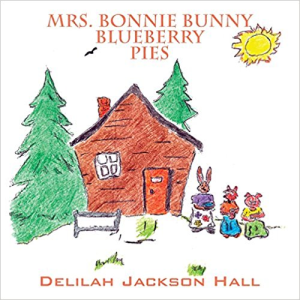
  • Mrs. Bonnie Bunny Blueberry Pies

mrs bonnie bunny's blueberry pies delilah jackson hall

This week, I’d like to highlight some exciting titles coming hot off the Outskirts Press, starting with Mrs. Bonnie Bunny Blueberry Pies–a book which has made it to the Amazon Featured Book of the week list! In this thrilling children’s book, Outskirts Press author Delilah Jackson Hall tells the tale of Mrs. Bonnie Bunny and her famous blueberry pies (for which she wins yearly awards at the Fall Festival). These famous pies get Mrs. Bonnie Bunny some negative attention, however, when the Bunny clan and a few other mischievous friends of theirs decide to sabotage Bonnie and snatch her pies from the window sill before she can enter them in this year’s Fall Festival! Watch the scandal unfold amongst these critters and see the truth behind it all “in the most unlikely of places.”

  • Stan, the Little Turtle

stan the little turtle anne toole

Outskirts Press author Anne Toole is up next with another children’s book, Stan the Turtle. A true introvert, Stan the Turtle upset his mother by never wanting to meet the other critters that lived near his family. Instead, Stan insists on swimming on day long, all by his lonesome. This tale of an introvert takes an unexpected turn with Stan’s mom disappears, nowhere to be found, and Stan has no critter friends to help him find her! Will he be able to gain their favor and get help in his search for mother turtle? Read this amazing story to find out and “discover what important lesson little Stand learns.”

  • Good Morning, How Are You?

good morning how are you dr papijazz

Next up is Dr. Papijazz’s children’s title, Good Morning, How Are You?, a story which features Richard the Rooster. Richard discovers that being different can be a great thing, and that each and every one of us has some unique talent that we may need some help discovering. Downtrodden Richard had yet to tap into his unique talent and was feeling sad and lonely, going to bed in the dumps. However, one morning, a beautiful sunrise greets Richard and he is overcome with joy and simultaneously overcomes his depression. In that moment, Richard discovers his unique talent, and lets out a loud crow, teaching other birds around the globe that they can do the same!

  • Old Dog New Tricks

old dog new tricks marie-yolaine williams

In Old Dog New Tricks, Marie-Yolaine Williams paints a heartfelt story of a shelter dog who got a second chance. Hoping to encourage people to adopt shelter dogs, dog lover Marie-Yolaine wrote the tale of Boscoe, an 11-year-old dog who winds up at a shelter, competing with cute puppies for a potential new home. While most families come in and swoon over puppies, Boscoe’s ears perk up when a family finally comes in looking for an older dog. Read this wonderful, EVVY Award winning story to find out if Boscoe finds a forever home.

!


spa-news

As a self-publishing author, you may find it helpful to stay up-to-date on the trends and news related to the self-publishing industry.This will help you make informed decisions before, during and after the self-publishing process, which will lead to a greater self-publishing experience. To help you stay current on self-publishing topics, simply visit our blog every Monday to find out the hottest news. If you have other big news to share, please comment below.

KellyABOUT KELLY SCHUKNECHT: Kelly Schuknecht is the Executive Vice President of Outskirts Press. In addition to her contributions to the Outskirts Press blog at blog.outskirtspress.com, Kelly and a group of talented marketing experts offer book marketing services, support, and products to not only published Outskirts Press authors, but to all authors and professionals who are interested in marketing their books and/or careers. Learn more about Kelly on her blog, kellyschuknecht.com.