From the Archives: “5 Tips for Finding Errors in Your Writing”

Welcome back to our Tuesday segment, where we’ll be revisiting some of our most popular posts from the last few years.  What’s stayed the same?  And what’s changed?  We’ll be updating you on the facts, and taking a new (and hopefully refreshing) angle on a few timeless classics of Self Publishing Advisor.

∗∗∗∗∗

[ Originally posted: March 23rd, 2010 ]

1 – Utilize an editor

The most common mistakes are minor, such as misspellings or incorrect use of punctuation. Other common errors are incorrect word use (their, they’re, there). A professional copyeditor is adept at noticing and correcting these kinds of mistakes. Do not make the mistake of relying solely upon a computerized spell-checker, which cannot tell the difference between “worse” and “worst” since they are both properly spelled words. Use an editor – a human one. Good self-publishing options will provide copyediting and other more advanced services. Be sure to ask your rep.

2 – Get a second (and third) set of eyes

Even if you do not wish to pay a professional, anyone who reviews your writing will find mistakes you invariably miss. Since you are overly familiar with your own work you are much more likely to miss obvious mistakes because your mind already knows what it is supposed to say, rather than what it actually says. When someone else reads your work, they have no preconceived notions about your writing. In addition to finding mistakes, other people may offer helpful suggestions to make your business writing stronger.

3 – Come back to it later

Do you wait long enough after writing something to begin editing it? Many writers edit their work as they write it. Not only does this slow down the creative process, it increases the chance that your mind will ignore blatant errors in deference to your intentions. Once your brain thinks a paragraph is free from errors, it tends to overlook any new errors that are introduced during the rewriting process. Put your writing away for several hours, days, or weeks and revisit it later. After some time away from your work, you will be more likely to read the words as they appear on the page, not as you envisioned them in your mind. The mind is error-free, the page is not.

4 – Read your material backwards

You are only familiar with your writing in one direction – forward. Reading your material backwards makes it seem entirely different and fools your mind into ignoring the intention and only concentrating on the reality. Furthermore, your critical view of the writing at its most technical level will not be corrupted by the flowing exposition you have massaged into sparkling prose. When you read your manuscript backwards, it becomes a collection of words. Without contextual meaning, the brain has nothing to focus upon other than the words themselves. Mistakes literally jump off the page.

5 – Read your material out loud

When you read words aloud, your brain must slow down and concentrate on the material. How fast can you read the following sentence? The quick brown fox jumped over the lazy dogs. Now how fast can you read it out loud? It takes at least twice as long, and those precious milliseconds sometimes make all the difference between a typo that is missed, and one that is caught and corrected.

As a popular Internet posting informed us in 2003, it deosn’t mttaer in waht oredr the ltteers in a wrod are, the olny iprmoetnt tihng is taht the frist and lsat ltteer be in the rghit pclae. The rset can be a toatl mses and you can sitll raed it wtihuot any porbelm. Tihs is bcuseae the huamn mnid deos not raed ervey lteter by istlef, but the wrod as a wlohe. But try raednig tihs out luod and see how far you get. An extra bonus for reading your material out loud is that you may discover stumbling blocks like awkward sentence structure and choppy dialogue.

Writing is weird and hard … and sometimes we just can’t make it work without a little help from a third party, be it a casual acquaintance or a paid professional.  Those pesky little demons, typos, seem to slip under the radar at every opportunity––and there’s no way to catch them all, since every author has unique and quirky “characteristic typos.”  I, for instance, have a tendency to self-edit in the middle of writing a sentence, and doing so often leaves relics behind: duplicate words, confounded sentence structure, and incomplete thoughts.  One of my closest friends, a trilingual émigré from France, has a wholly different weakness: transcription errors and run-on sentences.  Still another friend is prone to switch tense and person faster than Marvel churns out movie plotlines.

On the subject of typos:

“If we are our own harshest critics,” asks Nick Stockton of WIRED magazine, “why do we miss those annoying little details?” The answer may be more life-affirming than you think.  Writes Stockton, “The reason typos get through isn’t because we’re stupid or careless, it’s because what we’re doing is actually very smart.”  He goes on to quote psychologist Tom Stafford of the University of Sheffield.  “When you’re writing, you’re trying to convey meaning. It’s a very high level task,” said Stockton.  The reason we miss typos is because we are too smart, instinctively and unconsciously, about how we process information.  Expediency requires our brains to distill language down to its component parts and to extrapolate or guess rather than literally consider each letter on a page.  Stockton says it much better:

“Generalization is the hallmark of all higher-level brain functions. It’s similar to how our brains build maps of familiar places, compiling the sights, smells, and feel of a route. That mental map frees your brain up to think about other things. Sometimes this works against you, like when you accidentally drive to work on your way to a barbecue, because the route to your friend’s house includes a section of your daily commute. We can become blind to details because our brain is operating on instinct. By the time you proof read your own work, your brain already knows the destination.”

Today I went to the movies with a friend, and despite having discussed (in detail) beforehand how we needed to pick up cheese from the grocery store on the way home to make omelets later, I found myself well past the turnoff before it even computed that I was supposed to be doing something other than following instinctive muscle memory.  All this to say, I feel the truth of Stockton’s words on a profound and immediate level.  And as an author, I’m well aware of just how prone I am to skip my characteristic typos.

The original 5 tips are still relevant

… but it’s just as important to understand why typos happen and to recognize three key things about them:

  • everyone makes errors;
  • these errors are unique and originate from somewhere that makes sense for each person; and
  • you are not a successful author if you magically avoid making any typos––you’re a successful author if you take steps to address the reality of errors in your writing and trust the tried-and-true editorial tips above to catch them.

It’s so easy to fixate on finding errors before you hand your manuscript off for other people to read, but in all reality part of the reason authors find early readers is to help with the editorial process!
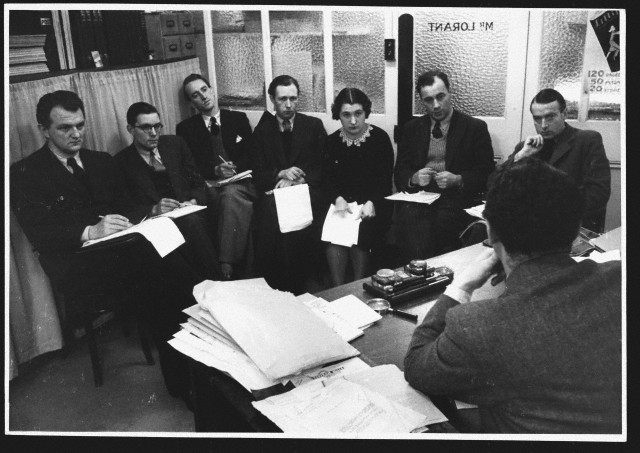
tips for editing

If you have any other ideas, I’d love to hear them.  Drop me a line in the comments section below and I’ll respond as quickly as I can.  ♠

KellyABOUT KELLY SCHUKNECHT: Kelly Schuknecht is the Executive Vice President of Outskirts Press. In addition to her contributions to the Outskirts Press blog at blog.outskirtspress.com, Kelly and a group of talented marketing experts offer book marketing services, support, and products to not only published Outskirts Press authors, but to all authors and professionals who are interested in marketing their books and/or careers. Learn more about Kelly on her blog, kellyschuknecht.com.

Conversations: 2/5/2016

IMPASSIONED VISION

Whether you are a fledgling writer (just drying your feathers so you can fly) or an experienced eagle-author (whose books soar into the headlines with ease), I believe there is a key that will unlock even more writing abilities for you beyond developing additional skills and techniques.  This key is labeled: PASSION. It unlocks the door to discovering the passions that drive us to write what we write. When that happens—throughout the writers lifetime—we experience vision elements that pave the way to developing the next book, and the next.

What does this quality of Impassioned Vision look like?

  • Clarity concerning the mission and/or purpose to what we write.
  • Focused research that will provide more details on the subject matter.
  • Connection to other writers, researchers, inspired scientists and thinkers.
  • New perspectives that will challenge current thinking and cause us the build and rebuild our own viewpoints (and the various views of our characters).

Although I’ve yet to read every book by Author Anne Lamott, she continues to be one of my favorite writers. Even though some might call her more of a political activist, I enjoy her honesty and impassioned style which has, time-after-time, touched the lives of readers and challenged them to look deeper within.

Ms. Lamott has published a book titled: Bird by Bird: Some Instructions on Writing and Life.  Many of her statements inspire me and, yes, some confuse me a bit.  However, what Lamott talks about in this book indicates to me that she’s utilizing this impassioned vision key. Her words in the following quote—speaking directly to all writers—are so beautifully written that I must share it:

"Bird by Bird" by Ann Lamott

And so it is, my friends, that I encourage every writer out there to “build your sand castles!” Dig deep to discover your very personal impassioned visions! Weave your passions, your perspectives, your “Aha” moments with research and imagination into every manuscript page.  Let your stories be told with sharpened telescopic vision through the characters—the “people”—whose passions must be heard.

Then PUBLISH! If you have a publisher-in-waiting, review the contract and sign. If not, don’t be fearful of the self-publishing marketplace. It is growing by-the-minute and offering authors partnerships with creative consultants, marketing specialists and so much more. ⚓︎

RoyaleneABOUT ROYALENE DOYLE: Royalene has been writing something since before kindergarten days and continues to love the process. Through her small business—DOYLE WRITING SERVICES—she brings more than 40 years of writing experience to authors who need “just a little assistance” with completing their projects. This is a nice fit as she develops these blogs for Outskirts Press (OP) a leading self-publisher, and occasionally accepts a ghostwriting project from one of their clients. Her recent book release (with OP) titled FIREPROOF PROVERBS, A Writer’s Study of Words, is already receiving excellent reviews including several professional writer’s endorsements given on the book’s back cover.  

Royalene’s writing experience grew through a wide variety of positions from Office Manager and Administrative Assistant to Teacher of Literature and Advanced Writing courses and editor/writer for an International Christian ministry. Her willingness to listen to struggling authors, learn their goals and expectations and discern their writing voice has brought many manuscripts into the published books arena.

Conversations: 1/29/2016

IT’S A NEW DAY! NEW MONTH! NEW YEAR!

Readers Also Have Eagle-Eye Expectations


“Be careful—be very careful—never to misspell, misuse, or make a pronoun error!” This advice came from an experienced writing acquaintance. He had just experienced a lengthy discussion (argument) with an editor who had been assigned “review” his manuscript. This gentleman author used creative spelling in the dialogue segments of one particular character throughout the whole book and the editor wanted it corrected. That was not going to happen! Within the week the author and the publishing house had a mutual parting-of-the-way and the author self-published!

Although I was very excited for my writing friend, I could also see the editor’s perspective. Word usage is extremely important and a skill that we must all develop: GRAMMAR! When I was in elementary and high school, I disliked that word (grammar) a lot! However, I now look upon it more kindly as I’ve grown into the “study of linguistics.”

LINGUISTICS

Have you ever heard someone try to dodge a point being made in a discussion by saying, “Oh, that’s just your own semantics!” It sounds like—and may be meant as—a dismissive statement. However, the person/character who says that is usually doing their best to avoid accepting the other person’s perspective. Here are a few things I’ve learned about linguistics and how this study continues to enhance my writing abilities.

  • When you and I speak/write in our own language, we use “internalized rules” to shape phrases and sentences that best communicate what we want another person to understand. This is essentially the use of grammar—our personal grammar—acquired since our ears first heard sounds.
  • Linguistics is the “bigger picture” of the basic grammar we learned in school—those clauses, and dangling participles we had to diagram. Writers who want to communicate to their readers must step into this expanded study and hear their characters speaking phonetically.
  • Writers of the exceptional and well-received books have learned the rules that govern the linguistic behavior of a characters and/or a group of characters.
  • AND writers must also accept the challenges of accurate spelling! Words may sound alike, even have similar spellings, however VERY different meanings. (e.g. their, there, they’re)

Systems of Grammar have been with us since the days of Sanskrit which existed in the Iron Age. In approximately 100 B.C. a fella named Dionysius Thrax developed his “Art of Grammar” which appeared closely to the 1st century Latin grammars. In the High Middle Ages, the Hebrew grammar developed very specific rules, leading into the Middle Ages where grammar was taught—to those of privilege—as a “core discipline” of communication. By the time the Renaissance Period was bringing about world-wide changes, all nations and people groups had some form of “grammar rules” by which to more clearly communicate.

I’ve heard it said that the Americanized grammar “rules” are no more than guidelines and extremely frustrating to authors of all genres. Personally, I prefer the term guidelines because—like the characters I’m developing—language is a living entity. It grows and changes with each individual person/character and culture. It is up to us—our creative writing ears—to hear and write in the best forms of linguistic grammar that will communicate exactly what we want our readers to hear. ⚓︎


RoyaleneABOUT ROYALENE DOYLE: Royalene has been writing something since before kindergarten days and continues to love the process. Through her small business—DOYLE WRITING SERVICES—she brings more than 40 years of writing experience to authors who need “just a little assistance” with completing their projects. This is a nice fit as she develops these blogs for Outskirts Press (OP) a leading self-publisher, and occasionally accepts a ghostwriting project from one of their clients. Her recent book release (with OP) titled FIREPROOF PROVERBS, A Writer’s Study of Words, is already receiving excellent reviews including several professional writer’s endorsements given on the book’s back cover.  

Royalene’s writing experience grew through a wide variety of positions from Office Manager and Administrative Assistant to Teacher of Literature and Advanced Writing courses and editor/writer for an International Christian ministry. Her willingness to listen to struggling authors, learn their goals and expectations and discern their writing voice has brought many manuscripts into the published books arena.

Conversations: 1/22/2016

IT’S A NEW DAY! NEW MONTH! NEW YEAR!

Readers Have Deep Emotional Expectations


Yes, readers have emotional and spiritual expectations when they purchase your book. Not only are they looking for the escapism-excitement of cliffhanger stories they want to hear, feel, taste, touch and smell the scenes you’re creating. These are the elements where writers either shine brightly or fade quickly. The story and plot pieces cannot carry a book toward the bestselling lists alone. You may recall my mention of Aristotle a couple weeks ago. His philosophical thoughts continue to offer today’s writers a unique perspective on how to enhance the full reality of a character’s experience by adding uniquely descriptive words—even made-up words—from the following categories.

four elements earth fire air water

  • The Earth we walk upon brings us many challenges. Will your characters face a hot, dry, throat parched day? Or will they enjoy a cool, crisp, invigorating day? Must they dig themselves out of 18 inches of wet, heavy snow? Or face an earthquake? Tornado?
  • Water—and having access to clean water—is truly a life or death part of your story whether it is ever mentioned or not. If characters exist in an environment where turning on the faucet and filling the coffee-maker is an every-day occurrence that describes an important part of your story. However, if your character(s) must walk nine miles to reach a well of bitter water, their perspectives (and your reader’s perspective) will be quite different.
  • The Air we breathe might be hot and polluted or cool and clear. Air quality has become a focal point of governments and life-threatening to people/characters with breathing illnesses. Particles in the air can literally “take the breath away” from someone as if a poison gas surrounded them.
  • Fire. Readers can enjoy the cozy fireplace flames with your characters or the campfire nights under a clear star-spangled sky. They can also hear, taste, smell and be touched by the heat that comforts them in winter or the heat of flames that explode in a forest fire or burn a home to the ground. Fire is an element that readers both fear and enjoy.
  • Aristotle’s 5th element of “life” is aether which we identify today as “outer space.” He imagined that the stars and planets, that make up the “heavenly spaces” we see above us, have an effect and affect on our daily lives. Every character you create will looks UP—at some point in their story—and feel or think something that is unique to them. Something that will connect with your readers.

aether

Over the span of the last 40 years I’ve listened to hundreds of writer/speakers in workshops and classrooms as they talked about the usefulness of descriptive writing. They agree upon the absolute need to incorporate the sounds, tastes, textures, smells and emotional elements of the concepts listed above. However, most such lecturers warn writers not to over-do. MY ADVISE is to LET LOOSE and “over-do” with ALL you’ve got—especially as you create the 1st draft of your manuscript. If your desire is to give Readers a story they can “sink their teeth into,” then DO IT with clear, concise, picturesque word choices. The whole concept of descriptive writing is to feed and satisfy the readers’ expectations—allowing them the opportunity to live the lives of the characters. Paint a masterpiece image of the people, places and things that make up your story. Every detail will make your book more interesting and more engaging. THEN, by the time your 2nd book hits the bookstores and online shopping sites, you’ll have created a fan-base for all your future published works! ⚓︎


RoyaleneABOUT ROYALENE DOYLE: Royalene has been writing something since before kindergarten days and continues to love the process. Through her small business—DOYLE WRITING SERVICES—she brings more than 40 years of writing experience to authors who need “just a little assistance” with completing their projects. This is a nice fit as she develops these blogs for Outskirts Press (OP) a leading self-publisher, and occasionally accepts a ghostwriting project from one of their clients. Her recent book release (with OP) titled FIREPROOF PROVERBS, A Writer’s Study of Words, is already receiving excellent reviews including several professional writer’s endorsements given on the book’s back cover.  

Royalene’s writing experience grew through a wide variety of positions from Office Manager and Administrative Assistant to Teacher of Literature and Advanced Writing courses and editor/writer for an International Christian ministry. Her willingness to listen to struggling authors, learn their goals and expectations and discern their writing voice has brought many manuscripts into the published books arena.

Conversations With A Self-Publishing Writer: 11/27/2015

SEASONS Part IV


Thomas Edison once said, “The three great essentials to achieve anything worthwhile are, first, hard work; second, stick-to-itiveness; third, common sense.” This clear and truthful statement applies to every writer/author no matter what season of life we are in. If you’ve read any of my previous blogs you may remember me writing about Lois Beebe Hayna. This author of poetry, fiction, essay and gardening advice will soon be 102 years young—and she continues to write and publish her poetry.

royalene5

So how do we who are much younger (yes, if you’re 92, you are much younger) encourage ourselves to keep writing? How do we avoid looking at the winter season of our lives and write for all seasons? Here are a few quotes I’ve saved to encourage myself. I hope they will encourage you, too.

  • From Laura Ingalls Wilder, who published her first novel at the age of 65:
    • “The real things [of life] haven’t changed. It is still best to be honest and truthful; to make the most of what we have; to be happy with simple pleasures and to be cheerful and have courage when things go wrong.”
      • When my characters are arguing with me (the writer), this statement brings them in line.
  • From C.S. Lewis, author of The Chronicles of Narnia series and Screwtape Letters, who wrote until his passing at the age of 65:
    • “A pleasure is full grown only when it is remembered.” “Love is something more stern and splendid than mere kindness.”
      • The many layers of meaning within these thoughts continue to help me create authentic characters. Plus, Lewis’ life-journey and his “collection of author-friends” is an example for all authors to consider.
  • From Alice Ann Munro, a Canadian short story author who, in 2013 at the age of 82, was awarded the Nobel Prize in Literature:
    • “People are curious.…They will be driven to find things out, even trivial things.” “Always remember that when a man goes out of the room, he leaves everything in it behind… When a woman goes out she carries everything that happened in the room along with her.” “…if she let go of her grief even for a minute it would only hit her harder when she bumped into it again.”
      • These statements give me even deeper insights into the creation of characters and the circumstances that can be written for them—the corners to back them into.


After Munro received her Nobel Prize, the Swedish Academy applauded her as the “master of the contemporary short story.” When asked about that statement, she gave writers further encouragement: “I would really hope that this would make people see the short story as an important art, not just something that you played around with until you’d got a novel written.”

So it is that in closing this month’s series of Blogs on Seasons, I hope you’ve been inspired in your own writing life. Being a writer is part of our DNA and becoming the best writer we can be is a life-long process—a process that leads us to be published authors at a variety of steps along the way. ⚓︎

RoyaleneABOUT ROYALENE DOYLE: Royalene has been writing something since before kindergarten days and continues to love the process. Through her small business—DOYLE WRITING SERVICES—she brings more than 40 years of writing experience to authors who need “just a little assistance” with completing their projects. This is a nice fit as she develops these blogs for Outskirts Press (OP) a leading self-publisher, and occasionally accepts a ghostwriting project from one of their clients. Her recent book release (with OP) titled FIREPROOF PROVERBS, A Writer’s Study of Words, is already receiving excellent reviews including several professional writer’s endorsements given on the book’s back cover.  

Royalene’s writing experience grew through a wide variety of positions from Office Manager and Administrative Assistant to Teacher of Literature and Advanced Writing courses and editor/writer for an International Christian ministry. Her willingness to listen to struggling authors, learn their goals and expectations and discern their writing voice has brought many manuscripts into the published books arena.