Conversations With A Self-Publishing Writer: 10/16/2015

THE NOAH WEBSTER LEGACY – PART III

WHEN we publish our books we are wisely advised to promote them in every venue we can access—to even pre-promote to the Readers we know will be interested in our topic and/or genre. When Noah Webster was writing his book A Collection of Essays and Fugitiv Writings on Moral, Historical, Political and Literary Subjects, he promoted it right into the office of President of the United States.

webster

  • First he talked to his friends and acquaintances about his soon-to-be-published book and enlisted them in “subscribing” to it. It is understood that many of these people financially supported (subscribed) the work.
  • Secondly, he published their names on the first several pages of the book—in alphabetical order. These scribers included: Vice President John Adams (indicating that he received two copies of the book), as well as many Senators, Representatives, Aldermen, Attorneys, Physicians, Merchants, Judges and ordinary folks from every location he’d visited.
  • Then, following the list of “subscribers,” Webster addressed this book as if he were writing a personal letter to: “The President, The Vice President, The Senators, and The Representatives of the United States of America, The following PUBLICATION, designed to Aid the Principles of the Revolution, to Suppress Political Discord and to Diffuse a Spirit of Enquiry, Favorable to Morals, to Science, and Truth, Is most humbly inscribed as a Tribute of Respect for their Characters, of Gratitude for their Public Services, and a Pledge of Attachment to the Present Constitution of the American Republic, by their most obedient and most humble servant, The Author.”

Now THAT is marketing—book promotion with flare! Certainly everyone was talking about this book and the boldness of the author. For Webster, the reality was that his often abrasive and know-it-all attitude kept him from being IN the “in-crowd.” However, it is widely accepted that Webster’s passionate nationalism was a major influence on the Founding Fathers. Reading his essays, newspaper articles, and dictionary word definitions gave them much food-for-thought in their daily lives and formation of our country.

So, where are you in pre-production planning for the book(s) you are writing? In today’s publishing world the group of supporters (subscribers) that Webster had would be called a Tribe. These are the folks who know you are writing—know a little about the story—and could be Tweeting about it or posting Facebook comments about how much they are anticipating the book’s arrival in their hands.

And, if you need financial support I know of several self-publishing presses who offer GIFT CARDS that family and friends can purchase to be applied to the publishing process and marketing of your book. The teams of marketing experts in these self-publishing houses can be a great help in connecting with Readers through the Internet and other media which takes the burden off your shoulders giving you the time to write your next book.

May the writing legacy left to us by authors such as Noah Webster give you encouragement and inspire you to accomplish great things with your writings. ⚓︎

RoyaleneABOUT ROYALENE DOYLE: Royalene has been writing something since before kindergarten days and continues to love the process. Through her small business—DOYLE WRITING SERVICES—she brings more than 40 years of writing experience to authors who need “just a little assistance” with completing their projects. This is a nice fit as she develops these blogs for Outskirts Press (OP) a leading self-publisher, and occasionally accepts a ghostwriting project from one of their clients. Her recent book release (with OP) titled FIREPROOF PROVERBS, A Writer’s Study of Words, is already receiving excellent reviews including several professional writer’s endorsements given on the book’s back cover.  

Royalene’s writing experience grew through a wide variety of positions from Office Manager and Administrative Assistant to Teacher of Literature and Advanced Writing courses and editor/writer for an International Christian ministry. Her willingness to listen to struggling authors, learn their goals and expectations and discern their writing voice has brought many manuscripts into the published books arena.

The Current State of E-Readers | An Author’s Guide (Part III )

Did you know that Barnes & Noble sells an e-reader?  If you haven’t stopped by one of their brick and mortar stores in the last few years, you might never have known.  This is because the tablet in question never quite got the sales momentum that its primary rivals, the Kindle and the iPad, had automatically built in.  (More on that in a moment.)  And the NOOK, as Barnes & Noble has dubbed their creation, already seems to be on the way out.  I stopped by a Barnes & Noble while driving through central Montana, and … gone are the enormous beautiful displays, the wide sweeps of banners and posters emblazened with larger-than-life-size images of the tablet, its logo, and cheery recommendations on what ebook to read next.  It looks as though we’re back to basics when it comes to our favorite (by default, since it’s our only) big brick and mortar bookstore!

But what about the NOOK?  Should you as an author care about the rise and fall of this non-gargantuan piece of technology?  The short answer is yes.  The reasons why can never quite be summarized as a “short answer,” but I’ll do my best to stick to the important bits.

William Lynch, Chief Executive Officer of Barnes & Noble, holds up the new Nook Tablet at the Union Square Barnes & Noble in New York

The first NOOK was launched in October 2009, almost exactly six years ago.  By 2011, the NOOK had captured approximately 13.4% of the total global market share for e-reading devices.  But as 

The NOOK store still does brisk business.  This is in part because readers still love a good physical book in hand, and B&N is now the only large remaining bookseller, and therefore it has both a solid built-in captive audience for its internal promotions.  It may also be attributable in part to the parent company’s deft hand at package deals and perqs.  (If you bring your NOOK into a B&N store, you have free access to their entire ebook collection while there!  Who knew?  Not me, until I started researching for this blog post!)  Here are the numbers according to number-crunching website Statista.com:

NOOK sales according to Statista

As you can see, NOOK sales are certainly, shall we say, “plunging.”  But Statista still reports approximately $263.8 million dollars in sales for 2015 to date, and that’s not an insignificant percentage of the total ebook market.  The real concern, for you as an indie or self-published author, is whether any of those sales translate into profits for authors outside of the traditional Big Five publishing houses.  And that data simply isn’t available, though anecdotal evidence seems to indicate that the NOOK store is not the most profitable place to publish your ebook.  Which is not to say that it’s not a worthwhile place … however, it’s far more likely you’ll connect with a greater number of new readers through the Amazon Kindle store or through Apple’s iTunes/iBooks interface.  This is because most search engines and indexing algorithms will promote results in these two digital stores over that of Barnes & Noble, for whatever reason (and there may be several reasons, some shady and some legitimate, and some mere rumors).  And although Kindle sales have fallen and tablet sales seem to have plateaued across the entire global market, Amazon and Apple have both proven innovative and flexible enough to roll with the punches, and their devices have held up better to changing market demands.

Half of your job as a self-published author is to tackle matters of self-promotion and marketing with the business acumen of an entire PR department and the ruthlessness of a CEO.  Is a strategy proving ineffective?  On the chopping block it goes.  Is one particular edition of your book not selling?  Out the window, sayonara.  Is a social media platform or blogging interface sucking up more of your time than seems worthwhile when balanced against outreach to new readers?  It may be time to refocus.  This is why it’s so vital that you know what’s going on with the NOOK before you decide whether or not you want to pay a hybrid publishing company to publish or spend hours of your own time agonizing over the creation of an ebook edition to sell on the NOOK Store.  If your book is already moderately successful, you may find that it helps round out your total bundle of offerings.  But if you’re just starting out and you don’t have much of a budget, you may want to stick with options that are guaranteed failsafes.

Don’t despair for the NOOK.  Just don’t be sucked into thinking that, just because Barnes & Noble has been around a long time (and now enjoys a certain kind of monopoly over the physical bookstore market), readers will pay back your investment in the NOOK store with any kind of enthusiasm.  As the ebook and ereader markets mature, one thing is becoming increasingly clear: more iterations of the same device will not equate to more ebooks sold and read.  In fact, readers are turning back in droves to the physical book … and that’s not such a bad thing, in the long run.

Thank you for reading!  If you have any questions, comments, suggestions, or contributions, please use the comment field below or drop us a line at selfpublishingadvice@gmail.com.  And remember to check back each Wednesday for your weekly dose of marketing musings from one indie, hybrid, and self-published author to another. ♠

KellyABOUT KELLY SCHUKNECHT: Kelly Schuknecht is the Executive Vice President of Outskirts Press. In addition to her contributions to the Outskirts Press blog at blog.outskirtspress.com, Kelly and a group of talented marketing experts offer book marketing services, support, and products to not only published Outskirts Press authors, but to all authors and professionals who are interested in marketing their books and/or careers. Learn more about Kelly on her blog, kellyschuknecht.com.

From the Archives: “SELF-PUBLISHING: THE NEW AMERICAN IDOL”

Welcome back to our new Tuesday segment, where we’ll be revisiting some of our most popular posts from the last few years.  What’s stayed the same?  And what’s changed?  We’ll be updating you on the facts, and taking a new (and hopefully refreshing) angle on a few timeless classics of Self Publishing Advisor.

∗∗∗∗∗

[ Originally posted: February 4th, 2009 ]

Seeing Jennifer Hudson sing the National Anthem at the Super Bowl reminded me of the recent article in the New York Times about the self-publishing industry, which received a lot of attention and has sparked ongoing controversy.

In spite of all evidence to the contrary, it appears conventionally published authors (and those striving to become such) still view self-publishing services with contempt because they feel authors are “cheating” somehow. After all, getting a book published traditionally is “hard work.”  Those who have done it (or long to) perhaps feel as if self-published authors haven’t paid their dues.

But are they really cheating, or are they simply taking advantage of wide-spread changes occurring  throughout the entertainment and business worlds?

Let’s examine other industries:  The same Do-it-Yourself (DIY) fever is sweeping through the music industry. Or, to be more accurate, has already swept through the music industry.  Talented musicians are no longer waiting for acceptance from the “establishment” and instead, are distributing their music through iTunes, finding their audiences through Myspace, and broadcasting their music videos via YouTube.   It is safe to say the music industry has irrevocably changed.  Musicians no longer give 95% of their royalties to the “industry” and customers no longer buy CDs from brick-and-mortar music stores.

Are these musicians cheating? No. They are still paying their dues, but now the invoice comes after their music has already become available. They still must market aggressively to obtain listeners, but at least they have something to market.   The audience determines which of those musicians succeed and which of them fail.

This is no different from the self-publishing book industry.

I think it is safe to say that “becoming a rock star” is a dream that almost everyone can acknowledge, if not personally identify with; although if the ratings for American Idol are any indication, it might actually be a dream nearly everyone can identify with, too.

Other common dreams are “becoming an actor,” “becoming a model,” “becoming a professional athlete,” and yes, even “becoming a published author.”

Can you imagine the uproar that would ensue if all that was required to start playing for the New York Knicks was writing a check for $1000 to some internet company? Can you imagine the fervor if all that was required to obtain a recording contract was standing in line at some reality show try-out?  Wait a minute!  That’s already happening. Reality television has altered the search for “talent” and now, in rare instances, getting “discovered” is no harder than filling out an application. Nowadays, instead of submitting audition tapes to countless producers, lyricists stand in line and face the possibility of public humiliation at the hands of Simon, Paula, and Randy.

This is no different from the self-publishing book industry.

Is this “cheating,” per se, or has the do-it-yourself mentality simply removed unnecessary hurdles that prevented talent from being discovered faster? You see, talent is the one common denominator and talent cannot be purchased. Cast members of Survivor have their fifteen minutes of fame and then disappear back into the abyss. The try-outs for American Idol feature thousands upon thousands of “hopefuls” standing in lines around city blocks and yet the main competition is comprised of just a handful.  Most had their opportunity to shine, and their audience rejected them. But at least they received a shot.

As the New York Times article states, self-publishing companies are thriving, and that is because we give writers their shot, their fifteen minutes, their chance.  We are American Idol for writers. We make it easy to publish a book. If “publishing a book” is your dream, you’re going to be happy with the result.  And if your dream is to be successful, famous, rich, or a combination of the three, you’re going to receive your chance, but just like everyone else who is successful, famous, or rich, you are going to need to bring something special to the table.

Most reasonable people recognize this. Those who don’t may become disillusioned, but listen – if it were easy to become a bestselling author, a multi-platinum recording artist, a player for the New York Knicks, or a highly-sought-after runway model, then everyone would do it.

Just because iTunes makes the distribution of music easy doesn’t mean every artist is going to become a success overnight. And just because standing in line for American Idol is easy doesn’t mean all those people are going to win an Oscar and sing the National Anthem for the Super Bowl.   Lord knows there is only one Jennifer Hudson.  American Idol didn’t make her a success; talent pours from her soul. She would have found success tripping through the dark blindfolded.  But American Idol shined a light on her, and she reflected back.

Self-publishing companies shine a light on writers.  It is the writer’s job to shine back. Some authors do, like Gang Chen, who earned over $39,000 in royalties from Outskirts Press in the 4th quarter of 2008. That’s $13,000 a month. Has his book sold a million copies? No. Is he making a lot of money as a self-published author?  Yes. By any reasonable benchmark, Gang Chen is a successful self-published author who has given specific permission to have his successes shared.

And this brings me to my last point.  All publishing companies are different, just like all writers are different, and just like all contestants on American Idol are different.  Success is never guaranteed. But if you are going to self-publish your book, you’re better off publishing with a company where your chances for success increase.  Above all, you have to believe in yourself and you have to work hard. Success rarely comes easily for anyone, but now, thanks to self-publishing companies, everyone has an equal chance. We’ll shine the light on you. What you do with that light is up to you.

football fan

Six years on, Brent’s words still hold true.  As with many other career fields and endeavors in life, indie and self-publishing authors often suffer from what psychologists call “Imposter Syndrome.”  In an excellent piece (“Imposter Syndrome, and What it Means to be an Adult”) for the journal Humanist back in 2014, Greta Christina defines imposter syndrome as “a condition where accomplished people see themselves as frauds, as not deserving of success or recognition, despite significant evidence to the contrary.  I think imposter syndrome can apply to more than just career accomplishments.  I think imposter syndrome can apply to every aspect of life, and our ability to navigate it as adults.”  She goes on to discuss the importance of rites of passage and rituals as signposts on our way to self-acceptance and self-realization.  Now, Greta Christina is approaching imposter syndrome as a humanist and not as someone specifically interested in self-publishing, but her words resonate.  Indie, hybrid, and self-publishing authors are often (still) perceived as or perceive themselves as newcomers, aliens, or interlopers in the grand publishing sphere.  And yet–and yet–the data shows that self-publishing is a fully respectable and increasingly respected niche.  It’s so pervasively utilized by authors and readers alike that I even struggle to call it a niche.

So how do we change perspectives on self-publishing?  How do we change the interior experience, the actual inhabited day-to-day emotions of being a self-publishing author?  Well, if we listen to experts like Greta Christina, we invent ourselves some rites and rituals.  Recognizing an unhealthy line of thought (such as, “I’m not a real author,” or “I’m only a self-published author”) and then combating it actively with positive (and true) rebuttals (“I am absolutely a real author!” or “I’m so excited to be a self-published author!”) is not just a ritual … it’s a necessity, like breaking any other bad habit.

So here, at the end of this archival revisitation, is my suggestion for a new daily ritual–

Repeat after me: I have to believe in myself and I have to work hard. 

Say it again and again, until you believe in it.  I believe in you. ♠

KellyABOUT KELLY SCHUKNECHT: Kelly Schuknecht is the Executive Vice President of Outskirts Press. In addition to her contributions to the Outskirts Press blog at blog.outskirtspress.com, Kelly and a group of talented marketing experts offer book marketing services, support, and products to not only published Outskirts Press authors, but to all authors and professionals who are interested in marketing their books and/or careers. Learn more about Kelly on her blog, kellyschuknecht.com.

News From the Self-Publishing World: 10/12/15

This week in the world of self-publishing:

We’ve mentioned the self-publishing and English-language translation phenomenon by Carl-Johan Forssén Ehrlin, The Rabbit Who Wants to Fall Asleep, before.  Yes, it’s now a solid success in the traditional industry as well, since its purchase and republication by one of the Big Five publishing houses–but once a self-published book, always a self-published book.  Right?  Right.  (We will always toast our fellow indie writers’ successes, even when those successes move them into a new mode.)  Well, it probably comes as no surprise that the press surrounding Forssen Ehrlin’s book has only continued to grow rowdier and rowdier as critics celebrate the book’s careful craft and grounding in scientific research and the field of child psychology. This week, Leanne Italie of the HeraldNet writes that the author was “as surprised as anybody that the book snowballed so quickly soon after climbing the Amazon rankings in the UK in August, where the site made it one of its weekly deals and helped hook Ehrlin up with a publicist who helped him arrange interviews there.”  All this goes to show that the debate of whether Amazon is an author’s best friend or enemy still has quite a lot of ground to cover!

Sharon Short over at My Dayton Daily News had a chance to sit down with self-publishing sensation Chris Woodyard for an interview published on October 8th.  (You already know how wonderful a good interview is for a discouraged indie author or someone seeking entry into the world of self-publishing!)  Woodyard, who is widely known for her spirit-haunted works of hybrid fiction, speaks directly to the evolution of the self-publishing industry since she first began in 1991–when the internet itself remained a somewhat “new” thing for the average middle-class (and non-military) citizen.  Says Woodyard, “There definitely wasn’t as much available as there is today. I met a representative from a printing company who helped me find a local typesetter and I found a printer in Cincinnati who’d produce the books. I did everything a traditional print publisher would do — hiring the typesetter, visiting the print company to review proofs, setting up a basic business model.”  Today, she’s quick to point out, authors have a whole host of options to choose from.  “Now, writers who want to self-publish can have ‘print on demand’ copies created through various services — if five people want the book, five can be printed; 20 buyers, 20 copies, and so on. Or they can opt to skip printing all together and create ebooks,” Woodyard tells us.  “That wasn’t the case in 1991. After my first “Haunted Ohio” was printed, the minimum print run of books was delivered to my garage.”  And a minimum print run amounted to 10,000 copies!  Luckily, Woodyard has sold her books, and with a little help from the internet has even managed to find an audience for her Ohio-based ghost stories outside of her home state.  That’s an encouraging thought indeed!  Check out Short and Woodyard’s full conversation at the link.

Last Thursday, Business Insider contributor Rob Price published an article about the newly updated interface of the blog platform Medium, whose founder and CEO Ev Williams also happens to be one of the cofounders of Twitter.  According to Price, Williams announced last Wednesday “that the company is introducing ‘a slew of updates to bring Medium to the next level and in the process make it more powerful, more fun, and more democratic.'”  As with other blogging platforms, like Tumblr and LinkedIn Pulse, it may not immediately seem like a big deal for indie and self-publishing authors, but … it is:

As Williams points out, everyone from Bono to Melinda Gates to author John Green has posted to the site in the last few weeks. The company says more than 20,000 people publish on Medium each week.

Medium’s clean interface also makes it a favourite for brands and promotional blogs looking to get their message out: “Medium has become a dumping ground for a different generation’s press releases,” my colleague Biz Carson wrote last month. In addition to its self-publishing tools, it has a number of in-house publications — including tech vertical Backchannel.

For more information, check out Price’s full article–and if you give Medium a chance, check in with us here at Self Publishing Advisor from time to time.  We’re definitely intrigued!

It’s not just J.K. Rowling keeping our spirits up these days (although she certainly remains wonderful).  Cultured Vultures columnist Andrez Bergen writes that while publishing is “still something Ben-Hur might shy from” for a variety of reasons, “it’s too easy to be put off by the wall that seems to stand between an amateur scribe and his debut publication. If I have any advice at all worth its salt, it would be this: persevere, be downright stubborn, believe in your craft, and be prepared to kick on doors (nicely) rather than knock sheepishly.  And in a worse-case-scenario, set up a shell-company to (self) publish and keep the secret under wraps.”  Bergen’s only half joking, here.  There are so many existing options these days, with dozens or possibly even hundreds of indie and hybrid and self-publishing companies to choose from–but there’s always room for innovation.  So if you can’t find exactly what you’re looking for, don’t forget that you will always have a cheer squad in me and in us here at Self Publishing Advisor if you choose to invent something from scratch.  Such as a self-publishing company of your own!  You can count on us to follow your adventure from start to finish with great interest, because we care.  We care that you are represented the way you want to be, by people and a brand that puts you first and profits second.


As a self-publishing author, you may find it helpful to stay up-to-date on the trends and news related to the self-publishing industry.This will help you make informed decisions before, during and after the self-publishing process, which will lead to a greater self-publishing experience. To help you stay current on self-publishing topics, simply visit our blog every Monday to find out the hottest news. If you have other big news to share, please comment below.

KellyABOUT KELLY SCHUKNECHT: Kelly Schuknecht is the Executive Vice President of Outskirts Press. In addition to her contributions to the Outskirts Press blog at blog.outskirtspress.com, Kelly and a group of talented marketing experts offer book marketing services, support, and products to not only published Outskirts Press authors, but to all authors and professionals who are interested in marketing their books and/or careers. Learn more about Kelly on her blog, kellyschuknecht.com.

Conversations With A Self-Publishing Writer: 10/09/2015

THE NOAH WEBSTER LEGACY – PART II

Noah Webster was (as the saying goes) a complicated man. After graduating from Yale with a B.A. degree in 1778 he couldn’t seem to hold a job. He was qualified to teach the basic liberal arts studies (back in a one-or-two-room school house) but wanted to study Law so he resigned. In order to go back to school—being instructed by Oliver Ellsworth (the future Supreme Court Chief Justice)—he needed financial income so again began teaching full-time. However, the load of teaching and law studies was too much to handle. History tells us that he fell into a depression when quitting both positions.

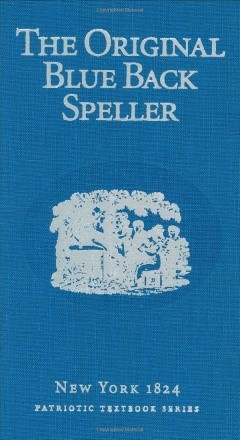
blue book speller

How many writers have experienced this emotional component of reaching for their dreams only to discover the heaviness of the challenge as they’ve balanced full-time jobs while developing their book or book series? This is rarely discussed, and yet Webster is an excellent example of fighting his way back—tapping into his educated, emotional and passionate self which he expressed in writing.

As the Revolutionary War continued, George Washington passed through the New Haven area and Webster (who played the flute) joined a group of supporters/students who serenaded Washington and his troops. Shortly thereafter, Webster, his brothers and father tried to join the Battle of Saratoga in New York but by the time they got there, the battle had been won by the American troops.

  • Thus it happened that Noah turned to writing as a way to channel his patriotic ambitions and he began writing a series of articles for a New England newspaper encouraging citizens and their American Revolution resolve.
  • Between 1783-1785 he also wrote his “Blue-Backed Speller” spending most of his time getting it published and announced. (It was later published in 1824 as “The Original Blue Back Speller: A Patriotic Textbook Series.”)
  • At the same time he was writing these books, Webster was also working on copyright legislation to protect the works of all writers.
  • His relentless book promotion pioneered now common techniques like the author tour, the fabricated blurb and the aggressive stoking of manufactured controversy,” says New York Times book reviewer Jesse Sheidlower, the editor at large of the Oxford English Dictionary and the president-elect of the American Dialect Society.
  • Webster was known for writing constantly under various pseudonyms. Doing so he would often praise his own works and deconstruct the arguments of his critics. This is still being done today on the Internet under the label of “sock puppetry.”

So here is what I’ve learned from Noah Webster today: (1) write myself out of melancholy; (2) focus my writing efforts on subjects that tap into my passions, compassions, interests and ambitions; (3) don’t hesitate to self-publish; (4) use every avenue available to promote my books; and (5) if necessary, be willing to face critics with straightforward discussion.

Webster strongly promoted what he called American-English building an American linguistic style of spelling and pronunciation that lives and continues to grow to this very day. Without intentionally setting out to do so I believe he has given all writers permission to utilize our language in new ways; to create new words and combined words and related definitions; to write beyond our current skills, develop concepts for generations yet unborn, and publish in paper books, on the Internet and venues yet to be discovered. ⚓︎

RoyaleneABOUT ROYALENE DOYLE: Royalene has been writing something since before kindergarten days and continues to love the process. Through her small business—DOYLE WRITING SERVICES—she brings more than 40 years of writing experience to authors who need “just a little assistance” with completing their projects. This is a nice fit as she develops these blogs for Outskirts Press (OP) a leading self-publisher, and occasionally accepts a ghostwriting project from one of their clients. Her recent book release (with OP) titled FIREPROOF PROVERBS, A Writer’s Study of Words, is already receiving excellent reviews including several professional writer’s endorsements given on the book’s back cover.  

Royalene’s writing experience grew through a wide variety of positions from Office Manager and Administrative Assistant to Teacher of Literature and Advanced Writing courses and editor/writer for an International Christian ministry. Her willingness to listen to struggling authors, learn their goals and expectations and discern their writing voice has brought many manuscripts into the published books arena.