Self-publishing, Literature and Pop Culture

I opened the Books section in yesterday’s New York Times Urban Eye to read the headline, “Why Literature Doesn’t Matter.” Really? How sad. It matters to me. It matters to my family, friends, and colleagues. It matters to the self-publishing authors I work with every day. Literature doesn’t matter… I wish someone would have told me.

According to Urban Eye, a recent Sunday Book Review article penned buy novelist Kurt Anderson was to fill me in. Anderson writes, “During the 1960s and ’70s…people who hadn’t read a word of a first-rate contemporary novel — no Cheever, no Bellow, no Salinger, Heller, Styron, Doctorow, Updike or Roth — nevertheless knew the novelists’ names… And then everything changed.”

But book sales in the US have remained strong, and are even growing over previous years in Europe. Despite the current recession effects, statistics show that readers are still buying books. Not matter? Anderson goes on to claim, “But irony of ironies, after literature was evicted from mass culture, pop culture itself began to fragment and lose its heretofore defining quality as the ubiqui­tous stuff that everybody consumed.”

Ah, I’m seeing to whom, or rather to what, Literature doesn’t matter to – pop culture. Wait, then this is a good thing for authors and readers. The fragmentation that Anderson talks about is the segmenting of consumers into smaller, more clearly defined profiles. What that means to self-publishing authors of fiction, non-fiction, etc., is not that your work doesn’t matter, that Literature doesn’t matter, but that it doesn’t matter to everyone. Perfect, now you can coordinate and focus your subject matter and marketing efforts to readers who will benefit from, and buy your books.

Talk to your self-publisher early on about your custom marketing plan.

Karl Schroeder


Share this Post

Self-publishing Book Marketing Advice – Readers that Count

Placing your book in front of readers that matter is one of the most important elements in successful book marketing of your self-published title. This  should be high on your long range radar even as you write.

What does this mean? The smaller, most identified reader base the better off you’ll sit. Does your non-fiction piece focus on Green Building and Design? Your fiction take place in the US Civil War? Or your title introducing relevant ways to manage a company during a recession?

Each of these examples presents you, the author, with a strong, identifiable reader base. Should you care if someone who blogs incessantly about the Harry Potter series doesn’t know or care about your book? Without question, no.

Should you take note if Robert Morris mentions your B2B management or effective leadership piece? Absolutely. He is an individual influential on a specific topic that will bring others to your book.

The bottom line challenge is finding which circles, critics, and resource that matter to your book and convincing them of its value. Its in trying to please everyone that we become invisible – something like the law of diminish returns.

Doesn’t writing sometimes seem to be the easiest part?

– Karl Schroeder

Self-publishing’s Strongest According to Inc. Magazine

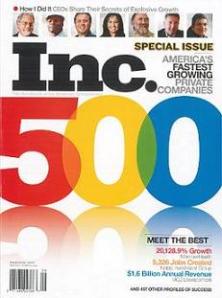
Inc500Cover2Inc. Magazine released its annual top 500 fastest growing US businesses yesterday. Outskirts Press, Inc ranked #268 on the list, and exclusive among full-service self publishing outfits. With on-demand publications up 132% over the previous year, Outskirts Press finds itself the fastest growing provider in the fastest growing segment of the book publishing industry. Congratulations Outskirts Press.

Author Solutions – the only other self-publishing related provider recognized, came in at 3266 among the top 5000 companies.

Congratulations self-publishing.

– Karl Schroeder

Self-Publishing: Give me six hours…

Give me six hours to chop down a tree and I will spend the first four sharpening the axe. – Abraham Lincoln

Let’s look at breaking down your self-publishing book project into the short, mid, and long range in terms of the process in goals. The actual time involved for each phase varies with each author and each project. Nevertheless, you’ve worked hard on writing, revising, and preparing your book for publication. Congratulations. The first step or phase is done or nearing complete, and it’s time to publish.

Many authors confuse this second step – actual publishing – with step 3. Let’s slow down and take a closer look. Phase 1 is the writing, or artistic phase. Step 2, the publishing or business step. Time to begin sharpening the axe. Upfront prices are important, but take the time to avoid the ever present instant gratification of free and quick publishing and research beyond. What kind of pricing control will you have? Professional production options? Will your book be situated to retail competitively on the market? What kind of marketing services and options are available after publication? These are critical questions to ask as you research full-service self-publishing options, customize your mid-range work, and begin to look at getting your published book into reader’s hands. Now your prepared to chop the tree.

Karl Schroeder
https://selfpublishingadvice.wordpress.com

Self-publishing, Obama, and the American Economy

The New York Times reported today that the US lost almost 500,000 more jobs in June 2009. “These numbers are indicative of a continued, very severe recession,” commendted Stuart Hoffman of PNC Financial Services in Pittsburgh. Pressure continues to weigh the Obama administration and its $787 billion stimulus plan, while some economists call for an additional round of government stimulus dollars.

Hmmm

I attended a conference recently where one speaker notably remarked, “People tell me there is a recession. I simply choose not to participate.”

Sure, we’ve seen some disturbing fallout over the past year, but it’s time to move the accident from the road and press on the gas pedal. The efficiency, timeliness, and effectiveness in advancements provided through independent and self-publishing offers authors the opportunity for their own stimulus package. Businesses leaders, entrepreneurs,  industry experts, speakers, and more are finding book publishing as an avenue to promote themselves and their work, leading to growth, credibility, and investment dollars, not to mention the ancillary benefit of ongoing royalties on book sales.

No-brainer? Give it a shot. Adversity engenders growth, and self publishing at the edge of the envelope. Don’t miss the train.

Karl Schroeder


Share this Post