Friday Conversations With A Self-Publishing Writer 1/31/14

FRAMED…

In my field of ghostwriting and concept consulting/building, I truly enjoy working with autobiographies/biographies, memoirs, histories and philosophy/faith projects.  These nonfiction genres allow the authors to weave their own experiences into the pages and breathe life into the details.  Although classified as fact-based, true-life books, they really are stories that carry a personal impact connecting author and Reader.

A current client is struggling—BIG TIME—to “put all the pieces together” for her book.  There are years of scribbled notes literally jammed into shoeboxes, not to mention the bigger box that holds the many pages of research materials.  Because she has had several “false starts,” we at least have somewhere to begin.  So, as I’m jumping into the non-fiction waters with this lovely lady, I wanted to share a few basic guidelines with our blog readers—and writers.

Nonfiction writing requires a framework—a definite perimeter or border to keep the author from racing down rabbit trails that not only distract readers, but also diminish the work-at-hand.  Here are my seven strategies for developing THE BEST nonfiction book:

The Topic:  With one or two sentences—not to exceed 38 words—tell yourself what are you writing about.  Be very narrow-minded here.  This is your “big idea” and the essence of it will be the heart of your book.

The Collection Box: (or file cabinet drawer, or large 3-ring binder notebook, or….).  Use that 38-word statement you’ve just created and print it out in BIG, BOLD TYPE.  This is the label for your collection of materials.  It is also the first thing you see when you work on your book and it is meant to inspire your thinking processes.

Sub-Topic Files:  You’ve probably already collected several pieces of information that relate to your topic.  Pull out those file folders and start organizing these pieces into sub-topic files.

Color-Coding:  As you build this collection of sub-topics, use color markers (or stickers) to mark the files that carry the most vital information.  Most writers will “file” their collection alphabetically, so the color-coding will allow you easy access to crucial facts when you need them.  For example:  Red = must be included; Orange = include; Yellow = good information; Blue = possible connections; Green = opposing opinions.

Bibliography File:  THIS IS AN ABSOLUTE MUST!  Always give credit to the “source” of your facts.  Unless you, yourself, are the source—the authority behind a statement—every fact, figure, quote, statistic, report, etc. must be acknowledged.  This can be woven into the manuscript; however, I always recommend that a bibliography be included at the end of non-fiction books.

To Outline or Not To Outline:  Every nonfiction writer I know has shown me an outline of their books.  Many end up using it—or most of it—as a Table of Contents.  So I must agree that it is useful.  However—don’t let an outline trap you.  Keep that 38-word statement fresh in your thoughts so that you will create a read-able book that is worth reading.

PLAN to Publish:  No one should do all the work of writing a book and then put it in a drawer.  The information you’ve gathered and poured your heart into is meant to reach a lot of people.  So once you have that Topic Statement, start your research into publishers.  I am one who believes in self-publishing; however, if your Topic is a “hot topic,” there might be a publishing house out there for you.  But NO MATTER WHAT, get your book IN PRINT!

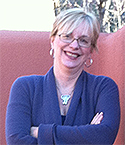
Royalene ABOUT ROYALENE DOYLE: Royalene Doyle is a Ghostwriter with Outskirts Press, bringing more than 35 years of writing experience to authors who need “just a little assistance” with completing their writing projects. She has worked with both experienced and fledgling writers helping complete projects in multiple genres. When a writer brings the passion they have for their work and combines it with Royalene’s passion to see the finished project in print, books are published and the writer’s legacy is passed forward.

Friday Conversations With A Self-Publishing Writer 1/17/14

HEADLINES…

When turning the pages of a popular magazine recently, I found myself reading only the headlines of each story.  If the wording didn’t capture my attention, I quickly moved to the next.  My time—even though it was time set aside for a specific appointment—was still valuable.  I didn’t want it wasted.  However, in short order, I found myself thanking the journalists for writing such clean, concise headlines.  The career of nonfiction writing is challenging, worthwhile and rewarding.

So it is that I offer my nonfiction author friends a reminder of the useful steps in creating their manuscripts.

The basic rules of journalism always apply:

  1. Use standard English spelling, punctuation and grammar while telling the reader Who, What, Where, When, Why and How.
  2. Get the facts, statistics and spelling of names and places RIGHT.
  3. KNOW the main point.  If you can’t express it in 25 words or less, you don’t have a clear/basic handle on what you’re writing.   Be short, concise, and clear in your sentence, paragraph and article length—unless asked to “expand.”
  4. Stay as objective as humanly possible.  An impartial, detached perspective will not only allow you to write excellent nonfiction following all the above criteria, it will also protect you from being damaged by the realities.
  5. ALWAYS WRITE THE TRUTH, to the best of your ability.  A writer—every writer—has an obligation to their readers to tell the unfiltered, untainted truth.

In 2011, Craig Silverman—award-winning author and journalist—wrote more about the challenges of journalistic, nonfiction writing in this Tweet and Re-tweet world.  Published in the Columbia Journalism Review, I share some of his insights and excellent advice:

  1. “Silverman’s Law of Incorrect Tweets:” WARNING!  A piece of misinformation is much more appealing than the correction, and people are inclined to re-tweet false “news” while ignoring the corrected info.  IF you are a writer who consistently has to “edit” already printed material, that reputation will follow you.
  2. Research your “sources.”  Every “source” will have their own spin on the event and/or topic.  Some will even falsify statements.  The quality and diversity of sources is hugely important, so make the effort to find the best sources (plural) possible.
  3. VERIFY before dissemination.  Apply the discipline of verification to everything you gather. Never hesitate to correct something you’ve written.  Ignoring it or refusing to make the correct has the potential to cause far greater damage than a writer’s moment of embarrassment.
  4. If a story seems to be “too good to be true”—a real scoop—it probably is.  Writers are often fooled because we want a story to be true, and we want to write about it.  Go back to the basics—and VERIFY!
  5. Don’t fear failure—let it instruct you!  Once the slam to the ego quits hurting and the anger subsides, a valuable lesson can be seen.  That’s how you stop making the same mistakes, how you get better.

There you have it.  “Easy-Peasy.”  NOT!  Some writers love research and being that private investigator.  However, most need support.  Where “two are better than one,” many eyes on a manuscript are even better.  There is a self-publishing team out there for you—one that is just the perfect match to support your project—get it published and IN the hands of your readers.

Royalene ABOUT ROYALENE DOYLE: Royalene Doyle is a Ghostwriter with Outskirts Press, bringing more than 35 years of writing experience to authors who need “just a little assistance” with completing their writing projects. She has worked with both experienced and fledgling writers helping complete projects in multiple genres. When a writer brings the passion they have for their work and combines it with Royalene’s passion to see the finished project in print, books are published and the writer’s legacy is passed forward.

Self-Publishing Week in Review: 8/13/13

As a self-publishing author, you may find it helpful to stay up-to-date on the trends and news related to the self-publishing industry. This will help you make informed decisions before, during and after the self-publishing process, which will lead to a greater self-publishing experience. To help you stay current on self-publishing topics, simply visit our blog every Tuesday to find out the hottest news in self-publishing this week.

Linda Gillard on self-publishing: ‘I market myself, not a genre’

Successful self-published author Linda Gillard talks about her self-publishing experience, including pricing, marketing, and working with editors and designers. She also shares why she never plans on going back to traditional publishing.

Hoffman: Should a self-published book be your next business card?

This writer suggests that books are the next business card and are just as important as having a website and social media presence. Self-published books are a great way to build your credibility as a professional and to promote yourself. Self-publishing isn’t just for novelist. Many writers self-publish non-fiction books, and ghostwriters can provide assistance to those who need it.

Complimentary Kindle Edition for Authors Self-publishing With Outskirts Press in August

Authors who order Outskirts Press Diamond or Pearl book publishing package any time from August 1 through August 31 automatically qualify for the free Kindle Edition with the valid promotion code. Authors not only save hundreds on self-publishing services by bundling them with one of these two popular publishing packages, but receive a $199 Kindle Edition free.

If you have other big news to share, please comment below.

ABOUT KELLY SCHUKNECHT: Kelly Schuknecht is the Vice President of Outskirts Press. In addition to her contributions to the Outskirts Press blog at blog.outskirtspress.com, Kelly and a group of talented marketing experts offer book marketing services, support, and products to not only published Outskirts Press authors, but to all authors and professionals who are interested in marketing their books and/or careers. Learn more about Kelly on her blog at http://kellyschuknecht.com.

What is Narrative Nonfiction?

As a self-published author, you are asked to choose a genre for your book. The easy part is deciding whether your book is fiction or nonfiction. The more difficult part is determining what type of fiction or nonfiction to categorize your book.

Basically, there are two types of nonfiction books: narrative nonfiction and prescriptive nonfiction. All biographies and memoirs are considered narrative nonfiction, while how-to books are described as prescriptive nonfiction.

Remember, if you are writing a memoir, you must be able to attest to the accuracy of the details. In addition, the story must have the same elements as fiction stories: a beginning, middle, and end as well as conflict, interesting characters, setting, etc. If your memoir doesn’t meet these standards, you may want to write a fictional story loosely based on real life. This allows you to add information to create a better story and protects you from possible legal issues.

ABOUT WENDY STETINA: Wendy Stetina is a sales and marketing professional with over 30 years experience in the printing and publishing industry. Wendy works as the Director of Author Services for Outskirts Press. The Author Services Department is composed of knowledgeable customer service reps and publishing consultants; and together, they all focus on educating authors on the self-publishing process in order to help them publish the book of their dreams. Whether you are a professional looking to take your career to the next level with platform-driven non-fiction, or a novelist seeking fame, fortune, and/or personal fulfillment, Wendy Stetina can put you on the right path.

Self Publish a Book to Increase Credibility

Are you an industry expert who wants to increase your credibility and client base? One of the best ways to establish yourself as an expert and grow your business is to self publish a book. By writing and publishing a book, you prove you are knowledgable in your field and attract new customers.

In addition to showcasing your expertise, publishing a book increases you visibility. Plus, people respect “published authors.” Not only will this attract new clients, but the book can also serve as an additional revenue stream. Self publishing isn’t just for  creative writers; it is also perfect for industry experts.

If you aren’t a great writer, don’t worry. You can always hire a ghostwriter to help you bring your dream book to life.

I’d love to know, how has self publishing a book improved your business or career?

ABOUT WENDY STETINA: Wendy Stetina is a sales and marketing professional with over 30 years experience in the printing and publishing industry. Wendy works as the Director of Author Services for Outskirts Press. The Author Services Department is composed of knowledgeable customer service reps and publishing consultants; and together, they all focus on educating authors on the self-publishing process in order to help them publish the book of their dreams. Whether you are a professional looking to take your career to the next level with platform-driven non-fiction, or a novelist seeking fame, fortune, and/or personal fulfillment, Wendy Stetina can put you on the right path.