Espresso Book Machines Offer Self-Publishing Authors a Jolt in Sales

Oh, the publishing industry has come such a long way since the days of minimum advance orders, massive preprinting and prohibitive upfront production costs. Technology has not only given digital readers the gift of instant downloads, but now has given hard copy traditionalists the ability to choose a book digitally and have it in hand in the time it takes to press a few buttons on a vending machine.

In fact, the Espresso Book Machine® (EBM), as the name implies, is essentially a vending machine for literature. Just as an espresso maker both makes and vends a piping-hot beverage on demand, the EBM produces a paperback copy of your selection on the spot. The buyer selects a title and the EBM instantly prints the selection, complete with a full-color cover, that is indistinguishable from a preprinted paperback plucked from a bookshelf. The machine even cuts the book to the proper size for that title!

All that in three or four minutes. You can’t even make a latte that fast.

It’s understandable why so much excitement is brewing over this technology. Booksellers and libraries, wise to many readers’ undying love for both tangible reads and instant gratification, are keen to offer as many new releases as possible, even when shelf space is hard to come by. Naturally, authors are drinking it up, as well; any gadget that serves up their books without requiring huge advance printing and shipment costs is a sweet deal. Authors only pay a small preprint cost and receive the full retail price, minus a consignment fee.

Espresso Book Machines are already working overtime in libraries and universities all over the world, including but not limited to:

  • New York Public Library
  • University of Michigan Library
  • New Orleans Public Library
  • San Francisco Internet Archive
  • University of Michigan Library
  • Manchester Center Northshire Bookstore
  • University of Alberta
  • McMaster University Bookstore
  • London Newsstand UK
  • Library of Alexandria, Egypt
  • Melbourne, Australia Angus & Robertson Bookstore

More vending locations are being added all the time. Self-publishing giant Outskirts Press has added the Espresso Book Machine as an affordable distribution option for its authors, and it’s a smart addition to any book marketing plan. The small set-up fee makes the book available at all of the EBM locations and automatically uploads your title to new machines as they’re added to the EBM network, at no extra charge.

Combine an EBM edition with Amazon book listing, and iPad, NOOK and Kindle editions to maximize access to your book and make it easier for readers to make the decision to buy. Of course, you can still keep your car’s trunk stocked with your latest book just in case, but the Espresso Book Machine can help you lessen the load when preprinting isn’t possible.

Elise Connors ABOUT ELISE L. CONNORS:
Elise works as the Manager of Author Support of Outskirts Press.  She also contributes to the Outskirts Press blog at blog.outskirtspress.com. Elise and a group of talented book marketing experts assist not only published Outskirts Press authors, but also all authors and professionals who are interested in getting the best possible exposure for their book.

Weekly Self-Published Book Review: Queen Vernita Visits the Islands of Enchantment

Book reviews are a great way for self-publishing authors to gain exposure. After all, how can someone buy your book if he or she doesn’t know it exists? Paired with other elements of your book promotion strategy, requesting reviews is a great way to get people talking about what you’ve written.

When we read good reviews, we definitely like to share them. It gives the author a few (permanent) moments of fame and allows us to let the community know about a great book. Here’s this week’s book review by Midwest Book Review:
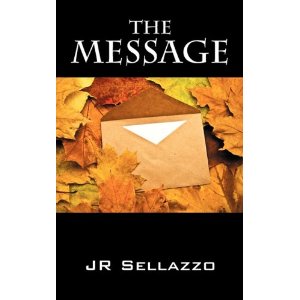
Queen Vernita Visits the Islands of Enchantment

Dawn Menge

Publisher: Outskirts Press

ISBN: 9781432773120

In this book, there is a person named Queen Vernita. She goes to a place called the Islands of Enchantment. In this place, she has a different person come and visit her every month for a whole year. Every time someone visits they learn something every day of the week.

My favorite part was when David came to visit her, and they learned about sharks. I learned that there are 440 species of sharks in the ocean. I learned that the great white shark gets to be 12 to 16 feet long. I also like learned about eels. They can get to 10 feet long. They can weigh 100 pounds! That is a big eel!

“Queen Vernita Visits the Islands of Enchantment” is good if you want to learn about things in the ocean. I learned a lot of new things by reading it. I liked how they had something new to learn every day of the week.

Using Twitter as a Marketing Tool for Self-Publishing Authors

Have you ever wondered whether Twitter could be an effective book marketing tool?  I often encourage self-publishing authors to use social media to market their books, and recently came across a really great story I wanted to share.

As I was monitoring the views on the Outskirts Press blog a couple of weeks ago, I noticed that in one day the blog’s Twitter referrals (viewers that came to our blog after clicking on a link from Twitter) went up by 40 percent! Yes, 40 percent!

How did this happen? Simple. Glenn Skinner, one of our Best Book of the Year Award Finalists, had tweeted about the contest that day in an effort to get more votes for his book.  Glenn (@KeyaQuests) currently has over 2,800 followers on Twitter, so his one tweet brought in so many more viewers that the referral rate went up by 40%.  Wow!

By building a strong social media platform, you can create similar results. Whether you are promoting your author website, blog, or book, you can drive website traffic and increase book sales by using Twitter. The key is to build a network of followers who are read your posts and visit the links you share. While keywords can get you some traffic through search engines, social media is the key to increasing website traffic.

If you are new to social media, you may want to consider a self-publishing company that offers help with social media marketing. For instance, Outskirts Press offers an Author Platform Set-up Through Social Media Option which helps authors harness the power of social media to market their book.

I’d love to know, how has social media helped you connect with your readers?

ABOUT KELLY SCHUKNECHT: Kelly Schuknecht is the Vice President of Outskirts Press.  In addition to her contributions to the Outskirts Press blog at blog.outskirtspress.com, Kelly and a group of talented marketing experts offer book marketing services, support, and products to not only published Outskirts Press authors, but to all authors and professionals who are interested in marketing their books and/or careers. Learn more about Kelly on her blog at http://kellyschuknecht.com.

Paperback vs Hardcover: Which is Better?

I frequently work with authors who can’t decide whether to self-publish a paperback or hardcover book. My recommendation is to do both. There are pros and cons to each style of book. By having both paperback and hardcover versions, you can appeal to different types of buyers. Here is an overview of the pros and cons of each style.

Paperback

  • Cheaper
  • Appealing to the majority of buyers
  • Easier to travel with
  • Less durable

Hardcover

  • Make great gifts, especially if it is autographed
  • Look good on display at signings and/or speaking events
  • More expensive
  • Tend to be more durable

I’d love to hear your opinions: do you prefer paperback or hardcover books?

ABOUT JODEE THAYER: With over 20 years of experience in   sales and management, Jodee Thayer works as the Manager of Author Services   for Outskirts Press. The Author Services Department   is composed of knowledgeable customer service reps and publishing consultants;   together, they all focus on educating authors on the self-publishing process in order to help them publish the   book of their dreams. Whether you are a professional looking to take your   career to the next level with platform-driven non-fiction or a novelist   seeking fame, fortune, and/or personal fulfillment, Jodee Thayer can put you   on the right path.

When to Edit Your Self-Published Book

One of the questions I am frequently asked is “when should I have someone edit my self-published book?” There are two things you need to keep in mind when deciding when to hire an editor: how is your book formatted and what type of editing do you want. Here is why.

Formatting

A manuscript should always be edited before it is designed into book format. If you plan to have the editor work on the hard-copy version of your manuscript, it has to be in standard manuscript format; that is twelve-point Courier or Times New Roman type, double-spaced, with margins of at least an inch on all sides. This format is standard in the industry and gives the editor room to work. If the book is already designed, it won’t be in standard manuscript format; it will be in book format.

If you plan to have your editor work on your electronic file, the format won’t matter, but it must be in a word-processing document, not a design program or a PDF. Most editors are not designers and won’t have the design program used to design your book. Even if the editor has the capability of opening the design program or manipulating a PDF (which some do), editing a book after it is designed will still interfere with the design. After the file is edited, you’ll have to return it to your designer to get it redesigned, and there will certainly be an additional charge for that service.

Type of Editing

There are basically two types of editing: copyediting and developmental editing. Copyediting should be done once your manuscript is complete. The editor will polish your manuscript by looking for grammar, consistency, clarity, and style issues. If you plan to add or delete large portions of content, you are not ready for a copyedit because it will result in extra fees due to the editor  re-editing portions of the manuscript or cost more than it needs as most editors charge based on the length of the manuscript.

Developmental editing should take place in the beginning stages of writing. This type of edit offers feedback on elements such plot, structure, character, etc. While many editors will point out obvious or frequent grammar and style issues, those types of mistakes are not the  main focus of this edit. If you decide to hire a developmental editor, copyediting is still recommended before publication.

Hopefully this answers some of your questions about the editing process. If you have other questions, feel free to leave them in the comment section, and I will try to address them in future posts.

ABOUT WENDY STETINA: Wendy Stetina is a sales and marketing professional with over 30 years experience in the printing and publishing industry. Wendy works as the Director of Author Services for Outskirts Press. The Author Services Department is composed of knowledgeable customer service reps and publishing consultants; and together, they all focus on educating authors on the self-publishing process in order to help them publish the book of their dreams. Whether you are a professional looking to take your career to the next level with platform-driven non-fiction, or a novelist seeking fame, fortune, and/or personal fulfillment, Wendy Stetina can put you on the right path.