Weekly Self Published Book Review: Applying Mathematics to Construction

Book reviews are a great way for self-publishing authors to gain exposure. After all, how can someone buy your book if he or she doesn’t know it exists? Paired with other elements of your book promotion strategy, requesting reviews is a great way to get people talking about what you’ve written.

When we read good reviews, we definitely like to share them. It gives the author a few (permanent) moments of fame and allows us to let the community know about a great book. Here’s this week’s book review by Midwest Book Review:

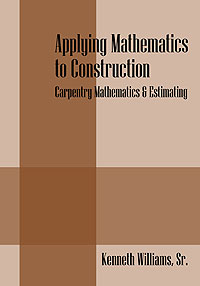
Applying Mathematics to Construction

Applying Mathematics to Construction

Kenneth Williams

Publisher: Outskirts Press

ISBN: 9781432766436

Mathematics makes up everything. “Applying Mathematics to Construction: Carpentry Mathematics & Estimating” is a guide to mathematics and related subjects when dealing with construction and carpentry, how to do more exact measurements, understand the materials one needs, and succeed on a higher level for one’s job. “Applying Mathematics to Construction” is a choice pick for community library mathematics and crafts collections.

2013 Book Award Season

It’s that time of year again. No, I’m not talking about the holidays. I’m talking about book award season, one of the most exciting times of year for self-published authors.

Over the next couple months, some of the most popular book award programs will be accepting submissions for books self-published in 2013. Here is an overview of some of the upcoming awards.

Reader Views: December 1, 2013

Works published by major book publishers are not eligible. Books must have 2013 copyright date. Authors are encouraged to submit their entries as soon as possible but postmarked no later than December 1, 2013. To learn more, visit http://readerviews.com/literaryawards/.

Ben Franklin Book Award: December 31, 2013

The IBPA Benjamin Franklin Awards, which include fifty-five categories recognizing excellence in book editorial and design, are regarded as one of the highest national honors for independent publishers.Any books submitted with copyright dates other than 2013 must be accompanied with proof of initial distribution  in the year 2013. The deadline is December 31, 2013. To learn more, visit http://ibpabenjaminfranklinawards.com/.

ForeWord Book Award: January 15, 2014

Any independently published titles in any format—including eBooks—published in 2013 are eligible. New editions of previously issued books are eligible with newly issued ISBNs. Submissions must be postmarked no later than January 15, 2014. To learn more, visit https://www.forewordreviews.com/services/book-awards/botya/.

I’d love to know, which contests are you submitting your book to this book award season?

ABOUT KELLY SCHUKNECHT: Kelly Schuknecht is the Vice President of Outskirts Press. In addition to her contributions to the Outskirts Press blog at blog.outskirtspress.com, Kelly and a group of talented marketing experts offer book marketing services, support, and products to not only published Outskirts Press authors, but to all authors and professionals who are interested in marketing their books and/or careers. Learn more about Kelly on her blog at http://kellyschuknecht.com.

Self-Publishing Week in Review: 11/05/13

As a self-publishing author, you may find it helpful to stay up-to-date on the trends and news related to the self-publishing industry. This will help you make informed decisions before, during and after the self-publishing process, which will lead to a greater self-publishing experience. To help you stay current on self-publishing topics, simply visit our blog every Tuesday to find out the hottest news.

Smart Businesses Find that Self-Publishing Isn’t Just for Authors Any More

Self-published books are a great part of businesses’ “content marketing” strategies. This article talks about how smart businesses are taking advantage of self-publishing.

3 Simple Censorship Rules Can Safeguard Self-Published Ebooks

Censorship has been a hot topic recently due to the self-publishing erotica scandal. This article talks about how censorship impacts self-publishing and how changes may impact the future.

Self-publishing grows, with almost 400,000 titles last year

A recent Bowker report shows that self-publishing is still a growing trends. More than 391,000 self-published titles were published in 2012. That is a 59 percent increase compared to the year before.

Opinion: How Indie Publishing Compares to the Indie Music Scene

This interesting articles compares indie publishing and indie music. Not only does it point out all the perks of independent publishing and music, but it also discusses the growing acceptance of indie publishing.

If you have other big news to share, please comment below.

ABOUT KELLY SCHUKNECHT: Kelly Schuknecht is the Vice President of Outskirts Press. In addition to her contributions to the Outskirts Press blog at blog.outskirtspress.com, Kelly and a group of talented marketing experts offer book marketing services, support, and products to not only published Outskirts Press authors, but to all authors and professionals who are interested in marketing their books and/or careers. Learn more about Kelly on her blog at http://kellyschuknecht.com.

5 Misunderstandings About Using Photos When Self-Publishing

One of the most confusing areas of publishing for self-published authors is copyrights. Many authors aren’t familiar with or misunderstand copyright laws — especially when it comes to using photos in their books or on their covers. Here are five of the most common misunderstandings.

1. “Download Free Photos” Sites

Many authors misunderstand the “download free photos” sites.  Most of these sites only allow the images to be used for blogs, websites, and other personal applications; not for publication.  Also, since these images are designed primarily for use on a computer, they are typically very low resolution and not suitable for printed publication.

2. Wikipedia Photos

Contrary to popular belief, it is not permissible to publish all photos downloaded from Wikipedia.  The author needs to look closely at the annotation on the page where they found the image to see the requirements.  Some will require the author to obtain permission from the copyright holder.

3. Limitations

Some copyright holders will sell the right to publish their image, but their permission may have limitations on the number of copies or length of time.  Many self-publishing companies will not accept a limited authorization.  Authors should check with their publisher before purchasing any such rights to publish
an image.

4. The Copyright Holder

Just because a photo is in your possession doesn’t mean you have the right to publish it.  The copyright holder is considered to be the person who took the photo. Therefore, the original photographer is the one who must grant authorization to publish the image.

5. Subjects in Photos

Despite my previous point, just because you took the photo doesn’t necessarily mean you have the right to publish the photo.  If there are people in the photo, then the author should obtain a photo release from the subjects.

I’d love to know what questions you have about photo copyrights. Please comment below.

ABOUT JODEE THAYER: With over 25 years of experience in sales and management, Jodee Thayer works as the Director of Author Services for Outskirts Press. The Author Services Department is composed of knowledgeable customer service reps, publishing consultants and marketing professionals; together, they all focus on educating authors on the self-publishing process in order to help them publish the book of their dreams and on assisting authors with marketing and promoting their book once published. Whether you are a professional looking to take your career to the next level with platform-driven non-fiction or a novelist seeking fame, fortune, and/or personal fulfillment, Jodee Thayer can put you on the right path.

Friday Conversations With A Self-Publishing Writer 11/01/13

There is a “little” secret in my house—a little book writing secret. I have always enjoyed the Winnie the Poo children’s series and actually dream about writing a collection of children’s books. Of course, not being a Big Name in the publishing world, I have already made the decision to self-publish—and selected the self-publishing press I will work with—because I want to see my grandchildren and great-grandchildren hold my books in their hands.

The stories are buzzing in my head! I’ve written the manuscript for the first one that will be published in board-book form. At least five “adventures” are planned in that series. The main characters will then graduate to the 3-5-year-old storybooks and eventually the 5-8 year-old more finely developed tales.

Now…I face the question of who will be the illustrator. Selecting and hiring a person to complete this whole series is a major priority. Here is the criteria I’ve developed so far:

1) First “the research.”

  • I’ll talk with my self-publishing consultant and get a name or two from them with website information so I can see their work. Having already done my research for the best self-publisher for my project, I am confident they will recommend an illustrator who can get my job done with excellence.
  • Also, with so much information on the Internet, I’ll look there. The established organizations—such as the Society of Children’s Book Authors and Illustrators and www.childrensillustrators.com— are good places to see a wide variety of styles.
  • And because I love bookstores, I’ll take a stroll through a children’s aisle or two looking at the finished products, making a list of any illustrators who seem to have the same vision I’m creating.

2)  Next comes “the conversation.”

  • I’m hoping to meet artists in person, but if not possible, a lengthy conversation (or two or three) will help me discern whether this person shares the visual concepts I’m “seeing”—the ability to complement the way I write.
  • Do they have experience in “maturing” characters from toddler stages through eight years old?
  • I will ask them to “show me” with samples of mood and emotion changes of how they “see” my main character.
  • Finally, I will ask if they believe they can sustain the lengthy commitment for the complete project series I’m developing

3) Money

By this time, my list of artists should be a short one, and I will talk “money.” I have a great respect for the creative genius found in the artwork of illustrators. Their conceptual input is very important to the process of finishing a quality book. So I expect the cost to be established by the current illustration market. This means approximately $150 per full-page illustration. If the revisions and detail work is more extensive, the cost will go up. However, I must be aware that no matter how marvelous my “little” stories are, the excellence of the artwork will either make or break the final product.

I do have one final criterion. My books are developed as a labor of love for my grandchildren and great-grandchildren. So I expect to receive delivery of the illustration master files. Once these characters are created—once they come alive in these stories—they belong on the pages of my books and nowhere else. Integrity-motivated illustrators already offer these files in their “project close-out” process.

So it is that the work of a writer goes along—more ideas than we sometimes know what to do with! Join me in self-publishing and giving the reading public more visually inspiring pages to turn!

Royalene ABOUT ROYALENE DOYLE: Royalene Doyle is a Ghostwriter with Outskirts Press, bringing more than 35 years of writing experience to authors who need “just a little assistance” with completing their writing projects. She has worked with both experienced and fledgling writers helping complete projects in multiple genres. When a writer brings the passion they have for their work and combines it with Royalene’s passion to see the finished project in print, books are published and the writer’s legacy is passed forward.