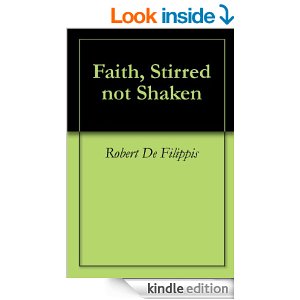
Weekly Self-Published Book Review: Faith, Stirred Not Shaken

Book reviews are a great way for self-publishing authors to gain exposure. After all, how can someone buy your book if he or she doesn’t know it exists? Paired with other elements of your book promotion strategy, requesting reviews is a great way to get people talking about what you’ve written.

When we read good reviews, we definitely like to share them. It gives the author a few (permanent) moments of fame and allows us to let the community know about a great book. Here’s this week’s book review by Midwest Book Review:

 Faith, Stirred Not Shaken

Faith, Stirred Not Shaken

Robert De Filippis

Publisher: Outskirts Press

ISBN: 9781432775278

Science and Religion have been opponents for many years. “Faith, Stirred Not Shaken: Exploring the Miracle Between Science and Religion” explores the philosophy between these ancient concepts that both try to define our world. As author Robert De Filippis tries to find a bridge between the two and states as times change, science and religion may find common ground once more. “Faith, Stirred Not Shaken” is an intriguing discussion of the value of faith, very much recommended.


ALA Conference 2014 in Las Vegas

The American Library Association annual conference and exhibit will take place in Las Vegas starting June 26, 2014 through July 1, 2014. The event features a variety of exhibits, speakers, and networking opportunities. It is a great chance for self-publishing authors to learn more about the publishing industry and network with other professionals.

Events such as the ALA Conference are excellent for helping self-published authors sell their books. Networking and learning about the industry are key steps in becoming a self-publishing successful story.

Some of the many benefits of attending the event include:

  • Make your library more efficient
  • Save your library time and money
  • Better serve your library users
  • Become a more effective library advocate
  • Make your library network stronger
  • Build a stronger reputation for your library
  • Inject fresh energy, excitement, and professionalism into your work
  • Become an excited, well-formed professional

First time attendees should review Leigh Milligan’s top ten tips in her article for INALJ based on her experience at the 2014 ALA Midwinter Meeting. Read the full article here.

You can find other helpful resources for first time attendees, exhibitors, and job searches by visiting http://ala14.ala.org/.

Annual registration and housing are now available. You can begin the registration process by visiting http://ala14.ala.org/register-now.

I’d love to know, do you plan on attending the 2014 ALA Conference? If you’ve attended an ALA Conference in the past, how did it impact your publishing success?

ABOUT KELLY SCHUKNECHT: Kelly Schuknecht is the Vice President of Outskirts Press. In addition to her contributions to the Outskirts Press blog at blog.outskirtspress.com, Kelly and a group of talented marketing experts offer book marketing services, support, and products to not only published Outskirts Press authors, but to all authors and professionals who are interested in marketing their books and/or careers. Learn more about Kelly on her blog at http://kellyschuknecht.com.

Self-Publishing Week in Review: 5/20/14

As a self-publishing author, you may find it helpful to stay up-to-date on the trends and news related to the self-publishing industry. This will help you make informed decisions before, during and after the self-publishing process, which will lead to a greater self-publishing experience. To help you stay current on self-publishing topics, simply visit our blog every Tuesday to find out the hottest news.

Choosing a Genre — Thrillers

This thriller author shares why she decided to write thrillers and explains the genre to authors trying to decide what type of stories they want to write. She explains key characteristics of the thriller genre as well as tips for writing thrillers. This is an interesting read for anyone considering writing a thriller.

Beginner’s Guide to Self-Publishing and Marketing

This article explains why self-publishing is a great option and shares tips to help make your book a success. Topics covered include social media, editing, formatting, marketing, tracking sales, and more. This is a great read for self-publishing authors.

How to Self-Publish for Free by Crowdfunding Your Book

This article explains the method of crowdfunding and how you can use it to finance your self-publishing project. The author provides step by step instructions and advice. This is an interesting read for authors looking for innovative ways to fund their self-publishing projects.

If you have other big news to share, please comment below.

ABOUT KELLY SCHUKNECHT: Kelly Schuknecht is the Vice President of Outskirts Press. In addition to her contributions to the Outskirts Press blog at blog.outskirtspress.com, Kelly and a group of talented marketing experts offer book marketing services, support, and products to not only published Outskirts Press authors, but to all authors and professionals who are interested in marketing their books and/or careers. Learn more about Kelly on her blog at http://kellyschuknecht.com.

Professional Copyediting is a Self-Publishing Must-Do

Many authors ask me questions like “Do I really need to hire an editor?” and “I had my friend who is an English teacher read it. That counts as editing, right?” While having friends, family, colleagues, and even your writing group is a great way to get feedback on your manuscript, it does not replace the need for a professional copyedit.

Many services offered by self-publishing companies could be considered optional depending on your goals and personal skills. Copyediting is not one of those services I consider “optional;” authors who want their work to polished and professional must hire a professional copyeditor.

So how is a copyedit different than having trusted friends and family read your book?

1) Copyediting requires special skills.

Even friends who are writers or teachers probably don’t have the training necessary to perform a quality edit. (Unless you happen to be friends with a copyeditor.) Copyediting is different than proofreading. The copyeditor doesn’t just look for obvious spelling and grammar mistakes. He or she also corrects style issues, picks up on inconsistencies, and corrects less obvious mistakes.

2) They can look at your work objectively.

Writers who self-edit their work often miss mistakes and inconsistencies because they are too attached to the story. They know what they are saying, so they don’t read through the eyes of a reader who doesn’t know the story. Similarly, friends and family may be afraid of hurting your feelings or be to proud of your work to review it objectively. Copyeditors don’t have a personal attachment to your story and review the manuscript as a professional rather than a friend.

Before you hire a copyeditor, it important to remember these tips:

  • Proofread and spell-check your work before sending it to an editor.
  • Remember that editors are human and many work with about a 5% margin of error.
  • There are different levels of editing intensity: basic, moderate, and extensive. (Basic copyediting typically catches about 70% of errors in a manuscript.)
  • As a self-publishing author, don’t focus on what the editor didn’t find, but rather what was found.
  • Review your manuscript again after you receive it from the editor to check for errors they may have missed.

While copyediting won’t make your book flawless, it will substantially increase the quality and professionalism of your book.

ABOUT JODEE THAYER: With over 20 years of experience in sales and management, Jodee Thayer works as the Manager of Author Services for Outskirts Press. The Author Services Department is composed of knowledgeable customer service reps and publishing consultants; together, they all focus on educating authors on the self-publishing process in order to help them publish the book of their dreams. Whether you are a professional looking to take your career to the next level with platform-driven non-fiction or a novelist seeking fame, fortune, and/or personal fulfillment, Jodee Thayer can put you on the right path.

Friday Conversations With A Self-Publishing Writer 5/16/14

BET THAT OLD TREE COULD TELL A FEW TALES

When working with a neighbor recently, trying to find a different way to write his memoirs, we sat in his comfortable dining room with old photos and memorabilia laid out in front of us.  I brought the coffee that day and the pause in our conversation gave us both a moment to think.  Then he said the most amazing thing:  “I bet that old tree out there could write this book better than I can.”  The fact that he just stated simmered in me for a minute or two; then I turned the page of my yellow tablet and we began again.

Did you plant that tree, or was it already here when you moved in?  “Oh, I planted it the very same week we finished unpacking.  That was 56 years ago.”  And so we began, the memorable pieces of his life following the growth rings of that that old tree.  “The Tree Nursery people told me it was a fast growing, hardy tree,” he continued.  “Just two years into its growth—the year our first child was born—there was a very heavy, wet, deep snow storm.  The branches were just leafing out, so the snow weighed them down; seemed like every time I changed a diaper, I also ran outside to knock the snow off that tree.  It had to be protected, too.”

EVERY individual has a unique and wonderful story to tell, and finding the right platform (the right storyline) to help them develop it is an important part of a ghostwriter’s job.  Here are a few of the useful “hooks,” I’ve found over the years.

  • “Mom! What’s for lunch?” If the memoir writer has mentioned different restaurants or types of food multiple times during your conversations, consider triggering his “life’s memories” by the meals he enjoyed: family gatherings (turkey and gravy), birthdays (chocolate cake with extra frosting), special snacks after school (cookies and milk).
  • “I just got a new IPad! Isn’t it great!” This memoir writer is technologically savvy. That tells me there is a tech-history in her life. Asking about the first radio she had, or the first TV she watched is fertile territory for triggering life-memories around each of those inventions, and so grows the story.
  • “Is that an autographed photo of President Regan?” If your ghostwriting client has a lot of photos displayed, look for a hidden theme. Of course, you’ll see the obvious family photos—those cherished family members are the reason this lady wants to write her memoirs. However, if there are several patriotic photos in plain view, talking about those can open some surprising doors.
  • “Where did all those blue ribbons come from?” Ah, this person holds a whole lot of memories about how those ribbons were won. The process of winning them didn’t just happen. The people, places, events surrounding each one will bring out an excellent framework for building this unique person’s life story.

There is great joy in working with folks who want to share their memories and pass their unique legacy forward.  THEN, when all the stories are in place, there is a special joy in seeing it IN PRINT.  I always share my experiences of self-publishing with my clients.  Even if they want only a few books (for children, grandchildren, great grandchildren), the print-on-demand self-publishing arena is a wonderful opportunity to have their memoirs printed in a beautiful format that becomes a treasured keepsake.  So it is that I encourage everyone:  “Don’t just think about writing your memoir, DO IT!”

Royalene ABOUT ROYALENE DOYLE: Royalene Doyle is a Ghostwriter with Outskirts Press, bringing more than 35 years of writing experience to authors who need “just a little assistance” with completing their writing projects. She has worked with both experienced and fledgling writers helping complete projects in multiple genres. When a writer brings the passion they have for their work and combines it with Royalene’s passion to see the finished project in print, books are published and the writer’s legacy is passed forward.