From the Archives: “Self-publishing, Literature and Pop Culture”

Welcome back to our new Tuesday segment, where we’ll be revisiting some of our most popular posts from the last few years.  What’s stayed the same?  And what’s changed?  We’ll be updating you on the facts, and taking a new (and hopefully refreshing) angle on a few timeless classics of Self Publishing Advisor.

∗∗∗∗∗

[ Originally posted: August 19th, 2009 ]

I opened the Books section in yesterday’s New York Times “Urban Eye” to read the headline, “Why Literature Doesn’t Matter.” Really? How sad. It matters to me. It matters to my family, friends, and colleagues. It matters to the self-publishing authors I work with every day. Literature doesn’t matter…. I wish someone would have told me.

According to “Urban Eye,” a recent Sunday Book Review article penned by novelist Kurt Anderson was to fill me in. Anderson writes, “During the 1960s and ’70s…people who hadn’t read a word of a first-rate contemporary novel — no Cheever, no Bellow, no Salinger, Heller, Styron, Doctorow, Updike or Roth — nevertheless knew the novelists’ names… And then everything changed.”

But book sales in the US have remained strong, and are even growing over previous years in Europe. Despite the current recession effects, statistics show that readers are still buying books. Not matter? Anderson goes on to claim, “But irony of ironies, after literature was evicted from mass culture, pop culture itself began to fragment and lose its heretofore defining quality as the ubiquitous stuff that everybody consumed.”

Ah, I’m seeing to whom, or rather to what, Literature doesn’t matter to – pop culture. Wait, then this is a good thing for authors and readers. The fragmentation that Anderson talks about is the segmenting of consumers into smaller, more clearly defined profiles. What that means to self-publishing authors of fiction, non-fiction, etc., is not that your work doesn’t matter, that Literature doesn’t matter, but that it doesn’t matter to everyone. Perfect, now you can coordinate and focus your subject matter and marketing efforts to readers who will benefit from, and buy your books.

Talk to your self-publisher early on about your custom marketing plan.

Karl Schroeder


Interior detail of antique and vintage books and ornaments on a shelf in a Cotswolds country cottage

When Karl Schroeder first wrote this blog for us back in 2009, the market for self-publishing authors had already begun to (in his words) “fragment” into smaller and smaller niche genres and industries.  Authors were on the lookout for that “big hit wonder” element for their books to tap into, the mode that we’re often taught to expect or at least reach for as writers in the modern West.  But despite appearances–despite the rise of J.K. Rowling and Stephanie Meyer and E.L. James and Gillian Flynn and too many others to name–the superstar writer has mostly receded into the background.  What we have today is a (more) stable, (more) diverse, and (more) opportunity-rich industry, and this holds true even for the oft-neglected self-publishing author.

So, yes, what Karl said remains true: literature does still matter, though not to everyone.  What may have, perhaps, changed is that it no longer matters just to connoisseurs of hyper-specialized niche genres and so on … literature does in fact have a profound impact upon and presence within pop culture.  And I’m not just talking about Young Adult Literature or the ever-popular megagenre of crime fiction … I’m talking about the supposedly “forgotten” or “neglected” classic literature.

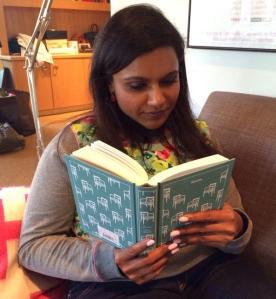
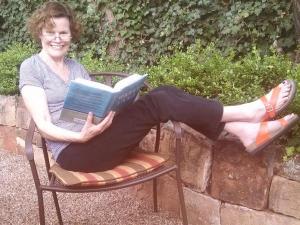
Ever heard of the #IReadEverywhere hashtag?  Well, it’s a thing.  A very, very big thing … because it demonstrates that our favorite pop culture icons–whether Mindy Kaling or or–read.  A lot.  And they read a pretty fantastic cross-section of all genres, including, yes, classic literature.  For example, we have:
ireadeverywhere1

Mindy Kaling reading Jane Austen (it doesn’t get more classic than that).  And …
ireadeverywhere2

Judy Blume reading Wally Lamb. And …

ireadeverywhere3

The Big Bang Theory’s Mayim Bialik and Melissa Rauch reading Jonathan Safran Foer and Julia Child, while their co-star …

ireadeverywhere4

Jim Parsons reads Buster Keaton.

And they’re not the only ones!  The #IReadEverywhere campaign has generated hundreds of pictures of celebrities catching a few classic words between subway stops, while sipping mochas at coffee shops, or playing on the floor with their cats.  The age of the book may vary (Foer and Childs never overlapped with Jane Austen in the historical record, let’s just say), but the tenor of the trend remains the same: everyone reads, and a lot of people read everywhere and perhaps even often.  You can’t despair for the state of classic literature or any literature at all when it’s literally a marker of “cool” to snap a selfie of you toting Hemingway along to a hip bar in NYC of a Saturday night.

And yet, Karl’s ultimate point remains as valid as ever: you still need to “[t]alk to your self-publisher early on about your custom marketing plan” if you want to create and maintain a steady stream of book sales.  And you can do that most effectively by narrowing your gaze to a specific, manageable target audience.  It’s better to start with a handful of very interested, very invested readers than to spread your fairy dust thinly among people who are only marginally interested.  Invested fans will (sometimes quite literally) sell your book for you, and that has historically been how self-published works have come to receive broad acclaim.  Think of Andy Weir and his blog readers.  Think of E.L. James and her fanatically excited followers on FanFiction.net.  Think of John and Jennifer Churchman and The SheepOver.  You can do everything right as an author and still not sell books if you haven’t gotten your fans on board.  On the flip side, you can invest just a little time and energy in wooing your readers and seizing opportunities when they arise, and sell books like hotcakes by doing so.  Talk to a marketing expert at your self-publishing company, and see what magic you can make happen, together! ♠

KellyABOUT KELLY SCHUKNECHT: Kelly Schuknecht is the Executive Vice President of Outskirts Press. In addition to her contributions to the Outskirts Press blog at blog.outskirtspress.com, Kelly and a group of talented marketing experts offer book marketing services, support, and products to not only published Outskirts Press authors, but to all authors and professionals who are interested in marketing their books and/or careers. Learn more about Kelly on her blog, kellyschuknecht.com.

Weekly Self-Published Book Review:Breaking the Devil’s Heart

Book reviews are a great way for self-publishing authors to gain exposure. After all, how can someone buy your book if he or she doesn’t know it exists? Paired with other elements of your book promotion strategy, requesting reviews is a great way to get people talking about what you’ve written.

When we read good reviews, we definitely like to share them. It gives the author a few (permanent) moments of fame and allows us to let the community know about a great book. Here’s this week’s book review by Midwest Book Review:

breaking the devils heart

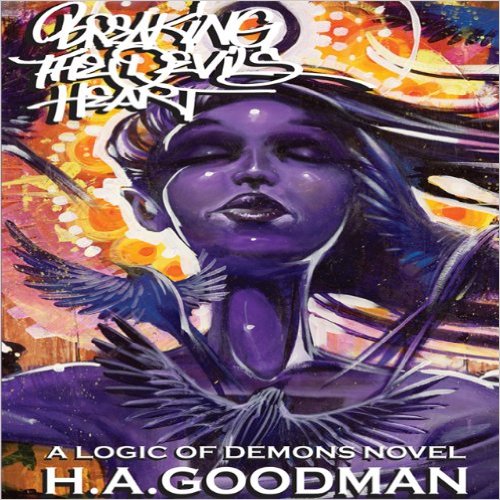
Breaking the Devil’s Heart

H. A. Goodman

Publisher: Outskirts Press

ISBN:9781432790790

Heaven and Hell aren’t as simple as Black and White. “Breaking the Devil’s Heart” starts off with the murder of Stewart Willoughby as he faces the afterlife, and finds it more complicated than angels and devils. Stewart finds his new purpose in his afterlife is a complex one to go against the bureaucracy of hell and end evil. A thoughtful spin of faith and the nature of good and evil, “Breaking the Devil’s Heart” is a strongly recommended pick for fantasy fiction collections.

Here’s what some other reviewers are saying:
Recommended for: those who question and seek, those with ideas rather than belief
Disclosure: I received a free copy from the author in exchange for an honest review.

Synopsis: When Stewart and Layla recruit a demon to spy on the Devil, their decision takes them on a whirlwind ride through the afterlife. Journey alongside this young couple in H. A. Goodman’s new novel, Breaking the Devil’s Heart, and join forces with a teenage Angel outcast to bankrupt Satan’s underground Company and save Heaven from civil war. H. A. Goodman’s Breaking the Devil’s Heart is a rollercoaster afterlife experience that tests a young couple’s love, their grasp on reality, and the essence of human nature. What happens when Stewart and Layla tour Hell’s Marketing Department and Stock Exchange? What happens when their relationship is tested by Satan? This book is unlike anything you’ve ever read, or ever thought the afterlife might be like. Breaking the Devil’s Heart is an enlightening look into an alternate world, a new afterlife, and a profound journey inside the human conscience

My Thoughts: This is actually the second book in the Logic of Demons series, after Logic of Demons, but the author recommends reading it first.

I have to admit that the idea of Hell being a bureaucracy appeals to me at a deep level. The low-level drudgery not only appeals to the absurdist in me, but actually makes more sense than hellfire and brimstone. I’m sure more office drones would agree that some hellfire and brimstone would be a relief compared to some of the long days at work. I also liked the idea of the Observers, or (as Stewart sometimes calls himself) naughty Angels.

The author really delves deeply into human behavior, often turning a quite unflattering spotlight upon our preconceptions. One demon says something that really sums up The Formula perfectly: “Think about it: it’s easier to shoot up a McDonalds (sic) than it is to feed starving people in some remote part of the globe. With one pull of a trigger or one too many glasses of cognac behind the wheel, unspeakable damage can occur. But tremendous goodness and altruism takes a great deal more work and far more effort. The system is skewed in one direction – ours.” Yet Stewart and Layla just can’t seem to get past their somewhat naïve idealism that humans are essentially good.

There are some great twists toward the end, but I don’t want to spoil those for you. This is a fairly quirky story, but very deep and delving into the darkest corners of the human psyche. With this book it is hard to say who will like it – I think I can pretty safely say that most agnostics will like it, most people who have questions about the afterlife, those people who have ideas instead of beliefs. There are some parts that are quite funny, especially to someone like me who finds the whole idea sort of absurd and amusing, but the overall book is fairly serious. I enjoyed it, and I recommend it.

News From the Self-Publishing World: 8/17/15

This week in the world of self-publishing:

Here’s What I Learned By Self-Publishing My YA Novel

In this MTV.com article, Brenna Ehrlich shares what she learned from self-publishing her YA novel. She discusses why she picked the self-publishing route over traditional publishing and tells other writers that, while it requires hard work, self-publishing is a possibility for them as well. She also gives useful advice such as hiring a professional editor, using beta readers, and more. Learning from successful self-published authors is a great way for you to improve your craft and self-publishing strategy.

BCALA, BiblioBoard Launch Self-Publishing Award

Librarians have long sought more guidance on self-published books as well as books by authors of color. Aiming to answer both needs is a new award offered by the Black Caucus of the American Library Association (BCALA) and BiblioBoard (the company that partners with LJ on SELF-e), called the SELF-e Literary Award. It will honor the top self-published fiction and poetry ebooks by African American authors who were born in the United States, with the winners receiving $500, formal recognition at the Black Caucus of the ALA Literary Awards, and a BCALA Literary Award Seal to use on their books. Not only is the lauding of self-published books a first for the BCALA, the new award will also be the group’s first to recognize digital content. Awards are a great way for authors to gain exposure and credibility. For submission details, be sure to check out the full article.

What I Learned When I Self-Published My Book

Writer, actress, and producer Lisa Marie Wilson shares what she learned when self-publishing her book. Her story includes why ebooks are more cost effective, how to apply for a copyright, the motivation behind her book, her regrets, and her plans for her next book. Her story is inspiring and informative. It is a must read for writers.

The Myth of The Lazy Writer

Successful authors work their butts off whether they self-publish or publish with a traditional publishing company. There is no such thing as a lazy successful author. In this Booklife.com article, self-publishing expert Hugh Howey debunks the myth of the lazy writer. He argues that regardless of the publishing route, writing and publishing is tough work. This is an interesting read for writers deciding which publishing route is best for them and for anyone who needs a reminder that they aren’t a lazy writer.

As a self-publishing author, you may find it helpful to stay up-to-date on the trends and news related to the self-publishing industry.This will help you make informed decisions before, during and after the self-publishing process, which will lead to a greater self-publishing experience. To help you stay current on self-publishing topics, simply visit our blog every Tuesday to find out the hottest news. If you have other big news to share, please comment below.

KellyABOUT KELLY SCHUKNECHT: Kelly Schuknecht is the Executive Vice President of Outskirts Press. In addition to her contributions to the Outskirts Press blog at blog.outskirtspress.com, Kelly and a group of talented marketing experts offer book marketing services, support, and products to not only published Outskirts Press authors, but to all authors and professionals who are interested in marketing their books and/or careers. Learn more about Kelly on her blog, kellyschuknecht.com.

Weekly Self-Published Book Review: Prisoner of Belief

Book reviews are a great way for self-publishing authors to gain exposure. After all, how can someone buy your book if he or she doesn’t know it exists? Paired with other elements of your book promotion strategy, requesting reviews is a great way to get people talking about what you’ve written.

When we read good reviews, we definitely like to share them. It gives the author a few (permanent) moments of fame and allows us to let the community know about a great book. Here’s this week’s book review by Midwest Book Review:

prisoner of belief

Prisoner of Belief

John Van Dixhorn

Publisher: Outskirts Press

ISBN:9781478736318

Synopsis: “Prisoner of Belief: One Man’s Odyssey to Reclaim His Soul – From Evangelical Minister to Searching Psychologist” is the personal story of John Van Dixhorn, a man who fights for his soul against the crushing power of religious orthodoxy and evangelical zealotry to become a modern man in the modern world. Raised by rigid Calvinists, Van Dixhorn became an evangelical minister, a successful pastor with prosperous churches. But intellectual honesty and emotional longing led him to challenge his faith, his church, his family, his friends and his vocation…and to eventually leave the ministry and become a secular psychologist. To live this life and write this book takes courage. “Prisoner of Belief” is a memoir of a courageous man. Through the numerous sharp and painful (and sometimes very funny) anecdotes, we begin to realize what it means to confront all the significant figures and forces in one’s life, from self, to mom, to brother, church, faith, ideology, Jesus, and finally to God…and the world-view that holds all this together in one neat theological package. Van Dixhorn provides enough historical background so that otherwise obscure theology may be understood. As a psychologist, Van Dixhorn takes us deeper to see how doctrine affects emotional life, how belief affects our psyche, our sexuality, and our sense of self. As Van Dixhorn leads us through his life, we learn so much from this honest and courageous story.

Critique: Told with extraordinary candor and unusual insight, “Prisoner of Belief: One Man’s Odyssey to Reclaim His Soul – From Evangelical Minister to Searching Psychologist” is exceptionally well written and organized. A fascinating reveal of the power of the human spirit to emancipate itself from the strictures of custom, tradition, orthodoxy, and repression, “Prisoner of Belief” is an informed and informative read, making it highly recommended and an enduringly valuable addition to community and academic library American Biography collections. It should be noted that “Prisoner of Belief” is also available in a Kindle edition ($9.99).

Here’s what some other reviewers are saying:

A courageous story of the meaning of religion, personal events, and trying to find one’s true vocal. I had long ago abandoned Christianity, so I had no personal ax to grind as I read Dr. Van Dixhorn’s memoirs. Though, it was unsettling to learn of the elitist attitude of fundamentalist religious groups and their views of the secular, non-christian population.
Dr. Van Dixhorn capture genuine personal struggles through out his life as a child, in seminary school, and as minister trying to live Evangelist life.
As one seeking life’s simple truths, the book satisfies my needs. For those wanting a crash course of seminary teaching and the duality of the bible, you will find plenty of food for thought. And for those struggling with your religious briefs, this is a great place to start your journey.

– Amazon Reviewer

An Indie Author’s Social Media Primer | First Thoughts

Everyone’s got an opinion on how best to use social media.  These two simple words have become the locus for more blogs, podcasts, and even heated offline debates than any other subject in the last five years––or more.  In part we can attribute this pervasive conversation to the fact that the advent of social media has radically altered the average Westerner’s daily routine as well as that person’s basic expectations of relationships, whether we’re talking about relationships with other individuals, or with the companies and other institutions with which you or I might have some connection.  These days, for example, it’s entirely reasonable for consumers to expect their favorite companies––whether Nike, or Denny’s––as well as their favorite celebrities––be they Rihanna or Neil Gaiman––to have active and responsive presences on social media networks like Facebook, Twitter, and Instagram.  And while Lady Gaga won’t be able to respond to each and every tweet lobbed her way over the course of a day, the fact that she responds to any tweets renders her a more accessible figure to the average Twitter user.

IMG_0976

But we’re not just here to gab about the latest and greatest in Facebook updates and how to use the Twitter app––even though, certainly, those two will rank among many other topics we’ll examine over the coming weeks.  We’re here, first and foremost, to talk about how to market your self-published book.  It’s already hard enough to break into the market when it comes to books, especially self-published books––talk about a daunting proposition!––without a guide or even professional assistance; we exist to make your life a little bit easier.  To that end, each and every social networking tool I address will be tied back to this notion of marketing, and marketing specifically as a newly-published or on-the-verge-of-published indie, hybrid, or self-published author.

The first social network that everyone thinks of is still, by and large, Facebook.  And don’t worry, we’ll absolutely talk about how to use Facebook effectively.  It is important to note, however, that the bigger a platform is in terms of user base, the more “crowded” the market will seem to a reader seeking new material.  It is vital that an indie author knows the ins and outs of Facebook updates and feeds and public profiles and so on and so forth, because the vast majority of any author’s potential readers will have Facebook accounts; however, it’s just as vital for a self-published author to establish a certain degree of comfort with at least a couple of the lesser-used platforms, because they will be both more “discoverable” and more visible without the throng of other authors competing for attention.  To that end, I will take a stroll through each of the quote-on-quote “major” social networking sites, including:

  • Twitter
  • Tumblr
  • Instagram
  • Snapchat
  • YouTube
  • Pinterest

… but I will also examine lesser-known or more specialized platforms, such as:

  • Goodreads
  • Etsy
  • LinkedIn
  • Flickr

… because, ultimately, it’s the tools we’ve neglected that end up most surprising us with their unexplored possibilities.

There’s a lot more to using social media for book promotion, however, than simply knowing the names of the most popular sites or even how to set up an account with and update each one.  There are a whole host of other behaviors to discover, observe, and adopt––”best practices,” so to speak––than just generating content.  Authors have to know, for example, the inside tricks.  They have to know the whys as well as the wherefores: why does engaging your readers on multiple platforms translate to better book sales?  Why is it important to track your social media efficacy using analytics?  And most importantly of all, why is it necessary to create a strategy, a plan for your social media campaign?  I’ll walk with you through the theory––and together, we’ll peel back some of the layers that lie between us and a social media repertoire that actually makes a difference.  We’ll debunk some myths, learn some new things, and slowly work our way through.

Together.

(Since that’s kind of the point, in the end, of social networking.)

I hope you’ll join me in building this Social Media Primer!  If you have any questions, comments, suggestions, or contributions, please use the comment field below or drop us a line at selfpublishingadvice@gmail.com.  And remember to check back each Wednesday for your weekly dose of social media know-how. ♠

KellyABOUT KELLY SCHUKNECHT: Kelly Schuknecht is the Executive Vice President of Outskirts Press. In addition to her contributions to the Outskirts Press blog at blog.outskirtspress.com, Kelly and a group of talented marketing experts offer book marketing services, support, and products to not only published Outskirts Press authors, but to all authors and professionals who are interested in marketing their books and/or careers. Learn more about Kelly on her blog, kellyschuknecht.com.